What Japanese Cashiers Say When You Pay in Cash
When you pay in cash, Japanese cashiers say three set phrases. As they take your money they say oazukari shimasu, as in 1,000円お預かりします (out of ¥1,000). As they hand back change they say okaeshi desu, as in 550円のお返しです (here’s ¥550 change). If you pay the exact amount, you hear chōdo itadakimasu (that’s exactly right, thank you). None of these needs an answer beyond a nod or arigatō gozaimasu. Below is each phrase with real recordings from Koe’s course, plus the short lines you can say for a big bill, no small change or the exact amount.
“Out of ¥1,000”: oazukari shimasu
The first phrase comes as the cashier takes your money. It confirms how much you handed over before any change is counted. In the course, at a croquette stand on a Tokyo shopping street, the total is ¥450 and you pay with a ¥1,000 bill:
Sano-san, at the croquette stand, says
全部で450円です。
Zenbu de yonhyakugojūen desu.
That’s ¥450 all together.
You say
1,000円でお願いします。
Sen'en de onegai shimasu.
Here’s ¥1,000.
As you hand over a bill. The cashier answers 1,000円お預かりします, out of ¥1,000: that’s their line, not yours. At registers all over Tokyo you’ll also hear 1,000円からお預かりします and 580円になります. Style guides call these part-timer keigo, and this course’s staff use the standard forms. Either way, the answer is a nod or ありがとうございます.
Sano-san, at the croquette stand, says
1,000円お預かりします。
Sen'en oazukari shimasu.
Out of ¥1,000.
The note on your line is worth reading slowly. Sen'en de onegai shimasu is what you say as you hand over the bill, and oazukari shimasu is the cashier’s line, not yours. The note also warns you about variations: at registers all over Tokyo you will also hear a version with kara added before oazukari shimasu, and a total said with ni narimasu. Style guides call these part-timer keigo, and the course’s staff use the standard forms. Either way, the answer is a nod or arigatō gozaimasu.
“Here’s your change”: okaeshi desu
The second phrase comes with the change. The cashier says the amount, then no okaeshi desu:
Sano-san, at the croquette stand, says
550円のお返しです。
Gohyakugojūen no okaeshi desu.
Here’s ¥550 change.
The number comes first, so that is the part to catch. Here is the same ritual with a bigger bill, at a fruit stand where a basket comes to ¥1,950 and you pay with ¥10,000:
Ōno-san, the greengrocer, says
1万円お預かりします。
Ichiman'en oazukari shimasu.
Out of ¥10,000.
Ōno-san, the greengrocer, says
8,050円のお返しです。
Hassengojūen no okaeshi desu.
Here’s ¥8,050 change.
Listen to the two phrases side by side. Ichiman'en oazukari shimasu is “out of ¥10,000,” and hassengojūen no okaeshi desu is “here’s ¥8,050 change.” Once you know the frame, the only new information in each sentence is the number. If you want to practice hearing amounts like these, the guide to prices in yen has more of them.
“Exactly right”: chōdo itadakimasu
If you hand over the exact amount, there is no change, and the cashier’s line is different:
You say
ちょうどあります。
Chōdo arimasu.
I have the exact amount.
The cashier answers ちょうどいただきます: that’s their line. A nod or ありがとうございます is yours. Handing it over, people also say ちょうどで.
Ōno-san, the greengrocer, says
ちょうどいただきます。
Chōdo itadakimasu.
That’s exactly right, thank you.
The course notes spell out the roles again: chōdo itadakimasu is the cashier’s line, and a nod or arigatō gozaimasu is yours. They add that people also say ちょうどで, with the exact amount, as they hand it over.
When you only have a big bill
If all you have is a ¥10,000 bill and the purchase is small, the course gives you two ways to handle it politely. Ask first, before you hand it over:
You ask
1万円でもいいですか?
Ichiman'en demo ii desu ka?
Is a ¥10,000 bill okay?
Or, if you are already holding it out, apologize for not having anything smaller:
You say
すみません、細かいのがなくて。
Sumimasen, komakai no ga nakute.
Sorry, I don’t have anything smaller.
細かいの is small change, or smaller bills. Ending on なくて leaves the rest unsaid, which sounds soft.
The note explains why this sounds soft: komakai no is small change, or smaller bills, and ending on nakute leaves the rest unsaid. You are not asking for anything outright, just explaining, and the bill in your hand says the rest.
When a machine will not take your bill
Some places take payment by machine, like the ticket machine at a ramen shop. The course notes say older ones take coins and ¥1,000 bills only, and the owner changes the big ones. In the course, the owner offers before you ask:
Ishii-san, the ramen chef, says
1万円札は使えないので、両替しますね。
Ichiman'ensatsu wa tsukaenai node, ryōgae shimasu ne.
The machine doesn’t take ¥10,000 bills, so I’ll change it for you.
You ask
両替してもらえますか?
Ryōgae shite moraemasu ka?
Could you change this for me?
してもらえますか asks someone to do something for you, a notch softer than してください.
If nobody offers, ryōgae shite moraemasu ka asks for change. The course notes say shite moraemasu ka asks someone to do something for you, a notch softer than shite kudasai. For the rest of that routine, see the ramen ticket machine guide.
Saying you will pay cash
At a konbini, the clerk may ask how you want to pay before any of this happens. Your answer is one line:
Tamura-san, the night clerk, asks
お支払い方法はいかがなさいますか?
Oshiharai hōhō wa ikaga nasaimasu ka?
How would you like to pay?
You say
現金でお願いします。
Genkin de onegai shimasu.
Cash, please.
If the clerk takes your cash, the same phrases follow: oazukari shimasu as the money changes hands, then okaeshi desu with your change. The course notes add that at some chains you pick the payment on a small screen facing you and feed cash into the machine yourself, so you may not hear them at all. If you are paying by card or transit card instead, the guide to card, cash and Suica has those lines.
Every line on this page is a recording from Koe’s course. The cashier’s phrases are fast and nearly the same every time, which makes them easy to learn by ear once you have heard them a few times. In the app you hear each line, say your part out loud, and see what it heard.
Every line on this page
The 14 lines above, in order, for one last listen before you go. Each one is the recording from the Koe course.
全部で450円です。Zenbu de yonhyakugojūen desu.That’s ¥450 all together.
1,000円でお願いします。Sen'en de onegai shimasu.Here’s ¥1,000.
1,000円お預かりします。Sen'en oazukari shimasu.Out of ¥1,000.
550円のお返しです。Gohyakugojūen no okaeshi desu.Here’s ¥550 change.
1万円お預かりします。Ichiman'en oazukari shimasu.Out of ¥10,000.
8,050円のお返しです。Hassengojūen no okaeshi desu.Here’s ¥8,050 change.
ちょうどあります。Chōdo arimasu.I have the exact amount.
ちょうどいただきます。Chōdo itadakimasu.That’s exactly right, thank you.
1万円でもいいですか?Ichiman'en demo ii desu ka?Is a ¥10,000 bill okay?
すみません、細かいのがなくて。Sumimasen, komakai no ga nakute.Sorry, I don’t have anything smaller.
1万円札は使えないので、両替しますね。Ichiman'ensatsu wa tsukaenai node, ryōgae shimasu ne.The machine doesn’t take ¥10,000 bills, so I’ll change it for you.
両替してもらえますか?Ryōgae shite moraemasu ka?Could you change this for me?
お支払い方法はいかがなさいますか?Oshiharai hōhō wa ikaga nasaimasu ka?How would you like to pay?
現金でお願いします。Genkin de onegai shimasu.Cash, please.
Common questions
What does oazukari shimasu mean?
It is what a cashier says as they take your money, before giving change: sen'en oazukari shimasu is “out of ¥1,000.” It is their line, not yours. A nod or arigatō gozaimasu is the answer.
What does okaeshi desu mean?
It is said with your change: the amount, then no okaeshi desu. For example, gohyakugojūen no okaeshi desu, here’s ¥550 change.
What does chōdo itadakimasu mean?
It means you paid exactly the right amount, so there is no change. The course translates it as “that’s exactly right, thank you.” You can tell the cashier you have the exact amount with ちょうどあります.
What should you say back to a Japanese cashier?
Very little. The course notes say a nod or arigatō gozaimasu answers the cashier’s phrases. For your own side, say 1,000円でお願いします as you hand over a ¥1,000 bill, or すみません、細かいのがなくて if you only have a big one.
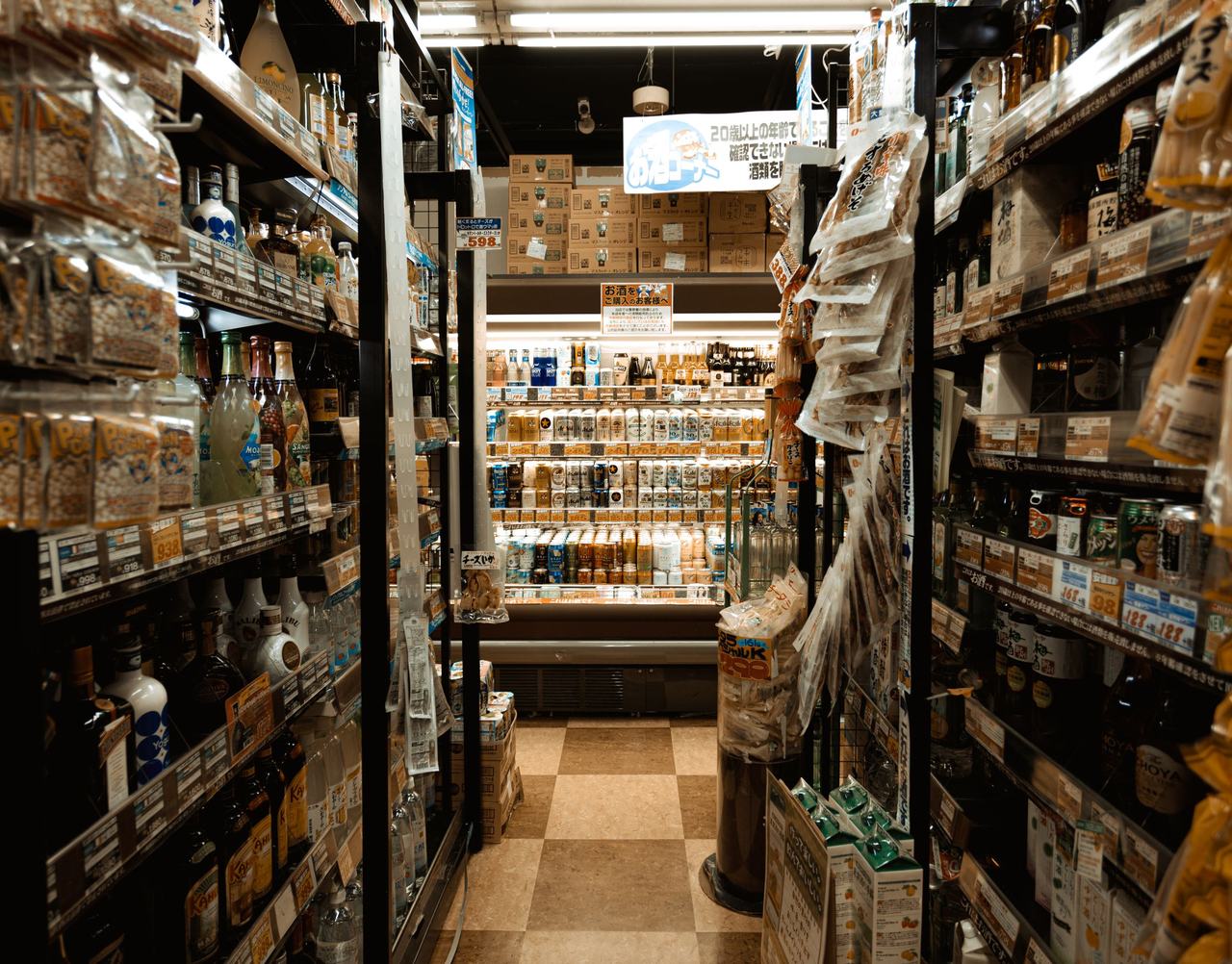
Opening photograph: A narrow convenience store aisle in Tokyo lined with packed shelves and a glowing drinks fridge at the back. Photograph by Aleksandar Pasaric on Pexels. Blog photo credits.