How to Ask Prices and Understand Yen Amounts
To ask how much something costs in Japanese, point at it and say すみません、これはいくらですか? (excuse me, how much is this?). The answer will end in en, yen, and the hard part is catching the number in front of it. When you are not sure, say the price back as a question, such as 300円ですか? (¥300?), and the seller will confirm or correct it. This page is mostly listening practice: the questions take a minute to learn, so most of it is real spoken prices from Koe’s course, from ¥150 at a fruit stand to ¥12,000 in a clothing store.
Asking the price
The basic question has two forms in the course. The first opens with sumimasen to get attention, which is what you want at a busy stall. The second is the same question without it, for when you already have someone’s attention:
You ask
すみません、これはいくらですか?
Sumimasen, kore wa ikura desu ka?
Excuse me, how much is this?
You ask
これはいくらですか?
Kore wa ikura desu ka?
How much is this?
おいくら is a touch more polite, and fine too.
Kore is this, and ikura is how much. The note adds that oikura is a touch more polite, and fine too. When you want to name the thing instead of pointing, put it first. The course’s example comes from a clothing store, and its note explains the pause:
You ask
このジャケット、いくらですか?
Kono jaketto, ikura desu ka?
How much is this jacket?
The pause after the thing, このジャケット、, stands in for は. Everyday speech.
Each, or all together
At a market stall, one price is often not the whole story. The course notes explain that fruit and vegetable stands sell by the pile, the bag or the piece, so it helps to ask exactly what you mean. For the price of one:
You ask
1個いくらですか?
Ikko ikura desu ka?
How much is one?
Ōno-san, the greengrocer, says
1個150円です。
Ikko hyakugojūen desu.
They’re ¥150 each.
Ikko is one piece, and the answer repeats it: ikko hyakugojūen, ¥150 each. When you have chosen several things, ask for the total:
You ask
全部でいくらですか?
Zenbu de ikura desu ka?
How much is it all together?
Ōno-san, the greengrocer, says
全部で1,200円です。
Zenbu de sennihyakuen desu.
That’s ¥1,200 all together.
Zenbu de is all together. If you hear zenbu de at the start of an answer, the number after it is your total, not a unit price.
Hearing hundreds
Small amounts come up all day: a snack, a coffee, a pile of tomatoes. Here are three from the course. Listen to each a few times, and try to say the number before you read the translation:
Ōno-san, the greengrocer, says
一山300円です。
Hitoyama sanbyakuen desu.
¥300 a pile.
Sano-san, at the croquette stand, says
全部で450円です。
Zenbu de yonhyakugojūen desu.
That’s ¥450 all together.
Haruka, the café owner, says
580円です。
Gohyakuhachijūen desu.
That’s ¥580.
The first adds a word you will hear at stalls: hitoyama is a pile, so it is ¥300 a pile, not ¥300 a tomato. In the second and third, notice how each amount ends in en and how the hundreds come first, then the tens. Compare ¥150, hyakugojūen, with ¥300, sanbyakuen: the hundreds word does not sound exactly the same in both, which is why hearing real amounts beats reading a number chart. A simple drill: play the three lines above in any order, say each amount out loud in English, then check the translation. When you get all three right without pausing, move on to the thousands.
Hearing thousands
Thousands come next: a basket of fruit, a taxi ride, a share of a dinner bill. Again, listen first:
Takeda-san, the taxi driver, says
2,400円です。
Nisen'yonhyakuen desu.
That’s ¥2,400.
Kenta, a friend, says
1人3,000円ね。
Hitori sanzen'en ne.
It’s ¥3,000 each.
The taxi fare is ¥2,400, nisen'yonhyakuen: two thousands, then four hundreds. The second line is Kenta splitting an izakaya bill, ¥3,000 each. Hitori is one person, so the course explains hitori sanzen'en as a per-person amount. Earlier on this page, the fruit total of ¥1,200 is another to compare.
Hearing ten-thousands
Bigger amounts use a unit you will not find in English. In the course, a ¥10,000 bill is ichiman'en, so the amounts above it are built on that word. Here is a vintage jacket in Shimokitazawa:
Nomura-san, the store clerk, says
12,000円です。
Ichimannisen'en desu.
It’s ¥12,000.
¥12,000 is ichimannisen'en: the ten-thousand word first, then two thousand. Amounts like this go by fast, and the ten-thousand word at the start is the part to catch: if you hear ichiman, you know the price is at least ¥10,000 before you have understood the rest. The same unit comes back at the register when you pay with a big bill, which the guide to what cashiers say covers.
Saying it back to check
The most useful habit with prices is to say the number back. The course notes put it simply: say a price back as a question to check you heard it right.
You ask
300円ですか?
Sanbyakuen desu ka?
¥300?
Say a price back as a question to check you heard it right.
You say
全部で450円ですね。
Zenbu de yonhyakugojūen desu ne.
That’s ¥450 all together, right?
The first is a question: sanbyakuen desu ka, ¥300? The second adds ne to a total, all together ¥450, right? The course notes say ne checks that you heard right. Either way, the seller will answer with a yes or the correct amount, and you will hear the number a second time. That second hearing is often all you need.
Every line on this page is a recording from Koe’s course. For prices, listening matters more than speaking, so play the amounts above without looking and say each one back. In the app you hear a line, answer out loud, and see what it heard. For buying at a street stall from start to finish, see the shotengai street food guide.
Every line on this page
The 15 lines above, in order, for one last listen before you go. Each one is the recording from the Koe course.
すみません、これはいくらですか?Sumimasen, kore wa ikura desu ka?Excuse me, how much is this?
これはいくらですか?Kore wa ikura desu ka?How much is this?
このジャケット、いくらですか?Kono jaketto, ikura desu ka?How much is this jacket?
1個いくらですか?Ikko ikura desu ka?How much is one?
1個150円です。Ikko hyakugojūen desu.They’re ¥150 each.
全部でいくらですか?Zenbu de ikura desu ka?How much is it all together?
全部で1,200円です。Zenbu de sennihyakuen desu.That’s ¥1,200 all together.
一山300円です。Hitoyama sanbyakuen desu.¥300 a pile.
全部で450円です。Zenbu de yonhyakugojūen desu.That’s ¥450 all together.
580円です。Gohyakuhachijūen desu.That’s ¥580.
2,400円です。Nisen'yonhyakuen desu.That’s ¥2,400.
1人3,000円ね。Hitori sanzen'en ne.It’s ¥3,000 each.
12,000円です。Ichimannisen'en desu.It’s ¥12,000.
300円ですか?Sanbyakuen desu ka?¥300?
全部で450円ですね。Zenbu de yonhyakugojūen desu ne.That’s ¥450 all together, right?
Common questions
How do you ask “how much” in Japanese?
Point and say すみません、これはいくらですか?, excuse me, how much is this? For one piece, ask 1個いくらですか?. For everything together, ask 全部でいくらですか?.
How do you understand prices spoken in Japanese?
Listen for en at the end and the number in front of it. For totals, listen for zenbu de, all together. Practice with real recordings, because some amounts sound different from what a number chart suggests. When unsure, say the price back as a question and listen to the answer.
What does zenbu de mean?
Zenbu de means all together. A seller who starts with zenbu de is telling you the total, as in zenbu de sennihyakuen desu, that’s ¥1,200 all together.
How do you check a price you heard in Japanese?
Say it back as a question, as in 300円ですか?. The course notes suggest exactly this. Adding ne to a total, as in 全部で450円ですね, does the same job.
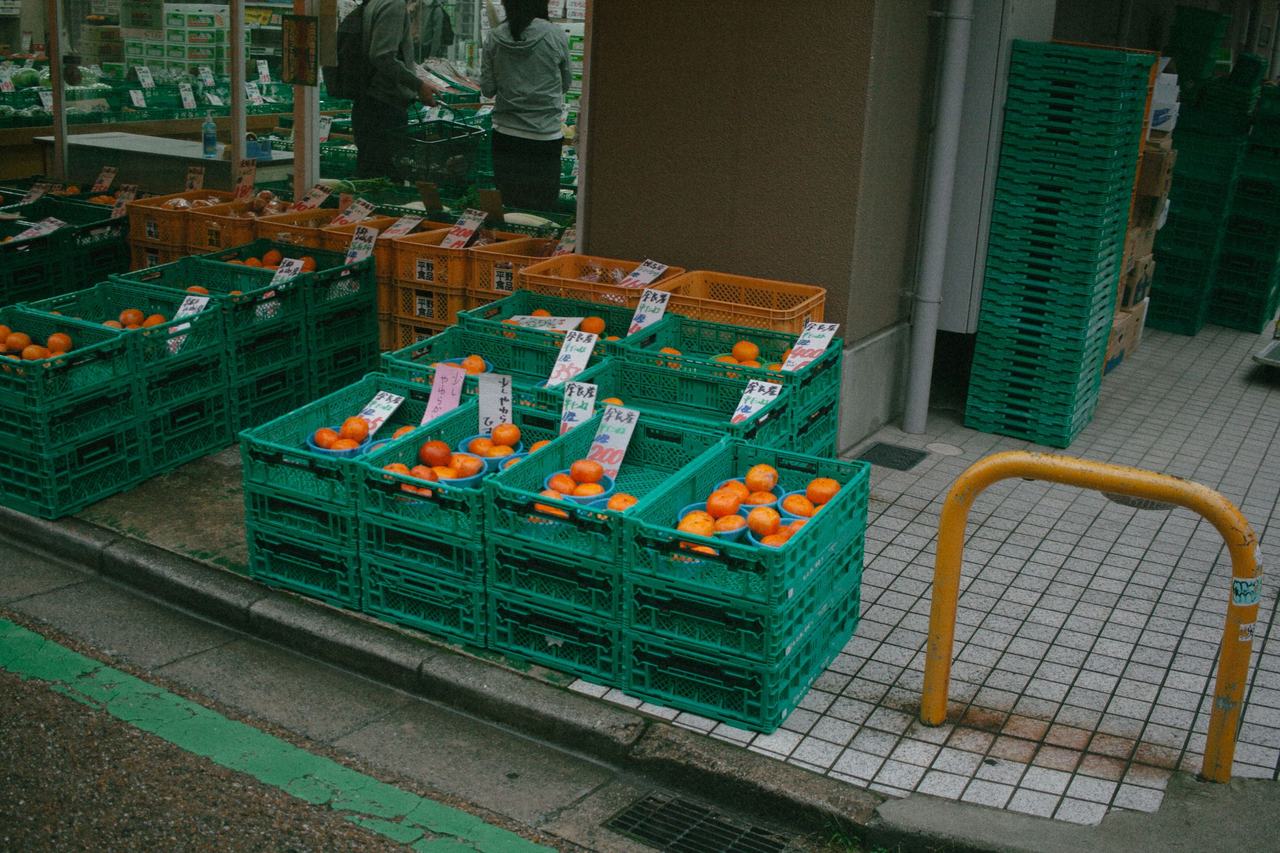
Opening photograph: Green crates of oranges with handwritten price cards sit on the sidewalk outside a Tokyo greengrocer. Photograph by Giuseppe Macri on Pexels. Blog photo credits.