Atatamemasu Ka: Konbini Bento, Heating and Chopsticks
Atatamemasu ka means “shall I heat it up?” A konbini clerk asks it when you buy a bento, pasta or a rice bowl: お弁当、温めますか? (shall I heat up your bento?). Answer 温めてください (please heat it up) or 温めなくて大丈夫です (no need to heat it). The next question is about chopsticks, and はい、お願いします (yes, please) is all you need. Below is the whole food-counter exchange with real recordings, from the 11 p.m. konbini run in Koe’s course, where you buy a bento and a yogurt from Tamura-san, the night clerk.
What atatamemasu ka means
The course notes explain the routine: bentos, pasta and rice bowls are heated at the counter, and the clerk asks first. The course sets it at 11 p.m. at the konbini near your apartment, where you buy a bento and a yogurt and the night clerk has a question or two before she scans them. Here is the first question as you will hear it:
Tamura-san, the night clerk, asks
お弁当、温めますか?
Obentō, atatamemasu ka?
Shall I heat up your bento?
Obentō is the bento, and atatamemasu ka is shall I heat it up. The word to listen for is atatame, which is in the question and in both of your answers. In the course scene you are buying a bento and a yogurt, and the question is about the bento.
Yes, heat it, or no need
Both answers are short. If you want it hot:
You say
温めてください。
Atatamete kudasai.
Please heat it up.
Bentos, pasta and rice bowls are heated at the counter, and the clerk asks first: お弁当、温めますか?
Tamura-san, the night clerk, says
かしこまりました。
Kashikomarimashita.
Certainly.
Kashikomarimashita is the clerk’s “certainly.” It tells you she has your answer, and the bento is heated at the counter.
If you are taking it home, or it is something you eat cold, say no:
You say
温めなくて大丈夫です。
Atatamenakute daijōbu desu.
No need to heat it.
大丈夫です is the polite no at a konbini. いいです on its own can mean yes or no, so clerks often ask again: say 大丈夫です for no and お願いします for yes.
The note on this line is the most useful thing on the page. Daijōbu desu is the polite no at a konbini. Ii desu on its own can mean yes or no, so clerks often ask again. Say daijōbu desu for no and onegai shimasu for yes, and there is nothing to misunderstand.
Would you like chopsticks?
The second question is about chopsticks:
Tamura-san, the night clerk, asks
お箸はお付けしますか?
Ohashi wa otsuke shimasu ka?
Would you like chopsticks?
You say
はい、お願いします。
Hai, onegai shimasu.
Yes, please.
You say
お箸は大丈夫です。
Ohashi wa daijōbu desu.
No chopsticks, thank you.
いらないです is understood, but it’s blunt. 大丈夫です does the same job softly.
Ohashi is chopsticks, and the course notes say hai, onegai shimasu is all you need when the clerk asks. To say no, ohashi wa daijōbu desu is the soft way. The note points out that いらないです is understood, but blunt.
One more point from the course notes: otsuke shimasu is the clerk’s humble form for what the clerk does, so you never say it back. Your answer is your own short line, not a repeat of her question. If you are eating with someone, this is also the moment to say how many pairs you want, which comes up below.
When the clerk forgets to ask
Sometimes the question does not come. The course has a line for exactly that, for when the clerk forgets to ask:
You say
お箸をお願いします。
Ohashi o onegai shimasu.
Chopsticks, please.
For when the clerk forgets to ask. When she does ask, お箸はお付けしますか?, would you like chopsticks, はい、お願いします is all you need. お付けします and ございます are the clerk’s humble and formal forms for what the clerk does, so you never say them back.
Say it at the register before you leave. If you have already stepped away, go back and put sumimasen in front, as the course does when you add something late: すみません、これもお願いします. It is a short line, and worth having ready for any late-night food run.
How many pairs, and a spoon
The clerk may also ask how many pairs you need:
Tamura-san, the night clerk, asks
お箸は何膳お付けしますか?
Ohashi wa nanzen otsuke shimasu ka?
How many pairs of chopsticks?
You say
2膳お願いします。
Nizen onegai shimasu.
Two pairs, please.
膳 counts pairs of chopsticks. ふたつ works too.
Nanzen asks how many pairs, and zen is the counter for pairs of chopsticks, so nizen is two pairs. The note adds that futatsu, the everyday word for two things, works too. If counting words are new to you, the guide to counters for ordering explains hitotsu, futatsu and the rest.
The course scene includes a yogurt, which you will want a spoon for. Ask for it on top of the chopsticks:
You say
スプーンもください。
Supūn mo kudasai.
A spoon too, please.
も is also: the spoon on top of what you already asked for.
Mo is also, the course notes say: the spoon on top of what you already asked for. The same pattern adds anything else you need.
“It’s hot, so please be careful”
When the bento comes back, heated, the clerk hands it over with a warning:
Tamura-san, the night clerk, says
熱くなっておりますので、お気をつけください。
Atsuku natte orimasu node, oki o tsuke kudasai.
It’s hot, so please be careful.
The course translates it as “it’s hot, so please be careful.” Atsuku is a form of the word for hot that the ramen chef uses in atsui uchi ni dōzo, enjoy it while it’s hot, and oki o tsuke kudasai is the careful part.
The food counter in order
- The clerk asks obentō, atatamemasu ka. Say 温めてください or 温めなくて大丈夫です.
- She asks about chopsticks. Say はい、お願いします, or お箸は大丈夫です.
- If she asks how many pairs, say 2膳お願いします, or the number you need.
- For a yogurt, add スプーンもください.
- If no chopsticks were offered, ask お箸をお願いします.
After the food questions come the bag, the point card, payment and the receipt. The guide to what konbini staff ask takes you through the rest of the register in order.
Every line on this page is a recording from Koe’s course. The clerk’s questions are quick, so hearing atatamemasu ka and ohashi wa otsuke shimasu ka until they are familiar is the whole job. In the app you hear each one, answer out loud, and see what it heard.
Every line on this page
The 12 lines above, in order, for one last listen before you go. Each one is the recording from the Koe course.
お弁当、温めますか?Obentō, atatamemasu ka?Shall I heat up your bento?
温めてください。Atatamete kudasai.Please heat it up.
かしこまりました。Kashikomarimashita.Certainly.
温めなくて大丈夫です。Atatamenakute daijōbu desu.No need to heat it.
お箸はお付けしますか?Ohashi wa otsuke shimasu ka?Would you like chopsticks?
はい、お願いします。Hai, onegai shimasu.Yes, please.
お箸は大丈夫です。Ohashi wa daijōbu desu.No chopsticks, thank you.
お箸をお願いします。Ohashi o onegai shimasu.Chopsticks, please.
お箸は何膳お付けしますか?Ohashi wa nanzen otsuke shimasu ka?How many pairs of chopsticks?
2膳お願いします。Nizen onegai shimasu.Two pairs, please.
スプーンもください。Supūn mo kudasai.A spoon too, please.
熱くなっておりますので、お気をつけください。Atsuku natte orimasu node, oki o tsuke kudasai.It’s hot, so please be careful.
Common questions
What does “atatamemasu ka” mean?
It means “shall I heat it up?” The clerk asks it for bentos, pasta and rice bowls, which are heated at the counter. Answer 温めてください for yes or 温めなくて大丈夫です for no.
How do you say “no need to heat it” in Japanese?
Say 温めなくて大丈夫です. Daijōbu desu is the polite no at a konbini. Avoid ii desu on its own, which can mean yes or no.
How do you ask for chopsticks at a konbini?
If the clerk asks ohashi wa otsuke shimasu ka, say はい、お願いします. If the clerk forgets to ask, say お箸をお願いします.
How do you say “two pairs of chopsticks” in Japanese?
Say 2膳お願いします, two pairs, please. Zen counts pairs of chopsticks, and the course notes say futatsu works too.
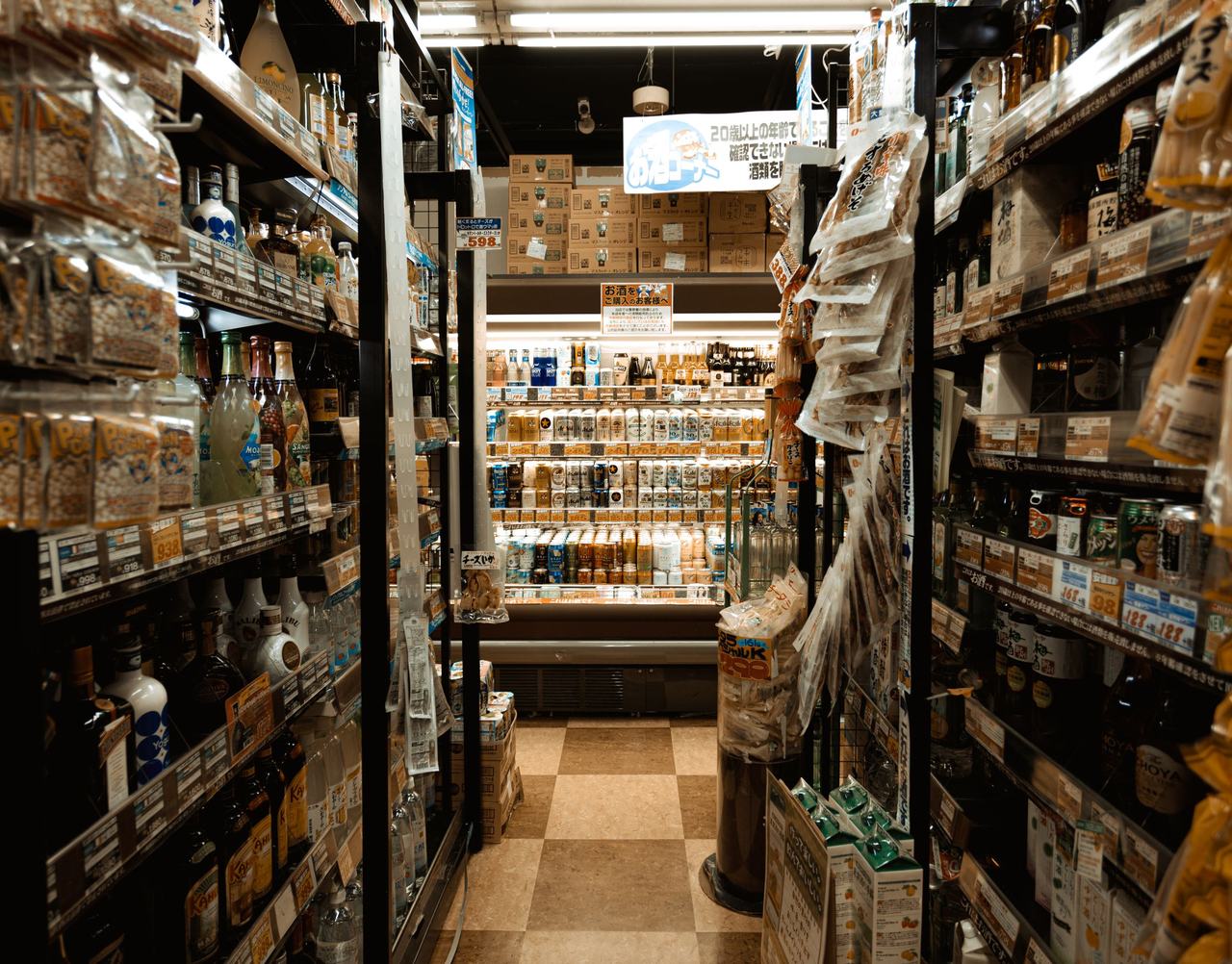
Opening photograph: A narrow convenience store aisle in Tokyo lined with packed shelves and a glowing drinks fridge at the back. Photograph by Aleksandar Pasaric on Pexels. Blog photo credits.