Just Looking: How to Browse a Tokyo Shop in Japanese
To say “just looking” in Japanese, say ちょっと見てるだけです (I’m just looking). You only need it when a clerk asks whether you are looking for something in particular. The welcome you hear as you walk in needs no answer at all, a nod is enough. And when you leave without buying, the soft line is 今回はやめておきます (I’ll pass this time). Below is a whole low-pressure browse in order, with recordings from Koe’s shopping unit, set among the racks of denim and workwear in Nomura-san’s vintage store in Shimokitazawa.
The welcome that needs no answer
Staff in Tokyo greet everyone who comes in. In Koe’s vintage store, the clerk adds an invitation to take your time:
Nomura-san, the store clerk, says
いらっしゃいませ。どうぞごゆっくりご覧ください。
Irasshaimase. Dōzo goyukkuri goran kudasai.
Welcome. Please take your time.
You do not answer this with words. The course is direct about it: いらっしゃいませ。どうぞごゆっくりご覧ください, welcome, please take your time, needs no answer. A nod, or a quiet ありがとうございます, is all it takes. Then carry on browsing.
If you want the longer story of that first word, our post on what irasshaimase means and whether you answer it covers it.
Looking for anything? How to say you are just browsing
After a minute or two, a clerk may come over with a question. This is the one:
Nomura-san, the store clerk, asks
何かお探しですか?
Nani ka osagashi desu ka?
Looking for anything in particular?
何かお探しですか, the course explains, asks if you are looking for anything in particular. This is the moment for the line in the title of this post:
You say
ちょっと見てるだけです。
Chotto miteru dake desu.
I’m just looking.
The clerk’s いらっしゃいませ。どうぞごゆっくりご覧ください, welcome, please take your time, needs no answer: a nod, or ありがとうございます. If she asks what you’re after, this is the reply.
ちょっと is a little, and dake means just, or only. Together they tell the clerk you are happy browsing on your own. In the course, the clerk answers by repeating her invitation:
Nomura-san, the store clerk, says
どうぞごゆっくりご覧ください。
Dōzo goyukkuri goran kudasai.
Please take your time.
That is the end of it. She leaves you to it, and you go back to the rack.
Asking a price while you browse
When a price is not easy to find, point at the item and ask:
You ask
これはいくらですか?
Kore wa ikura desu ka?
How much is this?
おいくら is a touch more polite, and fine too.
Kore is this. The course notes that おいくら is a touch more polite, and fine too. If you can name the item, name it instead. The course’s example is a jacket:
You ask
このジャケット、いくらですか?
Kono jaketto, ikura desu ka?
How much is this jacket?
The answer comes back as a number and desu. In the course, the jacket costs this:
Nomura-san, the store clerk, says
12,000円です。
Ichimannisen'en desu.
It’s ¥12,000.
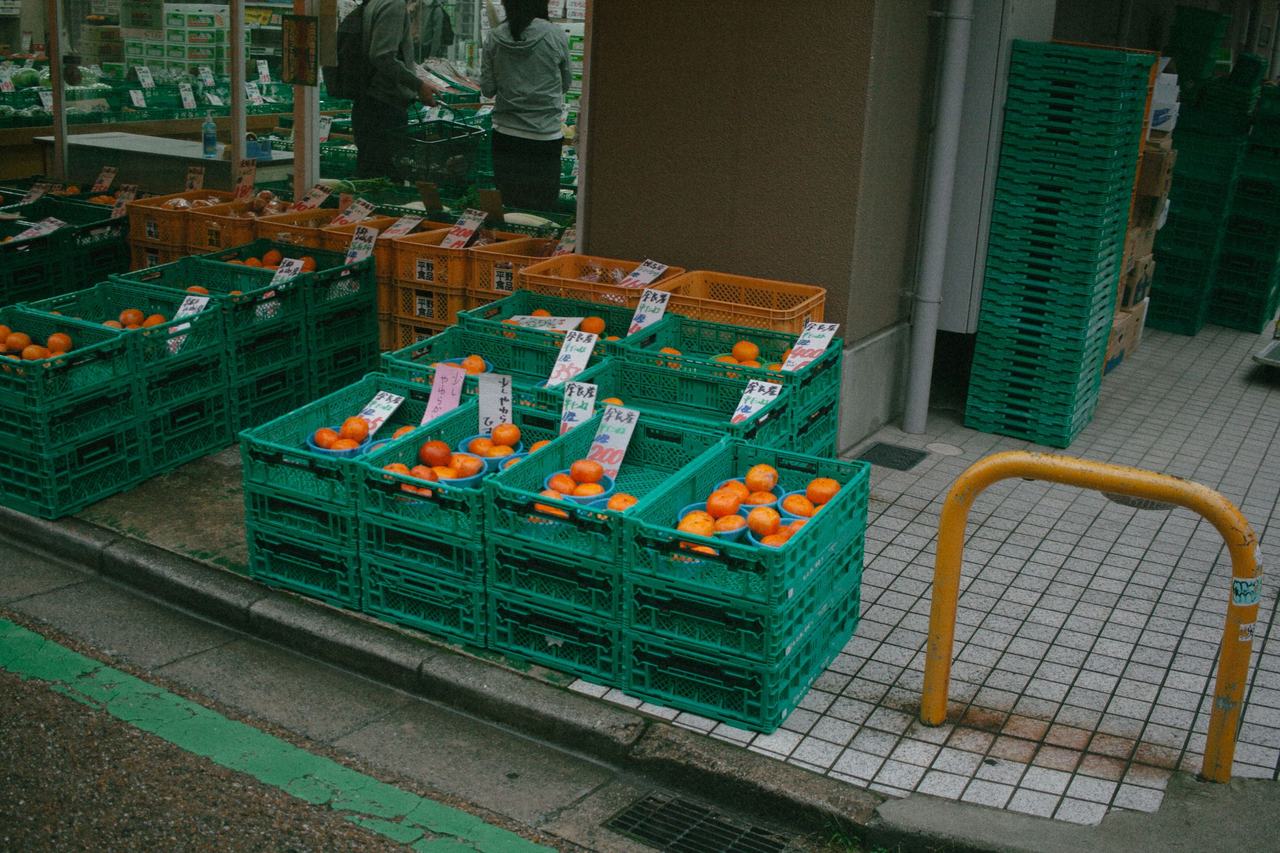
Yen amounts are where listening gets hard, because a five-digit price arrives as one long word. If you are not sure you heard it, say the number back as a question; the course teaches this habit with fruit prices at a greengrocer’s stand. Or ask すみません、もう一度お願いします, sorry, could you say that again.
Sometimes there is no tag at all. Rather than guessing, say so:
You say
値札がないんですが。
Nefuda ga nain desu ga.
There’s no price tag on this one.
んですが turns a problem into a soft question, and leaves the clerk room to fix it.
The course explains why this works so well: んですが turns a problem into a soft question, and leaves the clerk room to fix it. You have not asked for anything directly, and the clerk can take it from there.
Reacting: that’s cool, and that’s a little pricey
Browsing is more fun when you can react. Two short lines cover most of what you will feel at a rack:
You say
かっこいいですね。
Kakkoii desu ne.
That’s cool.
For clothes, bikes, people. To a friend you’d drop the です.
You say
ちょっと高いですね。
Chotto takai desu ne.
It’s a little pricey.
ちょっと softens it; nobody haggles in a Tokyo store.
かっこいい is cool, for clothes, bikes and people, and the course notes that to a friend you would drop the です. In the course, Kenta says it when he finds the jacket, and the clerk tells him where it is from:
Nomura-san, the store clerk, says
こちらは70年代のアメリカのものです。
Kochira wa nanajūnendai no Amerika no mono desu.
This one is from 1970s America.
If it is the color that wins you over, the course also has この色、いいですね, I like this color.
The second line above is useful when the price is more than you hoped. Again ちょっと, a little, softens it. But read the course note on it carefully: nobody haggles in a Tokyo store. Saying it is a little pricey is an honest reaction, not an opening offer. Do not expect the price to drop.
Leaving without buying
At some point you will walk out empty-handed, and that is fine. If the clerk has helped you, or you have tried something on, close it softly:
You say
今回はやめておきます。
Konkai wa yamete okimasu.
I’ll pass this time.
The soft way to leave without buying. いらないです is blunt here.
The course calls this the soft way to leave without buying, and it warns that いらないです, I don’t need it, is blunt here. Add a thank-you as you go: ありがとうございます.
A browse from door to door
Here is how a low-pressure visit might run. You walk in, and the clerk says welcome, please take your time. You nod. You look through the racks. The clerk comes over and asks if you are looking for anything, and you say ちょっと見てるだけです. She tells you to take your time. A jacket catches your eye, so you ask このジャケット、いくらですか?, hear the price, and say ちょっと高いですね. You put it back, find a shirt with no tag, and say 値札がないんですが. In the end you decide against both, say 今回はやめておきます and a thank-you, and head out.
That is five short lines from you, and the clerk’s welcome needs no words at all. What makes it hard is that the clerk’s Japanese is polite and quick, and you hear it before you are ready. Every line on this page is a recording from Koe’s course, and the app has you hear each one, say it out loud, and then shows you what it heard. Play the clerk’s two questions above a few times, and the next time someone asks if you are looking for anything, ちょっと見てるだけです will come out before you have to think about it.
Every line on this page
The 12 lines above, in order, for one last listen before you go. Each one is the recording from the Koe course.
いらっしゃいませ。どうぞごゆっくりご覧ください。Irasshaimase. Dōzo goyukkuri goran kudasai.Welcome. Please take your time.
何かお探しですか?Nani ka osagashi desu ka?Looking for anything in particular?
ちょっと見てるだけです。Chotto miteru dake desu.I’m just looking.
どうぞごゆっくりご覧ください。Dōzo goyukkuri goran kudasai.Please take your time.
これはいくらですか?Kore wa ikura desu ka?How much is this?
このジャケット、いくらですか?Kono jaketto, ikura desu ka?How much is this jacket?
12,000円です。Ichimannisen'en desu.It’s ¥12,000.
値札がないんですが。Nefuda ga nain desu ga.There’s no price tag on this one.
かっこいいですね。Kakkoii desu ne.That’s cool.
ちょっと高いですね。Chotto takai desu ne.It’s a little pricey.
こちらは70年代のアメリカのものです。Kochira wa nanajūnendai no Amerika no mono desu.This one is from 1970s America.
今回はやめておきます。Konkai wa yamete okimasu.I’ll pass this time.
Common questions
How do you say “just looking” in Japanese?
Say ちょっと見てるだけです, I’m just looking. Use it when a clerk asks 何かお探しですか?, looking for anything in particular. ちょっと is a little, and dake means just.
Do you have to answer the clerk’s welcome in a Japanese store?
No. The course says the clerk’s welcome, please take your time, needs no answer: a nod, or ありがとうございます, is enough.
Can you haggle in Japanese stores?
The course note is plain: nobody haggles in a Tokyo store. You can still say ちょっと高いですね, it’s a little pricey, as an honest reaction, but it is not an offer.
How do you politely leave a shop without buying in Japan?
Say 今回はやめておきます, I’ll pass this time, and thank the clerk. The course calls it the soft way to leave without buying, and notes that いらないです sounds blunt.
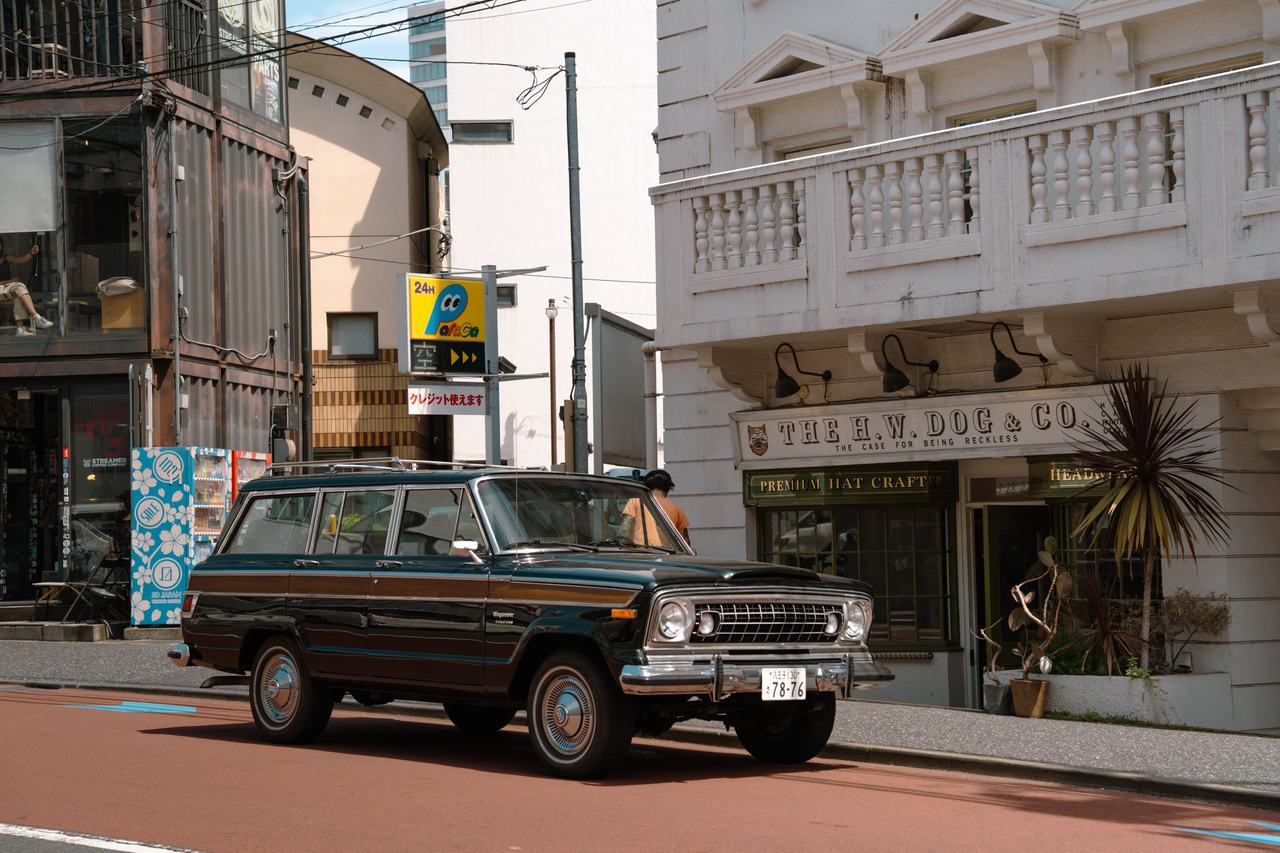
Opening photograph: A vintage wood-paneled SUV is parked outside a retro hat shop on a sunny Tokyo street. Photograph by Iban Lopez Luna on Pexels. Blog photo credits.