Card, Cash or Suica: Saying How You’ll Pay in Japan
To ask if you can pay by card in Japanese, say カードは使えますか? (can I pay by card?). If the answer is yes, カードでお願いします (by card, please) tells the cashier how you will pay. If you hear genkin dake, the shop is cash only. At a konbini you can also pay with a transit card such as Suica: 交通系でお願いします (with my transit card, please). Below are those lines and the replies, at a cash-only fruit stand, a konbini register and a clothing store, all with real recordings from Koe’s course.
Asking if they take cards
The question is short, and the course notes give the literal sense: can I use a card? It is worth asking before you choose what to buy at a small place, because there the answer is often no:
You ask
カードは使えますか?
Kādo wa tsukaemasu ka?
Can I pay by card?
Literally, can I use a card? Many small stores on a shotengai take cash only.
Ōno-san, the greengrocer, says
すみませんね、うちは現金だけなんですよ。
Sumimasen ne, uchi wa genkin dake nan desu yo.
Sorry, we’re cash only.
The note says many small stores on a shotengai, a shopping street, take cash only. The greengrocer’s reply is the one to recognize: uchi wa genkin dake, we’re cash only. Genkin is cash, and dake is only. He opens with sumimasen ne, sorry, which softens it. Your answer is a nod and your cash, or 現金でお願いします to say you will pay that way.
Paying with your phone
The course also covers phone payment, and its note has practical advice:
You ask
スマホ決済は使えますか?
Sumaho kessai wa tsukaemasu ka?
Can I pay with my phone?
スマホ is a smartphone, and 決済 is payment. In practice most people name the app: ペイペイ、使えますか? The stickers by the register show which ones a store takes.
Sumaho is a smartphone and kessai is payment. The note adds that in practice most people name the app, as in ペイペイ, and that the stickers by the register show which ones a store takes. So look at the stickers first: if your payment method is there, you may not need to ask at all.
Saying how you will pay
At a konbini or any register with several options, the clerk may ask how you want to pay. In the course, Tamura-san, the night clerk, asks it like this:
Tamura-san, the night clerk, asks
お支払い方法はいかがなさいますか?
Oshiharai hōhō wa ikaga nasaimasu ka?
How would you like to pay?
You say
カードでお願いします。
Kādo de onegai shimasu.
By card, please.
You say
現金でお願いします。
Genkin de onegai shimasu.
Cash, please.
Both answers have the same shape: the method, then de onegai shimasu. Kādo de is by card, and genkin de is in cash. If you are paying cash, the guide to what cashiers say covers the phrases you will hear as the clerk counts your change.
Paying with Suica or another transit card
A transit card does more than open ticket gates. Suica is a prepaid, rechargeable contactless card that also works as electronic money in shops, especially convenience stores, and at many station vending machines and lockers. At the register, the course gives you one line for it:
You say
交通系でお願いします。
Kōtsūkei de onegai shimasu.
With my transit card, please.
At some chains you pick the payment on a small screen facing you and feed cash into the machine yourself; at others you tell the clerk, and this is the line. 交通系 is the word for transit cards, Suica, PASMO and the rest. Saying the card’s name, スイカで, is fine too.
The note explains how this works at different chains. At some you pick the payment on a small screen facing you; at others you tell the clerk, and this is the line. Kōtsūkei is the word for transit cards, Suica, PASMO and the rest, and saying the card’s name, as in スイカで, is fine too. When there is a screen, the clerk may point you to it:
Tamura-san, the night clerk, says
お支払い方法を画面でお選びください。
Oshiharai hōhō o gamen de oerabi kudasai.
Please choose how to pay on the screen.
If you have not bought a transit card yet, the guide to buying and charging a Suica has the lines for that.
The installments question at clothing stores
This one can surprise card users. At clothing and department stores, after you hand over a card, the clerk may ask how many payments you want:
Nomura-san, the store clerk, asks
お支払い回数は?
Oshiharai kaisū wa?
How many installments?
Nomura-san, the store clerk, asks
一括でよろしいですか?
Ikkatsu de yoroshii desu ka?
One payment, is that right?
You say
一括でお願いします。
Ikkatsu de onegai shimasu.
In one payment, please.
Japanese credit cards can split a purchase into installments, so clothing and department stores ask お支払い回数は?, how many payments. 一括 is all at once. On a foreign card it’s the only answer, and many registers won’t ask at all.
The course notes explain it: Japanese credit cards can split a purchase into installments, so these stores ask oshiharai kaisū wa, how many payments. Ikkatsu is all at once. On a foreign card it is the only answer, and many registers will not ask at all. If you hear ikkatsu de yoroshii desu ka, the clerk is checking that one payment is right, and your answer is はい or 一括でお願いします.
When you need cash
Because so many small places are cash only, you will want an ATM sooner or later. The course’s answer is the konbini:
You ask
ATMはどこですか?
ATM wa doko desu ka?
Where’s the ATM?
Konbini ATMs take foreign cards, around the clock.
Tamura-san, the night clerk, says
ATMは奥にございます。
ATM wa oku ni gozaimasu.
The ATM is at the back.
The course notes say konbini ATMs take foreign cards, around the clock. The clerk’s answer uses oku, the back, which the course explains as where things like the restroom are, so head to the back of the store.
Which line to use where
A quick guide to the places in this article:
- A small stall or shop on a shopping street: ask カードは使えますか? before you choose, and carry cash in case the answer is genkin dake.
- A konbini: say 交通系でお願いします, カードでお願いします or 現金でお願いします, or choose on the screen when the clerk points to it.
- A clothing or department store, paying by card: expect the installments question, and answer 一括でお願いします.
- Anywhere with payment stickers by the register: check them first, or ask スマホ決済は使えますか?.
Every line on this page is a recording from Koe’s course. The replies are what you need to catch, especially genkin dake and the installments question. In the app you hear each line, say your side out loud, and see what it heard.
Every line on this page
The 13 lines above, in order, for one last listen before you go. Each one is the recording from the Koe course.
カードは使えますか?Kādo wa tsukaemasu ka?Can I pay by card?
すみませんね、うちは現金だけなんですよ。Sumimasen ne, uchi wa genkin dake nan desu yo.Sorry, we’re cash only.
スマホ決済は使えますか?Sumaho kessai wa tsukaemasu ka?Can I pay with my phone?
お支払い方法はいかがなさいますか?Oshiharai hōhō wa ikaga nasaimasu ka?How would you like to pay?
カードでお願いします。Kādo de onegai shimasu.By card, please.
現金でお願いします。Genkin de onegai shimasu.Cash, please.
交通系でお願いします。Kōtsūkei de onegai shimasu.With my transit card, please.
お支払い方法を画面でお選びください。Oshiharai hōhō o gamen de oerabi kudasai.Please choose how to pay on the screen.
お支払い回数は?Oshiharai kaisū wa?How many installments?
一括でよろしいですか?Ikkatsu de yoroshii desu ka?One payment, is that right?
一括でお願いします。Ikkatsu de onegai shimasu.In one payment, please.
ATMはどこですか?ATM wa doko desu ka?Where’s the ATM?
ATMは奥にございます。ATM wa oku ni gozaimasu.The ATM is at the back.
Common questions
How do you ask “can I pay by card” in Japanese?
Say カードは使えますか?, literally can I use a card? If the answer is genkin dake, the shop is cash only. If it is yes, say カードでお願いします when you pay.
Can you pay with Suica in shops?
Yes, at many. Suica works as electronic money in shops, especially convenience stores, and at many station vending machines and lockers. At the register, say 交通系でお願いします, or choose it on the screen if there is one.
What does ikkatsu mean when paying by card?
Ikkatsu means one payment, all at once. Clothing and department stores ask because Japanese cards can split a purchase into installments. On a foreign card, the course notes say it is the only answer: 一括でお願いします.
Where can you get cash with a foreign card in Tokyo?
At a konbini. The course notes say konbini ATMs take foreign cards, around the clock. Ask the clerk ATMはどこですか? if you cannot see it.
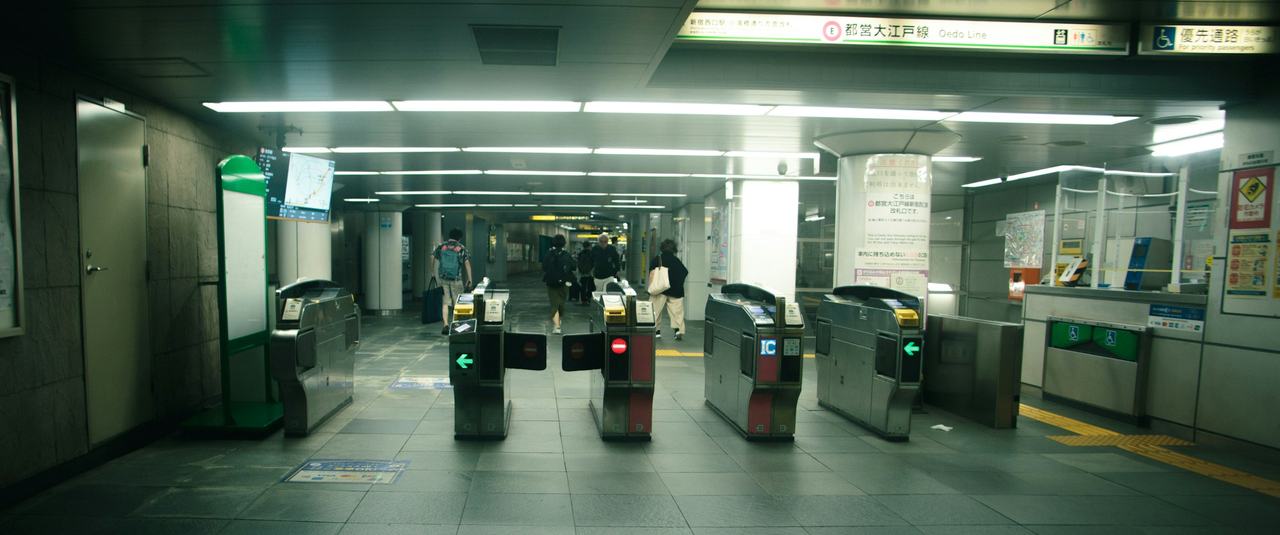
Opening photograph: Ticket gates at Shinjuku station in Tokyo. Photograph by Thiago Yonamine on Unsplash. Blog photo credits.