Pásele and Other Things Mexican Vendors Say to You
When a Mexican vendor calls out pásele, it means step right up: come closer, have a look. In Habla’s market scene, Doña Lupe says it together with the question that follows it, ¿Qué le damos?, what can I get you. You answer by asking a price, such as ¿A cómo están los aguacates?, or by naming what you want. This guide collects the lines vendors and shopkeepers say to you in the course, grouped by the moment they come up, with what they mean and a good reply to each. Every line has a recording, so you can learn to hear them at full speed.
When a vendor calls you over
The first line is the invitation. At the fruit stall in the course, Doña Lupe calls out to Diego as he walks up:
Doña Lupe asks
Pásele, joven. ¿Qué le damos?
Step right up, young man. What can I get you?
Pásele, joven is translated in the course as step right up, young man. ¿Qué le damos? is what can I get you. At a market, the natural reply is a price question. The course notes that ¿A cómo…? is how the market asks a price, usually by the kilo:
You ask
¿A cómo están los aguacates?
How much are the avocados?
¿A cómo…? is how the market asks a price, usually by the kilo.
Her answer in the scene is A setenta pesos el kilo: 70 pesos a kilo. If you are only walking past, a simple No, gracias is enough.
Notice the word after pásele. People in the course who serve you often add a way of addressing you. Doña Lupe calls Diego joven, which the course translates as young man, and says De nada, joven when Tom thanks her for directions. Don Toño, the taxi driver, calls Mariana señorita, miss. Doña Chelo answers Diego with Sí, joven. You do not need to answer the word itself. It is part of the greeting, and the question after it is what to listen for.
When a shopkeeper offers to help
At a clothes stall or a store, the opener is an offer of help rather than a call. You will hear two versions in the course. Paty, the clothes vendor, asks if she can help you with anything, and Doña Chelo, at the corner store, asks what she can do for you:
Paty, the clothes vendor, asks
Buenas tardes. ¿Le ayudo en algo?
Good afternoon. Can I help you with anything?
Doña Chelo, at the corner store, asks
Buenas tardes. ¿Qué se le ofrece?
Good afternoon. What can I do for you?
Neither one needs a yes or no. Answer with what you are looking for, or point and ask the price. If you are just looking, No, gracias works here too. At the corner store you will also hear ¿Qué va a llevar?, what can I get you, and that exchange has its own guide: what to say at an OXXO or corner store.
While you choose: how much, and which one
Once you have picked something, the vendor needs details. At a market stall, that means quantity:
Doña Lupe asks
¿Cuánto va a querer?
How much would you like?
You say
Medio kilo, por favor.
Half a kilo, please.
¿Cuánto va a querer? asks how much you would like. Medio kilo is half a kilo, and un kilo a whole one.
At a clothes stall, the question is which one. Paty asks it after showing you the colors she has:
Paty, the clothes vendor, asks
¿Cuál le gusta?
Which one do you like?
You say
En negro, por favor.
In black, please.
¿Cuál le gusta? means which one do you like. A color with por favor answers it.
Anything else, and will that be all
At the fruit stall, Doña Lupe checks for more with two different questions. The first is an invitation to keep going, and the second is a check that you are done:
Doña Lupe asks
¿Qué más le damos?
What else can I get you?
Doña Lupe asks
¿Sería todo?
Will that be all?
¿Qué más le damos? is what else can I get you. ¿Sería todo? is will that be all. If you want more, name the next thing. If you are done, the course gives a reply that closes the order and asks the total in one sentence:
You ask
Sí, es todo. ¿Cuánto es?
Yes, that’s all. How much is it?
You will also hear the plain ¿Algo más?, anything else, at cafés, stores and taco stands. It wants the same answers.
When a vendor wants to close the sale
At a clothes stall, the end of the conversation comes as a gentle push. Paty asks whether you will take it, and then, after an offer, what you think:
Paty, the clothes vendor, asks
¿Se la lleva?
Will you take it?
Paty, the clothes vendor, asks
¿Cómo ve?
What do you say?
¿Se la lleva? means will you take it. ¿Cómo ve? means what do you say. In the course, it follows Paty’s offer of a lower price. You have two good replies. Yes:
You say
Me lo llevo.
I’ll take it.
Literally: I take it with me. Me la llevo for a la thing.
Or a kind no, which the course calls the polite no:
You say
Lo voy a pensar, gracias.
I’ll think about it, thanks.
The polite no. Ahorita regreso, I’ll be right back, is the classic version.
The note adds that Ahorita regreso, I’ll be right back, is the classic version. If you want to bargain before you answer, see how to bargain at a Mexican market. For more ways to turn things down gently, see how to say no politely in Mexico.
A quick listening list
Here are the lines from this page, in plain English, so you can recognize them in the moment:
- Pásele: step right up.
- ¿Qué le damos?: what can I get you?
- ¿Le ayudo en algo?: can I help you with anything?
- ¿Qué se le ofrece?: what can I do for you?
- ¿Cuánto va a querer?: how much would you like?
- ¿Cuál le gusta?: which one do you like?
- ¿Qué más le damos?: what else can I get you?
- ¿Sería todo?: will that be all?
- ¿Se la lleva?: will you take it?
- ¿Cómo ve?: what do you say?
The words are not hard. What makes them hard is speed. Every line on this page is a recording from Habla’s course, and the app has you hear each one, answer out loud, and see what it heard, which is a good way to make these questions sound familiar before you are standing at the stall.
Every line on this page
The 15 lines above, in order, for one last listen before you go. Each one is the recording from the Habla course.
Pásele, joven. ¿Qué le damos?Step right up, young man. What can I get you?
¿A cómo están los aguacates?How much are the avocados?
Buenas tardes. ¿Le ayudo en algo?Good afternoon. Can I help you with anything?
Buenas tardes. ¿Qué se le ofrece?Good afternoon. What can I do for you?
¿Cuánto va a querer?How much would you like?
Medio kilo, por favor.Half a kilo, please.
¿Cuál le gusta?Which one do you like?
En negro, por favor.In black, please.
¿Qué más le damos?What else can I get you?
¿Sería todo?Will that be all?
Sí, es todo. ¿Cuánto es?Yes, that’s all. How much is it?
¿Se la lleva?Will you take it?
¿Cómo ve?What do you say?
Me lo llevo.I’ll take it.
Lo voy a pensar, gracias.I’ll think about it, thanks.
Common questions
What does pásele mean in Mexico?
In the course, pásele is translated as step right up: an invitation to come closer and look. You can step up and ask a price, or say No, gracias and keep walking.
What does ¿Qué se le ofrece? mean?
It means what can I do for you. In the course, Doña Chelo greets you with it at the corner store. Answer with what you want, or ask whether they have it.
What does ¿Sería todo? mean?
It means will that be all. If you are done, say Sí, es todo. ¿Cuánto es?, which closes the order and asks the total.
How do I say no to a vendor politely?
Say Lo voy a pensar, gracias. The course calls it the polite no, and notes that Ahorita regreso, I’ll be right back, is the classic version.
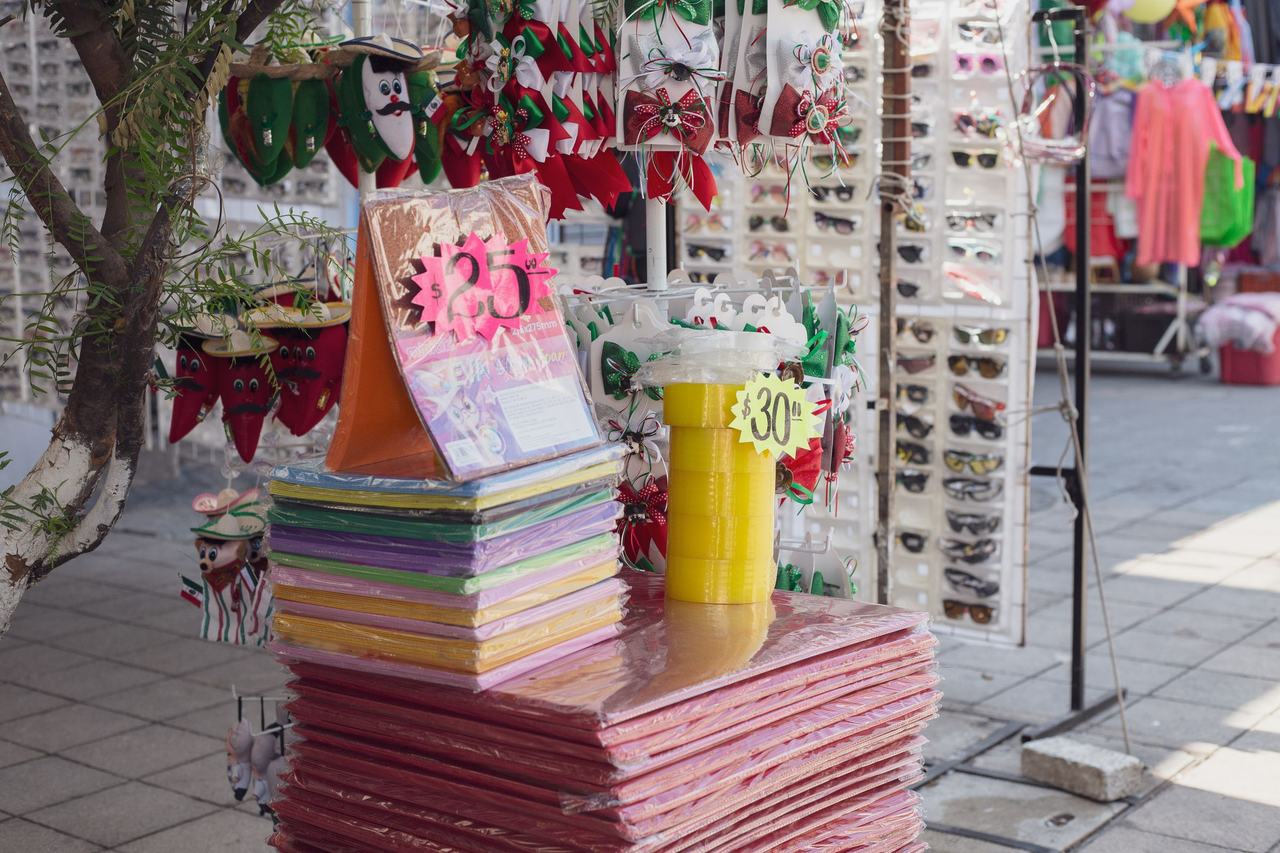
Opening photograph: A street market stall in Mexico City selling colored paper, sunglasses and festive decorations. Photograph by Noemí Jiménez on Pexels. Blog photo credits.