How to Ask How Much in Spanish in Mexico
To ask how much something costs in Spanish, say ¿Cuánto cuesta...? with the thing: ¿Cuánto cuesta una concha? That asks the price of one item. Mexico has three more price questions, and each one fits a different moment: ¿A cómo...? at a market stall, where prices go by the kilo; ¿Cuánto es? when you are ready to pay; and ¿Cuánto le debo? at the end of a taxi ride or at a stall. Below is each question, when to use it and how the answer comes back, with recordings from Habla’s café, corner store, market and shopping units.
The price of one thing, before you buy
When you want to know what one item costs before you decide, this is the question. The course note puts it plainly:
You ask
¿Cuánto cuesta una concha?
How much is a concha?
¿Cuánto cuesta…?: how much does it cost? For the price of one thing.
¿Cuánto cuesta una concha? is how much is a concha? The shape is ¿Cuánto cuesta...? plus the thing. Here it is at Doña Chelo’s corner store, with a note that sets it against the next question on this page:
You ask
¿Cuánto cuesta el agua?
How much is the water?
¿Cuánto cuesta…? asks the price of one thing. ¿Cuánto es? asks what you owe.
That note is the key to the whole topic. ¿Cuánto cuesta...? asks the price of one thing. ¿Cuánto es? asks what you owe. One is for deciding, the other is for paying.
Pointing at it: how much is this
You will not always know the name of what you want. In that case, point and use esto, this:
You ask
¿Cuánto cuesta esto?
How much is this?
Point and ask. ¿Cuánto vale? means the same.
The course notes that ¿Cuánto vale? means the same thing, so you may hear that too. If you do know the word, name it, as Diego does at Paty’s clothes stall:
You ask
¿Cuánto cuesta esta playera?
How much is this T-shirt?
Playera is the Mexican word for a T-shirt. Esta playera: this T-shirt.
Playera, as the note says, is the Mexican word for a T-shirt. Here is how Paty answers:
Paty, the clothes vendor, says
Ciento veinte pesos. Y le dejo dos en doscientos.
$120. And I’ll let you have two for $200.
The price comes first, ciento veinte pesos, $120. Then comes an offer: le dejo dos en doscientos, I’ll let you have two for $200. At Paty’s stall the price comes with a deal, so listen past the first number. For what to say next, see how to bargain at a Mexican market.
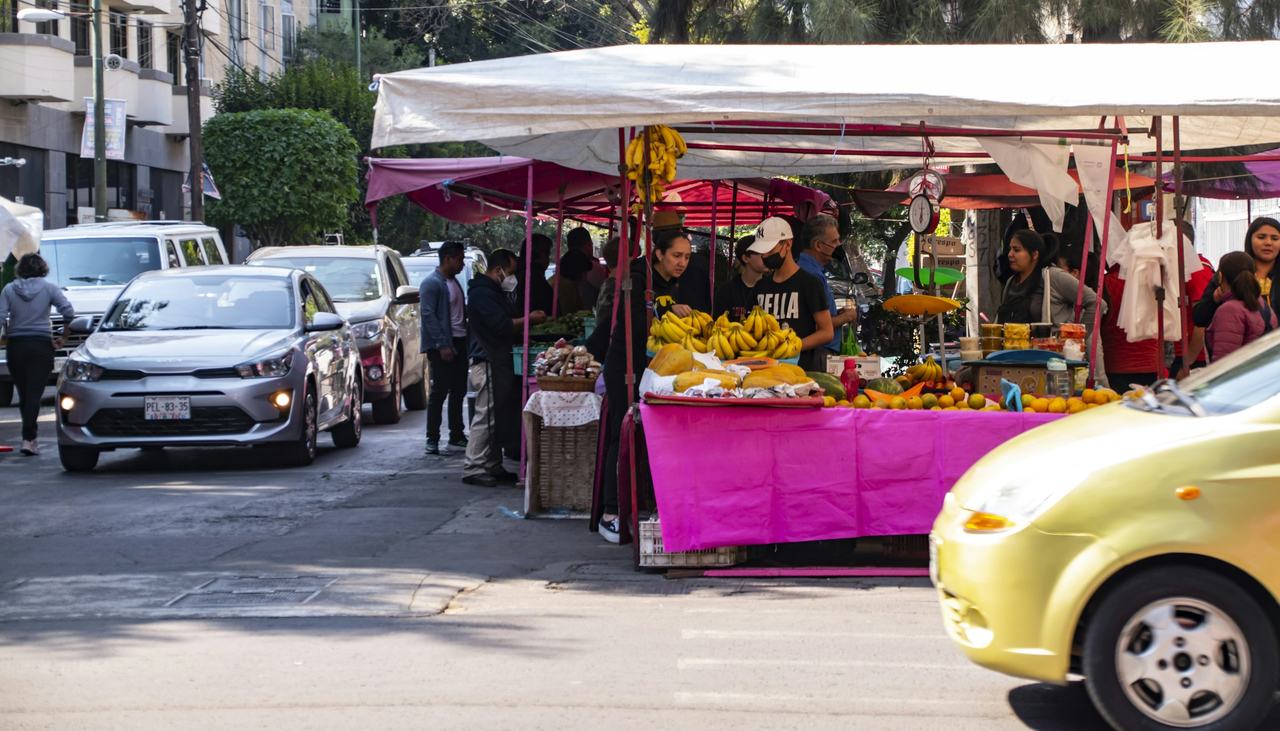
At the market: prices by the kilo
At a fruit or vegetable stall, the question changes. The course note explains why:
You ask
¿A cómo están los aguacates?
How much are the avocados?
¿A cómo…? is how the market asks a price, usually by the kilo.
¿A cómo están los aguacates? is how much are the avocados? The course notes that ¿A cómo...? is how the market asks a price, usually by the kilo. So the answer is a price per kilo, and Doña Lupe gives it like this:
Doña Lupe says
A setenta pesos el kilo.
$70 a kilo.
A setenta pesos el kilo is $70 a kilo. Notice that the answer repeats the a from the question. You can ask about anything on the stall the same way:
You ask
¿A cómo están los mangos?
How much are the mangoes?
Once you know the price, you order by weight. The course uses un kilo and medio kilo, a kilo and half a kilo. The full market visit, from the price to the bag, is in buying fruit and vegetables at a Mexico City market.
When you are ready to pay
Once you have what you want, the question is different. You are no longer asking a price. You are asking what you owe:
You ask
¿Cuánto es?
How much is it?
When you’re ready to pay.
Sofía, the barista, says
Son ochenta y cinco pesos.
It’s $85.
¿Cuánto es? is how much is it. At Sofía’s café, the answer is son ochenta y cinco pesos, it’s $85. Prices take son, as the course notes, so listen for son and then the number.
If you have several things, ask for the total:
You ask
¿Cuánto es todo?
How much is it all together?
¿Cuánto es todo? is how much is it all together. It is useful at a market stall, where each item may have its own price, and you want one number to pay.
At the end of a taxi ride or at a stall
The fourth question is the one for the end of a service, when the cost has already built up:
You ask
¿Cuánto le debo?
What do I owe you?
The usual question at the end of a taxi ride, or at a stall.
Don Toño, the taxi driver, says
Son ciento treinta pesos.
It’s $130.
¿Cuánto le debo? is what do I owe you. The course calls it the usual question at the end of a taxi ride, or at a stall. At Beto’s taco stand it is also how you pay: the course notes that la cuenta, the check, is for a sit-down taquería, and at a stand you ask ¿Cuánto le debo? Don Toño’s answer, son ciento treinta pesos, is $130.
Which question, when
Here are the four side by side:
- ¿Cuánto cuesta...? Before you buy, for one thing. Point and say ¿Cuánto cuesta esto? if you do not know the word.
- ¿A cómo...? At a market stall, for a price by the kilo.
- ¿Cuánto es? When you are ready to pay. Add todo for the total: ¿Cuánto es todo?
- ¿Cuánto le debo? At the end of a taxi ride, or at a stall or taco stand.
Each one fits its moment, and the answers you hear make more sense when you know which question you asked. The numbers themselves are the other half of the job: for hearing ciento, doscientos and the rest the first time, see understanding prices in pesos.
Every line on this page is a recording from Habla’s course. In the app you hear a line, say it out loud, and see what it heard, so each price question is ready when you reach the counter.
Every line on this page
The 13 lines above, in order, for one last listen before you go. Each one is the recording from the Habla course.
¿Cuánto cuesta una concha?How much is a concha?
¿Cuánto cuesta el agua?How much is the water?
¿Cuánto cuesta esto?How much is this?
¿Cuánto cuesta esta playera?How much is this T-shirt?
Ciento veinte pesos. Y le dejo dos en doscientos.$120. And I’ll let you have two for $200.
¿A cómo están los aguacates?How much are the avocados?
A setenta pesos el kilo.$70 a kilo.
¿A cómo están los mangos?How much are the mangoes?
¿Cuánto es?How much is it?
Son ochenta y cinco pesos.It’s $85.
¿Cuánto es todo?How much is it all together?
¿Cuánto le debo?What do I owe you?
Son ciento treinta pesos.It’s $130.
Common questions
What is the difference between ¿Cuánto cuesta...? and ¿Cuánto es?
The course puts it simply: ¿Cuánto cuesta...? asks the price of one thing, and ¿Cuánto es? asks what you owe. Use the first before you decide, and the second when you are ready to pay.
How do you ask the price at a Mexican market?
Use ¿A cómo...?, as in ¿A cómo están los aguacates? The course notes that this is how the market asks a price, usually by the kilo, and the answer comes as a price per kilo.
What does ¿Cuánto vale? mean?
It means how much is it, the same as ¿Cuánto cuesta...? The course notes that the two mean the same.
How do I ask for the total in Spanish?
Ask ¿Cuánto es todo? It means how much is it all together.
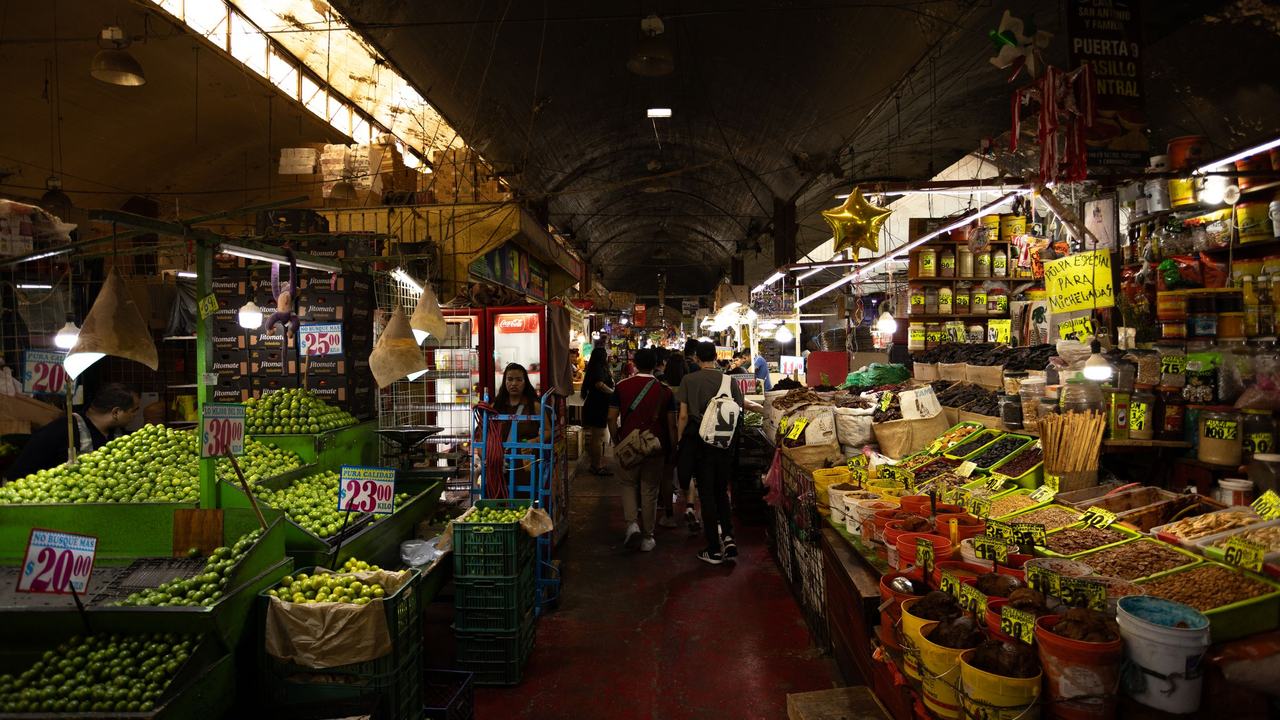
Opening photograph: Shoppers walk an aisle between stalls of limes, chiles and dried goods in a covered Mexico City market. Photograph by David Hernandez on Pexels. Blog photo credits.