What to Say at an OXXO or Corner Store in Mexico
At a corner store in Mexico, like Doña Chelo’s in the course, the cashier may open with ¿Qué va a llevar?, what can I get you. You answer with the thing and por favor, for example Una botella de agua, por favor, or ask ¿Tiene agua? if you cannot see it. Expect ¿Chica o grande? for size and ¿Algo más? for anything else, and finish with Es todo. ¿Cuánto es? (that’s all, how much is it?). Every line below comes from Habla’s corner-store unit, set at Doña Chelo’s tiendita. OXXO, the convenience store chain you will see across Mexico, has a counter like hers, with a cashier who asks the questions.
What the cashier says to you first
The greeting and the first question usually come together. Doña Chelo says good afternoon and asks what you are taking, in one breath:
Doña Chelo, at the corner store, asks
Buenas tardes. ¿Qué va a llevar?
Good afternoon. What can I get you?
¿Qué va a llevar? literally asks what you are going to take. It is the store’s version of the barista’s “what can I get you,” and you do not need to answer it as a question. Just name what you want, or ask whether they have it. The course’s note on ¿Tiene…? is one of the most useful notes in the unit: it opens almost every request at a store.
You ask
¿Tiene agua?
Do you have water?
¿Tiene…?, do you have…?, opens almost every request at a store. Hay works too: ¿Hay agua?
If you hear buenas tardes first, say it back. It is the easiest way to start.
Asking for water, a soda or chips
The pattern is the one you use everywhere in Mexico: the thing plus por favor. Water first:
You say
Una botella de agua, por favor.
A bottle of water, please.
The store will ask ¿Chica o grande?: small or large.
For a soft drink, the course teaches the general word and then notes that most people skip it and name the brand. Un refresco is any soda. Una Coca is a Coke.
You say
Un refresco, por favor.
A soda, please.
Un refresco is any soda. Most people just name it: una Coca.
For a snack, papas at a store are potato chips. The course adds that you will hear the diminutive papitas just as often, and that fries are a different thing: papas a la francesa.
You say
Unas papas, por favor.
Some chips, please.
At a store unas papas are a bag of potato chips, and you’ll hear the diminutive papitas just as often. Fries are papas a la francesa.
You say
Unas papas y un chocolate, por favor.
Some chips and a chocolate bar, please.
Two items in one sentence is easy. Join them with y, and keep por favor at the end.
Small or large
Water and drinks come in sizes, so the next question is almost always about that. It is short, and it comes fast:
Doña Chelo, at the corner store, asks
¿Chica o grande?
Small or large?
You say
La chica, por favor.
The small one, please.
Chica and grande answer ¿Chica o grande? The thing is understood, so you just say the size.
You say
Una botella de agua grande, por favor.
A large bottle of water, please.
The course’s note on la chica explains why the answer is so short: the thing is already understood, so you just say the size. La chica, por favor is a complete answer. If you prefer to say the size up front, ask for a large bottle by name, as in the second line. In the course’s listening scene, Diego answers ¿Chica o grande? and asks the price in the same breath: Una botella chica, por favor. ¿Cuánto es?
Anything else, and that’s all
Once the cashier has your first item, expect a check for more. At a corner store, the answer that ends the order and asks the total in one go is the one to learn:
Doña Chelo, at the corner store, asks
¿Algo más?
Anything else?
You ask
Es todo. ¿Cuánto es?
That’s all. How much is it?
The answer to ¿Algo más? when you are done: that’s all, and what do I owe you.
Doña Chelo, at the corner store, says
Son quince pesos.
That’s $15.
Son quince pesos is 15 pesos. The course’s explanation adds the nearby numbers: cincuenta would be fifty and veinticinco twenty-five. If you want to know the price of one thing before you decide, the course separates two questions: ¿Cuánto cuesta…? asks the price of one thing, and ¿Cuánto es? asks what you owe. For prices in general, see how to ask how much in Spanish in Mexico.
Paying with a big bill
The course notes that taxis and small stores are often short of change for big bills, and its advice is simple: ask before you hand one over.
You ask
¿Tiene cambio?
Do you have change?
Ask before you hand over a big bill. You’ll also hear feria, slang for coins: ¿No tiene feria?
Doña Chelo, at the corner store, says
Aquí tiene su cambio.
Here’s your change.
¿No tiene feria? is the slang version you may hear back, feria being coins. When the cashier counts out your change, aquí tiene su cambio is what you hear: here’s your change. The full story of breaking a large bill is in asking for change in Spanish.
At some registers you will also be asked whether you want a bag, or you may want a receipt. Those two questions have their own guide: bag, receipt and change at a Mexico City checkout.
The whole run, start to finish
Here is the visit the way it tends to go. You walk in and hear buenas tardes and ¿Qué va a llevar? You say Una botella de agua, por favor. The cashier asks ¿Chica o grande? and you say La chica, por favor. You add Unas papas, por favor if you want them. The cashier asks ¿Algo más? and you say Es todo. ¿Cuánto es? You hear the price, you pay, and you leave with a thank you and a goodbye:
You say
Gracias, hasta luego.
Thanks, bye.
The course notes that hasta luego, literally until later, is the everyday goodbye, even to someone you may never see again. That makes it the right goodbye for a cashier.
That is five or six lines, and on a trip you will likely use them again and again. The hard part is speed: ¿Chica o grande? sounds like one word the first time you hear it. Every line on this page is a recording from Habla’s course, and the app has you hear a line, say it out loud and see what it heard, so the questions sound familiar by the time you reach the counter.
Every line on this page
The 15 lines above, in order, for one last listen before you go. Each one is the recording from the Habla course.
Buenas tardes. ¿Qué va a llevar?Good afternoon. What can I get you?
¿Tiene agua?Do you have water?
Una botella de agua, por favor.A bottle of water, please.
Un refresco, por favor.A soda, please.
Unas papas, por favor.Some chips, please.
Unas papas y un chocolate, por favor.Some chips and a chocolate bar, please.
¿Chica o grande?Small or large?
La chica, por favor.The small one, please.
Una botella de agua grande, por favor.A large bottle of water, please.
¿Algo más?Anything else?
Es todo. ¿Cuánto es?That’s all. How much is it?
Son quince pesos.That’s $15.
¿Tiene cambio?Do you have change?
Aquí tiene su cambio.Here’s your change.
Gracias, hasta luego.Thanks, bye.
Common questions
What does ¿Qué va a llevar? mean?
It means what can I get you, literally what are you going to take. It is the cashier’s opening question at a corner store. Answer by naming what you want with por favor, or ask ¿Tiene agua?
How do you say “that’s all” at a store in Spanish?
Say Es todo. ¿Cuánto es? It answers ¿Algo más?, anything else, and asks the total in the same breath. Es todo on its own means that’s all.
How do I ask for a bottle of water in Spanish?
Say Una botella de agua, por favor. The course notes that the store will then ask ¿Chica o grande?, small or large. Answer with just the size: La chica, por favor.
What is a tiendita?
It is a small neighborhood corner store, like Doña Chelo’s in the course, where people pick up water, snacks and phone credit.
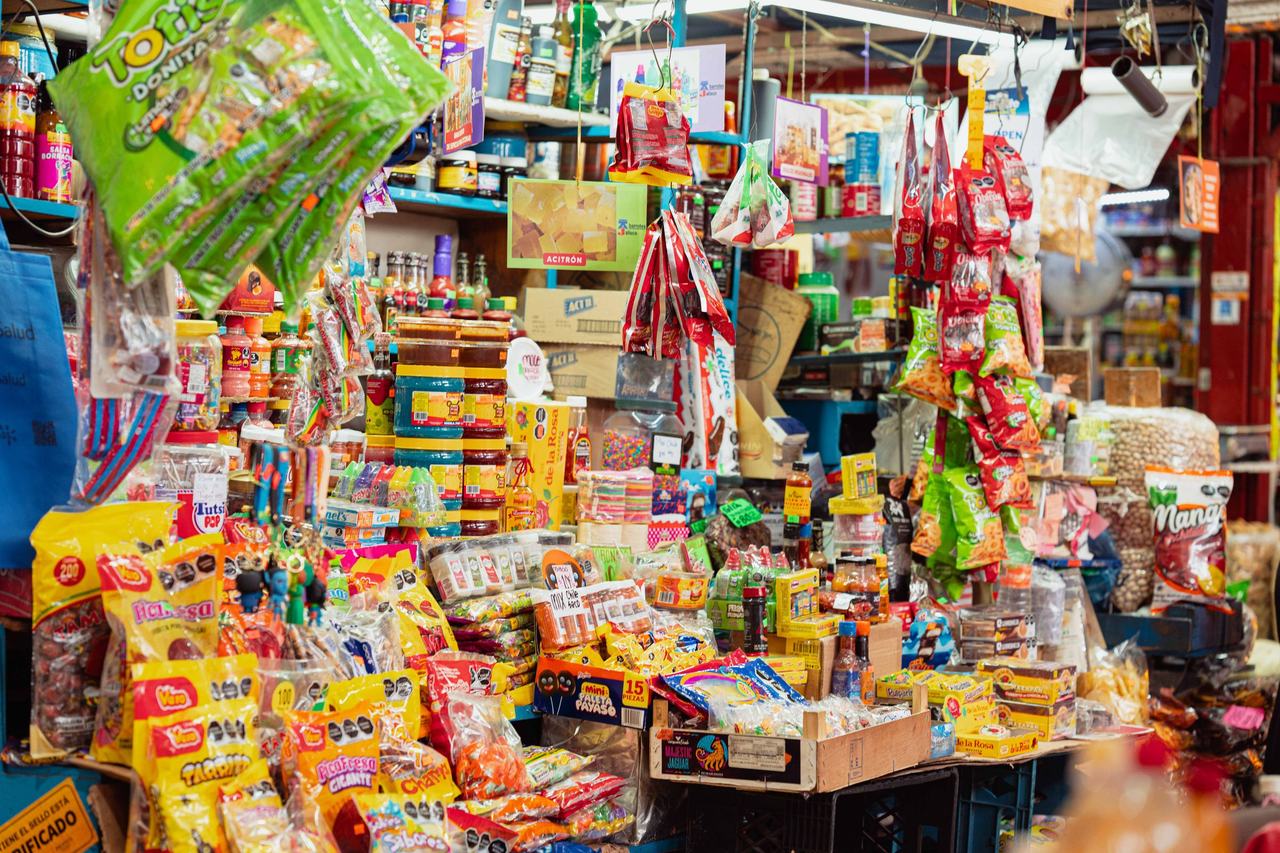
Opening photograph: A stall in Mexico City piled high with bags of Mexican candies and snacks. Photograph by Viridiana Rivera on Pexels. Blog photo credits.