Buying Fruit and Vegetables at a Mexico City Market
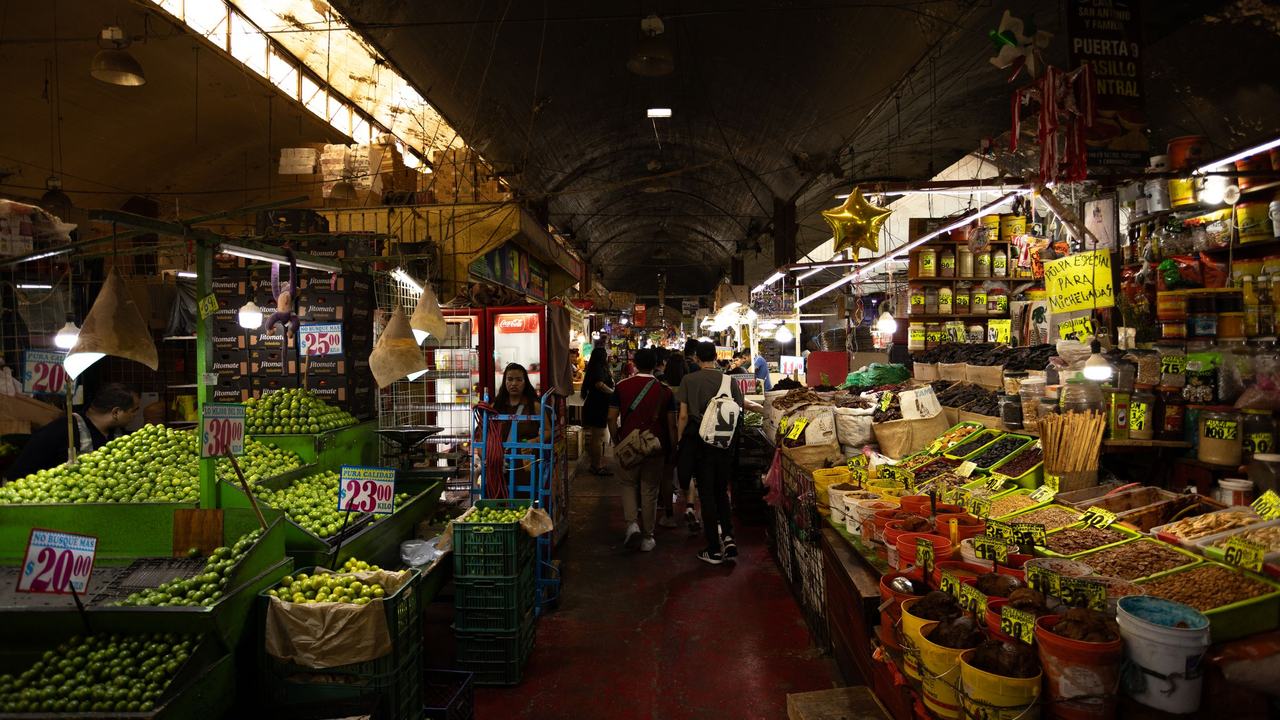
To buy fruit and vegetables at a Mexico City market, ask the price with ¿A cómo...?, as in ¿A cómo están los aguacates?, then order by weight: Medio kilo, por favor or a kilo of something, like Un kilo de jitomate, por favor. Prices at the stall go by the kilo, so the answer comes back as a setenta pesos el kilo, $70 a kilo. When you are done, say sí, es todo and ask the total. Below is a complete visit to Doña Lupe’s fruit stall, in order, with every line recorded from Habla’s numbers unit, including the Mexico City word for a red tomato.
Stepping up to the stall
In the course, the stall owner speaks first. Here is how Doña Lupe welcomes Diego:
Doña Lupe asks
Pásele, joven. ¿Qué le damos?
Step right up, young man. What can I get you?
Pásele is step right up, and joven is young man. ¿Qué le damos? is what can I get you. It is an invitation, not a question you need to answer word for word. Your reply is the first thing you want, or the price question.
Asking the price by the kilo
At a market stall, the price question is not the one you might expect. The course explains:
You ask
¿A cómo están los aguacates?
How much are the avocados?
¿A cómo…? is how the market asks a price, usually by the kilo.
Doña Lupe says
A setenta pesos el kilo.
$70 a kilo.
The course notes that ¿A cómo...? is how the market asks a price, usually by the kilo. ¿A cómo están los aguacates? is how much are the avocados, and a setenta pesos el kilo is $70 a kilo. You can ask about anything on the stall the same way:
You ask
¿A cómo están los mangos?
How much are the mangoes?
Listen for el kilo at the end of the answer. It tells you the number is a price per kilo, not a price per piece. For the other ways to ask a price in Mexico, and when each one fits, see how to ask how much in Spanish.
Ordering a kilo or half a kilo
Once you know the price, you order by weight. The stall owner may ask how much you want:
Doña Lupe asks
¿Cuánto va a querer?
How much would you like?
You say
Medio kilo, por favor.
Half a kilo, please.
¿Cuánto va a querer? is how much would you like? Medio kilo, por favor is half a kilo, please. For a full kilo, put un kilo de in front of the item:
You say
Un kilo de plátano, por favor.
A kilo of bananas, please.
You say
Medio kilo de fresas, por favor.
Half a kilo of strawberries, please.
Un kilo de plátano is a kilo of bananas, and medio kilo de fresas is half a kilo of strawberries. In the course scene, Diego orders the avocados with deme medio kilo, por favor, half a kilo, please, and then adds the tomatoes in the same breath.
Notice that plátano and jitomate stay singular after un kilo de, while fresas is plural. Copying the course lines exactly as they are is the safe way to get this right.
The Mexico City word for a red tomato
This is the word to learn before you go. The course note is short and important:
You say
Un kilo de jitomate, por favor.
A kilo of tomatoes, please.
In Mexico City a red tomato is a jitomate. A tomate is the green tomatillo.
In Mexico City, a red tomato is a jitomate. A tomate is the green tomatillo. So if you ask for tomate expecting red tomatoes for a salad, you may go home with tomatillos. Ask for jitomate and you get what you meant.
More, or that’s all
After each item, the stall owner checks whether you want anything else. These two questions come from Doña Lupe in the role play:
Doña Lupe asks
¿Qué más le damos?
What else can I get you?
Doña Lupe asks
¿Sería todo?
Will that be all?
¿Qué más le damos? is what else can I get you? ¿Sería todo? is will that be all? If you want more, name the next item. If you are finished, say so and ask the price in one line:
You ask
Sí, es todo. ¿Cuánto es?
Yes, that’s all. How much is it?
Sí, es todo. ¿Cuánto es? is yes, that’s all, how much is it? It answers her question and moves straight on to paying.
Paying for everything
With several items on the scale, you want one total. The course question for it:
You ask
¿Cuánto es todo?
How much is it all together?
Doña Lupe says
Son sesenta y cinco pesos.
That’s $65.
¿Cuánto es todo? is how much is it all together. Son sesenta y cinco pesos is that’s $65. The course explanation adds it up: half a kilo of avocados and a kilo of jitomate, sesenta y cinco pesos, $65 in all. Prices take son, as the course notes, so listen for son and then the number. For hearing the numbers on the first try, see understanding prices in pesos.
Then pay. Have cash ready: the course notes that many small places take cash only. Hand it over with aquí tiene, here you go.
The whole visit at a glance
Here is the stall visit in order:
- You hear Pásele and ¿Qué le damos?
- You ask the price: ¿A cómo están los aguacates?
- You hear the price per kilo: a setenta pesos el kilo.
- You order: medio kilo, por favor, or un kilo de jitomate, por favor.
- You hear ¿Qué más le damos? or ¿Sería todo?, and answer sí, es todo.
- You ask ¿Cuánto es todo? and pay.
Every line on this page is a recording from Habla’s course. In the app you hear a line, say it out loud, and see what it heard. For more of what stall owners say to you, see what Mexican vendors say to you.
Every line on this page
The 14 lines above, in order, for one last listen before you go. Each one is the recording from the Habla course.
Pásele, joven. ¿Qué le damos?Step right up, young man. What can I get you?
¿A cómo están los aguacates?How much are the avocados?
A setenta pesos el kilo.$70 a kilo.
¿A cómo están los mangos?How much are the mangoes?
¿Cuánto va a querer?How much would you like?
Medio kilo, por favor.Half a kilo, please.
Un kilo de plátano, por favor.A kilo of bananas, please.
Medio kilo de fresas, por favor.Half a kilo of strawberries, please.
Un kilo de jitomate, por favor.A kilo of tomatoes, please.
¿Qué más le damos?What else can I get you?
¿Sería todo?Will that be all?
Sí, es todo. ¿Cuánto es?Yes, that’s all. How much is it?
¿Cuánto es todo?How much is it all together?
Son sesenta y cinco pesos.That’s $65.
Common questions
What is the difference between jitomate and tomate in Mexico?
The course notes that in Mexico City a red tomato is a jitomate, and a tomate is the green tomatillo. To buy red tomatoes, ask for Un kilo de jitomate, por favor.
How do you ask the price at a Mexican market?
Use ¿A cómo...?, as in ¿A cómo están los aguacates? The course notes that this is how the market asks a price, usually by the kilo.
How do you say “half a kilo” in Spanish?
Say medio kilo, as in Medio kilo, por favor. For a full kilo, use un kilo de and the item.
What does pásele mean at a market?
It means step right up. Doña Lupe says it in the course to welcome Diego to her stall: Pásele, joven, step right up, young man.
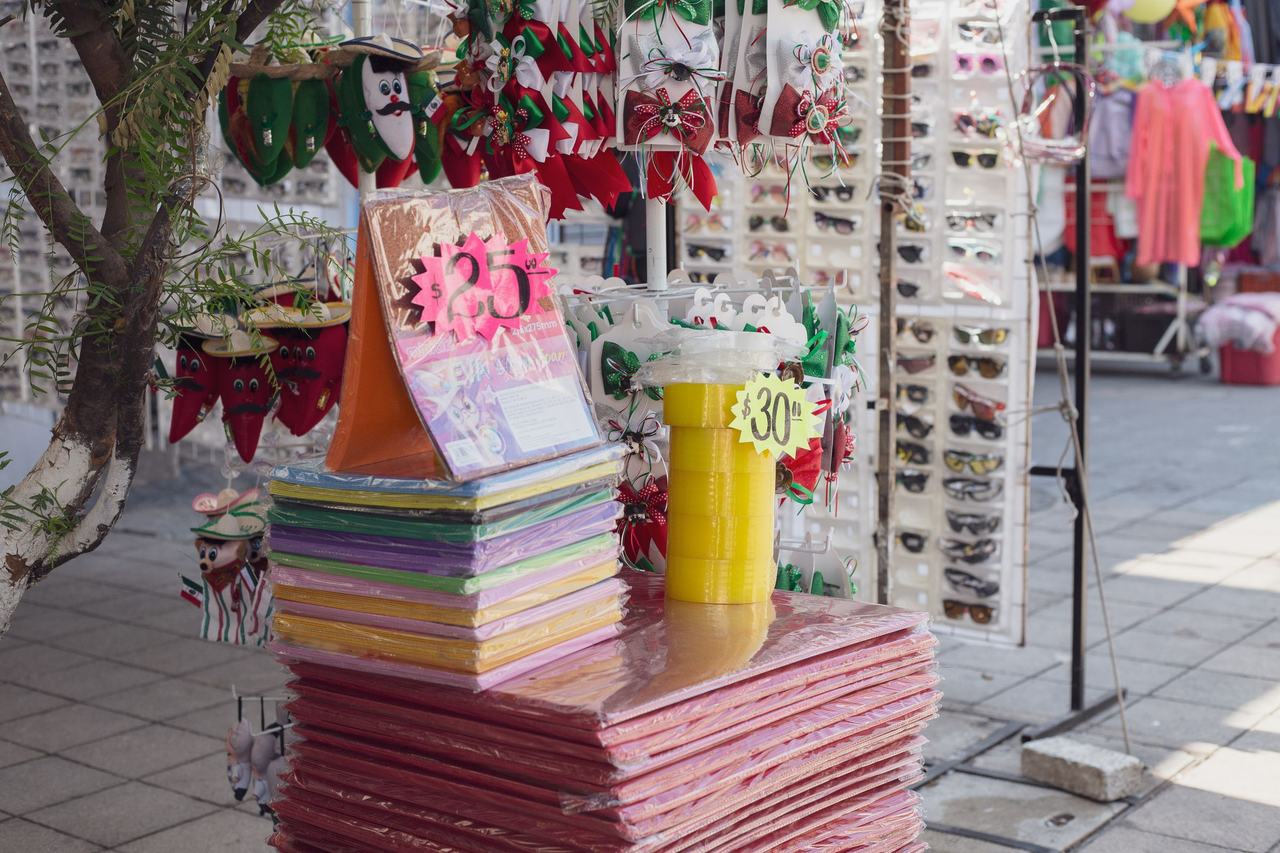
Opening photograph: A street market stall in Mexico City selling colored paper, sunglasses and festive decorations. Photograph by Noemí Jiménez on Pexels. Blog photo credits.