How to Take a Taxi in Tokyo in Japanese
To take a taxi in Tokyo, get in through the left rear door, which opens and closes by itself, and when the driver asks どちらまでですか? (where to?), name the place and add made onegai shimasu: 神保町までお願いします (to Jimbocho, please). If the place is hard to say, show the address on your phone with この住所までお願いします. When you arrive, say ここで大丈夫です (here is fine) and pay with カードでお願いします (by card, please). Below is one whole ride in order, late at night in the rain, with recordings from Koe’s getting-around unit and Takeda-san, the taxi driver.
Getting in: the door that opens by itself
In Koe’s scene, you and your colleague flag a taxi, and its left rear door swings open by itself. The course note is short and practical: a taxi’s left rear door opens and closes by itself, so get in and out on that side, and leave the door to the driver. Do not pull it shut behind you.
Once you are seated, the driver asks the first question:
Takeda-san, the taxi driver, asks
どちらまでですか?
Dochira made desu ka?
Where to?
どちらまでですか is where to. Your answer is the place, made, and a please:
You say
神保町までお願いします。
Jinbōchō made onegai shimasu.
To Jimbocho, please.
The driver asks どちらまでですか?, where to. Answer with the place and まで; the question itself is his.
The note makes a point worth remembering. The question どちらまでですか is the driver’s. Your part is the place and まで, to, as far as. You never need to repeat his question back.
The driver confirms and asks one more thing:
Takeda-san, the taxi driver, says
かしこまりました。シートベルトをお願いします。
Kashikomarimashita. Shītoberuto o onegai shimasu.
Certainly. Your seatbelt, please.
かしこまりました is certainly, the staff word for accepting a request. The second sentence asks for your seatbelt. A nod, and buckling up, is the whole answer.
If either question goes by too fast, it is fine to ask again:
You say
すみません、もう一度お願いします。
Sumimasen, mō ichido onegai shimasu.
Sorry, could you say that again?
もう一回 is a little more casual, and fine too.
Showing an address instead
Many places you want to go are not famous enough to name. A restaurant, a friend’s apartment, a small hotel. For those, show the address:
You say
この住所までお願いします。
Kono jūsho made onegai shimasu.
To this address, please.
Showing the address on your phone. Drivers put it into the navigation.
この住所 is this address. Hold up your phone as you say it. The course notes that drivers put the address into the navigation, so you do not need to read it aloud or know the route.
If you would rather name somewhere nearby, a station or a landmark you can say, the pattern is the same as before: the place, then まで, then a please. You can then guide the driver for the last stretch with the stopping lines below.
How long will it take
Once you are moving, you may want to know how long the ride is. One question covers it:
You ask
どのくらいかかりますか?
Donokurai kakarimasu ka?
How long will it take?
かかります is takes, for time and for money alike.
The note adds a useful detail: かかります is takes, for time and for money alike. In the course, the driver answers with time:
Takeda-san, the taxi driver, says
20分ぐらいですね。
Nijuppun gurai desu ne.
About twenty minutes.
About twenty minutes. ぐらい is about, the same word you hear when someone gives walking directions.
Telling the driver where to stop
As you get close, the driver may ask whether this is the spot:
Takeda-san, the taxi driver, asks
この辺でよろしいですか?
Kono hen de yoroshii desu ka?
Is around here all right?
この辺 is around here, and よろしいですか is the polite is it all right. If it is, answer with the line the course teaches for exactly this:
You say
ここで大丈夫です。
Koko de daijōbu desu.
Here is fine.
A taxi’s left rear door opens and closes by itself. Get in and out on that side, and leave the door to the driver.
If you would rather stop somewhere specific, point ahead and use this:
You say
あの信号の手前で止めてください。
Ano shingō no temae de tomete kudasai.
Please stop just before that light.
The course translates it as please stop just before that light. 信号 is the traffic light, the same word you hear in directions on the street. Point as you say it, so the driver knows which light you mean.
Paying and getting out
The fare comes as a number and です:
Takeda-san, the taxi driver, says
2,400円です。
Nisen'yonhyakuen desu.
That’s ¥2,400.
If you want to pay by card, say so:
You say
カードでお願いします。
Kādo de onegai shimasu.
By card, please.
There is no tip to add. The course says it plainly in a note in its izakaya lesson: no tipping anywhere in Japan, taxis and hotels included.
As you get out, the driver says one last thing:
Takeda-san, the taxi driver, says
お忘れ物のないよう、ご注意ください。
Owasuremono no nai yō, gochūi kudasai.
Please make sure you have everything.
Please make sure you have everything. It ends in ご注意ください, please be careful, the same ending you hear on station platforms. Check the seat for your phone, then step out through the same left door and let it close by itself.
Getting a taxi called for you
For an early start, you do not need to find a taxi on the street. In Koe’s hotel unit, you ask the front desk:
You ask
明日の朝、タクシーを呼んでもらえますか?
Ashita no asa, takushī o yonde moraemasu ka?
Could you call me a taxi tomorrow morning?
moraemasu ka is could you, a soft way to ask someone to do something for you. The clerk replies that a taxi will be there at six. More front desk requests are in our post on hotel front desk Japanese. If you are heading home late, see also what to ask before the last train.
The whole ride in order
- Get in through the left rear door. Leave the door to the driver.
- The driver asks where to. Say 神保町までお願いします with your place, or この住所までお願いします and show your phone.
- Buckle your seatbelt when he asks.
- If you want to know, ask どのくらいかかりますか?.
- Near the end: ここで大丈夫です, or あの信号の手前で止めてください.
- Pay with カードでお願いします and check you have everything.
That is five or six short lines from you. The driver’s lines are the part to practice, because they are polite and come while you are watching the meter or the street. Every line on this page is a recording from Koe’s course, and the app has you hear each one, say it out loud, and then shows you what it heard.
Every line on this page
The 14 lines above, in order, for one last listen before you go. Each one is the recording from the Koe course.
どちらまでですか?Dochira made desu ka?Where to?
神保町までお願いします。Jinbōchō made onegai shimasu.To Jimbocho, please.
かしこまりました。シートベルトをお願いします。Kashikomarimashita. Shītoberuto o onegai shimasu.Certainly. Your seatbelt, please.
すみません、もう一度お願いします。Sumimasen, mō ichido onegai shimasu.Sorry, could you say that again?
この住所までお願いします。Kono jūsho made onegai shimasu.To this address, please.
どのくらいかかりますか?Donokurai kakarimasu ka?How long will it take?
20分ぐらいですね。Nijuppun gurai desu ne.About twenty minutes.
この辺でよろしいですか?Kono hen de yoroshii desu ka?Is around here all right?
ここで大丈夫です。Koko de daijōbu desu.Here is fine.
あの信号の手前で止めてください。Ano shingō no temae de tomete kudasai.Please stop just before that light.
2,400円です。Nisen'yonhyakuen desu.That’s ¥2,400.
カードでお願いします。Kādo de onegai shimasu.By card, please.
お忘れ物のないよう、ご注意ください。Owasuremono no nai yō, gochūi kudasai.Please make sure you have everything.
明日の朝、タクシーを呼んでもらえますか?Ashita no asa, takushī o yonde moraemasu ka?Could you call me a taxi tomorrow morning?
Common questions
How do you tell a taxi driver where to go in Japanese?
Say the place, then made onegai shimasu: 神保町までお願いします, to Jimbocho, please. If the name is hard, show the address and say この住所までお願いします. The course notes that drivers put it into the navigation.
Do you tip taxi drivers in Tokyo?
No. A course note says there is no tipping anywhere in Japan, taxis and hotels included.
Do I open and close the taxi door myself in Japan?
No. The course notes that a taxi’s left rear door opens and closes by itself. Get in and out on that side, and leave the door to the driver.
How do you say “stop here” in a Japanese taxi?
Say ここで大丈夫です, here is fine. To stop at a particular spot, the course teaches あの信号の手前で止めてください, please stop just before that light.
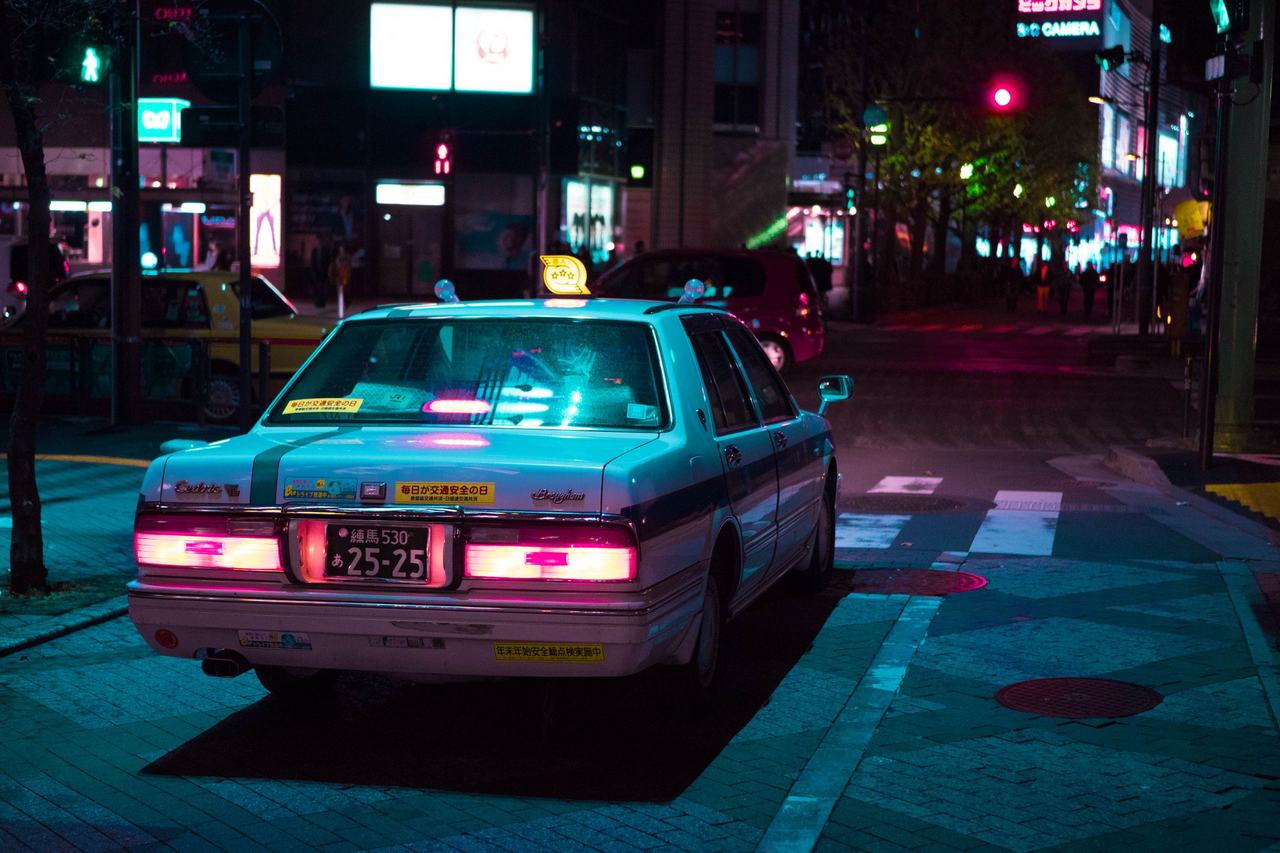
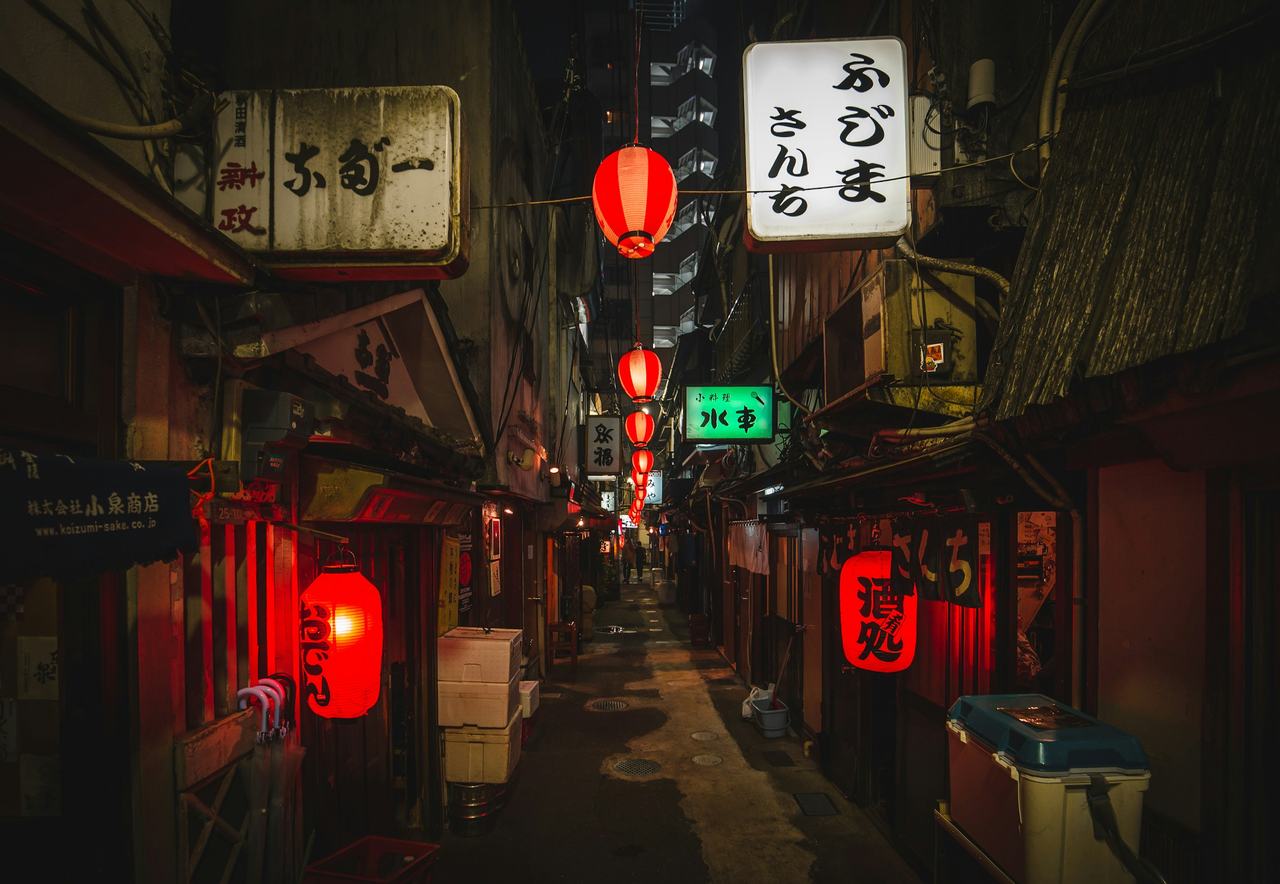
Opening photograph: A taxi with glowing tail lights waits at a corner on a neon-lit Tokyo street at night. Photograph by Alan W on Pexels. Blog photo credits.