Hotel Front Desk Japanese: Requests and Checkout
To report a problem at a Japanese hotel, say what is wrong and let the sentence trail off: エアコンがつかないんですが (the air conditioner won’t come on). The course notes that ending on が states the problem and leaves the request unsaid, and the staff take it from there. To ask for something, use moraemasu ka, could you: タオルをもう1枚もらえますか? (could I have one more towel?). When you leave, say チェックアウトをお願いします (I’d like to check out) and お世話になりました (thank you for everything). Below are those lines and the clerk’s answers, with recordings from Koe’s hotel unit, over two nights at a small hotel near Ueno.
Asking for something you need
Start with the simplest kind of visit, a small request. The course’s example is a towel:
You ask
タオルをもう1枚もらえますか?
Taoru o mō ichimai moraemasu ka?
Could I have one more towel?
枚 counts flat things: towels, sheets, tickets.
もう 1枚 is one more, and the note explains the counter: 枚 counts flat things, towels, sheets, tickets. The ending moraemasu ka is could you, and the course explains elsewhere that this asks someone to do something for you, a notch softer than してください. You can reuse the shape for anything the desk might hand you.
The answer you hope for is short. In Koe’s scene, Maeda-san, at the front desk, says:
Maeda-san, at the front desk, says
すぐお持ちします。
Sugu omochi shimasu.
I’ll bring it right away.
すぐ is right away. お持ちします is the staff’s polite way to say they will bring it. A thank-you is all you need back.
If the clerk offers you something instead, such as help or something to take, accept it with the line the course teaches for any offer:
You say
はい、お願いします。
Hai, onegai shimasu.
Yes, please.
Accepting an offer, of help or of something to take.
To turn an offer down, the soft no from the course is いえ、大丈夫です, no, thank you.
Reporting a problem: the air conditioner
Problems work differently from requests. You do not need to ask for anything. You just say what is wrong:
You say
エアコンがつかないんですが。
Eakon ga tsukanain desu ga.
The air conditioner won’t come on.
Ending on が states the problem and leaves the request unsaid: the staff take it from there.
The course note is the whole technique: ending on が states the problem and leaves the request unsaid, and the staff take it from there. You do not need to know the words for fix or send someone. The same pattern, a problem plus んですが, appears in the course’s shopping unit for a missing price tag.
In the course, the reply is this one:
Maeda-san, at the front desk, says
確認いたしますので、少々お待ちください。
Kakunin itashimasu node, shōshō omachi kudasai.
Let me check. One moment, please.
確認いたします is let me check, and 少々お待ちください is one moment, please. Then wait while the clerk looks into it.
Locked out: the key card left in the room
The other classic problem has its own line:
You say
カードキーを部屋に忘れてしまいました。
Kādokī o heya ni wasurete shimaimashita.
I’ve left my key card in the room.
しまいました adds a note of regret: I went and did it.
カードキー is the key card, and 部屋 is the room. The note explains the ending: しまいました adds a note of regret, I went and did it. It tells the clerk you know it was a slip. Expect a reply like the let me check above.
If the clerk asks for your room number, say it the way you heard it at check-in. In the course, zero in a room number is often read まる. Our post on checking in to a hotel in Japanese covers that.
Asking for a good place to eat nearby
The front desk can also point you to dinner. Ask:
You ask
近くにおいしいお店はありますか?
Chikaku ni oishii omise wa arimasu ka?
Is there a good place to eat nearby?
近くに is nearby, おいしい is good, delicious, and お店 is a place, a restaurant or shop. If the clerk recommends somewhere and you want to book, our post on booking a restaurant by phone in Japanese has the call.
Booking an early taxi
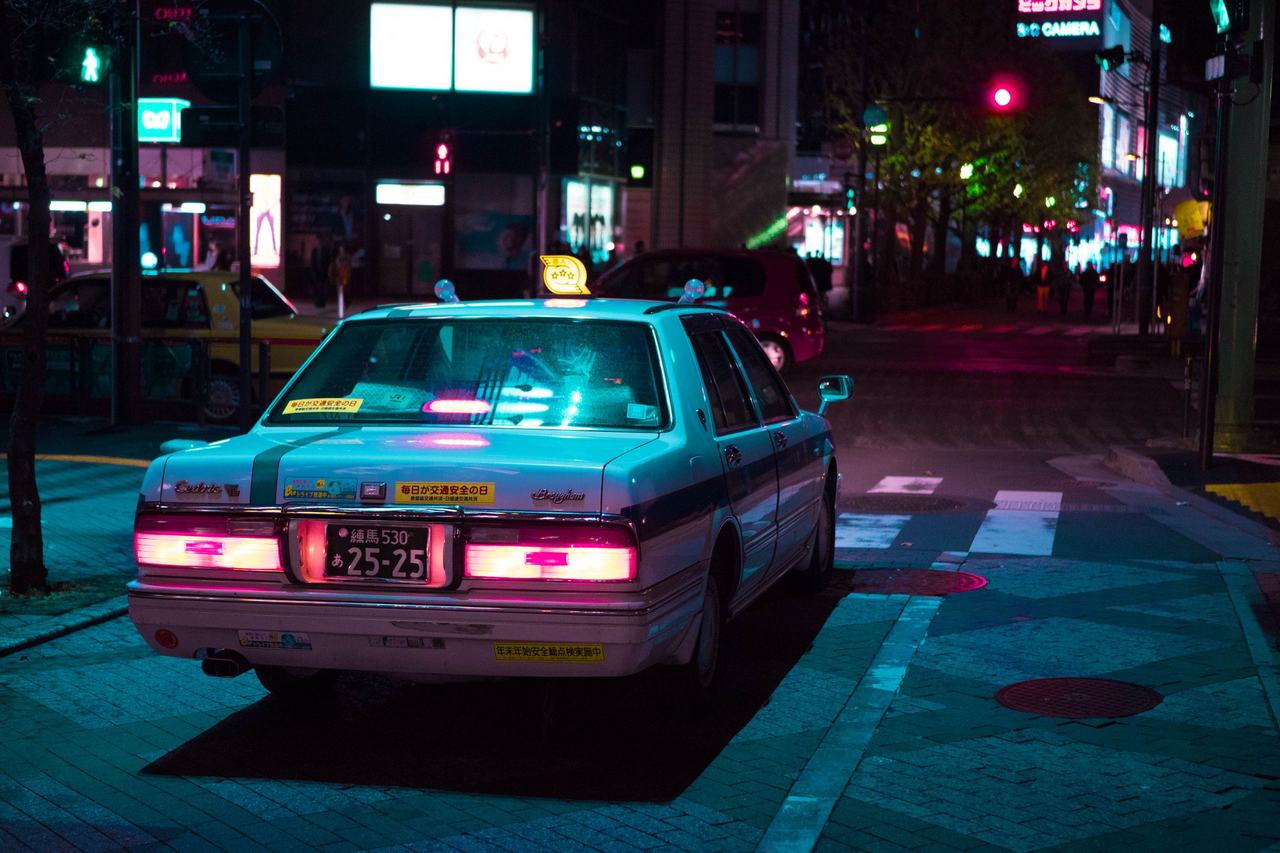
For an early train or flight, ask the desk the night before:
You ask
明日の朝、タクシーを呼んでもらえますか?
Ashita no asa, takushī o yonde moraemasu ka?
Could you call me a taxi tomorrow morning?
The clerk confirms the time. In the course the answer is six:
Maeda-san, at the front desk, says
6時にタクシーをお呼びしておきます。
Rokuji ni takushī o oyobi shite okimasu.
I’ll have a taxi here for you at six.
The course explains that お呼び here is the staff’s humble form for their own action, and that your part is just お願いします. If you are the one who names the time, this is the line:
You say
6時にお願いします。
Rokuji ni onegai shimasu.
For six, please.
Swap the number for your own hour.
Checking out and saying thank you
On your last morning, the desk is the last stop. If you are not sure how long you have, ask チェックアウトは何時ですか?, what time is checkout, the evening before. When it is time, the request is short:
You say
チェックアウトをお願いします。
Chekkuauto o onegai shimasu.
I’d like to check out, please.
If your train or flight is later, ask the desk to keep your luggage for the day:
You ask
荷物を預かってもらえますか?
Nimotsu o azukatte moraemasu ka?
Could you hold my bags?
And then the line that closes the stay, the one the course teaches for leaving:
You say
お世話になりました。
Osewa ni narimashita.
Thank you for everything.
Said as you leave a place that looked after you. It closes what 今日からお世話になります opened on your first day.
The note explains why it fits: it is said as you leave a place that looked after you, and it closes what 今日からお世話になります, I’ll be in your care from today, opened on the first day. There is no tip to add either: a course note says there is no tipping anywhere in Japan, taxis and hotels included.
Two nights at the desk, in brief
- Something you need: タオルをもう1枚もらえますか?, or the same shape with any item.
- Something wrong: エアコンがつかないんですが, a problem plus んですが.
- Locked out: カードキーを部屋に忘れてしまいました.
- A recommendation: 近くにおいしいお店はありますか?.
- An early taxi: 明日の朝、タクシーを呼んでもらえますか?, then 6時にお願いします.
- Leaving: チェックアウトをお願いします, 荷物を預かってもらえますか? if you need it, and お世話になりました.
Every line on this page is a recording from Koe’s course, and in the app you hear each one, say it out loud, and see what it heard. The clerk’s let me check, one moment please, is the line to know best, because it is the reply you are likely to hear whenever something needs checking.
Every line on this page
The 13 lines above, in order, for one last listen before you go. Each one is the recording from the Koe course.
タオルをもう1枚もらえますか?Taoru o mō ichimai moraemasu ka?Could I have one more towel?
すぐお持ちします。Sugu omochi shimasu.I’ll bring it right away.
はい、お願いします。Hai, onegai shimasu.Yes, please.
エアコンがつかないんですが。Eakon ga tsukanain desu ga.The air conditioner won’t come on.
確認いたしますので、少々お待ちください。Kakunin itashimasu node, shōshō omachi kudasai.Let me check. One moment, please.
カードキーを部屋に忘れてしまいました。Kādokī o heya ni wasurete shimaimashita.I’ve left my key card in the room.
近くにおいしいお店はありますか?Chikaku ni oishii omise wa arimasu ka?Is there a good place to eat nearby?
明日の朝、タクシーを呼んでもらえますか?Ashita no asa, takushī o yonde moraemasu ka?Could you call me a taxi tomorrow morning?
6時にタクシーをお呼びしておきます。Rokuji ni takushī o oyobi shite okimasu.I’ll have a taxi here for you at six.
6時にお願いします。Rokuji ni onegai shimasu.For six, please.
チェックアウトをお願いします。Chekkuauto o onegai shimasu.I’d like to check out, please.
荷物を預かってもらえますか?Nimotsu o azukatte moraemasu ka?Could you hold my bags?
お世話になりました。Osewa ni narimashita.Thank you for everything.
Common questions
How do you say “the air conditioner isn’t working” in Japanese?
Say エアコンがつかないんですが, the air conditioner won’t come on. The course notes that ending on が states the problem and leaves the request unsaid, and the staff take it from there.
What do I say if I’m locked out of my hotel room in Japan?
Go to the front desk and say カードキーを部屋に忘れてしまいました, I’ve left my key card in the room. In the course, the reply you hear at the desk is 確認いたしますので、少々お待ちください, let me check, one moment, please.
What does osewa ni narimashita mean?
お世話になりました means thank you for everything. The course notes it is said as you leave a place that looked after you, such as a hotel.
Do you tip at hotels in Japan?
No. A course note says there is no tipping anywhere in Japan, taxis and hotels included.
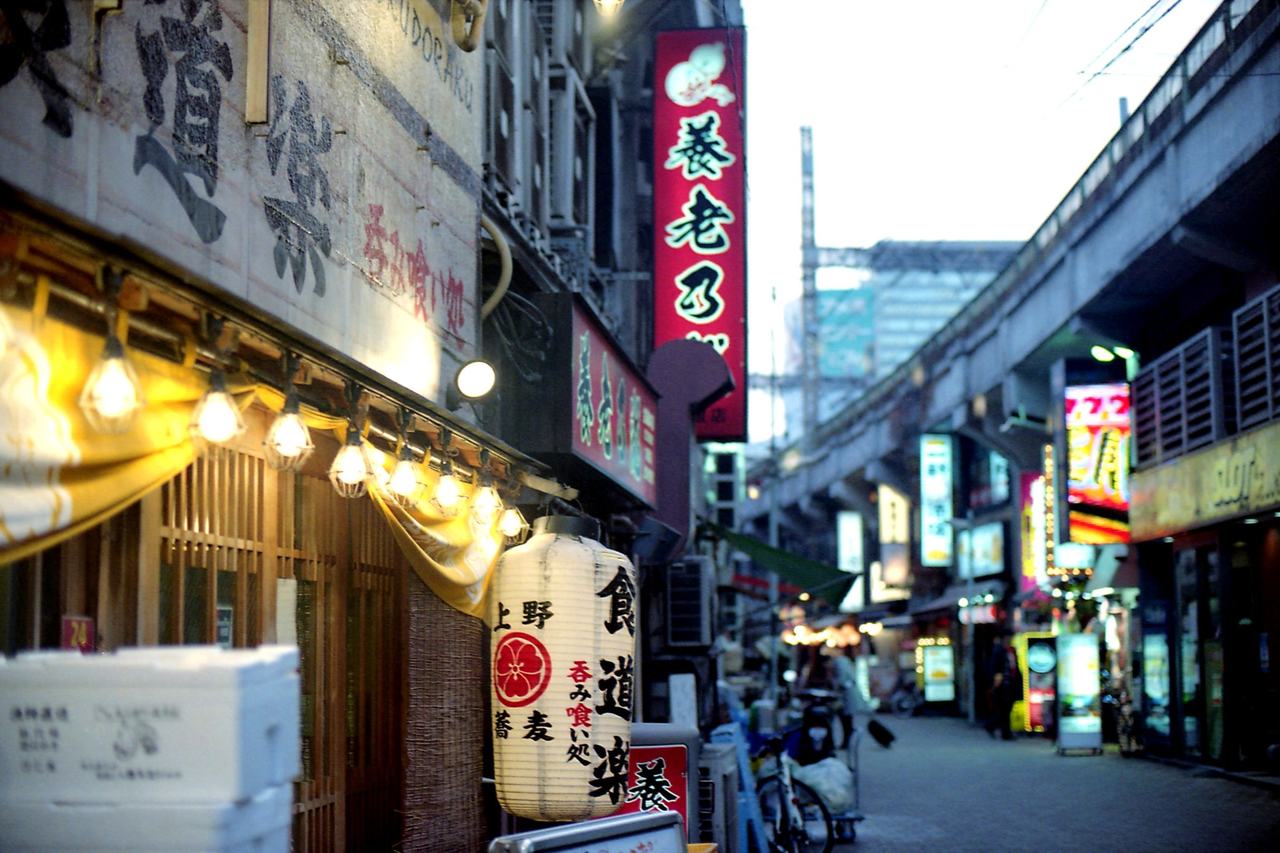
Opening photograph: Lanterns and lit signs line a narrow street beside an elevated railway in Tokyo at dusk. Photograph by Alan Wang on Pexels. Blog photo credits.