Last Train in Tokyo: What to Ask Before It Leaves
Tokyo’s trains stop between midnight and about one in the morning, as the course notes, and the last train home is called the 終電. The exact time depends on your line and your station, so ask: 終電は何時ですか? (what time is the last train?). Ask early in the evening, then plan backward from the answer: check how late the place is open with 何時までやってますか? and when last order is with ラストオーダーは何時ですか?. If the train has already gone, a taxi line like 神保町までお願いします gets you home. Below is a whole night in order, with recordings from Koe’s yakitori counter under the tracks in Yurakucho.
When Tokyo’s last trains run
The course note on the key question gives you the window:
You ask
終電は何時ですか?
Shūden wa nanji desu ka?
What time is the last train?
Tokyo’s trains stop between midnight and about one. 終電 is the last one home.
終電 is the last train home. Since the time is different for every line and every station, the answer you need is for your own trip. Ask it before the evening gets going, while you can still plan around it. The person to ask is whoever knows your route: a coworker, a friend, or station staff before you head out.
Once you have the time, the rest of the night is a countdown. The next three questions help you keep it.
Keeping track of the time
At a busy counter, time goes fast. In Koe’s scene, your coworker notices first:
Mori-san, a coworker, says
あ、もう9時ですね。
A, mō kuji desu ne.
Oh, it’s already nine.
もう is already, and 9時 is nine o’clock. You can say the same thing yourself later in the evening:
You say
もう10時ですね。
Mō jūji desu ne.
It’s already ten.
And if you have lost track entirely, just ask:
You ask
今、何時ですか?
Ima, nanji desu ka?
What time is it now?
今 is now, and 何時 is what time. The answer comes back as a number and 時, o’clock, and a half hour adds 半. These two lines from the course show both:
You say
7時です。
Shichiji desu.
It’s seven o’clock.
しちじ is the standard reading. You’ll also hear 7時, mostly on the phone or somewhere noisy, so it isn’t mistaken for 1時, and it’s accepted here. Four o’clock is only 4時, and nine o’clock only 9時.
You say
7時半です。
Shichijihan desu.
It’s half past seven.
半 is half, after the hour. 7時半 is accepted too.
The notes are worth reading for listening, not just speaking. Seven has two readings, and you will hear ななじ on the phone or somewhere noisy, so it is not mistaken for one o’clock. Four o’clock is only よじ, and nine o’clock is only くじ. At a loud counter late at night, knowing which sound to expect makes a time much easier to catch, and the time of your last train is one you do not want to mishear.
How late the place is open
The second question is about the place you are sitting in. The course teaches the everyday way to ask it:
You ask
何時までやってますか?
Nanji made yattemasu ka?
How late are you open?
やってます is the everyday way to say a place is open.
やってます, the note says, is the everyday way to say a place is open, and まで is until. In Koe’s scene, Sakai-san, the yakitori cook, answers:
Sakai-san, the yakitori cook, says
11時までです。
Jūichiji made desu.
Until eleven.
Until eleven. Now you know two times: when the place closes and when your train leaves. The earlier one is the one that matters.
Last order comes before closing
Closing time is not the last moment you can order. The course note explains:
You ask
ラストオーダーは何時ですか?
Rasuto ōdā wa nanji desu ka?
When is last order?
Restaurants and bars stop taking orders a little before they close: last call.
ラストオーダー is last order, and it is easy to catch once you know it. In the course, the cook gives it right after closing time:
Sakai-san, the yakitori cook, says
ラストオーダーは10時半です。
Rasuto ōdā wa jūjihan desu.
Last order is at ten thirty.
10時半 is ten thirty. 半 is half, after the hour. So at this counter you can order until ten thirty and stay until eleven. If your last train is earlier than that, the train wins.
When you are ready to go, ask for the check. This is the line the course teaches for it:
You say
すみません、お会計お願いします。
Sumimasen, okaikei onegai shimasu.
Excuse me, the check, please.
If the last train has already gone
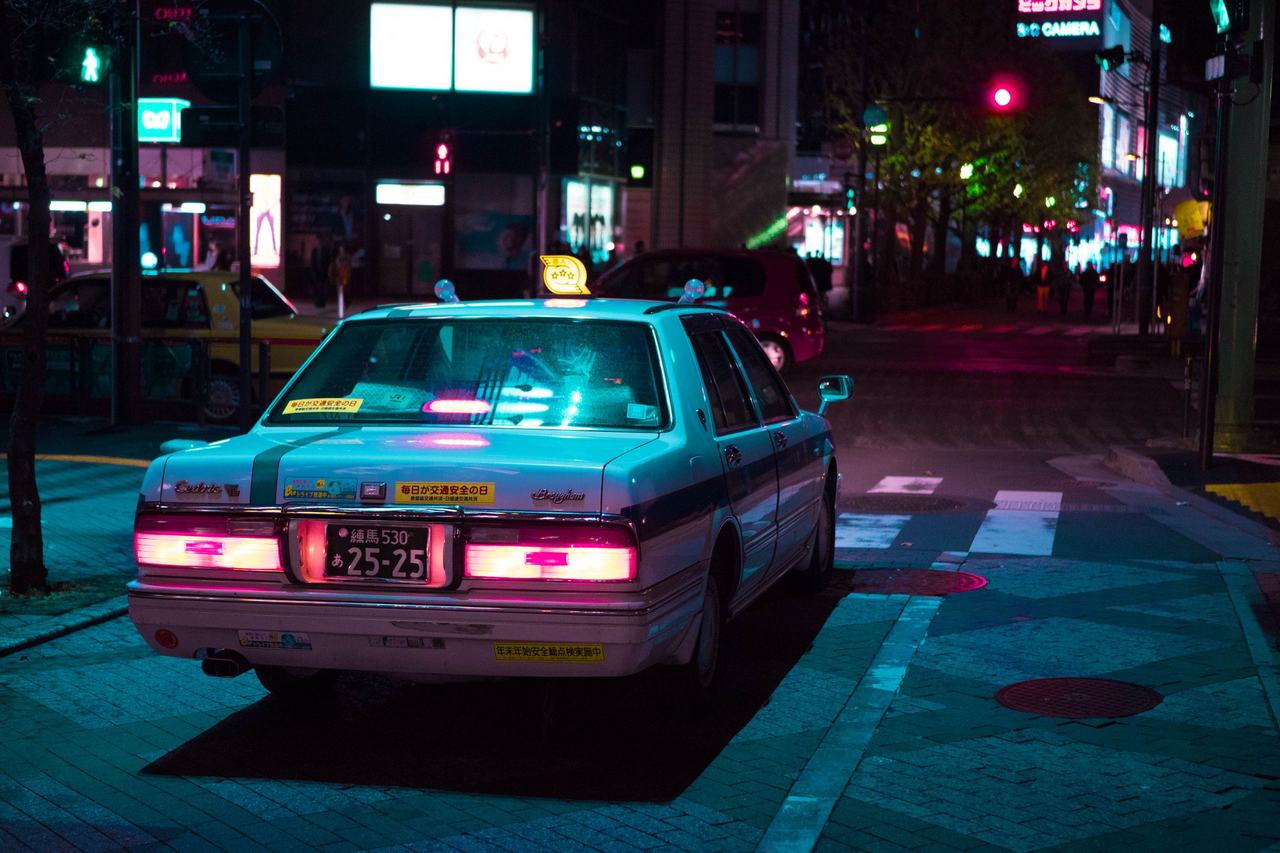
Sometimes the night runs long. If the 終電 has left, one way home is a taxi. In Koe’s taxi scene, the driver opens with one question:
Takeda-san, the taxi driver, asks
どちらまでですか?
Dochira made desu ka?
Where to?
Answer with your destination and made onegai shimasu, or show an address on your phone:
You say
神保町までお願いします。
Jinbōchō made onegai shimasu.
To Jimbocho, please.
The driver asks どちらまでですか?, where to. Answer with the place and まで; the question itself is his.
You say
この住所までお願いします。
Kono jūsho made onegai shimasu.
To this address, please.
Showing the address on your phone. Drivers put it into the navigation.
If you want to know how long the ride is, ask:
You ask
どのくらいかかりますか?
Donokurai kakarimasu ka?
How long will it take?
かかります is takes, for time and for money alike.
The note adds that かかります is takes, for time and for money alike. For the whole ride, from the door that opens by itself to paying, see how to take a taxi in Tokyo. And if you are planning a whole evening around a time, our post on asking opening hours and the time in Japanese goes further.
A night out, planned backward
Here is how the evening can run, with the last train in mind from the start:
- Before you go out, ask 終電は何時ですか? for your station.
- When you sit down, ask 何時までやってますか? and listen for the closing time.
- Ask ラストオーダーは何時ですか? and note the time.
- Check the time now and then with 今、何時ですか?, or say もう10時ですね when it is getting late.
- Leave enough time to get to the station, ask for the check with すみません、お会計お願いします, and go.
- If you miss it anyway: a taxi, and 神保町までお願いします with your own destination.
The questions are short and use the same few words: 何時, what time, and まで, until. The answers are the hard part, because they come as numbers at a noisy counter. Every line on this page is a recording from Koe’s course. In the app you hear each one, say it out loud, and see what it heard. Play the cook’s two answers a few times, until “until eleven” and “last order at ten thirty” are clear the first time you hear them.
Every line on this page
The 15 lines above, in order, for one last listen before you go. Each one is the recording from the Koe course.
終電は何時ですか?Shūden wa nanji desu ka?What time is the last train?
あ、もう9時ですね。A, mō kuji desu ne.Oh, it’s already nine.
もう10時ですね。Mō jūji desu ne.It’s already ten.
今、何時ですか?Ima, nanji desu ka?What time is it now?
7時です。Shichiji desu.It’s seven o’clock.
7時半です。Shichijihan desu.It’s half past seven.
何時までやってますか?Nanji made yattemasu ka?How late are you open?
11時までです。Jūichiji made desu.Until eleven.
ラストオーダーは何時ですか?Rasuto ōdā wa nanji desu ka?When is last order?
ラストオーダーは10時半です。Rasuto ōdā wa jūjihan desu.Last order is at ten thirty.
すみません、お会計お願いします。Sumimasen, okaikei onegai shimasu.Excuse me, the check, please.
どちらまでですか?Dochira made desu ka?Where to?
神保町までお願いします。Jinbōchō made onegai shimasu.To Jimbocho, please.
この住所までお願いします。Kono jūsho made onegai shimasu.To this address, please.
どのくらいかかりますか?Donokurai kakarimasu ka?How long will it take?
Common questions
What time is the last train in Tokyo?
The course notes that Tokyo’s trains stop between midnight and about one. The exact time depends on your line and station, so ask 終電は何時ですか?, what time is the last train, before your evening starts.
How do you say “last train” in Japanese?
The last train home is 終電 (shūden). To ask when it is, say 終電は何時ですか?.
What does “last order” mean in a Japanese restaurant?
Restaurants and bars stop taking orders a little before they close: last call. The word is ラストオーダー, and you ask about it with ラストオーダーは何時ですか?. In the course, last order is at ten thirty and the counter closes at eleven.
What should I do if I miss the last train in Tokyo?
A taxi is one way home. When the driver asks どちらまでですか?, where to, say your destination plus made onegai shimasu, as in 神保町までお願いします, or show the address with この住所までお願いします.
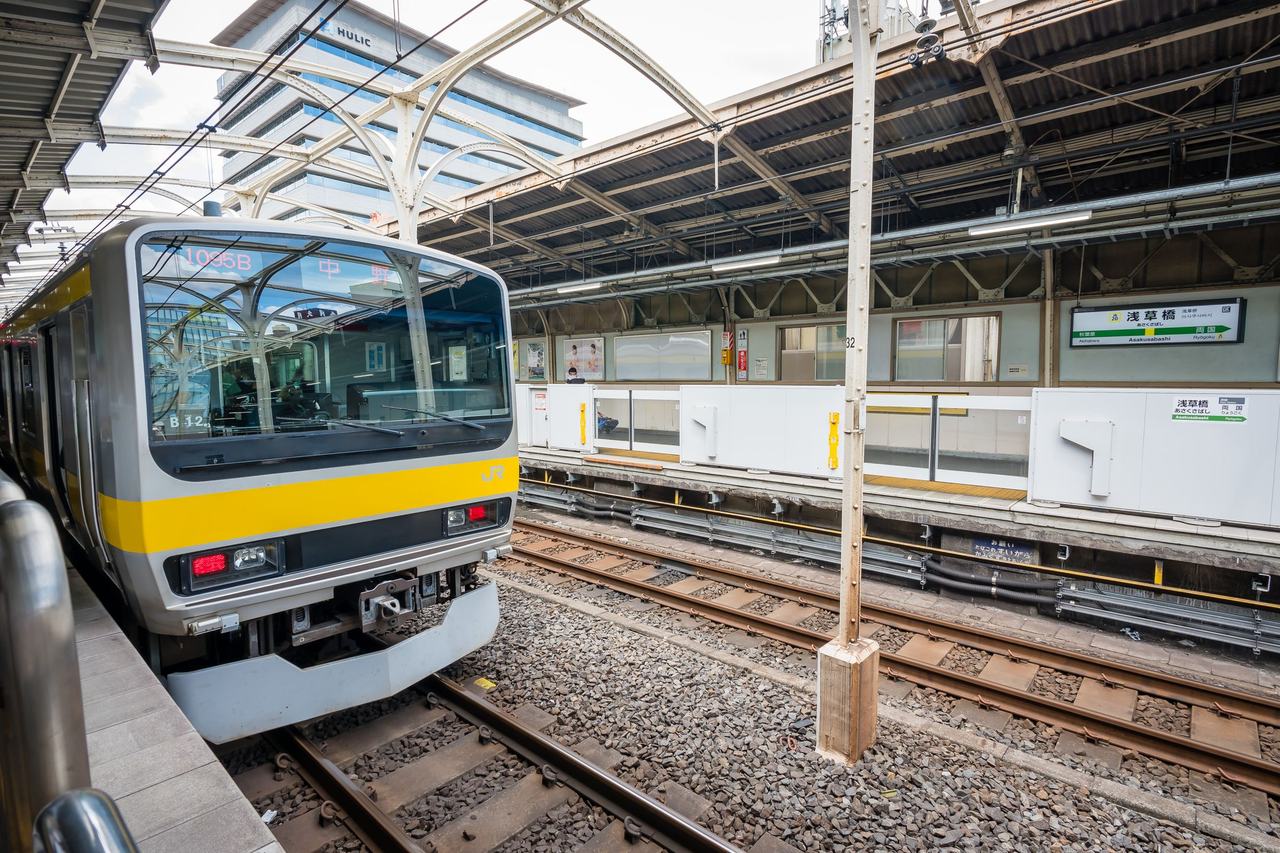
Opening photograph: A silver commuter train with a yellow stripe waits at an open-air station platform in Tokyo. Photograph by Valent Lau on Pexels. Blog photo credits.