How to Check In to a Hotel in Japanese
To check in to a hotel in Japanese, walk up to the desk and say チェックインをお願いします (I’d like to check in, please), or give your name the way the course does: 予約しているブラウンです (I have a reservation, the name is Brown). The clerk then asks for your passport, asks you to fill in a form, and tells you your room number and breakfast hours. Your lines are short. The clerk’s are formal and polite, and that is where it is easy to get lost. Below is the whole check-in in order, with recordings from Koe’s hotel unit, at the narrow front desk of a small hotel on a quiet street near Ueno.
At the desk: checking in and giving your name
You can open with the plain request:
You say
チェックインをお願いします。
Chekkuin o onegai shimasu.
I’d like to check in, please.
A hotel must see the passport of a guest who doesn’t live in Japan, and it usually copies it. As a visitor, you’ll be asked at every check-in, and handing it over is routine.
チェックイン is the English check-in, so it is easy to say and easy for the clerk to understand. The note under it is about passports, and it matters in the next step.
In Koe’s scene, the clerk speaks first. Maeda-san, at the front desk, greets you and asks for your name:
Maeda-san, at the front desk, says
いらっしゃいませ。ご予約のお名前をお願いします。
Irasshaimase. Goyoyaku no onamae o onegai shimasu.
Welcome. The name on the reservation, please.
ご予約のお名前 is the name on the reservation. The answer the course teaches puts your name and your reservation in one line:
You say
予約しているブラウンです。
Yoyaku shite iru Buraun desu.
I have a reservation. The name is Brown.
The clerk asks パスポートを拝見してもよろしいでしょうか?, may I see your passport. 拝見します and お伺いします are the staff’s humble words for their own looking and asking, so you never echo them.
Swap in your own family name for ブラウン. 予約している means I have a reservation, so the line works at any desk where you have booked.
The note explains something you will hear all through check-in. The clerk uses humble words for her own looking and asking. Those are hers alone, and you never echo them back.
The passport request
Next comes the most formal line of the exchange:
Maeda-san, at the front desk, asks
パスポートを拝見してもよろしいでしょうか?
Pasupōto o haiken shitemo yoroshii deshō ka?
May I see your passport?
拝見してもよろしいでしょうか is a very polite may I see. The only word you need to catch is パスポート. As the note on the check-in line says, a hotel must see the passport of a guest who doesn’t live in Japan, and it usually copies it. As a visitor, you will be asked at every check-in, and handing it over is routine.
Hand it over with a short line of your own:
You say
これ、パスポートです。
Kore, pasupōto desu.
Here’s my passport.
Filling in the form, and how many nights
The clerk then gives you a form to fill in:
Maeda-san, at the front desk, says
こちらにご記入ください。
Kochira ni gokinyū kudasai.
Please fill this in.
こちらにご記入ください means please fill this in. You do not need to say anything, just take the pen. If the clerk asks how long you are staying, or you want to confirm it, the course teaches the counter for nights:
You say
2泊です。
Nihaku desu.
Two nights.
泊 counts nights: 1泊, 2泊, 3泊.
泊 counts nights: one night, two nights, three nights, each with its own sound, as the note shows.
Your room number: listen for maru
Now the key line, the one you need to remember on the way to the elevator:
Maeda-san, at the front desk, says
お部屋は5階の502号室でございます。
Oheya wa gokai no go-maru-ni gōshitsu de gozaimasu.
Your room is 502, on the fifth floor.
Your room is 502, on the fifth floor. Two things make this hard to hear. First, 階 is the floor, so 5階 is the fifth floor. Second, the course explains that in a room number, zero is often read まる. So 502 is not “five hundred and two” but ごまるに, five, zero, two, one digit at a time. If you listen for まる, you will know a room number is coming.
The sentence ends in でございます, a very polite です. You do not need to answer it. A nod and a thank-you are enough.
Breakfast, checkout and Wi-Fi
The clerk may tell you the breakfast hours without being asked:
Maeda-san, at the front desk, says
朝食は7時から10時までです。
Chōshoku wa shichiji kara jūji made desu.
Breakfast is from seven to ten.
Breakfast is from seven to ten. 朝食 is breakfast, and the times come as から, from, and まで, until. If the clerk does not mention it, ask:
You ask
朝食は何時からですか?
Chōshoku wa nanji kara desu ka?
What time does breakfast start?
Two more questions are worth asking before you go up. When do you need to leave, and how do you get online?
You ask
チェックアウトは何時ですか?
Chekkuauto wa nanji desu ka?
What time is checkout?
You ask
Wi-Fiのパスワードを教えてもらえますか?
Wi-Fi no pasuwādo o oshiete moraemasu ka?
Could you tell me the Wi-Fi password?
チェックアウト and Wi-Fi are both English, which makes these two of the easiest questions in this post. The second ends in moraemasu ka, could you, a soft way to ask someone to do something for you.
Arriving early or leaving late: your bags
If you arrive before your room is ready, or you need to leave your luggage after checkout, ask the desk to hold it:
You ask
荷物を預かってもらえますか?
Nimotsu o azukatte moraemasu ka?
Could you hold my bags?
荷物 is your bags, and the request uses the same soft moraemasu ka ending. For what to say once you are settled in, from an extra towel to a key card left in the room, see our post on hotel front desk requests in Japanese.
The check-in in order
- At the desk: チェックインをお願いします, or answer the clerk’s question with 予約しているブラウンです and your own name.
- When she asks for your passport, hand it over with これ、パスポートです.
- Fill in the form. Confirm your stay with a line like 2泊です.
- Listen for the floor and the room number, with まる for zero.
- Ask 朝食は何時からですか?, チェックアウトは何時ですか? and Wi-Fiのパスワードを教えてもらえますか? as you need them.
Every line on this page is a recording from Koe’s course, and the app has you hear each line, say it out loud, and then shows you what it heard. The clerk’s passport request and room number are the two lines to play most. They are formal, and you need to act on both.
Every line on this page
The 13 lines above, in order, for one last listen before you go. Each one is the recording from the Koe course.
チェックインをお願いします。Chekkuin o onegai shimasu.I’d like to check in, please.
いらっしゃいませ。ご予約のお名前をお願いします。Irasshaimase. Goyoyaku no onamae o onegai shimasu.Welcome. The name on the reservation, please.
予約しているブラウンです。Yoyaku shite iru Buraun desu.I have a reservation. The name is Brown.
パスポートを拝見してもよろしいでしょうか?Pasupōto o haiken shitemo yoroshii deshō ka?May I see your passport?
これ、パスポートです。Kore, pasupōto desu.Here’s my passport.
こちらにご記入ください。Kochira ni gokinyū kudasai.Please fill this in.
2泊です。Nihaku desu.Two nights.
お部屋は5階の502号室でございます。Oheya wa gokai no go-maru-ni gōshitsu de gozaimasu.Your room is 502, on the fifth floor.
朝食は7時から10時までです。Chōshoku wa shichiji kara jūji made desu.Breakfast is from seven to ten.
朝食は何時からですか?Chōshoku wa nanji kara desu ka?What time does breakfast start?
チェックアウトは何時ですか?Chekkuauto wa nanji desu ka?What time is checkout?
Wi-Fiのパスワードを教えてもらえますか?Wi-Fi no pasuwādo o oshiete moraemasu ka?Could you tell me the Wi-Fi password?
荷物を預かってもらえますか?Nimotsu o azukatte moraemasu ka?Could you hold my bags?
Common questions
How do you say “I have a reservation” in Japanese?
Say your family name with 予約している in front: 予約しているブラウンです, I have a reservation, the name is Brown. Swap in your own name for ブラウン.
Do hotels in Japan need to see my passport?
Yes, for visitors. The course notes that a hotel must see the passport of a guest who doesn’t live in Japan, and usually copies it. The clerk asks with パスポートを拝見してもよろしいでしょうか?, and you answer これ、パスポートです.
How do you say “check in” in Japanese?
It is the English word, チェックイン. At the desk, say チェックインをお願いします, I’d like to check in, please.
How are room numbers said in Japanese hotels?
In the course, room 502 is read one digit at a time, ごまるに, and the course notes that zero in a room number is often read まる. The floor comes first: 5階, the fifth floor.
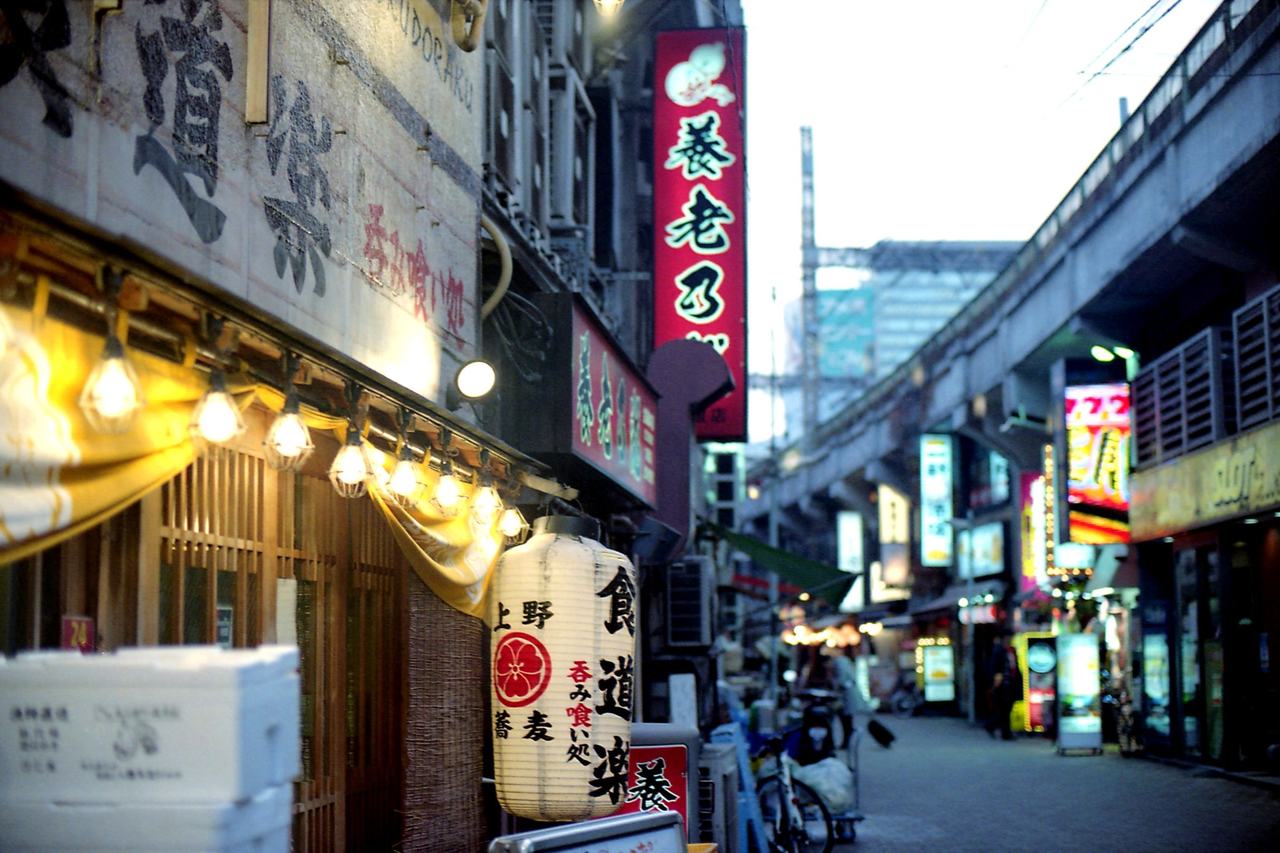
Opening photograph: Lanterns and lit signs line a narrow street beside an elevated railway in Tokyo at dusk. Photograph by Alan Wang on Pexels. Blog photo credits.