How to Change Trains at Shinjuku: What to Ask
To transfer at Shinjuku, ask station staff one short question at a time. Say where you are going, 高円寺に行きたいんですが (I’d like to go to Koenji), then ask the way to your line, JRへの乗り換えはどちらですか? (which way to change to JR?), then the platform, 中野方面は何番線ですか? (which platform for trains toward Nakano?). Before you board, check この電車は高円寺に止まりますか? (does this train stop at Koenji?). Each line below has a recording from Koe’s getting-around unit, which follows exactly this transfer: in on the Toei Shinjuku Line, out to Koenji on JR.
Start with where you are going
You do not need to know the route to ask for help. The most useful first line is simply your destination:
You say
高円寺に行きたいんですが。
Kōenji ni ikitain desu ga.
I’d like to go to Koenji.
たいんですが trails off on purpose, leaving room for the attendant to help, the same soft ending the course uses for buying an IC card. With your destination in hand, a station attendant can tell you which line, which platform and which train. Put すみません in front when you stop someone.
If you already know where you are going but not how, ask the open question instead:
You ask
どの電車に乗ればいいですか?
Dono densha ni noreba ii desu ka?
Which train should I take?
Which way to change lines
At Shinjuku, the first problem is getting from one railway to another. The course note explains why this transfer feels like leaving one station and entering another:
You ask
JRへの乗り換えはどちらですか?
JR e no norikae wa dochira desu ka?
Which way to change to JR?
乗り換え is a transfer. At Shinjuku, the Toei Shinjuku Line and JR are different companies, so you go out through one gate and in through another.
乗り換え is a transfer. Because the Toei Shinjuku Line and JR are different companies, you go out through one gate and in through another. On top of that, the Toei Shinjuku Line at Shinjuku uses an underground section shared with the Keio New Line, apart from the JR platforms. So expect a walk, and expect to pass through gates twice.
In the course, answers to a which-way question are short, and one word comes up again and again: あちら, that way.
Which platform: name the line, or the direction
Once you are through the JR gates, you need a platform number. There are two ways to ask, and the course teaches both.
The first names the line:
You ask
総武線は何番線ですか?
Sōbu-sen wa nanbansen desu ka?
Which platform is the Sobu Line?
Name the line when it matters. At Shinjuku the rapid and the Sobu Line local both run toward Nakano, from different platforms.
The second names the direction:
You ask
中野方面は何番線ですか?
Nakano hōmen wa nanbansen desu ka?
Which platform for trains toward Nakano?
方面 is the direction, named by a big station down the line: it’s how the signs over the platforms read. 何番線 asks the platform number.
方面 is the direction, named by a big station further down the line. The course note points out that this is how the signs over the platforms read, so asking this way matches what you see on the boards. 何番線 asks the platform number, and the answer comes back as a number plus 番線. In the course, Murakami-san, the station attendant, answers like this:
Murakami-san, the station attendant, says
16番線です。
Jūrokubansen desu.
Platform 16.
Platform 16. If you only catch the number, that is enough.
Which train, and the weekend rapid trap
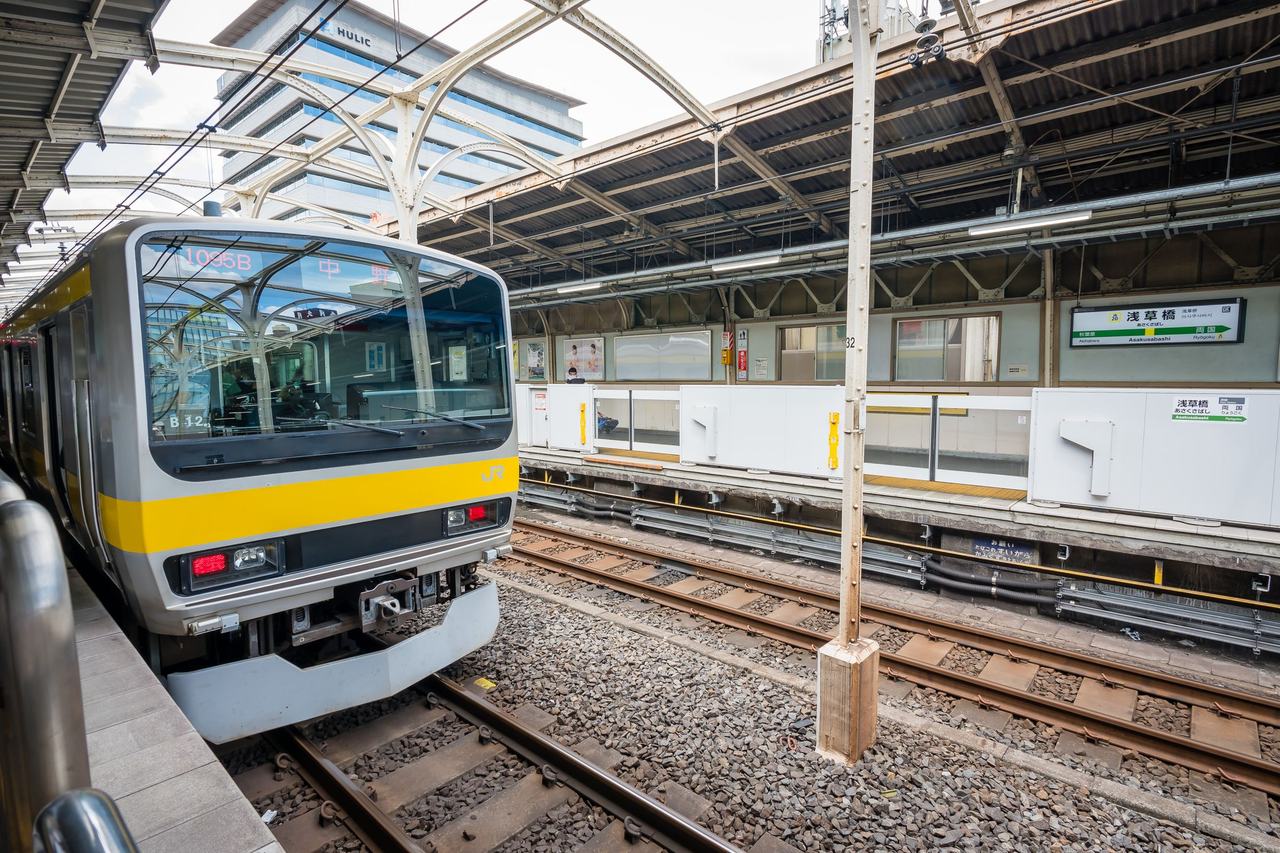
Here is the part that catches people on this exact route. Two kinds of train leave Shinjuku toward Nakano, from different platforms: the rapid and the Sobu Line local. On weekdays, both stop at Koenji. On weekends, the attendant warns you:
Murakami-san, the station attendant, says
土日は快速が止まらないので、総武線に乗ってください。
Donichi wa kaisoku ga tomaranai node, Sōbu-sen ni notte kudasai.
On weekends the rapid doesn’t stop there, so take the Sobu Line.
The course explains every piece. 土日 is Saturday and Sunday, and it is the same on holidays. 快速 is the rapid, and 止まらない means it does not stop. So on those days you take the 総武線, the Sobu Line local. Its note on the follow-up question puts it plainly: on weekends and holidays the rapid runs straight through Koenji, and only the Sobu Line local stops there.
That is why the last question before boarding matters so much:
You ask
この電車は高円寺に止まりますか?
Kono densha wa Kōenji ni tomarimasu ka?
Does this train stop at Koenji?
Worth asking on the Chuo Line: on weekends and holidays the rapid runs straight through Koenji, and only the Sobu Line local stops there.
Ask it of a station attendant on the platform, with your station’s name in place of Koenji. A yes means get on. Anything else, ask どの電車に乗ればいいですか?.
On the train: listening for your stop
Once you are moving, the announcements take over. The course ends this transfer with one line that tells you to get ready:
The platform announcer says
まもなく、高円寺、高円寺です。
Mamonaku, Kōenji, Kōenji desu.
We will soon arrive at Koenji.
まもなく means soon, and the station name is said twice. The other platform and on-board announcements, and what each means, are in our guide to Tokyo train announcements. On a crowded train, すみません、降ります, excuse me, I’m getting off, gets you to the door.
If you are leaving Shinjuku instead
Sometimes the problem is not a transfer but an exit. The course notes that big stations name their exits by compass point, and that Shinjuku has more than a dozen. Ask for the one you need:
You ask
東口はどちらですか?
Higashiguchi wa dochira desu ka?
Which way is the East Exit?
Big stations have many exits, named by compass point: 東口 is the East Exit. Shinjuku has more than a dozen.
Murakami-san, the station attendant, says
東口はあちらです。
Higashiguchi wa achira desu.
The East Exit is that way.
東口 is the East Exit, and the attendant’s answer is あちら, that way, once again. If you are meeting someone, agree on the exit before you arrive. For asking the way once you are outside, see how to ask for directions in Japanese.
The transfer in four questions
Here is the whole thing, the way you might do it at Shinjuku:
- Stop an attendant: 高円寺に行きたいんですが.
- Find the other railway: JRへの乗り換えはどちらですか?.
- Find the platform: 中野方面は何番線ですか? or 総武線は何番線ですか?.
- Before boarding: この電車は高円寺に止まりますか?.
Finish each exchange with 分かりました。ありがとうございます. Every line on this page is a recording from Koe’s course, and in the app you hear each one, say it out loud, and see what it heard. The attendant’s weekend warning is the line to play most, because it is long and the words that matter, 土日 and 快速, come first and fast.
Every line on this page
The 11 lines above, in order, for one last listen before you go. Each one is the recording from the Koe course.
高円寺に行きたいんですが。Kōenji ni ikitain desu ga.I’d like to go to Koenji.
どの電車に乗ればいいですか?Dono densha ni noreba ii desu ka?Which train should I take?
JRへの乗り換えはどちらですか?JR e no norikae wa dochira desu ka?Which way to change to JR?
総武線は何番線ですか?Sōbu-sen wa nanbansen desu ka?Which platform is the Sobu Line?
中野方面は何番線ですか?Nakano hōmen wa nanbansen desu ka?Which platform for trains toward Nakano?
16番線です。Jūrokubansen desu.Platform 16.
土日は快速が止まらないので、総武線に乗ってください。Donichi wa kaisoku ga tomaranai node, Sōbu-sen ni notte kudasai.On weekends the rapid doesn’t stop there, so take the Sobu Line.
この電車は高円寺に止まりますか?Kono densha wa Kōenji ni tomarimasu ka?Does this train stop at Koenji?
まもなく、高円寺、高円寺です。Mamonaku, Kōenji, Kōenji desu.We will soon arrive at Koenji.
東口はどちらですか?Higashiguchi wa dochira desu ka?Which way is the East Exit?
東口はあちらです。Higashiguchi wa achira desu.The East Exit is that way.
Common questions
How do you change from the Toei Shinjuku Line to JR at Shinjuku?
They are different companies, so you go out through one gate and in through another. The Toei Shinjuku Line uses an underground section shared with the Keio New Line, apart from the JR platforms. Ask an attendant JRへの乗り換えはどちらですか?, which way to change to JR.
How do you ask which platform in Japanese?
Name the line or the direction and add nanbansen desu ka: 総武線は何番線ですか? or 中野方面は何番線ですか?. The answer is a number, as in 16番線です.
Does the Chuo Line rapid stop at Koenji on weekends?
The course note says no: on weekends and holidays the rapid runs straight through Koenji, and only the Sobu Line local stops there. Check with この電車は高円寺に止まりますか?.
What does houmen mean on Japanese station signs?
方面 (hōmen) is the direction, named by a big station down the line. The course notes that it is how the signs over the platforms read. Toward Nakano is 中野方面.
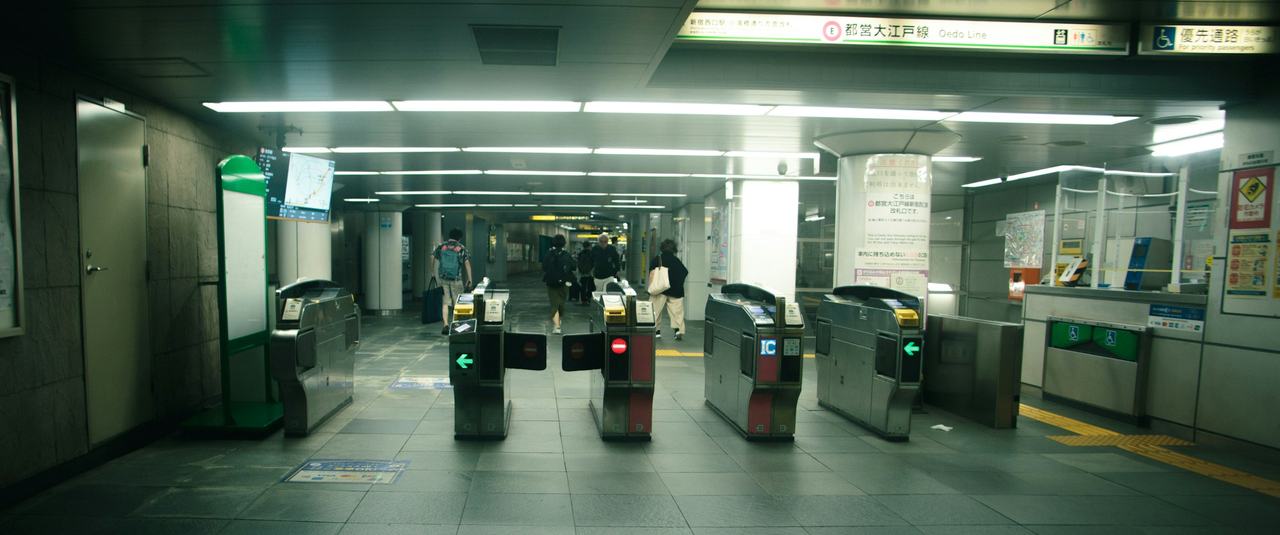
Opening photograph: Ticket gates at Shinjuku station in Tokyo. Photograph by Thiago Yonamine on Unsplash. Blog photo credits.