How to Buy Street Food on a Tokyo Shotengai
To order street food in Japan, name the item and how many you want, then add kudasai: コロッケをふたつください (two croquettes, please). To add something else, put mo after it: メンチカツもひとつ (and one menchi katsu). Then listen for the total, pay, and if you want to eat on the spot, ask ここで食べてもいいですか? (may I eat it here?). Below is the whole exchange, with the stall keeper’s lines and yours, from the croquette stand on Togoshi Ginza’s long shopping street in Koe’s numbers unit.
Fresh from the fryer
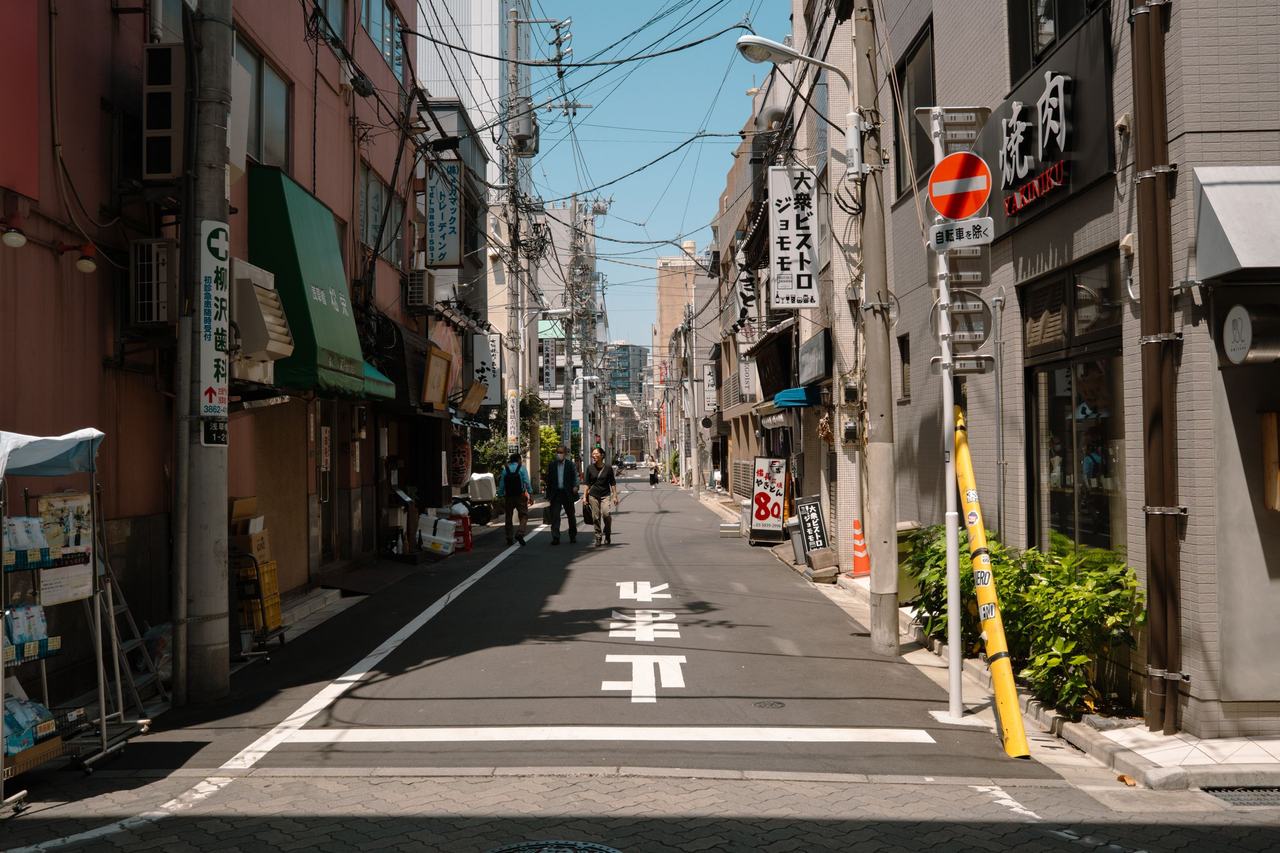
Koe’s course sets this scene on a shotengai, a long street of small shops. Next to the greengrocer, a croquette stand fries at its window, and people eat right there on the street. As you walk up, Sano-san, at the croquette stand, calls out to you:
Sano-san, at the croquette stand, says
揚げたてですよ。
Agetate desu yo.
They’re fresh from the fryer.
Agetate is fresh from the fryer. If you hear it, that is the moment to order. The course notes describe the two snacks on offer: a croquette is a fried potato patty, and a menchi katsu is a breaded, fried patty of ground meat.
Ordering by number
Name the snack, then how many, then kudasai. The stall keeper repeats your order back to confirm it:
You say
コロッケをふたつください。
Korokke o futatsu kudasai.
Two croquettes, please.
A croquette is a fried potato patty, about ¥100 on a shotengai.
Sano-san, at the croquette stand, says
はい、コロッケふたつですね。
Hai, korokke futatsu desu ne.
Two croquettes, then.
Counting words matter here, because you are ordering by the piece. The course counts things with hitotsu, futatsu, mittsu and so on, up to ten. If you want more on those, the guide to counters for ordering covers them. Listening for the number in the stall keeper’s echo is the quickest check that she heard you right.
Adding one more, by name or by pointing
To add a second item, the course uses mo, which its notes say adds it to what you’ve ordered:
You say
メンチカツもひとつ。
Menchikatsu mo hitotsu.
And one menchi katsu.
A breaded, fried patty of ground meat. も adds it to what you’ve ordered.
Sometimes you will not know the name of what is in the window. Then point. The course’s lines for this come from the greengrocer next door, and they work at any stall:
You say
じゃあ、これをください。
Jā, kore o kudasai.
Then I’ll take these.
You say
それもください。
Sore mo kudasai.
That too, please.
Kore is this and sore is that, as the course translates them, and mo again adds the second thing. With pointing and these two lines, you can buy anything in the window without knowing a single name.
Checking the total
The stall keeper adds it up and tells you the total. In the course explanation, two croquettes at ¥100 and a menchi katsu at ¥250 come to ¥450:
Sano-san, at the croquette stand, says
全部で450円です。
Zenbu de yonhyakugojūen desu.
That’s ¥450 all together.
You say
全部で450円ですね。
Zenbu de yonhyakugojūen desu ne.
That’s ¥450 all together, right?
Zenbu de is all together. Saying the amount back with ne at the end, as in your line, checks that you heard it right. The course notes suggest the same habit for any price: say it back as a question to check you heard it right. It also gives you a second chance to hear the number before you hand over any money.
Paying in cash
Small stalls on a shopping street are often cash only. The course notes say it plainly, on the question about cards:
You ask
カードは使えますか?
Kādo wa tsukaemasu ka?
Can I pay by card?
Literally, can I use a card? Many small stores on a shotengai take cash only.
So have coins and small bills ready. If all you have is a big bill, ask first with 1万円でもいいですか?, is a ¥10,000 bill okay, or apologize for it with すみません、細かいのがなくて, which the course notes describe as a soft way to say you have nothing smaller. In the course you pay with a ¥1,000 bill, and the stall keeper says two set phrases as she takes it and gives you change:
You say
1,000円でお願いします。
Sen'en de onegai shimasu.
Here’s ¥1,000.
As you hand over a bill. The cashier answers 1,000円お預かりします, out of ¥1,000: that’s their line, not yours. At registers all over Tokyo you’ll also hear 1,000円からお預かりします and 580円になります. Style guides call these part-timer keigo, and this course’s staff use the standard forms. Either way, the answer is a nod or ありがとうございます.
Sano-san, at the croquette stand, says
1,000円お預かりします。
Sen'en oazukari shimasu.
Out of ¥1,000.
Sano-san, at the croquette stand, says
550円のお返しです。
Gohyakugojūen no okaeshi desu.
Here’s ¥550 change.
Oazukari shimasu means she has taken your money, out of ¥1,000. Okaeshi is your change, here ¥550. Both are her lines, not yours: a nod or a thank-you is your whole part. For the full set of cashier phrases, see the guide to what cashiers say.
Eating it right there
In the course scene, people eat their croquettes on the street by the stand. If you are not sure whether that is fine at a particular stall, ask. It costs you one line, and it shows care:
You ask
ここで食べてもいいですか?
Koko de tabetemo ii desu ka?
May I eat it here?
Koko de is here, and tabetemo ii desu ka asks permission to eat. The course notes on trying on clothes explain the shape: shitemo ii desu ka asks permission. The same pattern turns up for using a restroom, so it will serve you well beyond food.
When you are done, thank the person who made it. The course’s line for that, said as you leave to whoever cooked or served, is ごちそうさまでした.
So the whole visit is five short steps: listen for agetate, order by number with kudasai, add anything else with mo, say the total back with ne, and pay with a small bill. Asking to eat on the spot is the optional sixth.
Every line on this page is a recording from Koe’s course. The stall keeper’s lines come quickly, especially the total and the change, so they are the ones to hear most. In the app you hear each line, say your side out loud, and see what it heard.
Every line on this page
The 13 lines above, in order, for one last listen before you go. Each one is the recording from the Koe course.
揚げたてですよ。Agetate desu yo.They’re fresh from the fryer.
コロッケをふたつください。Korokke o futatsu kudasai.Two croquettes, please.
はい、コロッケふたつですね。Hai, korokke futatsu desu ne.Two croquettes, then.
メンチカツもひとつ。Menchikatsu mo hitotsu.And one menchi katsu.
じゃあ、これをください。Jā, kore o kudasai.Then I’ll take these.
それもください。Sore mo kudasai.That too, please.
全部で450円です。Zenbu de yonhyakugojūen desu.That’s ¥450 all together.
全部で450円ですね。Zenbu de yonhyakugojūen desu ne.That’s ¥450 all together, right?
カードは使えますか?Kādo wa tsukaemasu ka?Can I pay by card?
1,000円でお願いします。Sen'en de onegai shimasu.Here’s ¥1,000.
1,000円お預かりします。Sen'en oazukari shimasu.Out of ¥1,000.
550円のお返しです。Gohyakugojūen no okaeshi desu.Here’s ¥550 change.
ここで食べてもいいですか?Koko de tabetemo ii desu ka?May I eat it here?
Common questions
How do you order street food in Japanese?
Name the item, then how many, then kudasai: コロッケをふたつください. To add another item, use mo: メンチカツもひとつ. If you cannot name it, point and say じゃあ、これをください.
Can you eat street food on the street in Tokyo?
At the course’s croquette stand on Togoshi Ginza, people eat right there on the street. If you are not sure at a particular stall, ask ここで食べてもいいですか?, may I eat it here?
Do street food stalls in Japan take cards?
Many do not. The course notes say many small stores on a shotengai take cash only. Ask カードは使えますか? if you want to check, and carry coins and small bills.
What does agetate mean?
Agetate means fresh from the fryer. A stall keeper calls it out to tell you the food has just been fried.
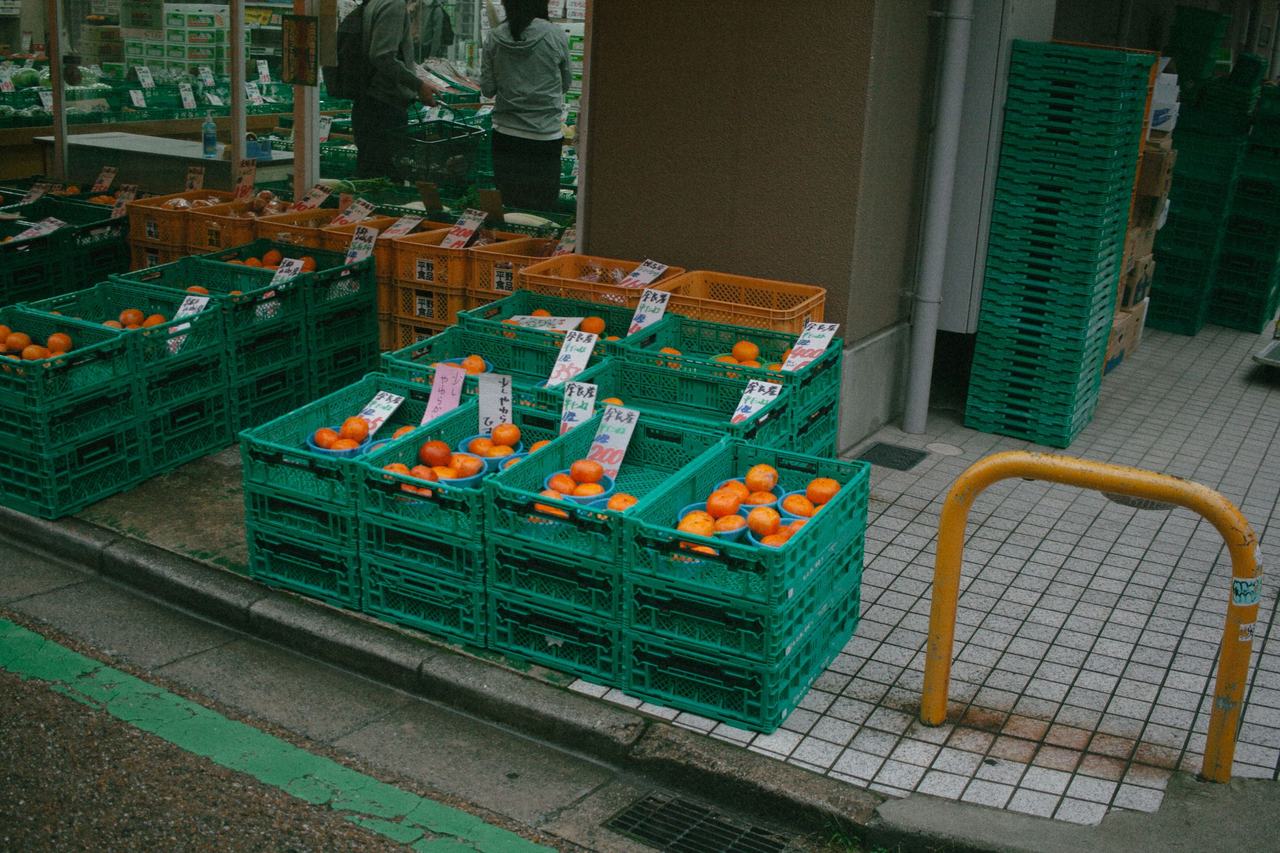
Opening photograph: Green crates of oranges with handwritten price cards sit on the sidewalk outside a Tokyo greengrocer. Photograph by Giuseppe Macri on Pexels. Blog photo credits.