The Konbini Bag Question: Yes or No in Japanese
To say no bag in Japanese, answer the clerk’s question with 袋は大丈夫です (I don’t need a bag). It uses daijōbu desu, which the course notes call the polite no at a konbini, and it is softer than a flat “I don’t need it.” If you have your own bag, say マイバッグがあるので大丈夫です. If you are buying one small thing, そのままで大丈夫です (it’s fine as it is) skips the bag and the sticker. And if you do want a bag, 袋、お願いします. Below are all four answers with real recordings from the konbini unit of Koe’s course, plus what the clerk asks next.
The question you will hear
The course calls it one of the two questions every konbini asks. Here is Tamura-san, the night clerk in the course:
Tamura-san, the night clerk, asks
袋はご利用ですか?
Fukuro wa goriyō desu ka?
Would you like a bag?
Fukuro is a bag, and goriyō desu ka is a polite way of asking whether you will use one. The course notes explain why clerks ask at all: since 2020, plastic bags cost a few yen, so clerks ask and many people carry their own. Learn to pick out fukuro at the start, and you will recognize the question every time.
The soft no: daijōbu desu
In the course, your friend Kenta is ahead of you in line, and he answers first. Then it is your turn, with the same words:
Kenta, a friend, says
袋は大丈夫です。
Fukuro wa daijōbu desu.
I don’t need a bag.
You say
袋は大丈夫です。
Fukuro wa daijōbu desu.
I don’t need a bag.
Since 2020, plastic bags cost a few yen, so clerks ask and many people carry their own.
Why daijōbu desu, which literally sounds like “it’s okay”? The course notes are consistent on this. Daijōbu desu is the polite no at a konbini. Its blunter cousins are understood but sound abrupt: the course notes say いらないです, I don’t need it, is understood, but it’s blunt, and that a plain iie, no, sounds blunt as the answer to an offer. A bag is an offer, so daijōbu desu is the right tone.
One thing to avoid: ii desu on its own. The course notes say it can mean yes or no, so clerks often ask again. Stick with daijōbu desu for no.
Yes, a bag, please
If you want a bag, the answer is just as short:
You say
袋、お願いします。
Fukuro, onegai shimasu.
A bag, please.
The bag goes on the total, a few yen.
The note tells you what to expect: the bag goes on the total, a few yen. You do not need to ask about the price. Saying yes is agreeing to it.
I have my own bag
Many people carry a reusable bag for exactly this reason. If you do, say so:
You say
マイバッグがあるので大丈夫です。
Maibaggu ga aru node daijōbu desu.
I have my own bag, thanks.
マイバッグ is the bag you bring along: my bag, in Japanese English.
Maibaggu is, in the course’s words, the bag you bring along: “my bag,” in Japanese English. The line ends on the same daijōbu desu as the plain no, so it is a polite no with a reason attached. Hold the bag up as you say it and the clerk will see what you mean.
It’s fine as it is, and the sticker
When you are buying one thing you can hold, such as a drink or a snack, there is a third answer:
You say
そのままで大丈夫です。
Sonomama de daijōbu desu.
It’s fine as it is.
No bag and no sticker. With one item in your hand, this saves everyone a step.
The note says it means no bag and no sticker, and that with one item in your hand, it saves everyone a step. That sticker is the other half of the bag question. If you say no bag without sonomama, the clerk may ask this next:
Tamura-san, the night clerk, asks
シールでよろしいですか?
Shīru de yoroshii desu ka?
Is a sticker all right?
The course explains it: with no bag, the clerk tapes the store’s sticker on the item to show it’s paid for. Shīru de yoroshii desu ka asks if a sticker is all right. A hai is all you need. If you already said sonomama de daijōbu desu, you have answered this before it was asked.
The same answers outside the konbini
The bag question is not only for stores. In the course’s very first unit, a neighbor on a quiet lane in Yanaka gives you persimmons from his tree and offers to put them in a bag:
Okada-san, a neighbor, asks
袋に入れましょうか?
Fukuro ni iremashō ka?
Shall I put them in a bag?
You say
いえ、大丈夫です。
Ie, daijōbu desu.
No, thank you.
The soft way to turn down an offer.
You say
はい、お願いします。
Hai, onegai shimasu.
Yes, please.
Accepting an offer, of help or of something to take.
The answers follow the same pattern as at the register. Ie, daijōbu desu is the soft way to turn down an offer, and hai, onegai shimasu is accepting it. The course notes describe them in general terms, for offers of help or of something to take, so they reach well beyond bags. For the other questions at the register, see the guide to what konbini staff ask.
Which answer to choose
- You want no bag and have several items: 袋は大丈夫です, then hai if the clerk asks about a sticker.
- You have one small item in your hand: そのままで大丈夫です.
- You brought a bag: マイバッグがあるので大丈夫です.
- You want a bag: 袋、お願いします, and it goes on the total.
- Someone who is not a clerk offers you a bag: いえ、大丈夫です or はい、お願いします.
Every line on this page is a recording from Koe’s course. The question itself is quick, and fukuro is the word to catch. In the app you hear the clerk’s line, answer out loud, and see what it heard, until your answer comes before she has finished asking.
Every line on this page
The 10 lines above, in order, for one last listen before you go. Each one is the recording from the Koe course.
袋はご利用ですか?Fukuro wa goriyō desu ka?Would you like a bag?
袋は大丈夫です。Fukuro wa daijōbu desu.I don’t need a bag.
袋は大丈夫です。Fukuro wa daijōbu desu.I don’t need a bag.
袋、お願いします。Fukuro, onegai shimasu.A bag, please.
マイバッグがあるので大丈夫です。Maibaggu ga aru node daijōbu desu.I have my own bag, thanks.
そのままで大丈夫です。Sonomama de daijōbu desu.It’s fine as it is.
シールでよろしいですか?Shīru de yoroshii desu ka?Is a sticker all right?
袋に入れましょうか?Fukuro ni iremashō ka?Shall I put them in a bag?
いえ、大丈夫です。Ie, daijōbu desu.No, thank you.
はい、お願いします。Hai, onegai shimasu.Yes, please.
Common questions
How do you say “no bag” in Japanese?
Say 袋は大丈夫です, I don’t need a bag. Daijōbu desu is the polite no at a konbini. If you have your own bag, say マイバッグがあるので大丈夫です.
Do you have to pay for plastic bags in Japan?
Yes, a small amount. The course notes say that since 2020, plastic bags cost a few yen, so clerks ask and many people carry their own. The bag goes on your total.
What does “fukuro wa goriyō desu ka” mean?
It means “would you like a bag?” Fukuro is a bag. Answer 袋は大丈夫です for no, or 袋、お願いします for yes.
Why does the clerk ask about a sticker?
If you do not take a bag, the clerk tapes the store’s sticker on your item to show it is paid for, and asks shīru de yoroshii desu ka, is a sticker all right. To skip both bag and sticker, say そのままで大丈夫です.
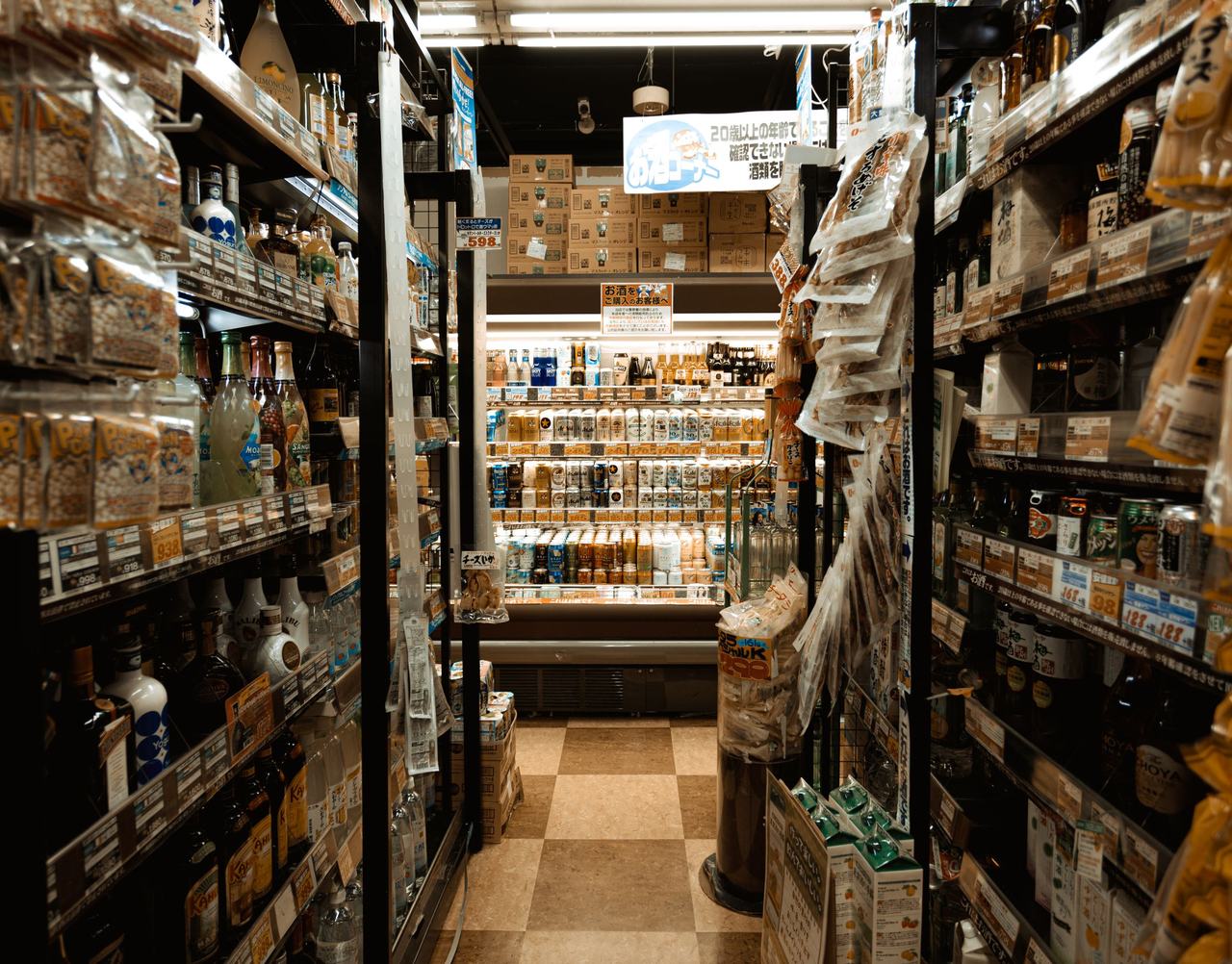
Opening photograph: A narrow convenience store aisle in Tokyo lined with packed shelves and a glowing drinks fridge at the back. Photograph by Aleksandar Pasaric on Pexels. Blog photo credits.