Tokyo Train Announcements: What They Mean in English
On a Tokyo platform, the announcements you hear as a train comes in mean, in order: a train is now arriving (まもなく、電車がまいります), please stand behind the yellow line (危ないですから、黄色い線までお下がりください), and the doors are closing, please be careful (ドアが閉まります。ご注意ください). On board, you will hear a request to set your phone to silent and avoid calls, and then your stop, as in まもなく、高円寺、高円寺です (we will soon arrive at Koenji). None of them needs an answer. The only line a passenger says is すみません、降ります (excuse me, I’m getting off). Below is each announcement with its recording from Koe’s getting-around unit, at Shinjuku on the way to Koenji.
Why the announcements sound so different
Station announcements are not the Japanese you hear at a café counter. The course says it directly: these are the most formal Japanese you’ll hear, and nobody answers them. They are long, polite and fast, and they come over a speaker with a train pulling in.
The good news is that you only need to recognize them, never answer them. Treat each one below as a sound to recognize, not a sentence to build. A few key words in each are enough.
A train is arriving: stand behind the yellow line
This is the first announcement you hear on a platform, as a train approaches:
The platform announcer says
まもなく、電車がまいります。
Mamonaku, densha ga mairimasu.
A train is now arriving.
Listen for two words. まもなく is the course’s soon, the same word that opens the next-stop announcement on board. 電車 is the train. The verb at the end, まいります, is the formal arriving. When you hear まもなく, get ready: the train is close.
In the course, the safety line comes next, and it tells you exactly what to do:
The platform announcer says
危ないですから、黄色い線までお下がりください。
Abunai desu kara, kiiroi sen made osagari kudasai.
For your safety, please stand behind the yellow line.
The course explains it as stand behind the yellow line. 黄色い線 is the yellow line, and お下がりください asks you to step back behind it. The opening, 危ないですから, is translated in the course as for your safety. If you are standing too close to the edge, this is your cue to move.
The doors are closing
When the train is ready to leave, the doors close with a warning:
The platform announcer says
ドアが閉まります。ご注意ください。
Doa ga shimarimasu. Gochūi kudasai.
The doors are closing. Please be careful.
This one is short and very useful. ドア is the English door, so you may catch it even on your first day. 閉まります is closing. ご注意ください is please be careful.
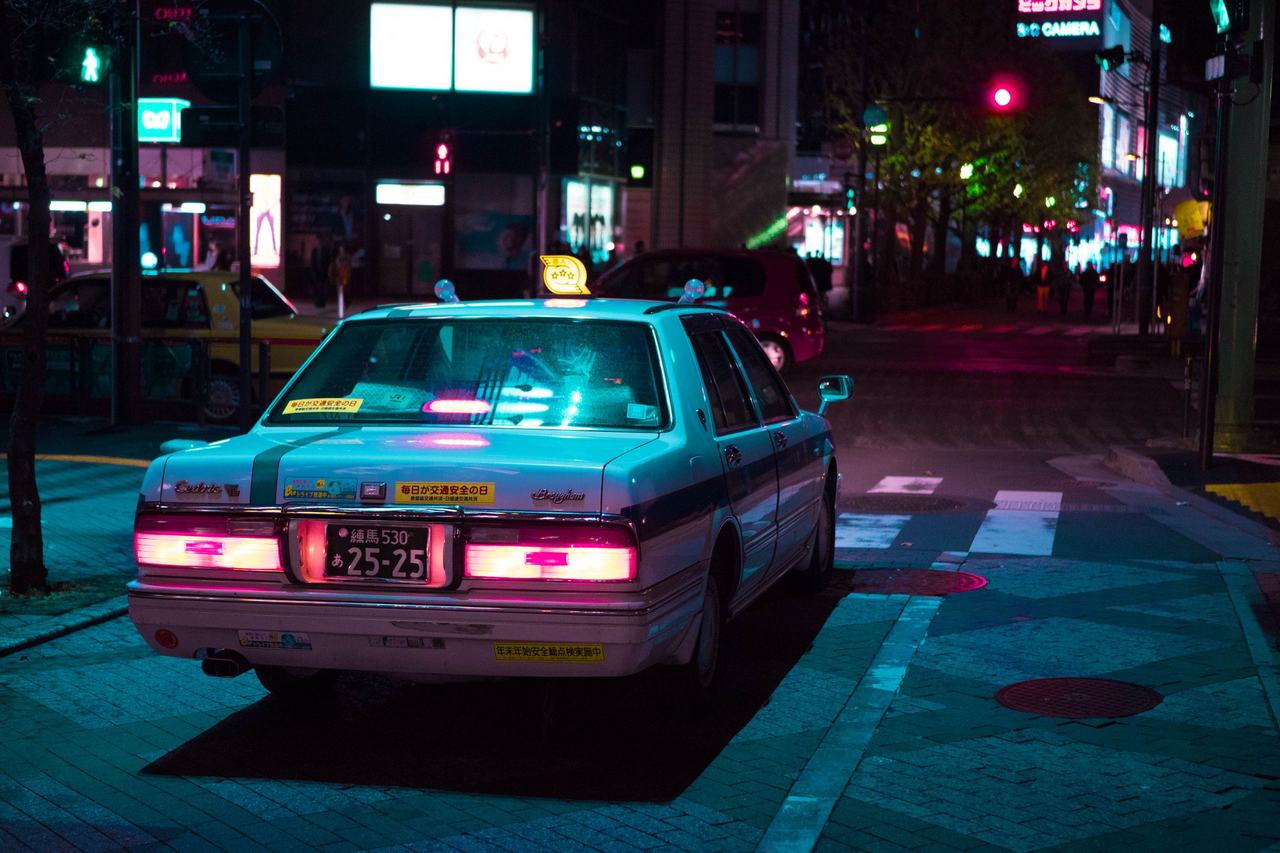
You will hear the same polite ご注意ください ending in other places too. In Koe’s taxi scene, the driver uses it to remind you not to leave anything behind:
Takeda-san, the taxi driver, says
お忘れ物のないよう、ご注意ください。
Owasuremono no nai yō, gochūi kudasai.
Please make sure you have everything.
On board: phones on silent
Once you are on the train, the longest announcement plays. It is about your phone:
The platform announcer says
車内では、携帯電話をマナーモードに設定の上、通話はご遠慮ください。
Shanai de wa, keitaidenwa o manāmōdo ni settei no ue, tsūwa wa goenryo kudasai.
On the train, please set your phone to silent and refrain from calls.
In the course’s translation: on the train, please set your phone to silent and refrain from calls. 車内では is on the train, and マナーモード is silent mode. 通話はご遠慮ください asks you to refrain from calls. If you hear マナーモード, check that your phone will not ring out loud.
Next stop: hearing your station
This is the announcement that matters most, because it tells you when to move. As your station approaches, you hear this:
The platform announcer says
まもなく、高円寺、高円寺です。
Mamonaku, Kōenji, Kōenji desu.
We will soon arrive at Koenji.
まもなく again, soon, then the station name, said twice so you cannot miss it, then です. When you hear your station’s name, start making your way to the door.
On a crowded train, this is the one moment you speak. The course gives you the line:
You say
すみません、降ります。
Sumimasen, orimasu.
Excuse me, I’m getting off.
On a crowded train, said toward the door as you move. The announcements you hear, まいります, お下がりください, are never answered.
The note tells you how it is used: said toward the door as you move. It also repeats the main rule of this whole post. The announcements you hear, the arriving and the stand back, are never answered.
When an announcement is not enough
Announcements tell you what is happening, but not always whether the train is right for you. For that, ask a person. On Koe’s route, the attendant gives a warning that matters for your trip:
Murakami-san, the station attendant, says
土日は快速が止まらないので、総武線に乗ってください。
Donichi wa kaisoku ga tomaranai node, Sōbu-sen ni notte kudasai.
On weekends the rapid doesn’t stop there, so take the Sobu Line.
On weekends the rapid doesn’t stop at Koenji, so you take the Sobu Line. The course notes that 土日 means Saturday and Sunday, and holidays work the same way. So before you board, ask:
You ask
この電車は高円寺に止まりますか?
Kono densha wa Kōenji ni tomarimasu ka?
Does this train stop at Koenji?
Worth asking on the Chuo Line: on weekends and holidays the rapid runs straight through Koenji, and only the Sobu Line local stops there.
For the whole transfer, from which platform to which train, see how to change trains at Shinjuku. And if the gate stops you on the way out, this guide covers what to say.
Practicing the announcements before you go
The announcements are pure listening. You never answer them, so the only goal is to recognize them fast. Here is a short checklist of the words to catch:
- まもなく: soon. Something is about to happen.
- 黄色い線: the yellow line. Step back.
- ドア: the doors. They are closing.
- マナーモード: silent mode. Check your phone.
- Your station’s name, twice. Get to the door.
Every line on this page is a recording from Koe’s course. In the app you hear each line, say it out loud, and see what it heard. Saying an announcement out loud is a good way to make its sounds stick, even though you will never say it on a train. Play the five announcements here in random order and name each one before it finishes, and the platform will start to make sense.
Every line on this page
The 9 lines above, in order, for one last listen before you go. Each one is the recording from the Koe course.
まもなく、電車がまいります。Mamonaku, densha ga mairimasu.A train is now arriving.
危ないですから、黄色い線までお下がりください。Abunai desu kara, kiiroi sen made osagari kudasai.For your safety, please stand behind the yellow line.
ドアが閉まります。ご注意ください。Doa ga shimarimasu. Gochūi kudasai.The doors are closing. Please be careful.
お忘れ物のないよう、ご注意ください。Owasuremono no nai yō, gochūi kudasai.Please make sure you have everything.
車内では、携帯電話をマナーモードに設定の上、通話はご遠慮ください。Shanai de wa, keitaidenwa o manāmōdo ni settei no ue, tsūwa wa goenryo kudasai.On the train, please set your phone to silent and refrain from calls.
まもなく、高円寺、高円寺です。Mamonaku, Kōenji, Kōenji desu.We will soon arrive at Koenji.
すみません、降ります。Sumimasen, orimasu.Excuse me, I’m getting off.
土日は快速が止まらないので、総武線に乗ってください。Donichi wa kaisoku ga tomaranai node, Sōbu-sen ni notte kudasai.On weekends the rapid doesn’t stop there, so take the Sobu Line.
この電車は高円寺に止まりますか?Kono densha wa Kōenji ni tomarimasu ka?Does this train stop at Koenji?
Common questions
What does mamonaku mean on Japanese trains?
まもなく (mamonaku) means soon. On the platform it opens まもなく、電車がまいります, a train is now arriving. On board it opens the next-stop announcement, as in まもなく、高円寺、高円寺です, we will soon arrive at Koenji.
What does “kiiroi sen made osagari kudasai” mean?
It means please stand behind the yellow line. The full announcement is 危ないですから、黄色い線までお下がりください, which the course translates as for your safety, please stand behind the yellow line.
Do you need to respond to train announcements in Japan?
No. The course is clear that the announcements are the most formal Japanese you’ll hear and that nobody answers them.
How do you say “I’m getting off” in Japanese?
Say すみません、降ります, excuse me, I’m getting off. The course notes it is said toward the door as you move on a crowded train.
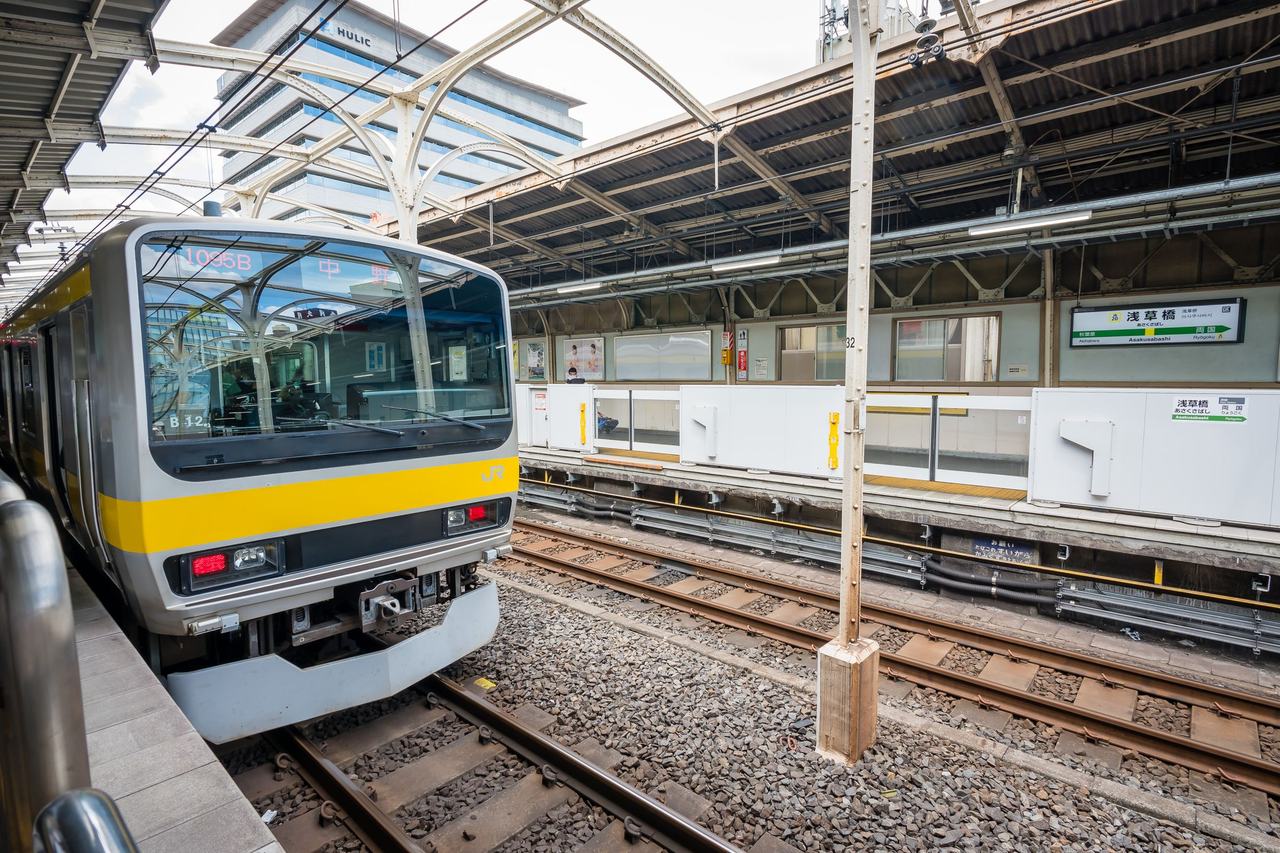
Opening photograph: A silver commuter train with a yellow stripe waits at an open-air station platform in Tokyo. Photograph by Valent Lau on Pexels. Blog photo credits.