How to Ask Opening Hours and the Time in Japanese
To ask what time a place closes, say 何時までやってますか?, how late are you open? The answer comes back as a time plus made desu, until: Jūichiji made desu, until eleven. At a restaurant or bar, also ask ラストオーダーは何時ですか?, because the course notes that they stop taking orders a little before they close. The same small question shapes cover breakfast, checkout and the time right now.
How late are you open
The course teaches this at a yakitori counter under the train tracks in Yurakucho, after work. You want to know how long you can stay, so you ask the cook:
You ask
何時までやってますか?
Nanji made yattemasu ka?
How late are you open?
やってます is the everyday way to say a place is open.
That note is worth remembering: やってます is the everyday way to say a place is open, so you can use the same question at a shop or a cafe. Sakai-san, the yakitori cook, answers with just the closing time and made:
Sakai-san, the yakitori cook, says
11時までです。
Jūichiji made desu.
Until eleven.
Listen for that shape: a time, then made desu. If the number goes past you, repeat it back as a question, the same way the course checks a price.
Last order comes before closing
The closing time is not the whole story. The course’s note on the next question explains why: restaurants and bars stop taking orders a little before they close, which is last call.
You ask
ラストオーダーは何時ですか?
Rasuto ōdā wa nanji desu ka?
When is last order?
Restaurants and bars stop taking orders a little before they close: last call.
Sakai-san, the yakitori cook, says
ラストオーダーは10時半です。
Rasuto ōdā wa jūjihan desu.
Last order is at ten thirty.
The course’s explanation spells out the gap. The counter stays open until eleven, but last order is at ten thirty. So if you arrive at a quarter past ten, the useful question is last order, not closing. A simple routine for arriving late anywhere that serves food: ask the closing time first, then last order. Two short questions, two numbers, and you know exactly how long you have to order and how long you can stay. The phrase itself is English in Japanese sound, rasuto ōdā, so once you have heard it a few times it is easy to catch.
What time is it now
Sometimes you just need the time. The course’s question is short:
You ask
今、何時ですか?
Ima, nanji desu ka?
What time is it now?
In the same yakitori scene, Mori-san, a coworker, glances at the clock and says it is already nine. You can say the same thing about ten:
Mori-san, a coworker, says
あ、もう9時ですね。
A, mō kuji desu ne.
Oh, it’s already nine.
You say
もう10時ですね。
Mō jūji desu ne.
It’s already ten.
The ne at the end, as the course notes elsewhere, invites the other person to agree, so it is a remark rather than a question. For the very last deadline of the night, the course also has 終電は何時ですか?, what time is the last train, and notes that Tokyo’s trains stop between midnight and about one. There is more on that in last train in Tokyo.
Hearing hours and half hours
The answers on this page are all hours or half hours. The course’s notes on these two lines carry the details worth knowing:
You say
7時です。
Shichiji desu.
It’s seven o’clock.
しちじ is the standard reading. You’ll also hear 7時, mostly on the phone or somewhere noisy, so it isn’t mistaken for 1時, and it’s accepted here. Four o’clock is only 4時, and nine o’clock only 9時.
You say
7時半です。
Shichijihan desu.
It’s half past seven.
半 is half, after the hour. 7時半 is accepted too.
So seven has two readings, and you may hear either. Four o’clock and nine o’clock each have only one. And han, half, comes after the hour: jūjihan is ten thirty. You will hear it on the phone too. When you call a restaurant to say you are running late, the host in the course confirms the new time with it:
Yamaguchi-san, the restaurant host, says
かしこまりました。8時半にお待ちしております。
Kashikomarimashita. Hachijihan ni omachi shite orimasu.
Certainly. We’ll see you at eight thirty.
At the hotel: breakfast and checkout
The other place you will ask about times is the front desk. At the small hotel near Ueno, the course asks when breakfast starts:
You ask
朝食は何時からですか?
Chōshoku wa nanji kara desu ka?
What time does breakfast start?
Maeda-san, at the front desk, gives the whole window at once, with two small words worth knowing for any schedule. Kara is from and made is until:
Maeda-san, at the front desk, says
朝食は7時から10時までです。
Chōshoku wa shichiji kara jūji made desu.
Breakfast is from seven to ten.
And on your last morning, there is one more time to check:
You ask
チェックアウトは何時ですか?
Chekkuauto wa nanji desu ka?
What time is checkout?
The answer comes in the same shape as the cook’s closing time and the clerk’s breakfast hours: a time, then desu. If you are unsure, say the time back with desu ne and let the clerk confirm it.
Notice that every question on this page is built on nanji, what time: nanji desu ka, nanji made, until what time, and nanji kara, from what time. Learn those three and you can ask about the schedules a visitor needs by putting the thing in front: breakfast, checkout, last order, the last train.
One more small word turns up in rules rather than opening hours: made ni, by. Okada-san, a neighbor, uses it when he explains the garbage days, and it means the deadline, not the closing time:
Okada-san, a neighbor, says
朝8時までに出してくださいね。
Asa hachiji made ni dashite kudasai ne.
Put it out by eight in the morning.
A quick guide to the answers
Here is what each answer you hear on this page means:
- Jūichiji made desu: until eleven, the closing time.
- Rasuto ōdā wa jūjihan desu: last order is at ten thirty.
- Mō kuji desu ne: it’s already nine.
- Shichiji kara jūji made desu: from seven to ten, a full window.
Every line here is a recording from Koe’s course. In the app you hear each answer, say the questions out loud, and see what it heard, so a spoken time is something you catch rather than guess.
Every line on this page
The 14 lines above, in order, for one last listen before you go. Each one is the recording from the Koe course.
何時までやってますか?Nanji made yattemasu ka?How late are you open?
11時までです。Jūichiji made desu.Until eleven.
ラストオーダーは何時ですか?Rasuto ōdā wa nanji desu ka?When is last order?
ラストオーダーは10時半です。Rasuto ōdā wa jūjihan desu.Last order is at ten thirty.
今、何時ですか?Ima, nanji desu ka?What time is it now?
あ、もう9時ですね。A, mō kuji desu ne.Oh, it’s already nine.
もう10時ですね。Mō jūji desu ne.It’s already ten.
7時です。Shichiji desu.It’s seven o’clock.
7時半です。Shichijihan desu.It’s half past seven.
かしこまりました。8時半にお待ちしております。Kashikomarimashita. Hachijihan ni omachi shite orimasu.Certainly. We’ll see you at eight thirty.
朝食は何時からですか?Chōshoku wa nanji kara desu ka?What time does breakfast start?
朝食は7時から10時までです。Chōshoku wa shichiji kara jūji made desu.Breakfast is from seven to ten.
チェックアウトは何時ですか?Chekkuauto wa nanji desu ka?What time is checkout?
朝8時までに出してくださいね。Asa hachiji made ni dashite kudasai ne.Put it out by eight in the morning.
Common questions
How do you ask what time a store closes in Japanese?
Say 何時までやってますか?, how late are you open? The course notes that やってます is the everyday way to say a place is open. The answer is a time plus made desu, until.
What does last order mean in Japan?
It is the time a restaurant or bar stops taking orders, a little before it closes. Ask ラストオーダーは何時ですか?. In the course, the counter is open until eleven and last order is at ten thirty.
How do you say half past in Japanese?
Add han, half, after the hour. The course’s example is 7時半です, half past seven. Its note adds that 7時半 has a second reading, which is accepted too.
How do you ask what time it is in Japanese?
Say 今、何時ですか?, what time is it now? The answer is a time plus desu, as in 7時です.
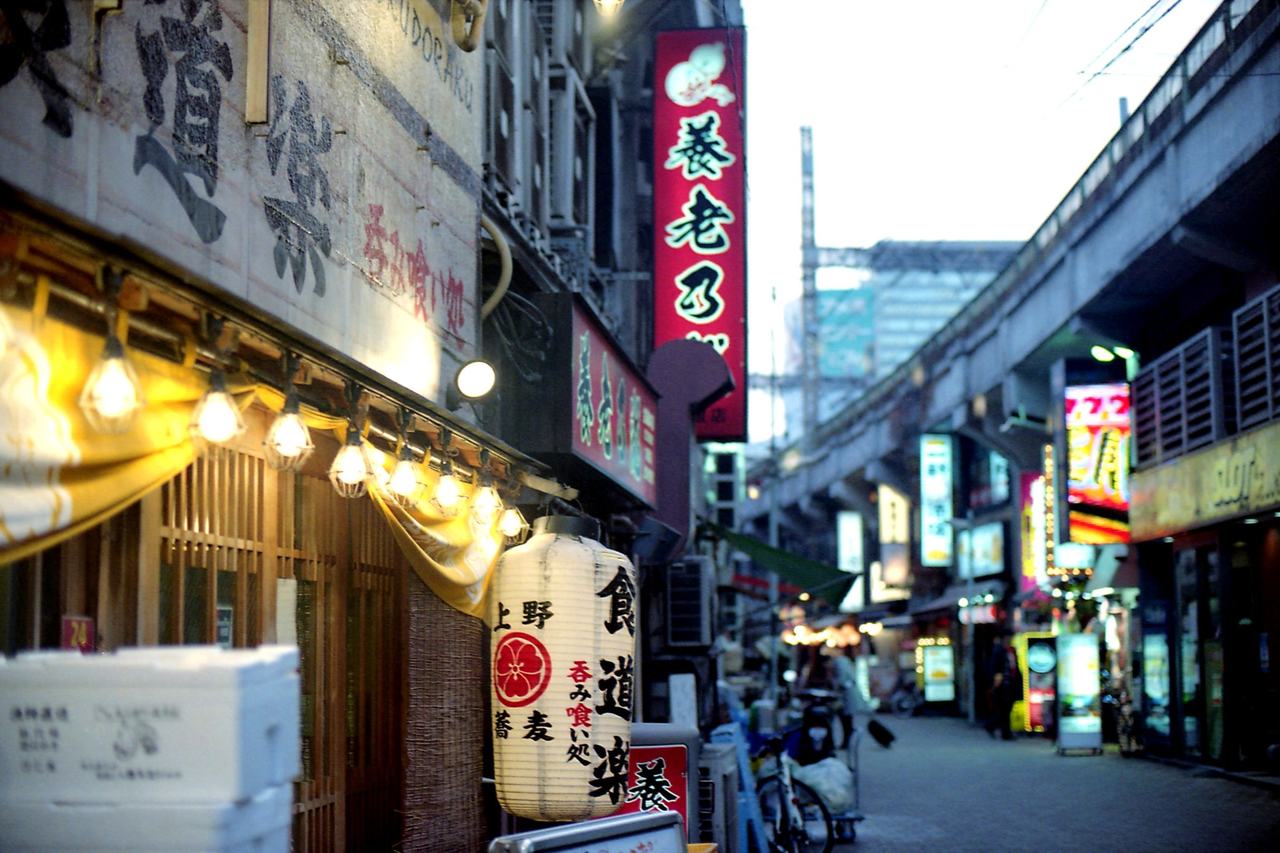
Opening photograph: Lanterns and lit signs line a narrow street beside an elevated railway in Tokyo at dusk. Photograph by Alan Wang on Pexels. Blog photo credits.