Running Late: Change or Cancel a Booking in Japanese
To tell a restaurant you will be late, call ahead, say who you are and when your booking is with すみません、8時に予約しているブラウンです (hello, this is Brown, I have a reservation at eight), then say how late you will be: すみません、30分ぐらい遅れそうです (sorry, we’re going to be about thirty minutes late). To change the booking, say 予約を変更したいんですが. To cancel, say キャンセルしたいんですが. Below is the whole call, with the host’s replies and the lines for a bad connection, from the lesson in Koe’s course where your train runs late and you call the restaurant from a noisy platform.
Why calling ahead matters in Tokyo
The course is direct about this, in a note on being late to meet a friend: Tokyo runs on time. If you will be even five minutes late, call or send a message ahead with an apology. The course applies the same courtesy to a restaurant holding a table for you: in the phone lesson, your train is running late, so you get off at the next station and call before you are late, not after. A short call is far better than arriving late without a word, and it gives the restaurant the chance to keep your table or offer another time.
The good news is that the call is short and predictable. The host’s lines are formal, but there are only a few of them, and the course gives you every one.
Say who you are and when you booked
The restaurant answers the way it did when you booked, with a formal thank-you for calling and its name:
Yamaguchi-san, the restaurant host, says
お電話ありがとうございます。和食青葉でございます。
Odenwa arigatō gozaimasu. Washoku Aoba de gozaimasu.
Thank you for calling Aoba.
You say
すみません、8時に予約しているブラウンです。
Sumimasen, hachiji ni yoyaku shite iru Buraun desu.
Hello, this is Brown. I have a reservation at eight.
Your line does three jobs at once. Sumimasen opens the call, the course’s choice once a business has answered with its name. Hachiji ni yoyaku shite iru is “who has a reservation at eight.” And your family name with desu tells her which booking to find. Put your own name and booking time in place of Brown and eight.
Say how late you will be
Then the apology and the delay, in one line:
You say
すみません、30分ぐらい遅れそうです。
Sumimasen, sanjuppun gurai okuresō desu.
Sorry, we’re going to be about thirty minutes late.
30分 is right too.
Yamaguchi-san, the restaurant host, says
承知いたしました。お気をつけてお越しください。
Shōchi itashimashita. Oki o tsukete okoshi kudasai.
Understood. Have a safe trip over.
Okuresō desu is the course’s “going to be late.” The host’s reply has two parts worth knowing. Shōchi itashimashita is “understood,” in the formal phone style the course describes, and oki o tsukete okoshi kudasai asks you to get there safely. When you hear shōchi, your message has landed.
If the delay is shorter, the course has a ten-minute version. It comes from the friend scene, but it is polite, so it works on the phone to a restaurant too:
You say
すみません、10分ぐらい遅れます。
Sumimasen, juppun gurai okuremasu.
Sorry, I’ll be about ten minutes late.
Tokyo runs on time. If you’ll be even five minutes late, call or send a message ahead with an apology. 10分 is right too.
Changing the time, or canceling
Sometimes a delay means a new time rather than a late arrival. Say you want to change the booking, and the host will move it with you:
You say
予約を変更したいんですが。
Yoyaku o henkō shitain desu ga.
I’d like to change my reservation.
Yamaguchi-san, the restaurant host, says
かしこまりました。8時半にお待ちしております。
Kashikomarimashita. Hachijihan ni omachi shite orimasu.
Certainly. We’ll see you at eight thirty.
In the course, the new time is eight thirty: hachijihan ni omachi shite orimasu, we’ll see you at eight thirty. Listen for the time in her answer and repeat it back if you are unsure.
If you cannot make it at all, cancel rather than not showing up:
You say
キャンセルしたいんですが。
Kyanseru shitain desu ga.
I’d like to cancel.
Both lines end in tain desu ga. The course notes describe this as a soft “I’d like to,” trailing off for the other person to help, which is exactly the tone you want when you are changing someone’s plans.
When the phone line is bad
In the course, you call from a station platform, and the line keeps fading. The host says so politely, and the course explains her phrase: literally, your call seems a little far away.
Yamaguchi-san, the restaurant host, says
お電話が少々遠いようですが…
Odenwa ga shōshō tōi yō desu ga...
The line seems a little faint...
You ask
もしもし、聞こえますか?
Moshimoshi, kikoemasu ka?
Hello? Can you hear me?
もしもし is for checking the line, or for calling a friend. When a business answers with its name, or you’re face to face, start with すみません.
You say
すみません、よく聞こえません。
Sumimasen, yoku kikoemasen.
Sorry, I can’t hear you well.
You say
またかけ直します。
Mata kakenaoshimasu.
I’ll call back.
Moshimoshi is, as the course notes say, for checking the line, or for calling a friend: not for opening a call to a business. Here it is the right word. If it does not improve, tell her you cannot hear well and that you will call back, then find a quieter spot and try again.
The same courtesy with a friend
The rule about calling ahead applies just as much to a friend waiting at a station exit. In the course, Kenta answers your call, hears you will be late, and is fine with it:
Kenta, a friend, asks
もしもし、エマさん?どうしましたか?
Moshimoshi, Ema-san? Dō shimashita ka?
Hello, Emma? Is everything okay?
You say
すみません、10分ぐらい遅れます。
Sumimasen, juppun gurai okuremasu.
Sorry, I’ll be about ten minutes late.
Kenta, a friend, says
大丈夫ですよ。気をつけて来てください。
Daijōbu desu yo. Ki o tsukete kite kudasai.
No problem. Get here safely.
Notice that Kenta answers his phone with moshimoshi, the friend’s way, where the restaurant answered with its name. For setting up the meeting in the first place, see the guide to making plans.
Every line on this page is a recording from Koe’s course. Phone calls are hard because you cannot see the other person, and a noisy platform makes it worse. Hearing the host’s few replies until they are familiar is what makes the call manageable. In the app you hear each line, say your side out loud, and see what it heard. If you have not booked yet, the phone booking guide has that call.
Every line on this page
The 14 lines above, in order, for one last listen before you go. Each one is the recording from the Koe course.
お電話ありがとうございます。和食青葉でございます。Odenwa arigatō gozaimasu. Washoku Aoba de gozaimasu.Thank you for calling Aoba.
すみません、8時に予約しているブラウンです。Sumimasen, hachiji ni yoyaku shite iru Buraun desu.Hello, this is Brown. I have a reservation at eight.
すみません、30分ぐらい遅れそうです。Sumimasen, sanjuppun gurai okuresō desu.Sorry, we’re going to be about thirty minutes late.
承知いたしました。お気をつけてお越しください。Shōchi itashimashita. Oki o tsukete okoshi kudasai.Understood. Have a safe trip over.
すみません、10分ぐらい遅れます。Sumimasen, juppun gurai okuremasu.Sorry, I’ll be about ten minutes late.
予約を変更したいんですが。Yoyaku o henkō shitain desu ga.I’d like to change my reservation.
かしこまりました。8時半にお待ちしております。Kashikomarimashita. Hachijihan ni omachi shite orimasu.Certainly. We’ll see you at eight thirty.
キャンセルしたいんですが。Kyanseru shitain desu ga.I’d like to cancel.
お電話が少々遠いようですが…Odenwa ga shōshō tōi yō desu ga...The line seems a little faint...
もしもし、聞こえますか?Moshimoshi, kikoemasu ka?Hello? Can you hear me?
すみません、よく聞こえません。Sumimasen, yoku kikoemasen.Sorry, I can’t hear you well.
またかけ直します。Mata kakenaoshimasu.I’ll call back.
もしもし、エマさん?どうしましたか?Moshimoshi, Ema-san? Dō shimashita ka?Hello, Emma? Is everything okay?
大丈夫ですよ。気をつけて来てください。Daijōbu desu yo. Ki o tsukete kite kudasai.No problem. Get here safely.
Common questions
How do you say “I’ll be late” in Japanese?
To a restaurant, すみません、30分ぐらい遅れそうです, sorry, we’re going to be about thirty minutes late. For a shorter delay, すみません、10分ぐらい遅れます, sorry, I’ll be about ten minutes late. Change the number to fit.
Should you call a restaurant in Japan if you are running late?
Yes. The course notes say Tokyo runs on time, and that if you will be even five minutes late, you should call or send a message ahead with an apology.
How do you cancel a reservation in Japanese?
Call, identify your booking with your name and time, then say キャンセルしたいんですが, I’d like to cancel. To move it instead, say 予約を変更したいんですが.
What does moshimoshi mean, and when do you use it?
It is a phone hello. The course notes say it is for checking the line, or for calling a friend. When a business answers with its name, start with sumimasen instead.
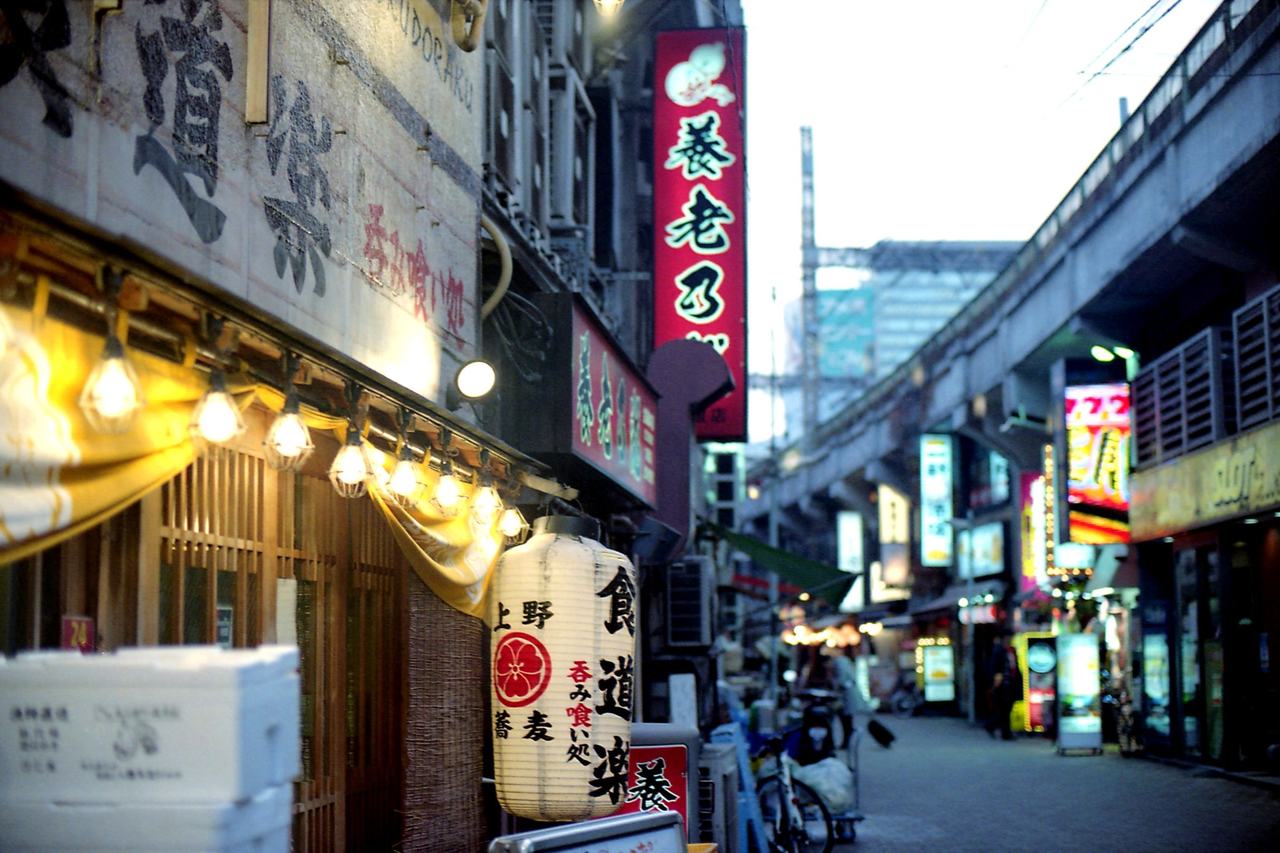
Opening photograph: Lanterns and lit signs line a narrow street beside an elevated railway in Tokyo at dusk. Photograph by Alan Wang on Pexels. Blog photo credits.