How to Invite Someone and Make Plans in Japanese
To invite someone in Japanese, ask in the negative: 今度、一緒に行きませんか?, want to go together sometime? With a friend who already talks to you casually, the course’s version is 今度、一緒に行かない?. Then settle three things: a day, a time and a station exit to meet at. If a day does not work, do not say no outright. Say the day, add chotto, a little, and let the sentence trail off.
The invitation: won’t you come?
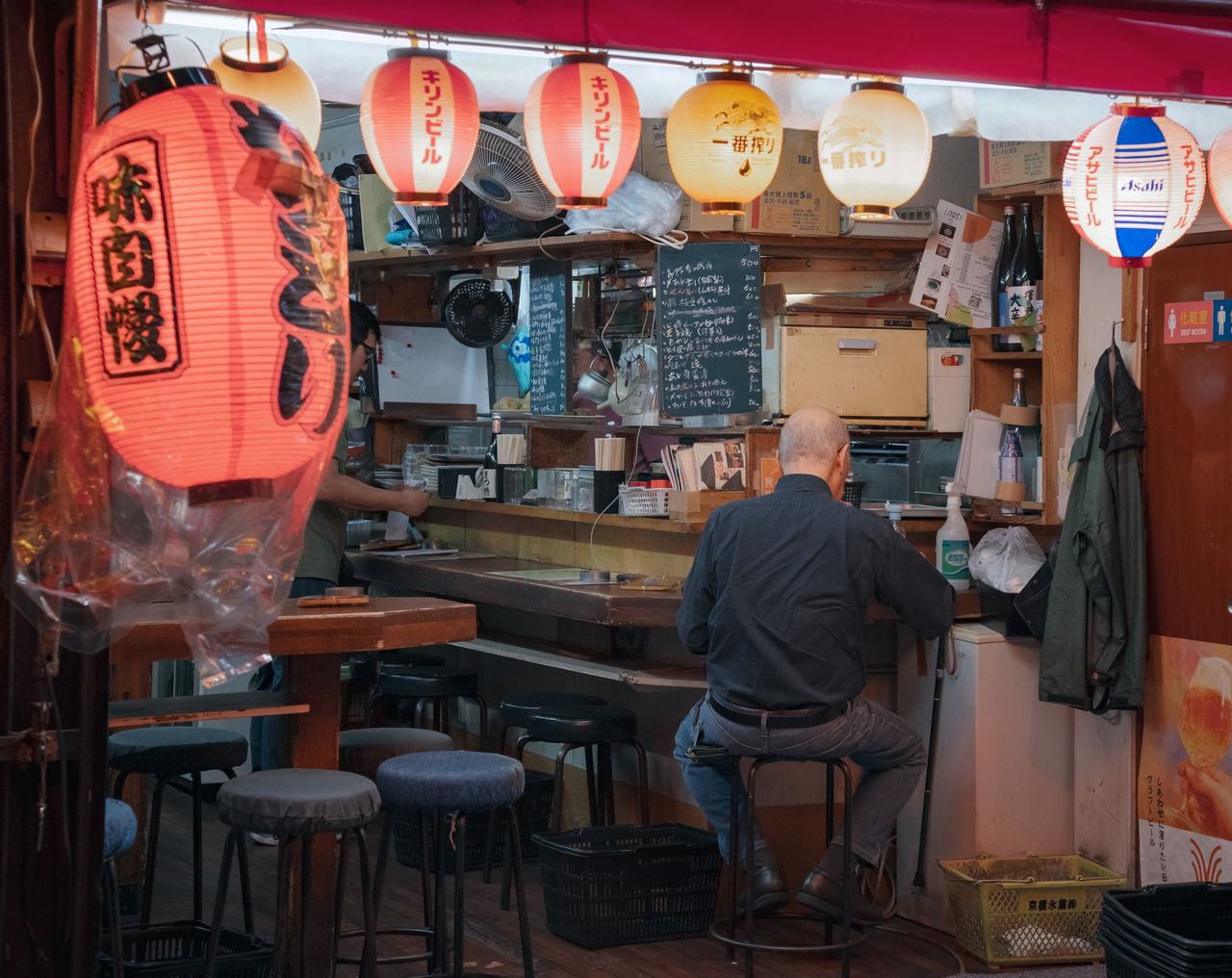
The course’s plan starts at a yakitori counter in Yurakucho. Kenta, a friend from the workshop, invites you and your coworker for drinks:
Kenta, a friend, asks
今度の土曜日、高円寺で飲みませんか?
Kondo no doyōbi, Kōenji de nomimasen ka?
Would you like to go for a drink in Koenji this Saturday?
His invitation ends in masen ka, a question in the negative, and so does the course’s general-purpose one:
You ask
今度、一緒に行きませんか?
Kondo, issho ni ikimasen ka?
Want to go together sometime? (polite)
Between friends, the same idea goes casual. The course’s note makes the pattern clear: the casual invitation asks in the negative too, 行かない?, won’t you go? To a coworker, it is 行きませんか?.
You ask
今度、一緒に行かない?
Kondo, issho ni ikanai?
Want to go together sometime? (to a friend)
The casual invitation asks in the negative: 行かない?, won’t you go? To a coworker, 行きませんか?.
Which one you use depends on the other person, not on you. The course is clear that you do not switch to casual speech on your own: wait until they do. More on that in casual vs polite Japanese.
Finding a day that works
In the course, the search for a day starts with a question about the weekend. Its note points out a small word that often goes missing in conversation:
You ask
週末、何か予定ありますか?
Shūmatsu, nani ka yotei arimasu ka?
Do you have any plans this weekend?
In conversation, the が after 予定 often drops out.
When you have a free day, offer it. The course’s note says 空いています means free, literally open:
You say
土曜日は空いています。
Doyōbi wa aite imasu.
I’m free on Saturday.
空いています means free, literally open.
You can also suggest one: 金曜日はどうですか?, how about Friday?, or 来週はどうですか?, how about next week? When everyone agrees, someone settles it. In the course, Mori-san does it with じゃあ、土曜日にしましょう, then let’s make it Saturday.
Saying no gently: the trailing chotto
This is the part to get right. A polite no in the course does not contain the word no. Its note on this line is direct: say ちょっと, a little, and let the sentence trail off. A flat “no, I won’t go” lands hard.
You say
日曜日はちょっと…
Nichiyōbi wa chotto...
Sunday’s not great...
The polite way to say no: ちょっと, a little, and let the sentence trail off. A flat いいえ、行きません lands hard.
You will hear it from the other side too. When Kenta invites Mori-san for Saturday, she cannot make it, and this is how she says so:
Mori-san, a coworker, says
すみません、土曜日はちょっと用事があって…
Sumimasen, doyōbi wa chotto yōji ga atte...
Sorry, I have plans on Saturday...
The course’s explanation says letting the sentence trail off is the soft way to say no. So when someone’s answer starts with sumimasen, has chotto in it and trails off, take it as a no and offer another day, for example with Raishū wa dō desu ka.
Settling a time and a meeting place
Once the day is fixed, ask about the time, or offer one with 土曜日の6時はどうですか?, how about six on Saturday?
You ask
何時がいいですか?
Nanji ga ii desu ka?
What time works for you?
Then the meeting place. The course notes that 待ち合わせ is meeting at a place you agree on, and that in Tokyo it is usually a station exit:
You ask
どこで待ち合わせしますか?
Doko de machiawase shimasu ka?
Where should we meet up?
待ち合わせ is meeting at a place you agree on. In Tokyo, that’s usually a station exit.
So name the station and the exit. The course’s note on this line explains why the exit matters: stations have several exits, so name one.
You ask
高円寺駅の北口でどうですか?
Kōenji eki no kitaguchi de dō desu ka?
How about the North Exit at Koenji Station?
Stations have several exits, so name one: 北口 is the north exit.
A time and an exit together are enough for two people to find each other, even at a station neither of you knows well.
Confirming the plan
Kenta wraps it up in one short line, and you say the key facts back with ne, which checks that you heard right:
Kenta, a friend, says
じゃあ、土曜日の6時に北口で。
Jā, doyōbi no rokuji ni kitaguchi de.
Then six on Saturday, at the North Exit.
You say
6時に北口ですね。
Rokuji ni kitaguchi desu ne.
Six at the North Exit, right?
The confirmation is worth the extra moment. If you heard six and it was really seven, or the North Exit when it was the East, this is when it gets fixed, not on the evening itself.
Close with something warm. The course’s line accepts the plan and adds that you are looking forward to it:
You say
いいですね。楽しみにしています。
Ii desu ne. Tanoshimi ni shite imasu.
Sounds good. I’m looking forward to it.
That is the whole plan in a handful of lines: an invitation, a day, a time, an exit, a confirmation and a warm close.
The same plan between friends
With friends who already talk casually, the steps are the same and the lines get shorter. At the Koenji izakaya, Kenta suggests a show next Saturday, and Aya, Kenta’s friend, offers a different day:
Aya, Kenta’s friend, says
日曜なら空いてるよ。
Nichiyō nara aiteru yo.
I’m free on Sunday.
The course’s explanation says 空いてる is the casual form of 空いています. If a day does not work for you, the casual no still trails off. The course’s note on this line says ごめん is the casual sorry:
You say
ごめん、その日はちょっと…
Gomen, sono hi wa chotto...
Sorry, that day’s not good for me.
ごめん is the casual sorry. The no still trails off, as it does in polite Japanese.
Then the time, 何時にする?, what time should we make it?, and Kenta’s casual wrap-up, じゃあ、6時に改札で, okay, six at the gates. Same structure as the polite plan, with fewer words.
If you are running late
On the day itself, one more line can save the evening. The course’s note on it is plain: Tokyo runs on time, and if you will be even five minutes late, call or send a message ahead with an apology.
You say
すみません、10分ぐらい遅れます。
Sumimasen, juppun gurai okuremasu.
Sorry, I’ll be about ten minutes late.
Tokyo runs on time. If you’ll be even five minutes late, call or send a message ahead with an apology. 10分 is right too.
In the course, Kenta takes the call and answers kindly:
Kenta, a friend, says
大丈夫ですよ。気をつけて来てください。
Daijōbu desu yo. Ki o tsukete kite kudasai.
No problem. Get here safely.
Every line on this page is a recording from Koe’s course. In the app you hear each line, say it out loud, and see what it heard, so you can make a plan in Japanese without reaching for your phone.
Every line on this page
The 17 lines above, in order, for one last listen before you go. Each one is the recording from the Koe course.
今度の土曜日、高円寺で飲みませんか?Kondo no doyōbi, Kōenji de nomimasen ka?Would you like to go for a drink in Koenji this Saturday?
今度、一緒に行きませんか?Kondo, issho ni ikimasen ka?Want to go together sometime? (polite)
今度、一緒に行かない?Kondo, issho ni ikanai?Want to go together sometime? (to a friend)
週末、何か予定ありますか?Shūmatsu, nani ka yotei arimasu ka?Do you have any plans this weekend?
土曜日は空いています。Doyōbi wa aite imasu.I’m free on Saturday.
日曜日はちょっと…Nichiyōbi wa chotto...Sunday’s not great...
すみません、土曜日はちょっと用事があって…Sumimasen, doyōbi wa chotto yōji ga atte...Sorry, I have plans on Saturday...
何時がいいですか?Nanji ga ii desu ka?What time works for you?
どこで待ち合わせしますか?Doko de machiawase shimasu ka?Where should we meet up?
高円寺駅の北口でどうですか?Kōenji eki no kitaguchi de dō desu ka?How about the North Exit at Koenji Station?
じゃあ、土曜日の6時に北口で。Jā, doyōbi no rokuji ni kitaguchi de.Then six on Saturday, at the North Exit.
6時に北口ですね。Rokuji ni kitaguchi desu ne.Six at the North Exit, right?
いいですね。楽しみにしています。Ii desu ne. Tanoshimi ni shite imasu.Sounds good. I’m looking forward to it.
日曜なら空いてるよ。Nichiyō nara aiteru yo.I’m free on Sunday.
ごめん、その日はちょっと…Gomen, sono hi wa chotto...Sorry, that day’s not good for me.
すみません、10分ぐらい遅れます。Sumimasen, juppun gurai okuremasu.Sorry, I’ll be about ten minutes late.
大丈夫ですよ。気をつけて来てください。Daijōbu desu yo. Ki o tsukete kite kudasai.No problem. Get here safely.
Common questions
How do you invite someone out in Japanese?
Ask in the negative. Politely, 今度、一緒に行きませんか?, want to go together sometime? With a friend who talks to you casually, 今度、一緒に行かない?. The course notes that the casual invitation asks in the negative too.
How do you politely say no to an invitation in Japanese?
Name the day, add chotto, and let the sentence trail off: 日曜日はちょっと…. The course notes that a flat “no, I won’t go” lands hard. With a friend, gomen takes the place of sumimasen.
How do you say “I’m free on Saturday” in Japanese?
土曜日は空いています. The course notes that 空いています means free, literally open. To ask someone else, turn it into a question, as the course does with 3日は空いていますか?, are you free on the third?
Where do people meet up in Tokyo?
The course notes that a meeting place agreed in advance, 待ち合わせ, is usually a station exit in Tokyo, and that stations have several exits, so you name one, as in 高円寺駅の北口でどうですか?.
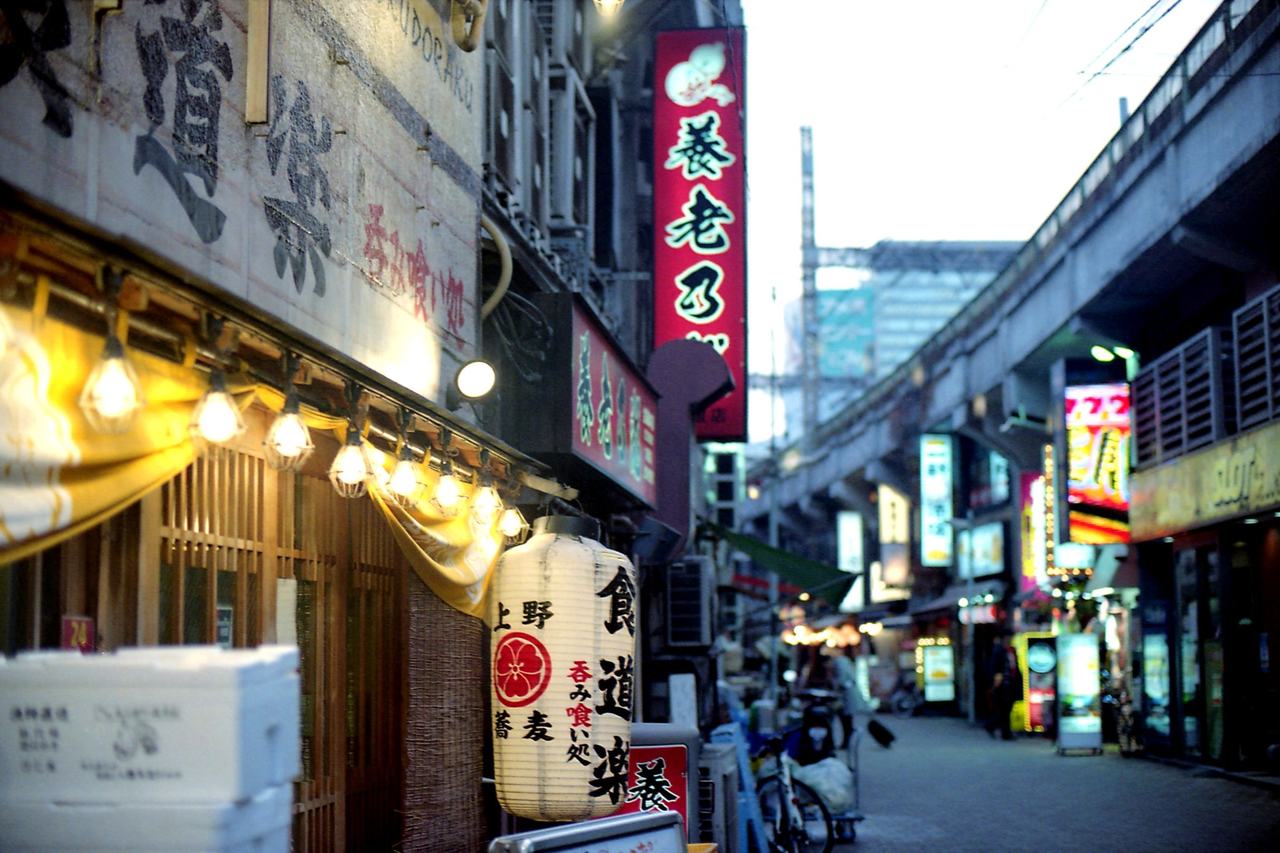
Opening photograph: Lanterns and lit signs line a narrow street beside an elevated railway in Tokyo at dusk. Photograph by Alan Wang on Pexels. Blog photo credits.