How to Book a Restaurant by Phone in Japanese
To book a restaurant by phone in Japanese, let the restaurant answer with its name, then say すみません、予約をお願いしたいんですが (I’d like to make a reservation) and give the date, time and number of people in one line, such as 15日の7時から、2人でお願いします (for two, on the 15th, at seven). After that, expect three things from the host: a question about how many, possibly a “that time is full,” and a request for your name. Below is the whole call, both sides, from the phone lesson in Koe’s course, where you book dinner for two at a small Japanese restaurant near your hotel in Ueno.
How the restaurant answers the phone
The first few seconds are the hardest part of the call, because the host answers in a very formal style. Here is how Yamaguchi-san, the host in the course, picks up:
Yamaguchi-san, the restaurant host, says
お電話ありがとうございます。和食青葉でございます。
Odenwa arigatō gozaimasu. Washoku Aoba de gozaimasu.
Thank you for calling Aoba.
The course explanation tells you what to expect: on the phone, staff use the most formal keigo, and de gozaimasu is a very polite desu. You do not need to speak that way yourself. You only need to recognize the shape: a thank-you for calling, then the restaurant’s name. When you hear the name, you know you have the right place, and it is your turn.
Opening your request
Start with sumimasen and say what you want. The course’s line does both:
You say
すみません、予約をお願いしたいんですが。
Sumimasen, yoyaku o onegai shitain desu ga.
Hello, I’d like to make a reservation.
The restaurant has answered with its name, so start with すみません. Ending on が leaves the request open, which sounds soft.
The note explains two choices in this line. Because the restaurant has already answered with its name, you start with sumimasen rather than a phone hello. And ending on ga leaves the request open, which sounds soft and invites the host to take it from there.
Date, time and number of people
The host will ask how many of you there are, and you can answer with everything at once:
Yamaguchi-san, the restaurant host, asks
何名様でしょうか?
Nanmeisama deshō ka?
For how many people?
You say
15日の7時から、2人でお願いします。
Jūgonichi no shichiji kara, futari de onegai shimasu.
For two, on the 15th, at seven, please.
She asks 何名様. The 様 honors the customer, so you answer 2人 or 2名, never 2名様. 7時 is fine too, and common on the phone.
The line packs in the three facts a restaurant needs: jūgonichi, the 15th; shichiji kara, from seven; and futari de, for two. As the course notes say, the host’s nanmeisama honors the customer, so your answer is futari, two people, never with sama added. The note adds that 7時 can also be read ななじ, which is fine, and common on the phone. Another course note gives the reason: on the phone or somewhere noisy, it keeps seven from being mistaken for one o’clock.
If the host speaks too fast, it is fine to ask her to slow down: もう少しゆっくりお願いします.
When your time is full
This is the moment most likely to throw you: a long, polite sentence that ends without finishing. In the course, seven o’clock is taken:
Yamaguchi-san, the restaurant host, says
あいにく7時は満席でございまして…
Ainiku shichiji wa manseki de gozaimashite...
I’m afraid seven is fully booked...
The course explanation breaks it down. Ainiku softens bad news, and manseki means every seat is taken. The sentence trails off, which the course describes elsewhere as the soft way to say no, and it leaves room for you to suggest another time. You do not need to understand every word: manseki alone tells you the answer. The course gives you a ready reply that asks about a later time, and a second line to confirm it:
You ask
8時なら空いていますか?
Hachiji nara aite imasu ka?
Is eight free, then?
You say
じゃあ、8時でお願いします。
Jā, hachiji de onegai shimasu.
Eight o’clock, then, please.
Hachiji nara aite imasu ka asks whether eight is free instead, and aite imasu, free, is a word you will hear again if she checks other times. Once she says yes, jā, hachiji de onegai shimasu settles it.
Your name and phone number
Next the host asks for your name, in another very formal sentence:
Yamaguchi-san, the restaurant host, asks
お名前をお伺いしてもよろしいですか?
Onamae o oukagai shitemo yoroshii desu ka?
May I have your name?
You say
ブラウンと申します。
Buraun to mōshimasu.
My name is Brown.
Your family name, with the humble 申します. For your own name it’s 名前, never お名前はブラウンです: the お honors the other person.
Give your family name with the humble mōshimasu. The note warns against one easy mistake: the o in onamae honors the other person, so you never use it for your own name.
The host may then ask for a phone number. The course’s line shows how numbers are read on the phone:
You say
電話番号は090の1234の5678です。
Denwabangō wa zerokyūzero no ichinīsan'yon no gōrokunanahachi desu.
My number is 090-1234-5678.
A phone number is read digit by digit, with の between the groups. Short digits are drawn out, so two is にー and five is ごー.
Read it digit by digit, with no between the groups. The note points out that short digits are drawn out, so two becomes nī and five gō. It helps to practice your own number this way before you call.
Closing the call
When everything is set, the host closes the booking with one more formal line:
Yamaguchi-san, the restaurant host, says
お待ちしております。
Omachi shite orimasu.
We look forward to seeing you.
Omachi shite orimasu is, in the course’s translation, “we look forward to seeing you.” A simple ありがとうございます from you ends the call. If you missed any detail along the way, ask before you hang up with すみません、もう一度お願いします: a booking confirmed twice is better than one you are unsure of.
Every line on this page is a recording from Koe’s course. On the phone you cannot see the other person, so hearing the host’s formal lines again and again is the best preparation. In the app you hear each line, say your side out loud, and see what it heard. If plans change after you book, the guide to changing or canceling a reservation has the next call.
Every line on this page
The 11 lines above, in order, for one last listen before you go. Each one is the recording from the Koe course.
お電話ありがとうございます。和食青葉でございます。Odenwa arigatō gozaimasu. Washoku Aoba de gozaimasu.Thank you for calling Aoba.
すみません、予約をお願いしたいんですが。Sumimasen, yoyaku o onegai shitain desu ga.Hello, I’d like to make a reservation.
何名様でしょうか?Nanmeisama deshō ka?For how many people?
15日の7時から、2人でお願いします。Jūgonichi no shichiji kara, futari de onegai shimasu.For two, on the 15th, at seven, please.
あいにく7時は満席でございまして…Ainiku shichiji wa manseki de gozaimashite...I’m afraid seven is fully booked...
8時なら空いていますか?Hachiji nara aite imasu ka?Is eight free, then?
じゃあ、8時でお願いします。Jā, hachiji de onegai shimasu.Eight o’clock, then, please.
お名前をお伺いしてもよろしいですか?Onamae o oukagai shitemo yoroshii desu ka?May I have your name?
ブラウンと申します。Buraun to mōshimasu.My name is Brown.
電話番号は090の1234の5678です。Denwabangō wa zerokyūzero no ichinīsan'yon no gōrokunanahachi desu.My number is 090-1234-5678.
お待ちしております。Omachi shite orimasu.We look forward to seeing you.
Common questions
How do you say “I’d like to make a reservation” in Japanese?
Say すみません、予約をお願いしたいんですが. Start with sumimasen once the restaurant has answered with its name. Ending on ga leaves the request open, which sounds soft.
How do you give your name on the phone in Japanese?
Use your family name with the humble mōshimasu: ブラウンと申します, with your own name in place of Brown. Never put the honorific o of onamae on your own name.
What does manseki mean?
Manseki means every seat is taken, fully booked. The host may say it with ainiku, which softens bad news. Ask for another time with a line like 8時なら空いていますか?.
How do you say a phone number in Japanese?
Read it digit by digit, with no between the groups. The course notes say short digits are drawn out, so two is nī and five is gō. Listen to 電話番号は090の1234の5678です for the rhythm.
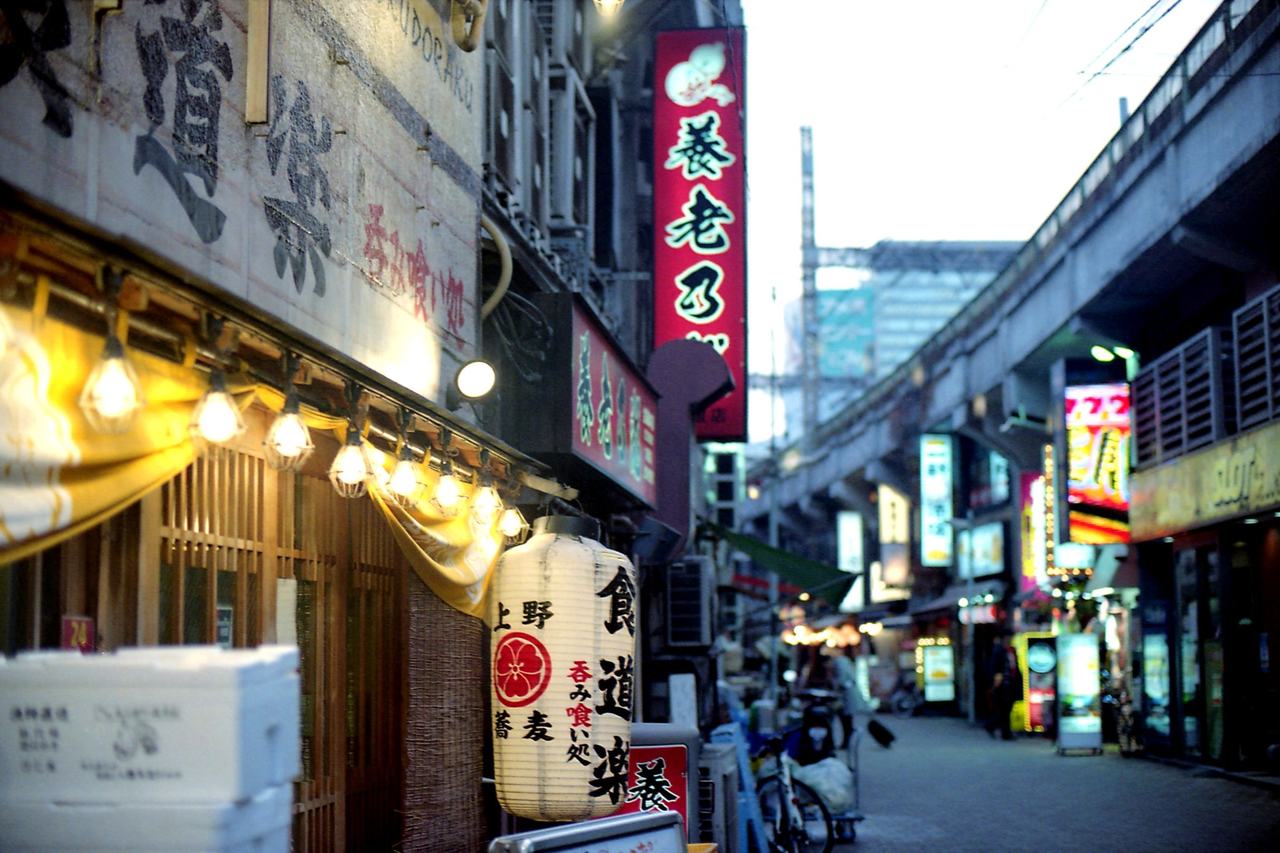
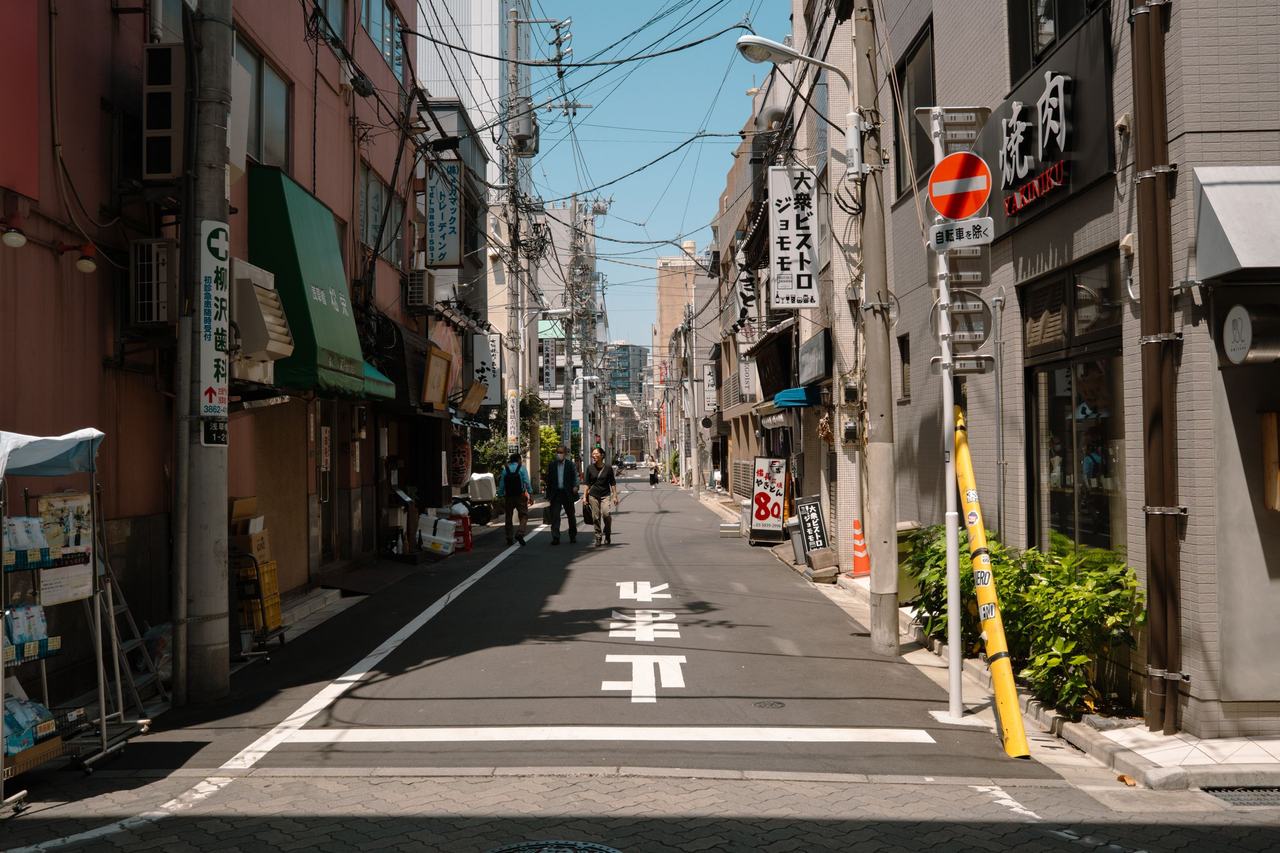
Opening photograph: Lanterns and lit signs line a narrow street beside an elevated railway in Tokyo at dusk. Photograph by Alan Wang on Pexels. Blog photo credits.