How to Buy Phone Credit (Recarga) in Mexico in Spanish
To buy phone credit in Mexico, go to a corner store or an OXXO counter and ask for una recarga with the amount, for example Una recarga de cien pesos, por favor ($100 of phone credit, please). The cashier then asks two things: which carrier, ¿De qué compañía?, and your number, ¿Me da su número? You answer De Telcel (or your own carrier) and show your number on the screen. When you hear Ya entró su recarga, the credit went through. Below is that whole exchange, with every line recorded, from Habla’s corner-store unit at Doña Chelo’s tiendita.
What a recarga is, and where to buy one
Una recarga is phone credit, a top-up for a prepaid line. The course’s note sums it up: any tiendita sells it, and they ask your carrier and your number. You can also top up a Telcel line at an OXXO counter the same way, by asking for a recarga and naming the carrier, or online on the carrier’s own site.
If you are not sure a small store sells credit, ask first:
You ask
¿Hace recargas?
Do you sell phone credit?
Literally: do you make top-ups? Mexicans say hacer una recarga.
The note explains the wording: Mexicans say hacer una recarga, to make a top-up, so the store is literally asked whether it makes them.
Asking for the amount
The cashier may greet you with an open question. Doña Chelo’s is ¿Qué se le ofrece?, what can I do for you. Your answer is the amount, said as a recarga de a number of pesos:
Doña Chelo, at the corner store, asks
Buenas tardes. ¿Qué se le ofrece?
Good afternoon. What can I do for you?
You say
Una recarga de cien pesos, por favor.
$100 of phone credit, please.
Una recarga is phone credit. Any tiendita sells it; they ask your carrier and your number.
You say
Una recarga de cincuenta pesos, por favor.
$50 of phone credit, please.
The course’s explanation spells out the number: cien is a hundred, so the first line asks for 100 pesos of credit. Cincuenta is fifty, as in the second line. For other amounts, and for hearing prices in general, see understanding prices in pesos.
Which carrier: the first question back
The first thing the cashier needs is your carrier. It comes as a short question, and in the course the answer is shorter still:
Doña Chelo, at the corner store, asks
¿De qué compañía?
Which carrier?
You say
De Telcel.
Telcel.
The answer to ¿De qué compañía?
The course notes that Telcel is the big one, and that AT&T, Movistar and Bait are the others. Answer with de and your carrier’s name, the way De Telcel does. If you bought a SIM on arrival and are not sure which carrier it is, check before you go to the counter: it is the one question you cannot answer by pointing.

Giving your number without reading it out
Next comes your number. This sounds like the hard part, since the course notes that Mexico City numbers are ten digits. The good news is that you do not have to say it.
Doña Chelo, at the corner store, asks
¿Me da su número?
Can I have your number?
You say
Aquí está mi número.
Here’s my number.
Show the screen. You never have to read a phone number out loud in this unit.
The note is practical: show the screen. In the course’s corner-store unit, you never have to read a phone number out loud. Diego’s own answer in the scene is even shorter than the course phrase:
Diego, a friend, says
Sí, aquí está.
Yes, here it is.
Sí, aquí está: yes, here it is. Hold your phone up with your number on it, or have it written down. If you do want to say a number aloud one day, the course teaches it in pairs of digits, and that is a different exchange: see swapping phone numbers in Spanish.
Hearing that the credit went through
Then the cashier tells you it worked. Listen for ya entró, it went in:
Doña Chelo, at the corner store, says
Listo. Ya entró su recarga. Son cien pesos.
Done. Your credit went through. That’s $100.
Listo means done or ready. Ya entró su recarga means your credit went through. Son cien pesos is what you owe. Pay, and you are finished. A thank you and a goodbye closes it:
You say
Gracias, hasta luego.
Thanks, bye.
When you do not catch the question
The carrier question comes fast, and the number question right after it. If you miss one, do not guess. The course teaches a very Mexican one-word way to ask someone to say it again, and its note warns against the obvious alternative:
You ask
¿Mande?
Pardon?
The polite Mexican way to ask someone to say it again, or to answer when they call you. Younger people also say ¿Perdón? or ¿Cómo? A bare ¿Qué? can sound rude.
If you need the whole sentence again, the course has a fuller version. It works as well at a store counter as it does on the phone, where the course uses it:
You ask
¿Me lo repite?
Could you say that again?
Literally: will you repeat it to me? To a friend: ¿Me lo repites? ¿Mande? works too.
Once you know the two questions are about the carrier and the number, you will usually catch them from a single word: compañía or número. Listen for those, and you can answer even if the rest goes by.
The whole exchange in order
Here is the visit as it runs at the counter. You hear ¿Qué se le ofrece? You say Una recarga de cien pesos, por favor. The cashier asks ¿De qué compañía? You say De Telcel. The cashier asks ¿Me da su número? You say Aquí está mi número and show the screen. You hear Listo. Ya entró su recarga, and the price. You pay and say thanks.
That is four short lines of your own, and two questions to recognize. The questions are the harder part, because they come quickly, and ¿De qué compañía? sounds like one long word at first. Every line on this page is a recording from Habla’s course. In the app you hear each line, say it out loud, and see what it heard, which is a good way to make the two questions familiar before your first top-up.
Every line on this page
The 13 lines above, in order, for one last listen before you go. Each one is the recording from the Habla course.
¿Hace recargas?Do you sell phone credit?
Buenas tardes. ¿Qué se le ofrece?Good afternoon. What can I do for you?
Una recarga de cien pesos, por favor.$100 of phone credit, please.
Una recarga de cincuenta pesos, por favor.$50 of phone credit, please.
¿De qué compañía?Which carrier?
De Telcel.Telcel.
¿Me da su número?Can I have your number?
Aquí está mi número.Here’s my number.
Sí, aquí está.Yes, here it is.
Listo. Ya entró su recarga. Son cien pesos.Done. Your credit went through. That’s $100.
Gracias, hasta luego.Thanks, bye.
¿Mande?Pardon?
¿Me lo repite?Could you say that again?
Common questions
What is a recarga in Mexico?
Una recarga is phone credit for a prepaid line. You buy it at a corner store or an OXXO counter by naming the amount, the carrier and your number. Mexicans say hacer una recarga, to top up.
Where can I buy a recarga in Mexico City?
The course notes that any tiendita, a corner store, sells it. You can also top up a Telcel line at an OXXO counter, or online on the carrier’s site.
Do I have to say my phone number in Spanish to top up?
No. Say Aquí está mi número and show the screen. The course notes that you never have to read a number aloud for a top-up in its corner-store unit.
What does ya entró su recarga mean?
It means your credit went through. Listo, done, often comes first, then the price, such as Son cien pesos.
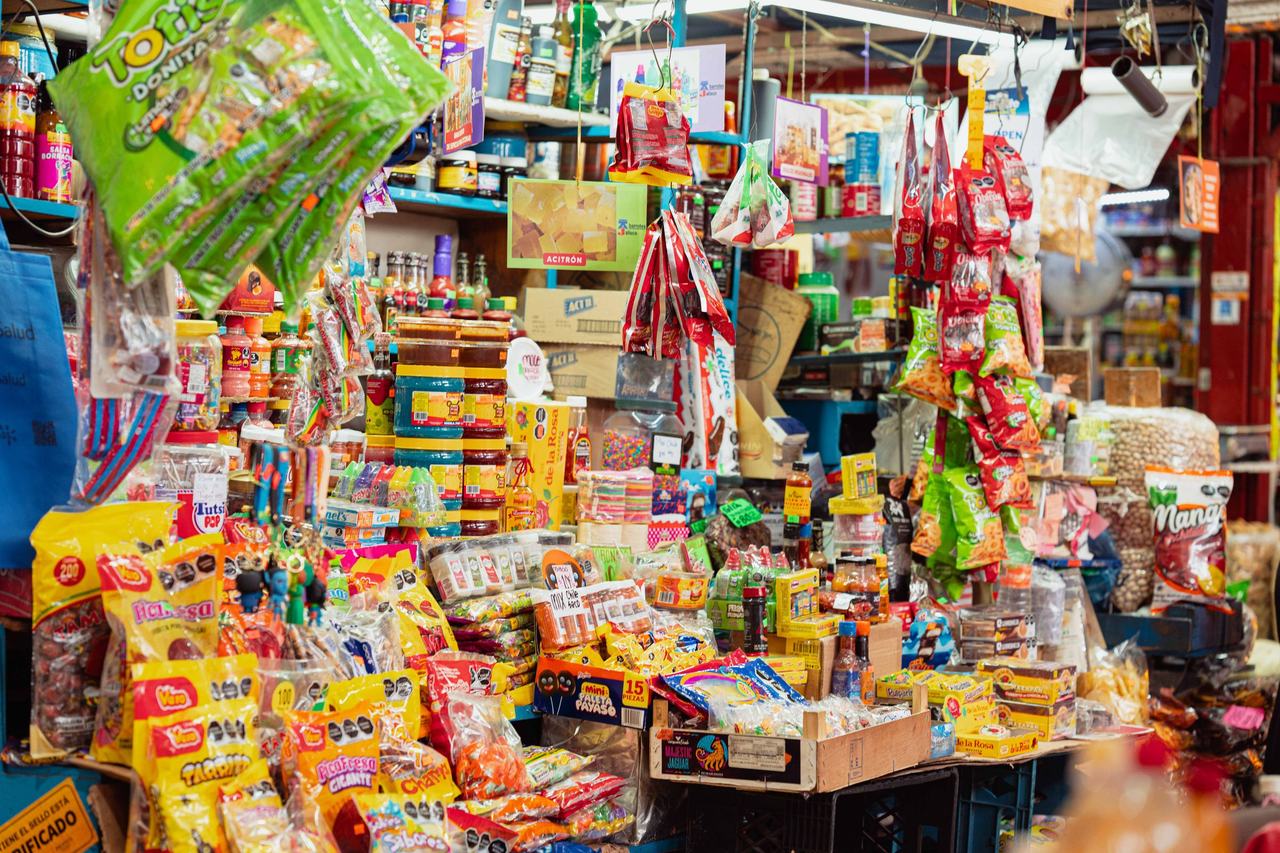
Opening photograph: A stall in Mexico City piled high with bags of Mexican candies and snacks. Photograph by Viridiana Rivera on Pexels. Blog photo credits.