How to Take a Taxi in Mexico City in Spanish
To take a taxi in Mexico City in Spanish, give the neighborhood first, then a street and a landmark: A la colonia Roma, por favor, then por Orizaba, cerca del parque, on Orizaba, near the park. To stop, say Aquí está bien. To pay, ask ¿Cuánto le debo?, what do I owe you. Those few lines carry the whole ride. Below is a complete trip in the order it happens, with Don Toño, the taxi driver in Habla’s getting-around unit, and every line recorded.
Telling the driver where you are going
The driver speaks first. In the course, Don Toño asks Mariana where she is headed:
Don Toño, the taxi driver, asks
¿A dónde la llevo, señorita?
Where to, miss?
¿A dónde la llevo, señorita? is where to, miss: literally, where do I take you. In the role play he asks it a simpler way, ¿A dónde vamos?, where are we going. Either way, your answer is the place.
In the course, that place is a neighborhood, a colonia:
You say
A la colonia Roma, por favor.
To the Roma, please.
A colonia is a neighborhood: the word on every address. People just say a la Roma.
Don Toño, the taxi driver, says
Va, a la Roma.
Okay, to the Roma.
The course notes that a colonia is a neighborhood, the word on every address, and that people just say a la Roma. Don Toño’s reply, va, a la Roma, is okay, to the Roma. Hearing the place said back is your confirmation that he understood.
Whereabouts: a street and a landmark
A neighborhood is a big place, so the next question narrows it down:
Don Toño, the taxi driver, asks
¿Por dónde?
Whereabouts?
You say
Por Orizaba, cerca del parque.
On Orizaba, near the park.
The answer to ¿Por dónde?, whereabouts: a street and a landmark, as Mariana says in the Listen.
¿Por dónde? asks whereabouts. The course’s answer is a street and a landmark: por Orizaba, on Orizaba, and cerca del parque, near the park. You do not need a full address for this. A street name and something visible nearby is what the question is asking for.
If the driver knows it, you will hear something like this:
Don Toño, the taxi driver, says
Ah, sí, ya sé dónde.
Ah yes, I know where.
Ya sé dónde is I know where. Now you can sit back.
In the course scene, Don Toño also gives a rough fare at this point:
Don Toño, the taxi driver, says
Va. Son como ciento cuarenta pesos.
Okay. It’ll be about $140.
Son como ciento cuarenta pesos is it’ll be about $140, and Mariana answers está bien, that’s fine. Notice como again, the word for about. If you want to give a full address instead, with the number and the cross streets, see how to give your address in Spanish.
Stopping where you want
As you get close, the driver may ask where exactly to stop:
Don Toño, the taxi driver, asks
¿Aquí o más adelante?
Here, or a little farther?
¿Aquí o más adelante? is here, or a little farther? You have two easy answers:
You say
Aquí está bien.
Here is fine.
Say it when you want the driver to stop. Aquí mero: right here.
You say
En la esquina, por favor.
At the corner, please.
Aquí está bien means here is fine, and the course notes it is what you say when you want the driver to stop. For an exact spot, the course adds aquí mero, right here. En la esquina, por favor is at the corner, please.
You do not have to wait for the question. If you see your stop coming, say aquí está bien and the driver will pull over. When you arrive, you will hear the words that end every ride in the course:
Don Toño, the taxi driver, says
Ya llegamos.
Here we are.
Ya llegamos is here we are.
Paying the fare
Now the question is what you owe. The course gives the phrase for it and a note on where it fits:
You ask
¿Cuánto le debo?
What do I owe you?
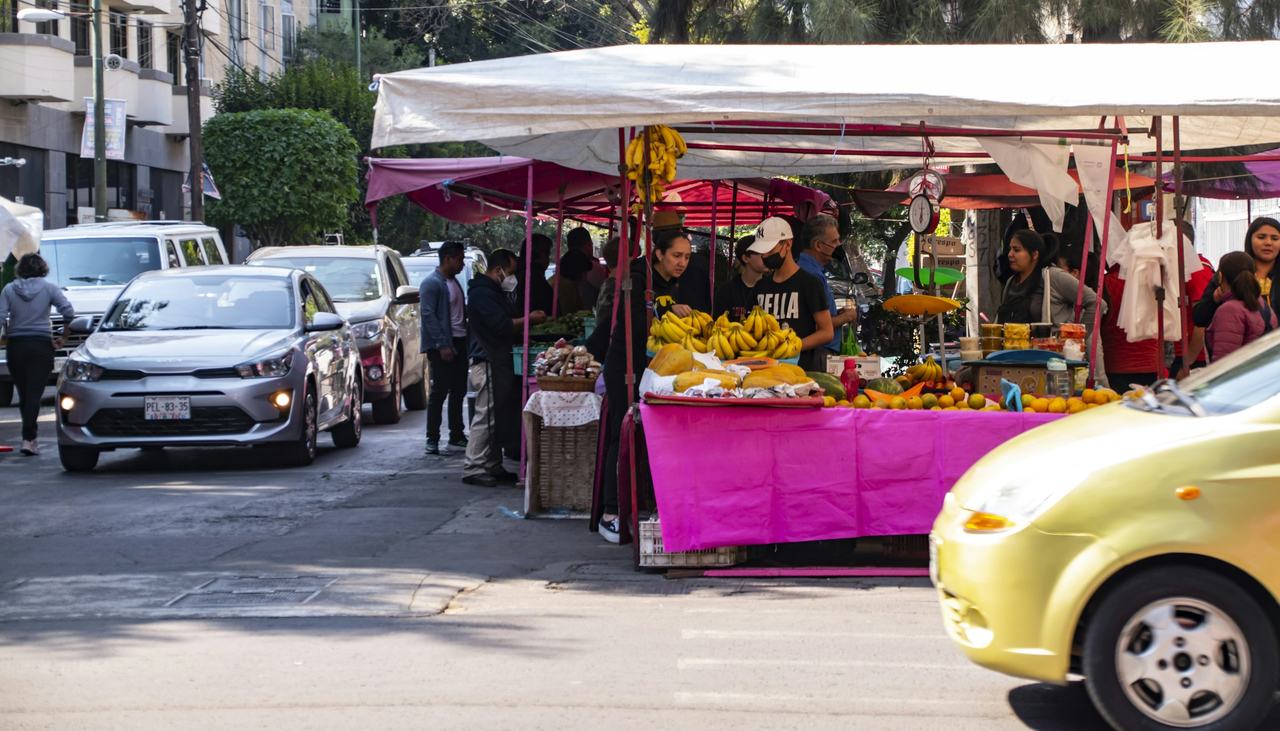
The usual question at the end of a taxi ride, or at a stall.
Don Toño, the taxi driver, says
Son ciento cuarenta pesos.
It’s $140.
¿Cuánto le debo? is what do I owe you, the usual question at the end of a taxi ride. The answer is a price with son: son ciento cuarenta pesos, it’s $140. Ciento is a hundred and cuarenta is forty.
Have cash ready. Street taxis in Mexico are paid in cash, even in big cities where cards are common in shops and restaurants.
Change for a big bill, and keeping it
The course has a warning that fits taxis well: taxis and small stores are often short of change for big bills. If all you have is a large bill, ask before you hand it over:
You ask
¿Tiene cambio de quinientos?
Do you have change for $500?
Taxis and small stores are often short of change for big bills.
¿Tiene cambio de quinientos? asks if the driver has change for a $500 bill. In the course, Don Toño says sí, cómo no, yes, of course. If the answer is no, this is the time to find out, while you are still in the car and can look for a smaller bill. For more on breaking big bills, see asking for change in Spanish.
If you would rather not wait for coins, there is a line for that too:
You say
Quédese con el cambio.
Keep the change.
Quédese con el cambio is keep the change.
Saying goodbye to the driver
The ride ends with a friendly exchange. In the course, Mariana thanks Don Toño like this:
Mariana, a coworker, says
Gracias. Que le vaya bien.
Thank you. Have a good day.
Que le vaya bien wishes him well, and the course translates it as have a good day. Don Toño answers igualmente, señorita, you too, miss. Igualmente is likewise, and it is also what you say back if a driver wishes you well first.
Here is the whole ride in brief: the neighborhood, ¿Por dónde? with a street and a landmark, aquí está bien or en la esquina, ¿Cuánto le debo?, and a goodbye. Every line on this page is a recording from Habla’s course. In the app you hear each line, say it out loud, and see what it heard, so Don Toño’s questions sound familiar before the first real ride.
Every line on this page
The 16 lines above, in order, for one last listen before you go. Each one is the recording from the Habla course.
¿A dónde la llevo, señorita?Where to, miss?
A la colonia Roma, por favor.To the Roma, please.
Va, a la Roma.Okay, to the Roma.
¿Por dónde?Whereabouts?
Por Orizaba, cerca del parque.On Orizaba, near the park.
Ah, sí, ya sé dónde.Ah yes, I know where.
Va. Son como ciento cuarenta pesos.Okay. It’ll be about $140.
¿Aquí o más adelante?Here, or a little farther?
Aquí está bien.Here is fine.
En la esquina, por favor.At the corner, please.
Ya llegamos.Here we are.
¿Cuánto le debo?What do I owe you?
Son ciento cuarenta pesos.It’s $140.
¿Tiene cambio de quinientos?Do you have change for $500?
Quédese con el cambio.Keep the change.
Gracias. Que le vaya bien.Thank you. Have a good day.
Common questions
How do I tell a taxi driver where to go in Spanish?
Say the neighborhood with a la colonia and por favor, as in A la colonia Roma, por favor. If the driver asks ¿Por dónde?, whereabouts, add a street and a landmark: Por Orizaba, cerca del parque.
How do I say “stop here” in a taxi in Mexico?
Say Aquí está bien, here is fine. The course notes that aquí mero means right here, and En la esquina, por favor asks to stop at the corner.
What does ¿Cuánto le debo? mean?
It means what do I owe you. The course calls it the usual question at the end of a taxi ride, or at a stall.
Do Mexico City street taxis take cards?
Plan to pay in cash. Street taxis in Mexico are paid in cash, so carry smaller bills, and if you only have a large one, ask ¿Tiene cambio de quinientos? before you pay.
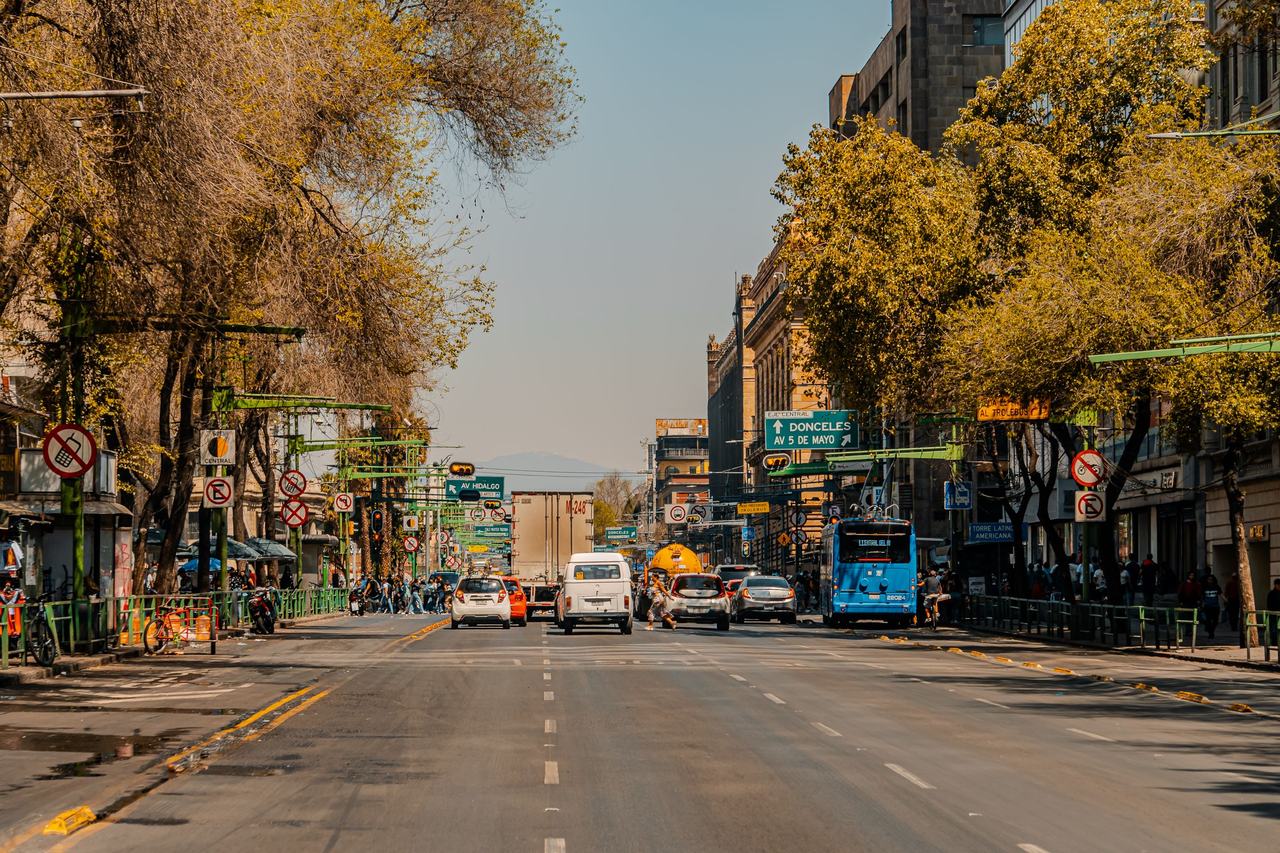
Opening photograph: Cars, vans and a blue city bus move down a wide, tree-lined avenue in Mexico City. Photograph by Jimmy Elizarraras on Pexels. Blog photo credits.