Getting to Coyoacán by Metro: The Spanish You Need
To get to Coyoacán by metro, ask ¿Cómo llego a Coyoacán? In Habla’s course, the answer is line three, about six stations, off at Viveros, then a ten-minute walk: toma la línea tres, te bajas en Viveros, de ahí caminas diez minutos. Viveros/Derechos Humanos is a stop on Metro Line 3. Below is that whole conversation, one step at a time, with the question you ask at each point and the answer you hear, plus why Mariana, who is from the city, says to skip the Metrobús for this trip.
Asking the way to Coyoacán
In the course, Tom wants to get to Coyoacán and asks Mariana, a coworker. In the role play she offers help first:
Mariana, a coworker, asks
¿Te ayudo con algo?
Need a hand with something?
You ask
¿Cómo llego a Coyoacán?
How do I get to Coyoacán?
Literally: how do I arrive at…? The question for any place in the city.
¿Te ayudo con algo? is need a hand with something? Your answer is the question itself: ¿Cómo llego a Coyoacán?, how do I get to Coyoacán. The course notes that it literally means how do I arrive at, and that it works for any place in the city.
The first part of the answer is the way to travel:
Mariana, a coworker, says
Es fácil, en metro.
Easy, by metro.
Es fácil, en metro is easy, by metro. Now you know which questions come next: the line, the number of stops and where to get off.
Line three, all the way
Mariana names the line straight away:
Mariana, a coworker, says
Toma la línea tres.
Take line three.
Mariana, a coworker, says
Y es directo, sin transbordo.
And it’s direct, no transfer.
Toma la línea tres is take line three. Y es directo, sin transbordo is and it’s direct, no transfer: you stay on the same train the whole way. Transbordo is the word for changing lines, and sin means without.
Line 3 is the one to look for on the maps. The course notes that metro lines have numbers and colors, so once you know the number, look for its color. If you are not given the line, the course question for it is ¿Cuál línea tomo?
How many stations
Knowing roughly how many stops to count makes the ride easier. Ask:
You ask
¿Cuántas estaciones son?
How many stations is it?
Mariana, a coworker, says
Como seis, no es mucho.
About six, not many.
Como seis, no es mucho is about six, not many. The course explains that como before a number means about, so count it as a guide. It also depends on where you start, so ask from wherever you are.

Getting off at Viveros, then walking
The station is the key piece of the answer. If it has not come up, ask directly:
You ask
¿Dónde me bajo?
Where do I get off?
Bajarse is to get off. Te bajas en…: you get off at…
Mariana, a coworker, says
En Viveros. Y de ahí caminas diez minutos.
At Viveros. From there you walk ten minutes.
En Viveros is at Viveros. Y de ahí caminas diez minutos is and from there you walk ten minutes. The course notes that bajarse is to get off and that you will hear the answer as te bajas en..., you get off at, so listen for the station name right after it. If you are not sure you caught it, say the name back with a question in your voice. The course calls saying directions back the best way to be sure you got them, and a station name is the part most worth checking.
The station’s full name is Viveros/Derechos Humanos, and it is on Metro Line 3. Line 3 also has a station called Coyoacán. Do not let the name confuse you: for Coyoacán itself, Mariana’s answer is Viveros. The course pairs the Coyoacán station with something else, the Cineteca, which comes up below.
For the ten-minute walk at the end, the lines for asking whether something is close, and for following turns, are on their own pages: is it far? walking directions and asking for directions in Mexico City.
Why not the Metrobús
Tom asks about the other option, the Metrobús, which the course describes as the red bus with its own lane:
Tom, a newcomer, asks
¿Y no hay Metrobús?
And isn’t there a Metrobús?
Mariana, a coworker, says
Sí, pero te deja lejos. Mejor el metro.
There is, but it leaves you far away. The metro’s better.
¿Y no hay Metrobús? is and isn’t there a Metrobús? Mariana says there is, pero te deja lejos: but it leaves you far away. Mejor el metro is the metro’s better. That is the course’s advice for this trip, and it shows why it pays to ask: the answer covers the walk at the other end, not only the ride.
A movie at the Cineteca
Coyoacán comes up again in the course when Diego invites Tom to the movies:
Diego, a friend, asks
Hay una película mexicana en la Cineteca. ¿Quieres ir?
There’s a Mexican movie on at the Cineteca. Do you want to come?
You say
Hay una película mexicana en la Cineteca.
There’s a Mexican movie on at the Cineteca.
Hay: there is, there are. The Cineteca Nacional, by metro Coyoacán, is the city’s film house.
Hay una película mexicana en la Cineteca is there’s a Mexican movie on at the Cineteca. The course notes that the Cineteca Nacional, by metro Coyoacán, is the city’s film house. So if a plan takes you there, the station to ask for is Coyoacán, also on Line 3. You can ask for it with the same question: cómo llego a, then the place.
The whole route in five lines
Here is the trip as the course gives it, question by answer:
- ¿Cómo llego a Coyoacán? Answer: es fácil, en metro.
- Which line? Answer: toma la línea tres, and it is directo, sin transbordo.
- ¿Cuántas estaciones son? Answer: como seis.
- ¿Dónde me bajo? Answer: en Viveros.
- Then: de ahí caminas diez minutos.
Every line on this page is a recording from Habla’s course. In the app you hear a line, say it out loud, and it shows you what it heard. Play Mariana’s answers a few times before the trip, so that línea tres and Viveros jump out the moment you hear them.
Every line on this page
The 13 lines above, in order, for one last listen before you go. Each one is the recording from the Habla course.
¿Te ayudo con algo?Need a hand with something?
¿Cómo llego a Coyoacán?How do I get to Coyoacán?
Es fácil, en metro.Easy, by metro.
Toma la línea tres.Take line three.
Y es directo, sin transbordo.And it’s direct, no transfer.
¿Cuántas estaciones son?How many stations is it?
Como seis, no es mucho.About six, not many.
¿Dónde me bajo?Where do I get off?
En Viveros. Y de ahí caminas diez minutos.At Viveros. From there you walk ten minutes.
¿Y no hay Metrobús?And isn’t there a Metrobús?
Sí, pero te deja lejos. Mejor el metro.There is, but it leaves you far away. The metro’s better.
Hay una película mexicana en la Cineteca. ¿Quieres ir?There’s a Mexican movie on at the Cineteca. Do you want to come?
Hay una película mexicana en la Cineteca.There’s a Mexican movie on at the Cineteca.
Common questions
Which metro line goes to Coyoacán?
In the course, the answer is line three: toma la línea tres y te bajas en Viveros, take line three and get off at Viveros, then walk ten minutes. Viveros/Derechos Humanos and Coyoacán are both stations on Metro Line 3.
How do I ask how to get somewhere in Spanish?
Use cómo llego a plus the place, as in ¿Cómo llego a Coyoacán? The course notes that it works for any place in the city.
Is the Cineteca Nacional near a metro station?
Yes. The course notes that the Cineteca Nacional is by metro Coyoacán, the station of that name on Line 3.
Is the Metrobús a good way to get to Coyoacán?
In the course, Mariana says no: te deja lejos, it leaves you far away, and mejor el metro, the metro’s better.
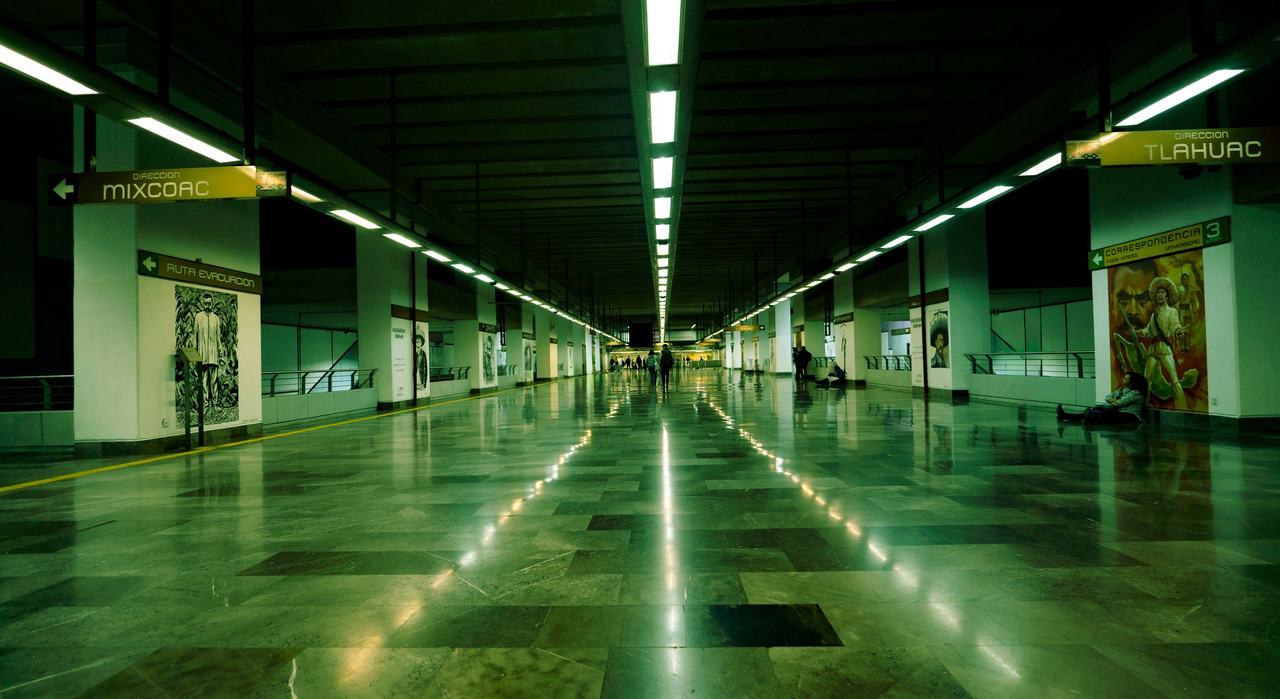
Opening photograph: A long, nearly empty metro platform in Mexico City under rows of fluorescent lights. Photograph by Vintage Lenses on Pexels. Blog photo credits.