Survival Spanish for Mexico City: The Phrases That Matter
The survival Spanish for Mexico City fits on one page: a greeting for the time of day, por favor after anything you ask for, ¿Mande? when you miss what someone said, and Gracias, hasta luego on the way out. Add one line for each place you will actually go, the café, the counter, the taxi, the taco stand and the pharmacy, and you can handle the first days of a trip. Here is that minimum, one line per situation, each with its recording from Habla’s course and, where it matters, the reply you will hear.
Four lines that work everywhere
Start every exchange with a greeting. The course teaches it by the time of day: buenos días in the morning, buenas tardes from about noon until it gets dark, and buenas noches after dark.
You say
Buenas tardes.
Good afternoon.
From about noon until it gets dark.
When you do not catch something, say ¿Mande? The course calls it the polite Mexican way to ask someone to say it again, and warns that a bare ¿Qué? can sound rude.
You ask
¿Mande?
Pardon?
The polite Mexican way to ask someone to say it again, or to answer when they call you. Younger people also say ¿Perdón? or ¿Cómo? A bare ¿Qué? can sound rude.
When a repeat does not help, say so plainly, and give the other person the chance to try another way: other words, a gesture, a pointed finger.
You say
Perdón, no entendí.
Sorry, I didn’t understand.
And when you leave, thanks and goodbye in one line. The course notes that hasta luego is the everyday goodbye, even to someone you may never see again.
You say
Gracias, hasta luego.
Thanks, bye.
At the café
The app’s first minute is a café order, and its note is the whole method: anything plus por favor is the simplest way to order. You can use the same shape for anything you can point at.
You say
Un café, por favor.
A coffee, please.
Anything + por favor: the simplest way to order.
The other café line you will want is the bathroom. Sofía’s answer is the kind of reply to expect: a place and a direction.
You ask
¿Dónde está el baño?
Where’s the bathroom?
Sofía, the barista, says
Al fondo, a la derecha.
At the back, on the right.
Al fondo is at the back, and a la derecha is on the right. For the full café exchange, with for here or to go, sizes and milk, see how to order coffee in Mexico City.
Paying for anything
One question covers paying almost anywhere. The course notes that it is the one to ask when you are ready to pay:
You ask
¿Cuánto es?
How much is it?
When you’re ready to pay.
The answer will be a number in pesos, which can be hard to catch. If you are not sure, say the number back as a question and wait for a yes.
Before you pay, ask about cards. The course notes that many small places take cash only, so it is worth asking before you order at a stall or a small shop. When the answer is yes, this is what you hear:
You ask
¿Aceptan tarjeta?
Do you take cards?
Many small places take cash only.
Sofía, the barista, says
Sí, claro. Aquí está la terminal.
Yes, of course. Here’s the card machine.
La terminal is the card machine.
Getting around
One question gets you directions anywhere: the course note calls it the question for any place in the city. The place goes at the end:
You ask
¿Cómo llego a Coyoacán?
How do I get to Coyoacán?
Literally: how do I arrive at…? The question for any place in the city.
In a taxi, the line you need most comes at the end of the ride, when you want the driver to stop:
You say
Aquí está bien.
Here is fine.
Say it when you want the driver to stop. Aquí mero: right here.
Taxi drivers in the course also ask where you are going and whereabouts, so have your neighborhood and a nearby street or landmark ready.
At a taco stand
At a street stand, the most useful question is about the salsa. The course note explains why the word is pica, it stings, rather than hot: caliente is hot to the touch, so never ask that about salsa.
You ask
¿Pica?
Is it spicy?
Picar is to sting: pica means it has chili heat. Caliente is hot to the touch, so never ask that about salsa.
At the end, the way you ask for the check depends on where you are sitting. The course note sets out the difference:
You say
La cuenta, por favor.
The check, please.
At a sit-down taquería. At a stand you ask ¿Cuánto le debo?
At a street stand, then, it is ¿Cuánto le debo?, what do I owe you? For ordering itself, a number and a filling, see how to order tacos at a Mexico City stand.
At the pharmacy
If you feel unwell, one pattern covers most of what you need at a pharmacy counter. The course notes that ¿Tiene algo para…?, do you have something for…?, works for anything at the pharmacy: a cold, a cough, a stomach ache.
You ask
¿Tiene algo para el dolor de cabeza?
Do you have something for a headache?
¿Tiene algo para…? works for anything at the pharmacy: la gripa, la tos, el dolor de estómago.
In the course, Nora the pharmacist asks how much it hurts, then explains how often to take what she gives you. If the dose comes fast, say it back as a question, exactly as you would with a price.
How to use this page before your trip
Fifteen lines is a small number, and none of them needs grammar you have to build. What makes them hard is the moment: a counter, a line of people behind you, a voice you have not heard before. That is why it helps to hear each one before you go, then say it until it comes without effort. If you only master two, make them ¿Mande? and Perdón, no entendí, because they keep every other exchange going. What to say when you don’t understand has the rest of that toolkit.
Every line on this page is a recording from the app’s course. In Habla you hear each line, say it out loud and see what the app heard.
Every line on this page
The 15 lines above, in order, for one last listen before you go. Each one is the recording from the Habla course.
Buenas tardes.Good afternoon.
¿Mande?Pardon?
Perdón, no entendí.Sorry, I didn’t understand.
Gracias, hasta luego.Thanks, bye.
Un café, por favor.A coffee, please.
¿Dónde está el baño?Where’s the bathroom?
Al fondo, a la derecha.At the back, on the right.
¿Cuánto es?How much is it?
¿Aceptan tarjeta?Do you take cards?
Sí, claro. Aquí está la terminal.Yes, of course. Here’s the card machine.
¿Cómo llego a Coyoacán?How do I get to Coyoacán?
Aquí está bien.Here is fine.
¿Pica?Is it spicy?
La cuenta, por favor.The check, please.
¿Tiene algo para el dolor de cabeza?Do you have something for a headache?
Common questions
What Spanish do I need for a trip to Mexico City?
A greeting for the time of day, por favor, ¿Mande?, ¿Cuánto es?, ¿Aceptan tarjeta?, a way to ask for directions, and Gracias, hasta luego. Those cover the café, the shop, the taxi and the taco stand as the course presents them.
How do you ask for the bathroom in Spanish?
Say ¿Dónde está el baño?. In the course, the answer is Al fondo, a la derecha: at the back, on the right.
How do you ask if a place takes cards in Mexico?
Ask ¿Aceptan tarjeta? before you order or pay. The course notes that many small places take cash only.
What should I say if I don’t understand someone in Mexico?
Say ¿Mande?, the polite Mexican pardon, and they will repeat it. If that does not help, say Perdón, no entendí.
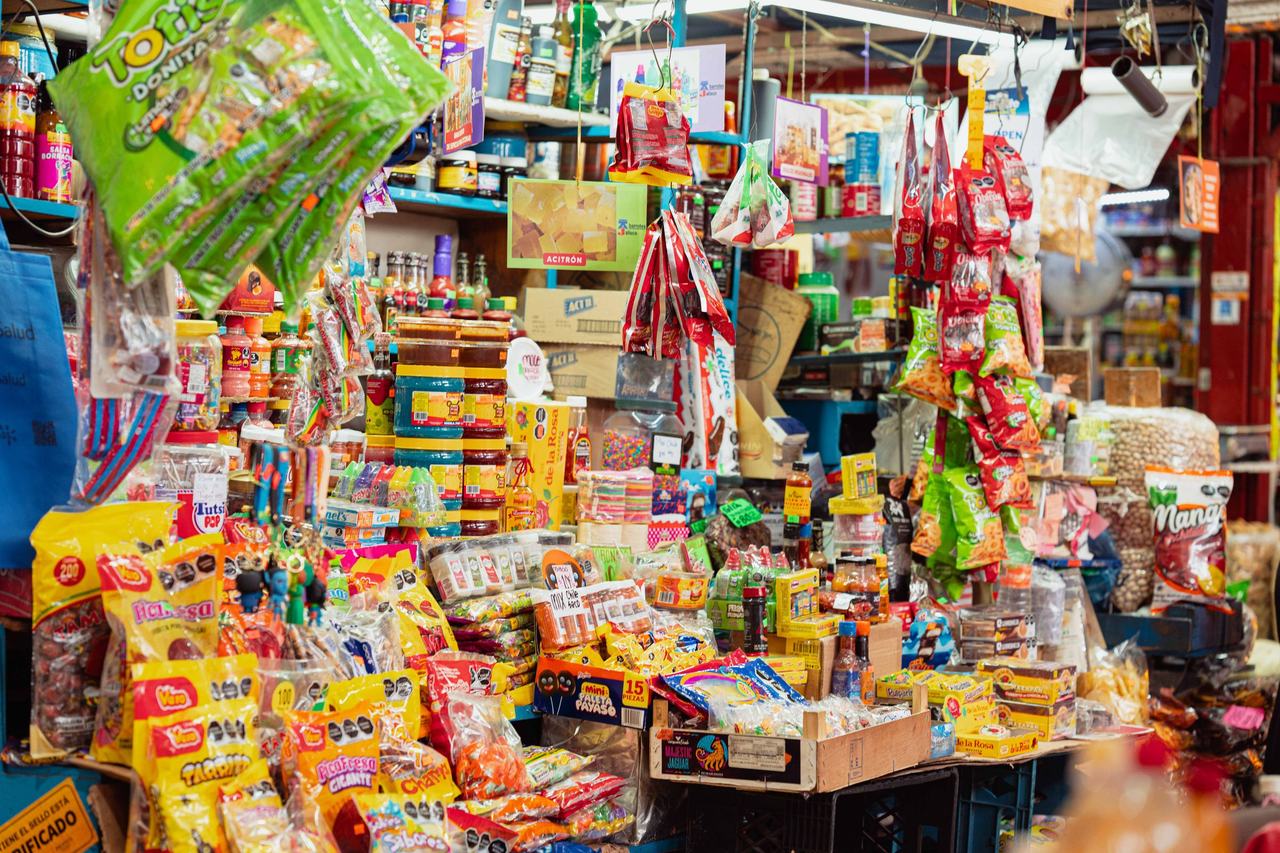
Opening photograph: A stall in Mexico City piled high with bags of Mexican candies and snacks. Photograph by Viridiana Rivera on Pexels. Blog photo credits.