How to Order Coffee in Mexico City in Spanish
To order coffee in Mexico City, say what you want and add por favor: Un café, por favor (a coffee, please) or Un americano, por favor (an americano, please). Then expect three short questions back: for here or to go, what size, and whether you want milk or sugar. Below is every line of that exchange, in the order it usually happens, with the recording of each one from Habla’s café unit, set at Sofía’s neighborhood café in Roma Norte.
The simplest way to order
The course’s own note on this is short and true: anything plus por favor is the simplest way to order. You do not need a full sentence. Name the drink, say please, and you have ordered.
You say
Un café, por favor.
A coffee, please.
Anything + por favor: the simplest way to order.
You say
Un americano, por favor.
An americano, please.
If you want to sound a little more like the people around you, use ¿Me da...? The course calls it the everyday Mexican way to ask for something. It literally means “will you give me.”
You ask
¿Me da un café con leche, por favor?
Could I have a coffee with milk, please?
¿Me da…?, literally will you give me…?, is the everyday Mexican way to ask for something.
For anything else, the shape stays the same. Here are two more drinks from the course:
You say
Un café de olla, por favor.
A café de olla, please.
Coffee brewed in a clay pot with cinnamon and piloncillo, raw cane sugar.
You say
Un chocolate caliente, por favor.
A hot chocolate, please.
When there are two of you, put the number in front: Dos americanos, por favor. Nothing else changes.
What the barista asks you first
The barista usually speaks first: often ¿Qué le sirvo?, what can I get you, as soon as you reach the counter. After your order it is often a quick check for more.
Sofía, the barista, asks
¿Qué le sirvo?
What can I get you?
Sofía, the barista, asks
Con gusto. ¿Algo más?
Sure. Anything else?
The answer to “anything else” is either another item or a polite no. Both of these come straight from the course:
You say
Nada más, gracias.
Nothing else, thanks.
The answer to ¿Algo más?, anything else?
You say
Es todo, gracias.
That’s all, thanks.
For here or to go
This question comes fast and can sound like one long word. Listen to it a few times before your trip and it will stop being a surprise.
Sofía, the barista, asks
¿Para aquí o para llevar?
For here or to go?
You say
Para aquí, por favor.
For here, please.
You say
Para llevar, por favor.
To go, please.
You may then hear ¿A nombre de quién?, which asks what name the order is under. Answer with a nombre de and your name.
Sofía, the barista, asks
¿A nombre de quién?
What name is it under?
You say
A nombre de Tom.
Under the name Tom.
The answer to ¿A nombre de quién?: what name is the order under?
When the barista says Ahorita sale, your drink will be right out. That is the moment to step aside and wait.
Sofía, the barista, says
Perfecto, Tom. Ahorita sale.
Perfect, Tom. It’ll be right out.
Size, milk and sugar
Sizes in Mexico, as the course notes, are chico, mediano and grande. The barista may ask the size as a question with all three options in it, which sounds harder than it is: just repeat the one you want.
Sofía, the barista, asks
¿De qué tamaño? ¿Chico, mediano o grande?
What size? Small, medium or large?
You say
Grande, por favor.
Large, please.
Sizes in Mexico: chico, mediano, grande.
Milk and sugar run on two small words. Con means with and sin means without. That gives you most of what you need for any coffee:
You say
Con leche, por favor.
With milk, please.
Con: with. Sin: without.
You say
Sin azúcar, por favor.
No sugar, please.
You say
Con leche y sin azúcar, por favor.
With milk and no sugar, please.
If you avoid lactose or dairy, the course has two lines worth learning. It notes that almost every café in Mexico has lactose-free milk, and that deslactosada on its own is enough to ask for it.
You say
Con leche deslactosada, por favor.
With lactose-free milk, please.
Almost every café in Mexico has it. Deslactosada on its own is enough.
You say
Con leche de avena, por favor.
With oat milk, please.
Something sweet with it
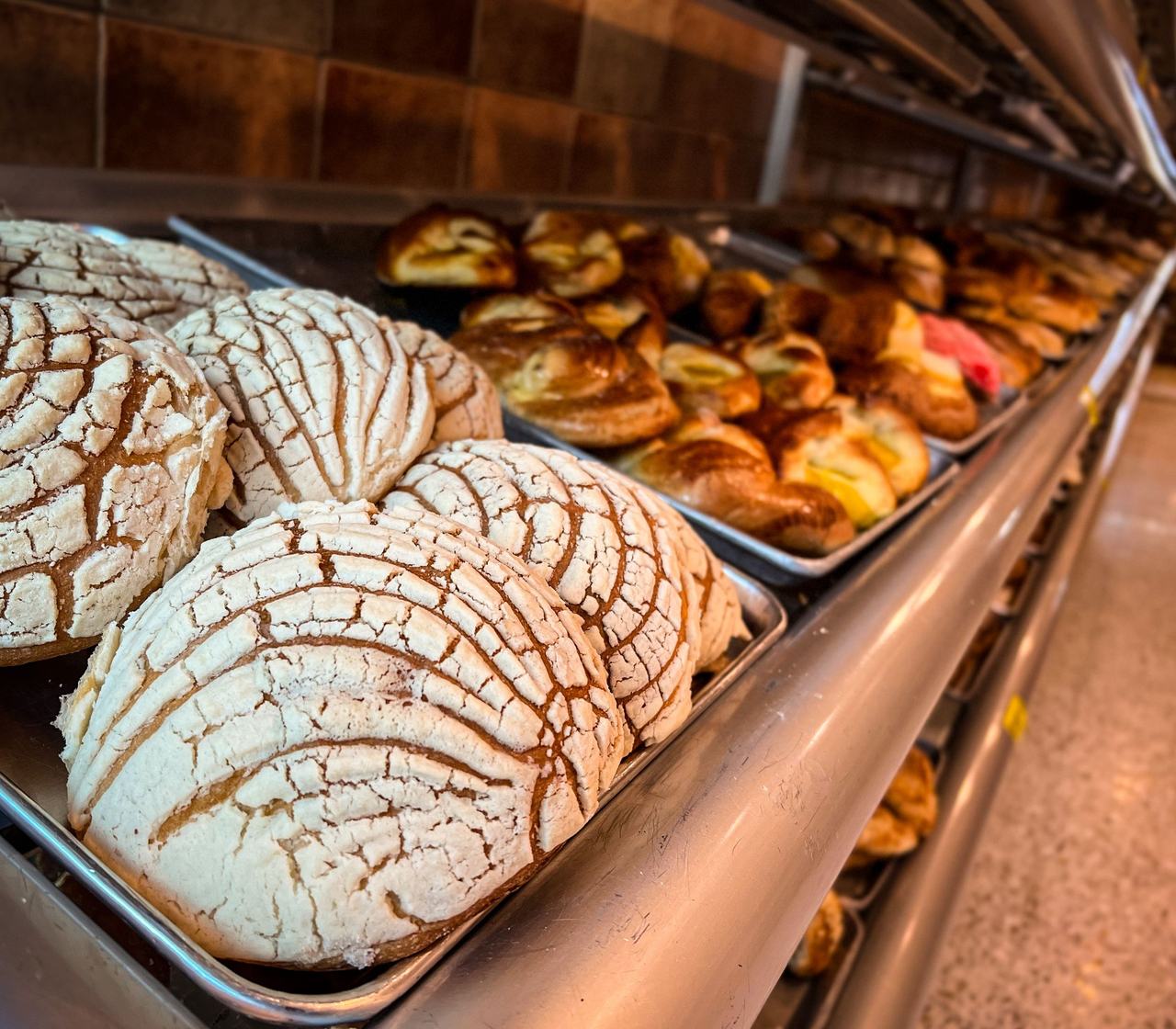
Something sweet to go with your coffee is a concha: in the course’s words, a soft sweet roll with a crunchy sugar top patterned like a shell, vanilla or chocolate. If you ask for one, expect a follow-up about the flavor.
You say
Una concha, por favor.
A concha, please.
Sofía, the barista, asks
¿De vainilla o de chocolate?
Vanilla or chocolate?
You say
Una concha de chocolate, por favor.
A chocolate concha, please.
And if you are staying a while, this is the line you will want before you sit down:
You ask
¿Dónde está el baño?
Where’s the bathroom?
Sofía, the barista, says
Al fondo, a la derecha.
At the back, on the right.
Paying at the counter
When you are ready to pay, ask the price with ¿Cuánto es?, how much is it. The barista answers with a number of pesos and may ask ¿Efectivo o tarjeta?, cash or card. The course notes that many small places take cash only, so if you want to pay by card, ask first.
Sofía, the barista, asks
Son cincuenta y cinco pesos. ¿Efectivo o tarjeta?
It’s $55. Cash or card?
You ask
¿Aceptan tarjeta?
Do you take cards?
Many small places take cash only.
Putting the order together
Here is the whole visit, the way it tends to run. You walk up, the barista asks what they can get you, and you name a drink with por favor. They ask if you want it for here or to go, and you say Para aquí, por favor or Para llevar, por favor. If it is a busy counter, they ask your name. They ask the size, and you say grande or chico. They ask about milk and sugar, and you answer with con or sin. They ask if there is anything else, and you say Nada más, gracias.
That is six or seven short lines, and none of them needs grammar you have to think about. What makes it hard is speed, because the questions come quickly and in a voice you have not heard before. The fix is the same one the course is built on: hear each line first, then say it out loud yourself until it comes without effort.
A good way to practice before the trip is to play the barista’s questions on this page in random order and answer each one aloud without looking. When you can answer “for here or to go” before the recording finishes, you are ready for the counter.
Every line on this page
The 29 lines above, in order, for one last listen before you go. Each one is the recording from the Habla course.
Un café, por favor.A coffee, please.
Un americano, por favor.An americano, please.
¿Me da un café con leche, por favor?Could I have a coffee with milk, please?
Un café de olla, por favor.A café de olla, please.
Un chocolate caliente, por favor.A hot chocolate, please.
¿Qué le sirvo?What can I get you?
Con gusto. ¿Algo más?Sure. Anything else?
Nada más, gracias.Nothing else, thanks.
Es todo, gracias.That’s all, thanks.
¿Para aquí o para llevar?For here or to go?
Para aquí, por favor.For here, please.
Para llevar, por favor.To go, please.
¿A nombre de quién?What name is it under?
A nombre de Tom.Under the name Tom.
Perfecto, Tom. Ahorita sale.Perfect, Tom. It’ll be right out.
¿De qué tamaño? ¿Chico, mediano o grande?What size? Small, medium or large?
Grande, por favor.Large, please.
Con leche, por favor.With milk, please.
Sin azúcar, por favor.No sugar, please.
Con leche y sin azúcar, por favor.With milk and no sugar, please.
Con leche deslactosada, por favor.With lactose-free milk, please.
Con leche de avena, por favor.With oat milk, please.
Una concha, por favor.A concha, please.
¿De vainilla o de chocolate?Vanilla or chocolate?
Una concha de chocolate, por favor.A chocolate concha, please.
¿Dónde está el baño?Where’s the bathroom?
Al fondo, a la derecha.At the back, on the right.
Son cincuenta y cinco pesos. ¿Efectivo o tarjeta?It’s $55. Cash or card?
¿Aceptan tarjeta?Do you take cards?
Common questions
Do I need to say “quiero” to order coffee in Mexico?
No. The drink plus por favor is enough, and ¿Me da...? is the everyday Mexican way to ask for something. The course also teaches quisiera, I’d like, and notes that quiero, I want, is fine too with por favor.
What does “para llevar” mean?
It means to go. The barista asks whether you want your order for here or to go, and you answer with para aquí or para llevar, plus por favor.
What is café de olla?
In the course’s words, it is coffee brewed in a clay pot with cinnamon and piloncillo, raw cane sugar. You order it the same way as any coffee: Un café de olla, por favor.
How do I ask for lactose-free milk in Spanish?
Say Con leche deslactosada, por favor. The course notes that almost every café in Mexico has it, and that the single word deslactosada is enough.
Opening photograph: Trays of conchas and other pan dulce line a bakery counter in Mexico City. Photograph by Blue Arauz on Pexels. Blog photo credits.