Cash or Card in Mexico: How to Pay in Spanish
To ask if a place takes cards in Mexico, say ¿Aceptan tarjeta?, do you take cards? The answer is either a yes with aquí está la terminal, here’s the card machine, or a no with nada más efectivo, cash only. If the cashier asks you first, the question is ¿Efectivo o tarjeta?, cash or card, and you answer En efectivo or Con tarjeta. Below are both exchanges, at Sofía’s café and at Paty’s market stall, with every line recorded from Habla’s numbers and shopping units.
Asking if they take cards
The question is two words, and you ask it before you pay, ideally before you order if you only have a card:
You ask
¿Aceptan tarjeta?
Do you take cards?
Many small places take cash only.
¿Aceptan tarjeta? literally asks do you accept card. The course note adds the reason to ask: many small places take cash only. Cards are widely accepted in Mexico’s big cities, but market stalls, street food stands and many taxis are often cash only, so the question is worth having ready.
At Sofía’s café, the answer is yes:
Sofía, the barista, says
Sí, claro. Aquí está la terminal.
Yes, of course. Here’s the card machine.
Sí, claro is yes, of course. Aquí está la terminal is here’s the card machine. La terminal is the word to listen for: when you hear it, the machine is on its way to you.
When the cashier asks: cash or card
Sometimes the cashier asks first. In the course’s role play, Sofía gives the price and asks in the same breath:
Sofía, the barista, asks
Son cincuenta y cinco pesos. ¿Efectivo o tarjeta?
It’s $55. Cash or card?
You say
En efectivo.
In cash.
You say
Con tarjeta.
By card.
Son cincuenta y cinco pesos is it’s $55, and ¿Efectivo o tarjeta? is cash or card? Efectivo is cash and tarjeta is card. Your answer is one of two short lines: en efectivo, in cash, or con tarjeta, by card.
Here are the two replies you may hear, one for each answer:
Sofía, the barista, says
Perfecto, gracias.
Perfect, thank you.
Sofía, the barista, says
Claro. Aquí está la terminal.
Sure. Here’s the card machine.
Perfecto, gracias is perfect, thank you, after you pay cash. Claro. Aquí está la terminal is sure, here’s the card machine, after you choose card. The price comes before the question, so listen for the number and have the right amount ready if you are paying cash. For catching the number itself, see understanding prices in pesos.
At a market stall: cash only
At a market stall the answer can be different. In the course, Diego has just agreed a price with Paty at her clothes stall and asks about cards:
You ask
Va. ¿Aceptan tarjeta?
Okay. Do you take cards?
Va is the Mexico City okay: deal.
Paty, the clothes vendor, says
No, joven, nada más efectivo.
No, cash only.
Va is the Mexico City okay, as the course notes: deal. Then the question. Paty’s answer is no, joven, nada más efectivo: no, cash only. Nada más means only, and joven is how she addresses him, young man.
The course’s note on asking about cards says many small places take cash only, and the stall scene shows exactly that. So the useful reply to nada más efectivo is calm and short:
You say
Está bien. Aquí tiene.
That’s fine. Here you go.
Está bien. Aquí tiene is that’s fine, here you go. Diego says it and hands over the cash. If you do not have enough cash on you, this is the moment to say so, or to look for a cash machine and come back. The course’s polite way to step away from a stall is Lo voy a pensar, gracias, which works here too.
Market stalls are also where you may get a better price by asking. For that, see how to bargain at a Mexican market.
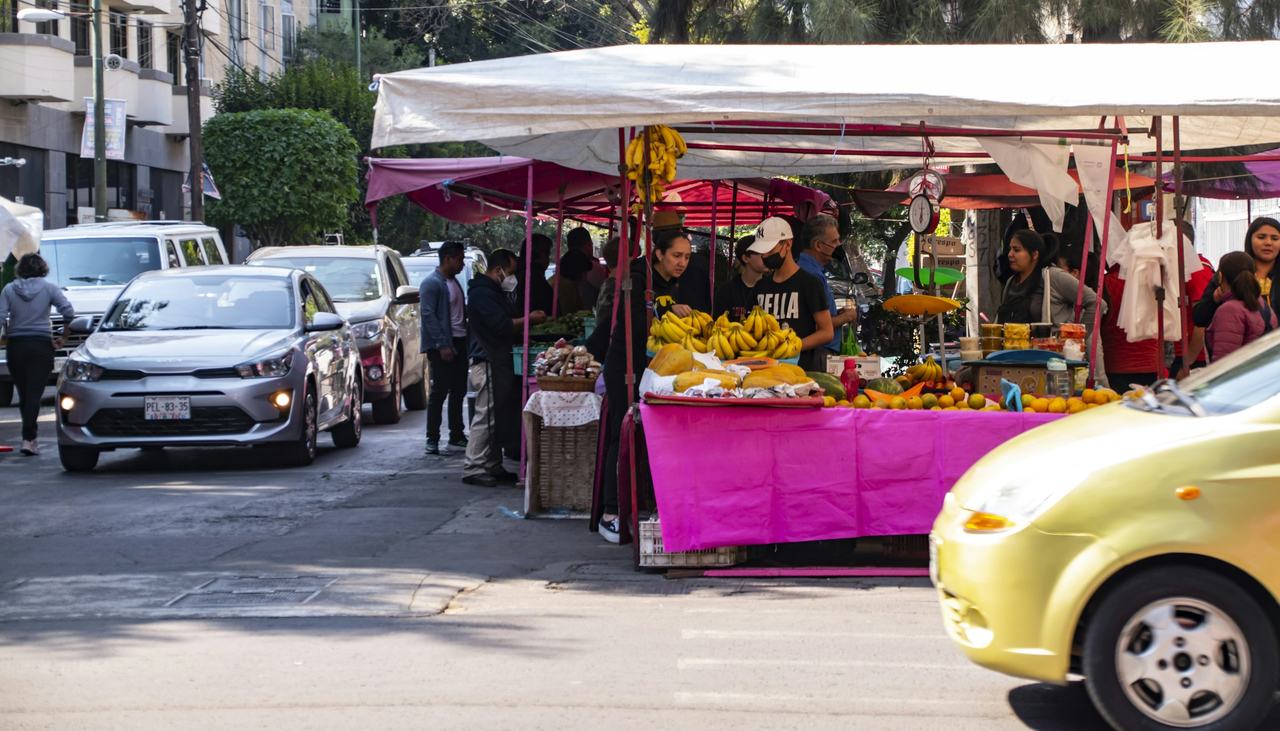
Taxis and taco stands
Street taxis and many food stands in Mexico are paid in cash. In the course, the taxi ride with Don Toño and the evening at Beto’s taco stand both end the same way, with the question for paying on the spot:
You ask
¿Cuánto le debo?
What do I owe you?
The usual question at the end of a taxi ride, or at a stall.
¿Cuánto le debo? is what do I owe you. Nobody brings a card machine in either scene, and the money changes hands right there. So before a taxi or a taco stand, check that you have cash, and smaller bills if you can: the course notes that taxis and small stores are often short of change for big bills.
Handing over the money
When you pay, there is one small phrase that goes with the act of handing something over:
You say
Aquí tiene.
Here you go.
Said when you hand something over. Staff say it to you too.
Aquí tiene is here you go. The course notes that you say it when you hand something over, and that staff say it to you too: when they give you your coffee, your bag or your change. You will hear it at almost every counter in the course.
If you pay cash, the change comes back with its own line:
Doña Chelo, at the corner store, says
Aquí está su cambio.
Here’s your change.
Aquí está su cambio is here’s your change. If you are paying with a large bill, ask first whether they have change; that question has its own page: breaking a big bill in Mexico.
Paying, start to finish
At a counter that takes cards, the whole payment is four lines:
- You ask ¿Cuánto es? or hear the price, son plus the number plus pesos.
- You ask ¿Aceptan tarjeta?, or you hear ¿Efectivo o tarjeta?
- You answer en efectivo or con tarjeta.
- You hear aquí está la terminal, or you hand over the cash with aquí tiene.
At a stall that is cash only, step three is está bien, and you pay in cash. Every line on this page is a recording from Habla’s course. In the app you hear a line, say it out loud, and see what it heard. The cashier’s lines are the ones to rehearse: ¿Efectivo o tarjeta? comes fast, right after the price.
Every line on this page
The 13 lines above, in order, for one last listen before you go. Each one is the recording from the Habla course.
¿Aceptan tarjeta?Do you take cards?
Sí, claro. Aquí está la terminal.Yes, of course. Here’s the card machine.
Son cincuenta y cinco pesos. ¿Efectivo o tarjeta?It’s $55. Cash or card?
En efectivo.In cash.
Con tarjeta.By card.
Perfecto, gracias.Perfect, thank you.
Claro. Aquí está la terminal.Sure. Here’s the card machine.
Va. ¿Aceptan tarjeta?Okay. Do you take cards?
No, joven, nada más efectivo.No, cash only.
Está bien. Aquí tiene.That’s fine. Here you go.
¿Cuánto le debo?What do I owe you?
Aquí tiene.Here you go.
Aquí está su cambio.Here’s your change.
Common questions
How do you ask “do you take cards” in Spanish in Mexico?
Say ¿Aceptan tarjeta? It literally means do you accept card. The course notes that many small places take cash only, so it is worth asking before you pay.
What does efectivo mean?
Efectivo means cash. A cashier may ask ¿Efectivo o tarjeta?, cash or card, and you answer en efectivo, in cash, or con tarjeta, by card.
What is la terminal when paying in Mexico?
La terminal is the card machine. When you hear aquí está la terminal, here’s the card machine, the cashier is bringing it to you to pay by card.
Do market stalls in Mexico take cards?
Often not. Market stalls, street food stands and many taxis are often cash only. In the course, Paty’s clothes stall answers nada más efectivo, cash only.
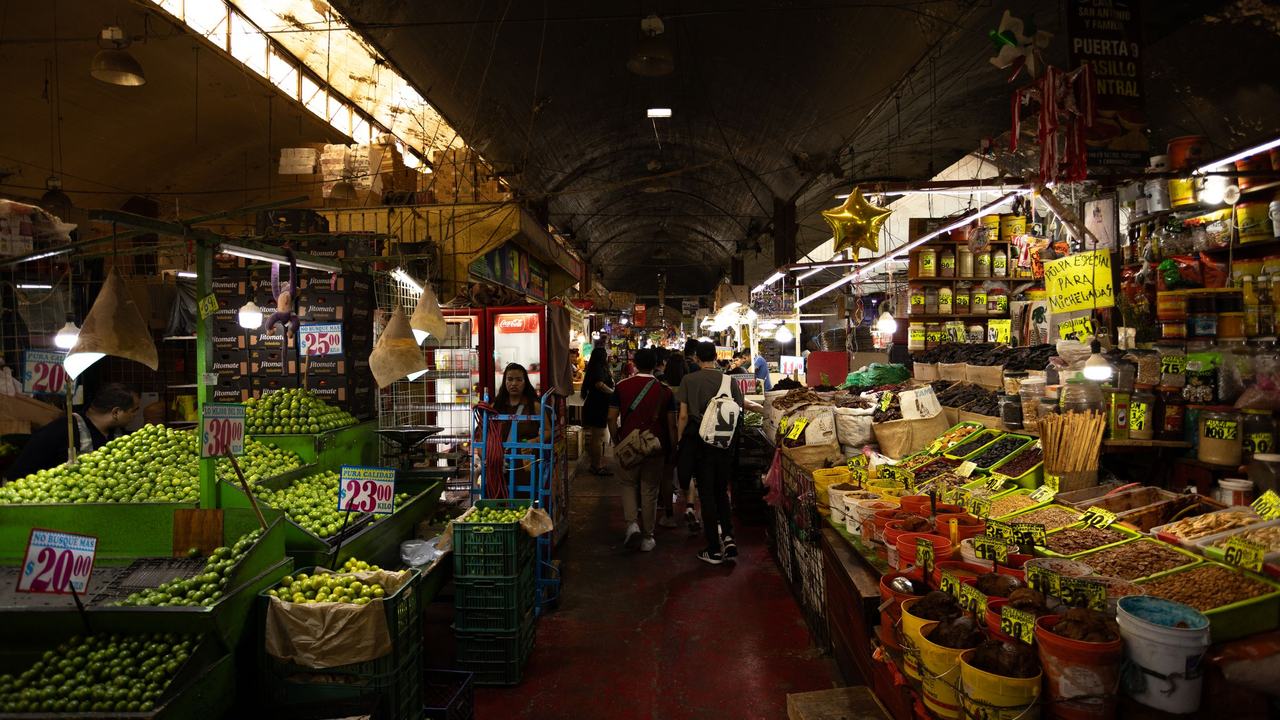
Opening photograph: Shoppers walk an aisle between stalls of limes, chiles and dried goods in a covered Mexico City market. Photograph by David Hernandez on Pexels. Blog photo credits.