How to Say No Politely in Korean
The plain word for no in Korean is 아니요 (aniyo), and it is fine for correcting a mistake. To turn down an offer politely, the course’s go-to line is 괜찮아요 (gwaenchanayo, it’s okay), which its note says also means no thanks. For an invitation, the course calls 미안해요. 약속이 있어요 (sorry, I have plans) the polite way to say no. Below is a ladder of six refusals from Sori’s course, from the counter to a friend’s invitation, each with recordings of the moment it is used.
Plain no: aniyo, for a mistake
Aniyo is the straight no. In the course it often comes first when you are putting something right, followed by the right answer. At Jimin’s café, she checks Minjun’s order, and he corrects it in two words:
Jimin, the barista, asks
아메리카노 맞아요?
amerikano majayo?
An americano, right?
Minjun, a friend, says
아니요, 라테요.
aniyo, rateyo.
No, a latte.
Aniyo, rateyo is no, a latte. Here the no is information: you are helping the other person get it right. The same thing happens with a number. When Jimin repeats a cookie order back as one cookie, the course answer is 아니요, 두 개요, aniyo, du gaeyo, no, two. And when a pharmacist asks about a symptom you do not have, aniyo starts the answer: 아니요, 열은 없어요, no, I don’t have a fever.
“It’s okay”: the everyday no thanks
This is the refusal the course uses at the counter. The course note on gwaenchanayo says it means it’s okay, and also no thanks, or I’m fine.
You say
괜찮아요.
gwaenchanayo.
It’s okay.
Also no thanks, or I’m fine.
At a convenience store, the clerk asks if you need a bag, and the course shows how to make the no thanks specific: put the thing first, then gwaenchanayo. The note on this line says gwaenchanayo here means no thanks.
Junho, the store clerk, asks
봉투 필요하세요?
bongtu piryohaseyo?
Do you need a bag?
You say
봉투는 괜찮아요.
bongtuneun gwaenchanayo.
No bag, thanks.
괜찮아요 here means no thanks.
Bongtuneun gwaenchanayo is no bag, thanks. It answers the question, and the word aniyo never comes up. For more of what convenience store clerks ask, see what to say at a Korean convenience store.
“Leave it out”: saying no to an extra
When someone offers to add something, you can turn it down by asking them to leave it out. At the café, Jimin offers syrup, and Seoyeon declines:
Jimin, the barista, asks
네. 시럽도 넣어 드릴까요?
ne. sireopdo neoeo deurilkkayo?
Sure. Would you like syrup too?
Seoyeon, a coworker, says
아니요, 시럽은 빼 주세요.
aniyo, sireobeun ppae juseyo.
No, no syrup, please.
She says aniyo and then sireobeun ppae juseyo: no syrup, please. The course note explains that ppae juseyo means please leave it out.
You say
시럽은 빼 주세요.
sireobeun ppae juseyo.
No syrup, please.
빼 주세요: please leave it out.
The receipt works the same way. When the clerk asks if you would like it, the course has a polite way to say you do not, by asking them to throw it away:
Junho, the store clerk, asks
네. 영수증 드릴까요?
ne. yeongsujeung deurilkkayo?
Okay. Would you like the receipt?
You say
영수증은 버려 주세요.
yeongsujeungeun beoryeo juseyo.
Please throw the receipt away.
버려 주세요: please throw it away.
Both of these are requests rather than refusals: you say what you want done, not what you do not want. For more extras at the café counter, see customizing a coffee order in Korean.
No, plus what you want instead
Sometimes the polite no is the one that comes with the answer the other person needs. The barista asks if your drink is for here, and the no is followed straight away by to go:
Jimin, the barista, asks
여기서 드세요?
yeogiseo deuseyo?
For here?
Minjun, a friend, says
아니요, 포장이요.
aniyo, pojangiyo.
No, to go.
Aniyo, pojangiyo is no, to go. The same pattern runs through the first section: no, a latte; no, two. The word after it tells them what to do.
“Not really”: for food and things you do not like
When a new friend asks whether you like something and you do not, the course gives a softer answer than a flat no. Its note says byeollo an means not really, and it is softer than an joahaeyo, I don’t like it.
You say
별로 안 좋아해요.
byeollo an joahaeyo.
I don’t really like it.
별로 안: not really. Softer than 안 좋아해요, I don’t like it.
Put the thing in front to say what it is. The course example is coffee:
You say
커피는 별로 안 좋아해요.
keopineun byeollo an joahaeyo.
I don’t really like coffee.
Keopineun byeollo an joahaeyo is I don’t really like coffee. It is honest without closing the subject, so the conversation can carry on to what you do like.
“Sorry, I have plans”: saying no to an invitation
For an invitation, the course is explicit. Its note calls this the polite way to say no to an invitation, and explains that 약속 means plans to meet someone:
You say
미안해요. 약속이 있어요.
mianhaeyo. yaksogi isseoyo.
Sorry, I have plans.
약속: plans to meet someone. The polite way to say no to an invitation.
In the course, Seoyeon uses it when Tom asks her to go hiking. She says sorry first, mianhaeyo, then gives the reason:
Seoyeon, a coworker, says
아, 미안해요. 이번 주말에는 약속이 있어요.
a, mianhaeyo. ibeon jumareneun yaksogi isseoyo.
Oh, sorry. I have plans this weekend.
To keep the door open, add another day. The course’s suggestion is next weekend, with eottaeyo, how about:
You ask
다음 주말은 어때요?
daeum jumareun eottaeyo?
How about next weekend?
Together, sorry, I have plans and how about next weekend turn a no into a new plan. For the other side of this conversation, see how to invite someone out in Korean.
Which no to use when
- Someone has it wrong: aniyo plus the right answer.
- A clerk offers something: the thing plus gwaenchanayo.
- Someone offers an extra: ppae juseyo, leave it out.
- A yes-or-no question about your order: aniyo plus what you want instead.
- A friend asks if you like something: byeollo an joahaeyo.
- An invitation: mianhaeyo. yaksogi isseoyo, then a new day.
Every line on this page is a recording from Sori’s course. In the app you hear each line, say it out loud, and see what the app heard. The counter refusals are the ones to have ready, because the question comes quickly: bongtuneun gwaenchanayo should be out before the clerk reaches for the bag.
Every line on this page
The 17 lines above, in order, for one last listen before you go. Each one is the recording from the Sori course.
아메리카노 맞아요?amerikano majayo?An americano, right?
아니요, 라테요.aniyo, rateyo.No, a latte.
괜찮아요.gwaenchanayo.It’s okay.
봉투 필요하세요?bongtu piryohaseyo?Do you need a bag?
봉투는 괜찮아요.bongtuneun gwaenchanayo.No bag, thanks.
네. 시럽도 넣어 드릴까요?ne. sireopdo neoeo deurilkkayo?Sure. Would you like syrup too?
아니요, 시럽은 빼 주세요.aniyo, sireobeun ppae juseyo.No, no syrup, please.
시럽은 빼 주세요.sireobeun ppae juseyo.No syrup, please.
네. 영수증 드릴까요?ne. yeongsujeung deurilkkayo?Okay. Would you like the receipt?
영수증은 버려 주세요.yeongsujeungeun beoryeo juseyo.Please throw the receipt away.
여기서 드세요?yeogiseo deuseyo?For here?
아니요, 포장이요.aniyo, pojangiyo.No, to go.
별로 안 좋아해요.byeollo an joahaeyo.I don’t really like it.
커피는 별로 안 좋아해요.keopineun byeollo an joahaeyo.I don’t really like coffee.
미안해요. 약속이 있어요.mianhaeyo. yaksogi isseoyo.Sorry, I have plans.
아, 미안해요. 이번 주말에는 약속이 있어요.a, mianhaeyo. ibeon jumareneun yaksogi isseoyo.Oh, sorry. I have plans this weekend.
다음 주말은 어때요?daeum jumareun eottaeyo?How about next weekend?
Common questions
How do you say “no thank you” in Korean?
Say 괜찮아요 (gwaenchanayo). The course notes that it means it’s okay, and also no thanks, or I’m fine. To name the thing, put it first, as in 봉투는 괜찮아요, no bag, thanks.
What does gwaenchanayo mean?
It’s okay. The course notes it also means no thanks or I’m fine, so the same word answers an apology, an offer and a question about how you are.
How do you turn down an invitation politely in Korean?
Say 미안해요. 약속이 있어요 (mianhaeyo. yaksogi isseoyo), sorry, I have plans. The course notes this is the polite way to say no to an invitation. To suggest another time, add 다음 주말은 어때요?.
How do you say “I don’t need a bag” in Korean?
The course line is 봉투는 괜찮아요 (bongtuneun gwaenchanayo), no bag, thanks. Its note says gwaenchanayo here means no thanks.
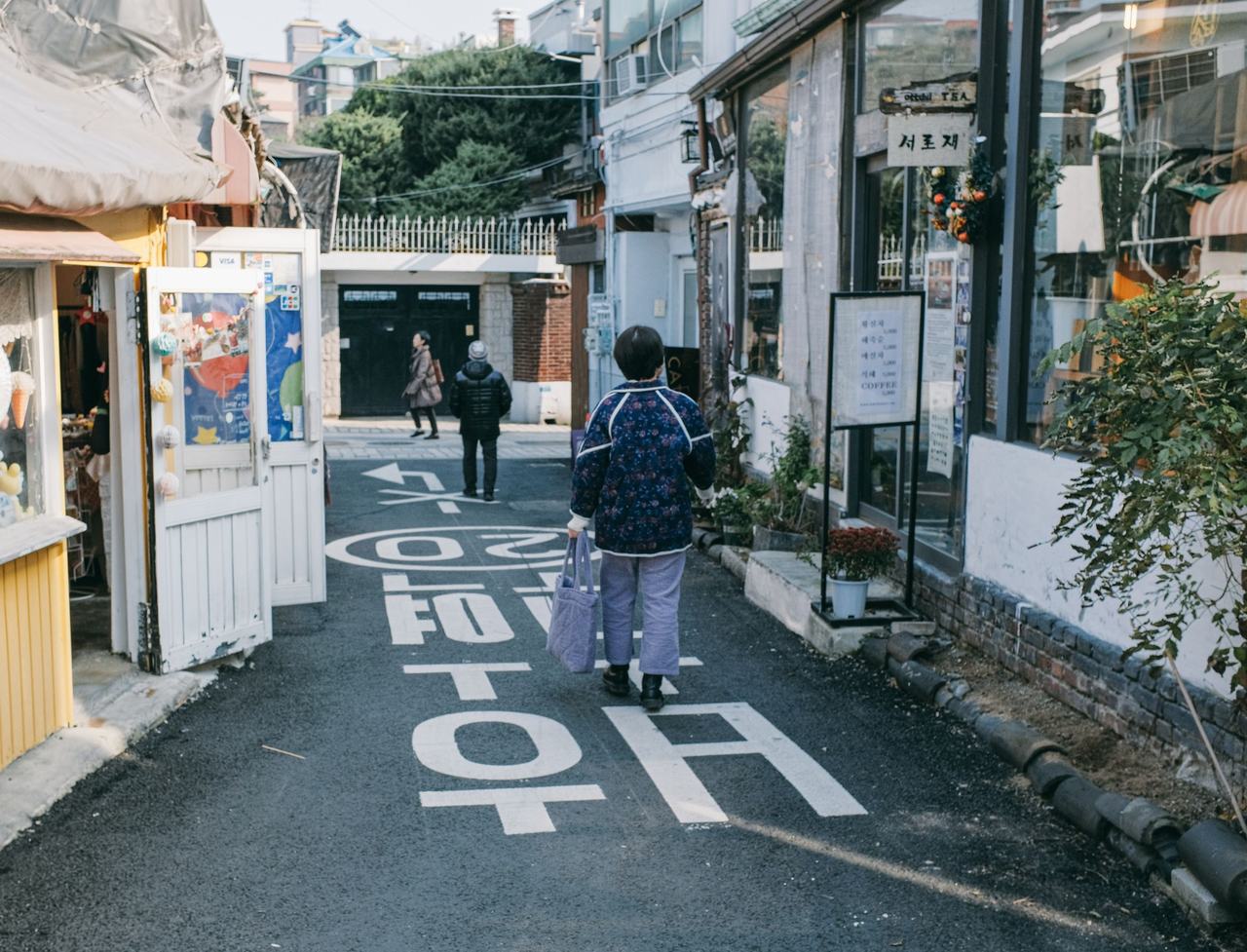
Opening photograph: A woman carrying a shopping bag walks away down a narrow lane of small shops in Seoul. Photograph by Huy Phan on Pexels. Blog photo credits.