Small Talk at a Tokyo Bar: Japanese for Making Friends
For small talk with people your age in Tokyo, keep it short and casual: ask 何が好き? (what do you like?) or どんな音楽聴くの? (what kind of music do you listen to?), react with ほんと? (really?), and when the night is ending, suggest a next plan and swap contacts. These are casual lines, so use them once the other person is already talking to you casually. The course’s scene for all of this is a small izakaya counter in Koenji, with records behind the bar.
Before you start: let them go casual first
Most lines on this page are casual Japanese, the kind friends use with each other. The course is firm that you do not switch to casual on your own. The other person opens the door, by talking to you casually or saying so outright, and until then polite Japanese is never wrong. In the course, it happens in the first round, when Kenta, a friend, asks your age casually and it turns out you are the same age. Aya, Kenta’s friend, talks casually from her first line. If you are not sure, see casual vs polite Japanese first.
Asking what someone likes
Aya starts the conversation the easy way, with a question about what you are into:
Aya, Kenta’s friend, asks
古着とか好き?
Furugi toka suki?
Are you into vintage clothes?
You can ask the same kind of question back. The course’s note on this line adds the right way to turn a question around: use the person’s name with wa, never a word for you, which can sound cold, or oddly intimate.
You ask
何が好き?
Nani ga suki?
What do you like?
To ask back, use the name: 彩は? or 健太は?. Never あなたも?: it can sound cold, or oddly intimate.
For your own answer, the shape is simple. Put the thing first, then ga suki:
You say
音楽が好き。
Ongaku ga suki.
I like music.
Music is a good topic at a bar with records behind the counter. The course’s follow-up question is soft and casual, and its note explains why: a question that ends in の is soft and casual.
You ask
どんな音楽聴くの?
Donna ongaku kiku no?
What kind of music do you listen to?
A question that ends in の is soft and casual.
Talking about the neighborhood
Then the talk turns to the neighborhood itself. Aya tells you what Koenji is known for:
Aya, Kenta’s friend, says
高円寺って、ライブハウスが多いんだよ。
Kōenjitte, raibuhausu ga ōin da yo.
Koenji has lots of little live music venues.
The course explains that a ライブハウス is a small club with a stage. To keep the topic going, ask whether someone comes here a lot:
You ask
高円寺、よく来るの?
Kōenji, yoku kuru no?
Do you come to Koenji a lot?
Kenta’s answer is a good example of how casual speech sounds from a friend:
Kenta, a friend, says
俺は週末大体ここにいるよ。
Ore wa shūmatsu daitai koko ni iru yo.
I’m here most weekends.
Reacting: honto and un
Small talk is half reacting. The course gives you one word that does a lot of work. Its note says it is short for 本当:
You ask
ほんと?
Honto?
Really?
Short for 本当.
The other is the casual yes, which keeps the conversation moving while someone talks. The course’s note adds that はい is still fine, just a little distant:
You say
うん。
Un.
Yeah.
The casual yes, with friends. はい is still fine, just a little distant.
Between these two, you can follow a long story with very little Japanese. Neither takes more than a second to say, which is what makes them useful when the talk is fast and you are still catching up.
Saying something nice
Compliments are an easy way into a conversation, especially in a neighborhood full of vintage clothing. The course’s word for it covers clothes, bikes and people, and its note adds the casual adjustment:
You say
かっこいいですね。
Kakkoii desu ne.
That’s cool.
For clothes, bikes, people. To a friend you’d drop the です.
So with friends, kakkoii on its own is enough. Point at the jacket, the record sleeve or the bike, and say it.
Suggesting the next plan
Near the end of the night, the talk turns to next time. Kenta has a show in mind:
Kenta, a friend, asks
来週の土曜、ライブ行かない?
Raishū no doyō, raibu ikanai?
Want to go to a show next Saturday?
You can suggest something too. The course’s note explains that 下北 is Shimokitazawa, another neighborhood of small theaters and secondhand stores:
You ask
週末、下北に行かない?
Shūmatsu, Shimokita ni ikanai?
Want to go to Shimokita this weekend?
下北 is Shimokitazawa, another neighborhood of small theaters and secondhand stores.
Notice that Kenta’s suggestion and yours both end the same way, ikanai?, won’t you go? The course notes that this is how a casual invitation asks: in the negative.
And for the simplest plan of all, the course has a line that works any night of the week:
You say
ラーメン食べに行こうよ。
Rāmen tabe ni ikō yo.
Let’s go get ramen.
If a day does not work for you, the casual no is ごめん、その日はちょっと…, which trails off rather than saying no outright. For the full back-and-forth of picking a day, a time and a station exit, see how to make plans in Japanese.
Swapping contacts at the end of the night
Before you leave, someone asks to stay in touch. In the course, Aya asks, and you can ask the same way. The course’s note adds how it is done: friends swap contacts in a messaging app, usually by scanning a QR code.
You ask
連絡先、交換しない?
Renrakusaki, kōkan shinai?
Want to swap contacts?
Friends swap contacts in a messaging app, usually by scanning a QR code.
Like the invitations above, it asks in the negative: kōkan shinai?, won’t we swap?
Then a promise to follow up:
You say
あとでメッセージ送るね。
Ato de messēji okuru ne.
I’ll message you later.
And as you go, Kenta sends you off the way friends do:
Kenta, a friend, says
気をつけて帰ってね。
Ki o tsukete kaette ne.
Get home safe.
If the night runs late, check the time of the last train with 終電は何時ですか?. The course notes that Tokyo’s trains stop between midnight and about one.
Every line here is a recording from Koe’s course. In the app you hear each line, say it out loud, and see what it heard, so your honto? sounds like a real reaction and not a quiz answer.
Every line on this page
The 16 lines above, in order, for one last listen before you go. Each one is the recording from the Koe course.
古着とか好き?Furugi toka suki?Are you into vintage clothes?
何が好き?Nani ga suki?What do you like?
音楽が好き。Ongaku ga suki.I like music.
どんな音楽聴くの?Donna ongaku kiku no?What kind of music do you listen to?
高円寺って、ライブハウスが多いんだよ。Kōenjitte, raibuhausu ga ōin da yo.Koenji has lots of little live music venues.
高円寺、よく来るの?Kōenji, yoku kuru no?Do you come to Koenji a lot?
俺は週末大体ここにいるよ。Ore wa shūmatsu daitai koko ni iru yo.I’m here most weekends.
ほんと?Honto?Really?
うん。Un.Yeah.
かっこいいですね。Kakkoii desu ne.That’s cool.
来週の土曜、ライブ行かない?Raishū no doyō, raibu ikanai?Want to go to a show next Saturday?
週末、下北に行かない?Shūmatsu, Shimokita ni ikanai?Want to go to Shimokita this weekend?
ラーメン食べに行こうよ。Rāmen tabe ni ikō yo.Let’s go get ramen.
連絡先、交換しない?Renrakusaki, kōkan shinai?Want to swap contacts?
あとでメッセージ送るね。Ato de messēji okuru ne.I’ll message you later.
気をつけて帰ってね。Ki o tsukete kaette ne.Get home safe.
Common questions
What are easy small talk questions in Japanese?
Two casual ones from the course: 何が好き?, what do you like?, and どんな音楽聴くの?, what kind of music do you listen to? Use them with people who are already talking to you casually.
How do you say “really?” in Japanese casually?
ほんと?. The course notes it is short for 本当. Said as a question, it means really?, and it shows you are following.
How do you ask for someone’s contact in Japanese?
The course’s casual line is 連絡先、交換しない?, want to swap contacts? Its note says friends swap contacts in a messaging app, usually by scanning a QR code.
How do you turn a question back to someone in Japanese?
Use their name with wa, the way the course asks a coworker back with Mori-san wa? The course notes that a word for you can sound cold, or oddly intimate, so the name is the safe choice.
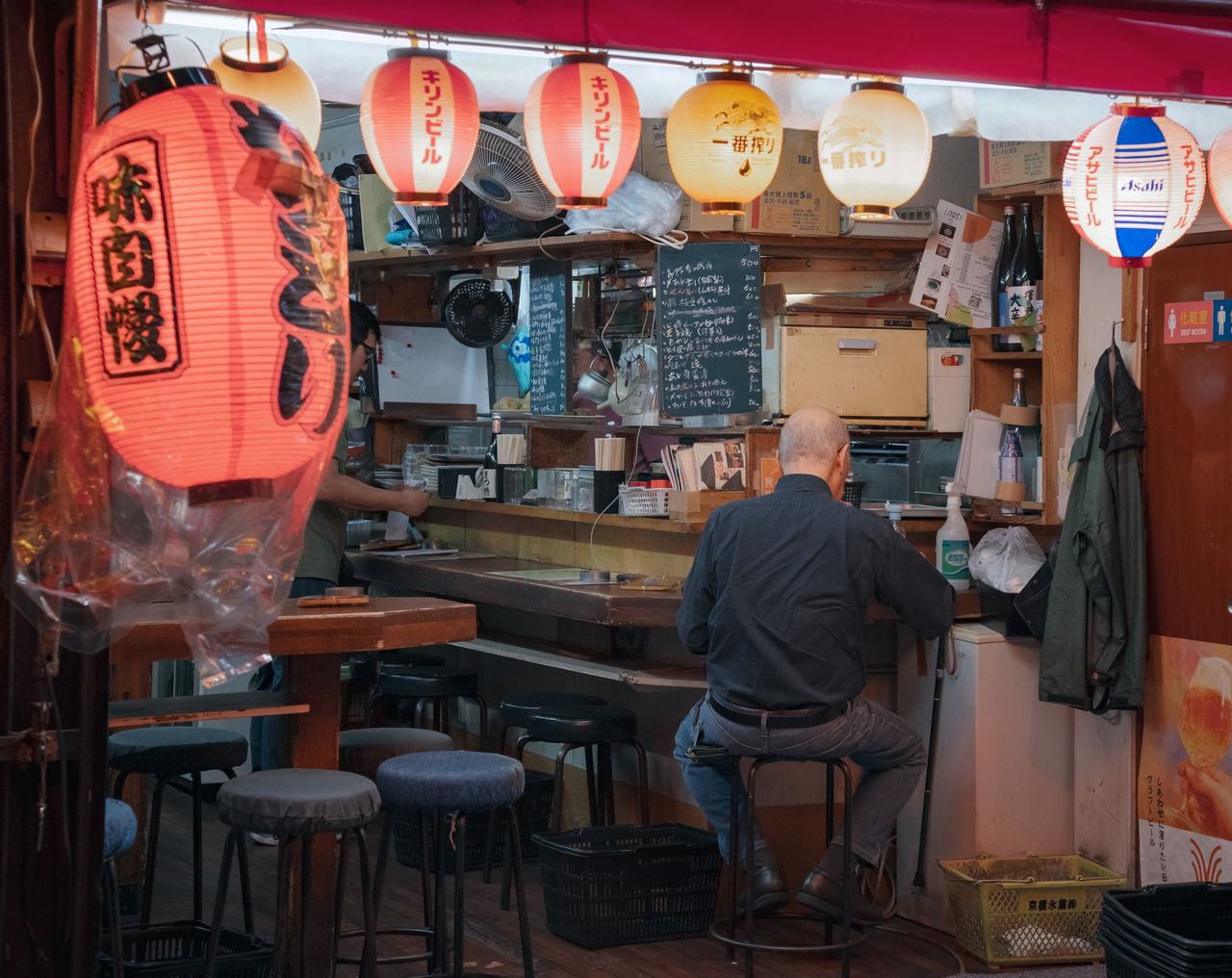
Opening photograph: A lone customer sits at the counter of a small izakaya under rows of paper lanterns in Tokyo. Photograph by Iban Lopez Luna on Pexels. Blog photo credits.