Casual vs Polite Japanese: When to Drop Desu and Masu
Use casual Japanese only after the other person opens the door. The course is clear on this: you don’t switch on your own. Someone starts talking to you casually, or says so outright, and then you can follow. Until that happens, polite Japanese is never wrong. And even among friends, staff still get polite Japanese. Once the door is open, the basics are short: うん for yes, ううん for no, ありがとう for thanks.
Wait for the other person to open the door
The course teaches the switch in one scene. It is a Saturday at a small izakaya counter in Koenji, with records behind the bar. Kenta, the friend from the workshop who has been speaking politely with you, brings his friend Aya, and partway through the first round he asks your age, casually:
Kenta, a friend, asks
そういえば、エマって何歳?
Sōieba, Ematte nansai?
By the way, Emma, how old are you?
You find out you are the same age, and say so:
You ask
え、同い年?
E, onaidoshi?
Oh, we’re the same age?
You don’t switch to casual on your own. The other person opens the door: they start talking to you casually, or say so outright, as Kenta does. Until then, polite Japanese is never wrong.
That note is the whole rule. The other person opens the door, by talking to you casually or by saying so outright. The course’s lesson title puts the reason in plain words: same age, so drop the polite. Until then, polite Japanese is never wrong. If you are not sure whether the door is open, stay polite.
Names work the same way. When you first meet Kenta at the workshop, he offers his given name himself, Kenta de ii desu yo, just Kenta is fine, and the course notes that a given name is used only when its owner offers it. In both cases the other person sets how close you are, and you follow.
How the switch sounds
Aya introduces herself the casual way. Compare her line with the polite introduction the course teaches at the studio: she closes with yoroshiku ne instead of yoroshiku onegai shimasu.
Aya, Kenta’s friend, says
はじめまして、彩です。よろしくね。
Hajimemashite, Aya desu. Yoroshiku ne.
Nice to meet you, I’m Aya.
Your answer to Kenta’s question shows the first change to learn. The course’s note says だ is the casual です, and よ adds warmth, the way you tell a friend something new:
You say
28歳だよ。
Nijūhassai da yo.
I’m twenty-eight.
だ is the casual です. よ adds warmth, the way you tell a friend something new. 28歳 is right too.
The course points out a few more of these swaps in its notes. To a friend you would drop the です from kakkoii desu ne. 空いてる is the casual 空いています. And a question that ends in の is soft and casual.
Casual yes, no and thanks
These three are the words you will use most once the door is open. The course gives each one with a note on when it fits:
You say
うん。
Un.
Yeah.
The casual yes, with friends. はい is still fine, just a little distant.
You say
ううん。
Uun.
Nah.
The casual no, often with a small shake of the head.
You say
ありがとう。
Arigatō.
Thanks. (to a friend)
The casual thank-you, for friends and family. To anyone else, ありがとうございます.
Notice the boundaries in those notes. Hai is still fine with friends, just a little distant, so you do not have to switch every word at once. But the casual thank-you is for friends and family. To anyone else, it stays arigatō gozaimasu.
Polite and casual side by side
Here are the pairs from the course in one place. The left side works with everyone. The right side is for friends who have opened the door:
- Yes: hai, or casually un.
- No to a fact: iie, or casually uun.
- Thanks: arigatō gozaimasu, or casually arigatō.
- Good morning: ohayō gozaimasu, or just ohayō, which the course notes is for family and friends.
- Want to go?: ikimasen ka, or casually ikanai.
- Sorry: sumimasen, or casually gomen.
Casual invitations and how to say no
Invitations change shape too. The course’s note explains that the casual invitation asks in the negative, 行かない?, won’t you go?, and gives the polite version for a coworker:
You ask
今度、一緒に行かない?
Kondo, issho ni ikanai?
Want to go together sometime? (to a friend)
The casual invitation asks in the negative: 行かない?, won’t you go? To a coworker, 行きませんか?.
You ask
今度、一緒に行きませんか?
Kondo, issho ni ikimasen ka?
Want to go together sometime? (polite)
Saying no follows the same pattern as in polite Japanese, with a casual sorry in front. The course’s note says ごめん is the casual sorry, and that the no still trails off:
You say
ごめん、その日はちょっと…
Gomen, sono hi wa chotto...
Sorry, that day’s not good for me.
ごめん is the casual sorry. The no still trails off, as it does in polite Japanese.
If you are planning something bigger than a drink, there is a full walk-through in how to invite someone in Japanese.
Staff still get polite Japanese
The course draws this line firmly. At closing time in Koenji, you split the check with your friends casually, and then you ask the owner for it politely. The course’s note on splitting says it plainly: staff always get polite Japanese, never a casual order for the check.
You say
割り勘にしよう。
Warikan ni shiyō.
Let’s split it evenly.
Splitting the check evenly is usual among friends. The check itself you ask the owner for, and staff always get polite Japanese: never お会計して.
You say
すみません、お会計お願いします。
Sumimasen, okaikei onegai shimasu.
Excuse me, the check, please.
So in the same minute you might say Warikan ni shiyō to Kenta and Sumimasen, okaikei onegai shimasu to the owner. That is not inconsistent. Casual speech belongs to the friendship, not to the place. The course’s scene for this lesson even says it: you thank the owner, politely.
Casual is not rough: what not to copy from anime
Casual Japanese among friends is relaxed, not tough. The course’s note on this line is pointed: anime lines like a swaggering “I’ll pay” are cartoon speech, not how Tokyo friends talk.
You say
じゃあ、そうするね。
Jā, sō suru ne.
Okay, I will.
Casual, but never rough. Anime lines like 俺が払うぜ are cartoon speech, not how Tokyo friends talk.
If most of your Japanese so far comes from shows, this is worth taking seriously. The casual lines on this page are what the course’s Koenji friends actually say: short, warm and plain.
Every line on this page is a recording from Koe’s course. In the app you hear each line, say it out loud, and see what it heard, so the casual pairs sound natural when the door does open.
Every line on this page
The 13 lines above, in order, for one last listen before you go. Each one is the recording from the Koe course.
そういえば、エマって何歳?Sōieba, Ematte nansai?By the way, Emma, how old are you?
え、同い年?E, onaidoshi?Oh, we’re the same age?
はじめまして、彩です。よろしくね。Hajimemashite, Aya desu. Yoroshiku ne.Nice to meet you, I’m Aya.
28歳だよ。Nijūhassai da yo.I’m twenty-eight.
うん。Un.Yeah.
ううん。Uun.Nah.
ありがとう。Arigatō.Thanks. (to a friend)
今度、一緒に行かない?Kondo, issho ni ikanai?Want to go together sometime? (to a friend)
今度、一緒に行きませんか?Kondo, issho ni ikimasen ka?Want to go together sometime? (polite)
ごめん、その日はちょっと…Gomen, sono hi wa chotto...Sorry, that day’s not good for me.
割り勘にしよう。Warikan ni shiyō.Let’s split it evenly.
すみません、お会計お願いします。Sumimasen, okaikei onegai shimasu.Excuse me, the check, please.
じゃあ、そうするね。Jā, sō suru ne.Okay, I will.
Common questions
When should I start using casual Japanese?
When the other person opens the door. The course notes that you don’t switch on your own: they start talking to you casually, or say so outright. Until then, polite Japanese is never wrong.
Can I use casual Japanese with a waiter or clerk?
No. The course notes that staff always get polite Japanese, even when you are speaking casually with friends at the same table. Ask for the check with すみません、お会計お願いします.
What is the casual way to say yes and no in Japanese?
Un for yes and uun for no, which the course notes often comes with a small shake of the head. Its note adds that はい is still fine with friends, just a little distant.
Is the Japanese in anime casual Japanese?
Not the kind to copy. The course notes that tough-sounding anime lines are cartoon speech, not how Tokyo friends talk. Casual, in the course’s words, is never rough.
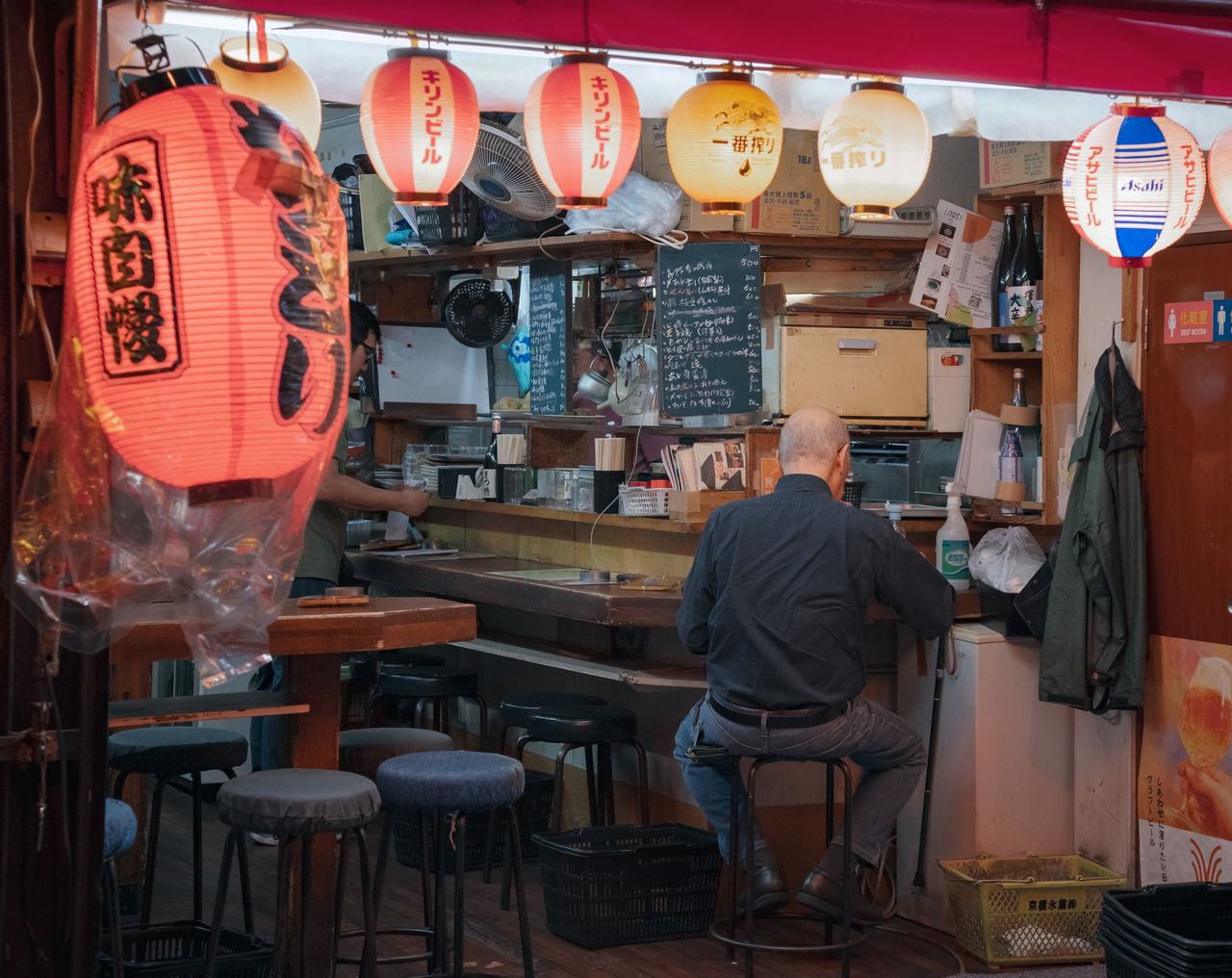
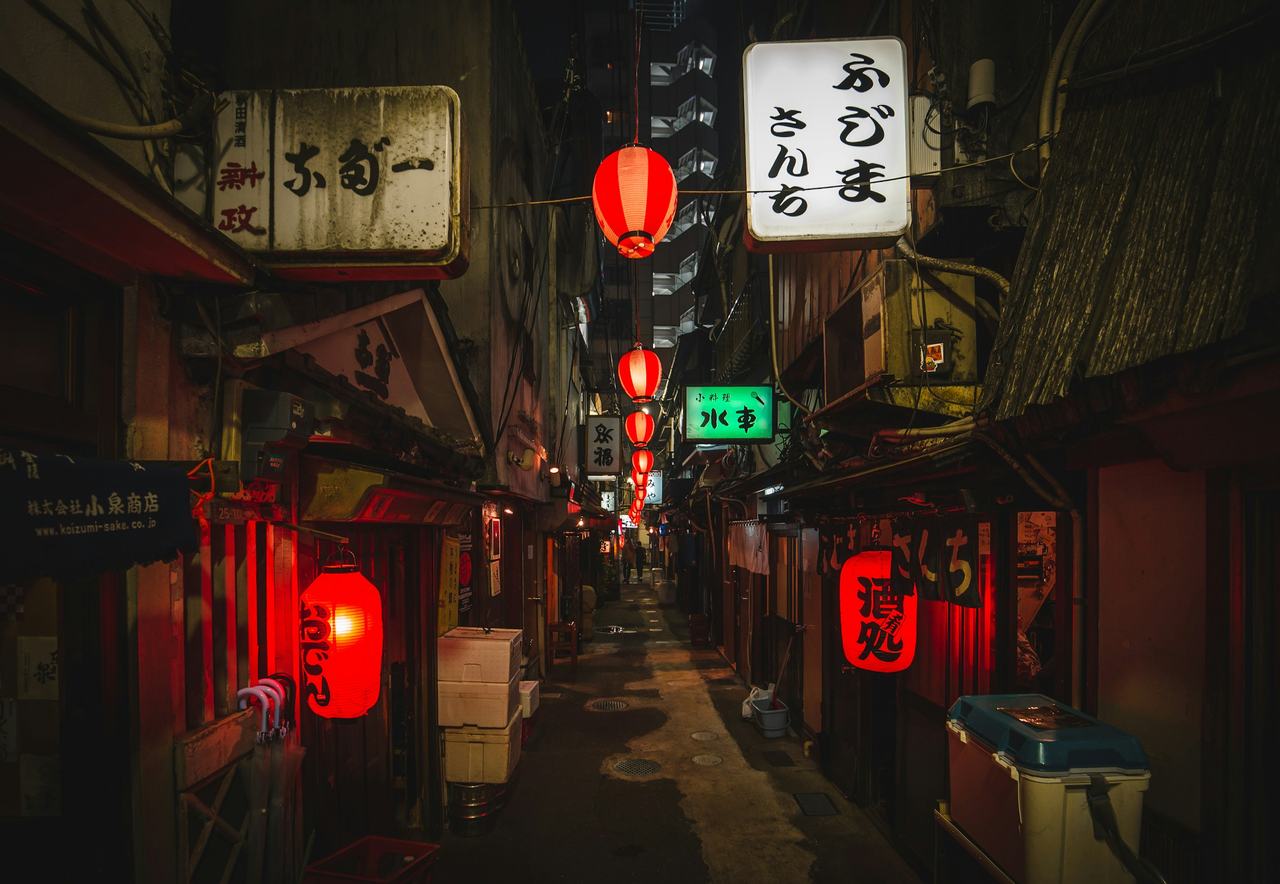
Opening photograph: A lone customer sits at the counter of a small izakaya under rows of paper lanterns in Tokyo. Photograph by Iban Lopez Luna on Pexels. Blog photo credits.