Kudasai vs Onegaishimasu: Which to Use in Japan
For ordering a thing, both work: ホットコーヒーをひとつください and ホットをひとつお願いします both get you one hot coffee. The two split elsewhere. Onegai shimasu is the one for choices (by card, to go), for a taxi destination, for handing something over and for saying yes. Kudasai goes after an action you want done, as in Atatamete kudasai, please heat it up. And when you want to ask someone to do something more softly than shite kudasai, the course uses moraemasu ka.
Ordering things: both words work
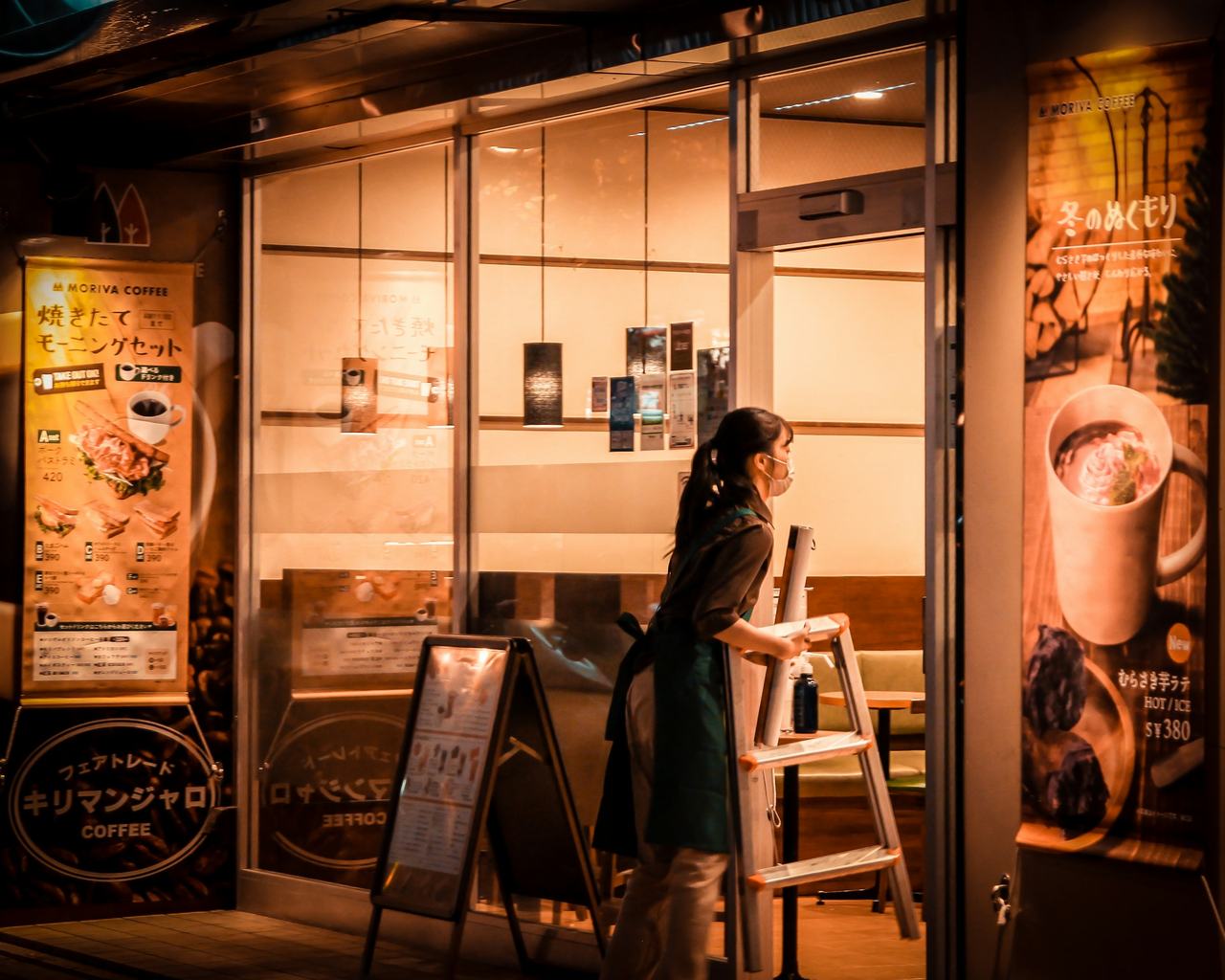
The course orders the same coffee both ways, at the same kissaten counter in Jimbocho. One uses kudasai:
You say
ホットコーヒーをひとつください。
Hotto kōhī o hitotsu kudasai.
One hot coffee, please.
ひとつ is one, for things you count. Staff answer an order with かしこまりました, certainly: that’s their word. Yours is はい or お願いします.
The other uses onegai shimasu, and the course notes that regulars order with just ホット:
You say
ホットをひとつお願いします。
Hotto o hitotsu onegai shimasu.
One hot coffee, please (just “hot”).
In a kissaten, ホット alone means hot coffee, and アイス means iced coffee. Regulars order with that one word.
What the course is strict about is keeping one of the two. Its note on a quick order says the small word を is often left out, but you keep ください or お願いします, because a bare コーヒーをくれ is a rough command nobody says to staff.
You say
カフェオレください。
Kafeore kudasai.
A café au lait, please.
In a quick order を often drops out. Keep ください or お願いします, though: a bare コーヒーをくれ is a rough command nobody says to staff.
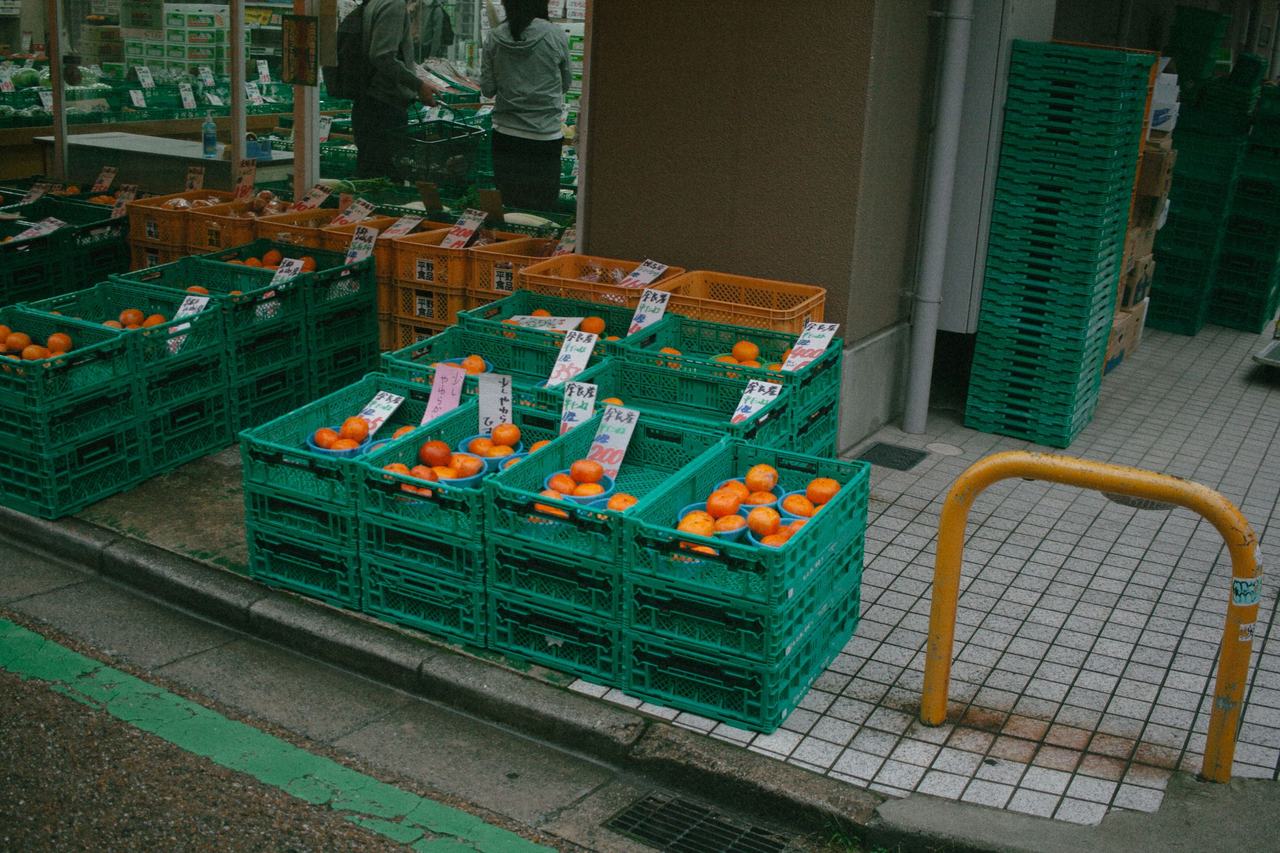
Pointing works the same way. At the vegetable stand in Togoshi Ginza, the course’s line for “I’ll take these” uses kudasai:
You say
じゃあ、これをください。
Jā, kore o kudasai.
Then I’ll take these.
At the register, the course even shows both words side by side for two kinds of receipt:
You say
レシートをください。
Reshīto o kudasai.
The receipt, please.
You say
領収書をお願いします。
Ryōshūsho o onegai shimasu.
A formal receipt, please.
For expenses. A 領収書 has a line for the payer’s name, where a レシート is the register’s slip.
So if you remember only one rule, make it this: name the thing, then add either word. You will be understood and you will be polite.
Choices and destinations: de onegai shimasu
When the question is how you want something (card or cash, here or to go, now or after the meal), the course answers with the choice plus de, and in the full version, de onegai shimasu. The pattern is the same for paying:
You say
カードでお願いします。
Kādo de onegai shimasu.
By card, please.
for taking your order with you:
You say
持ち帰りでお願いします。
Mochikaeri de onegai shimasu.
To go, please.
and, with made in place of de, for a taxi. Here the place comes first, then made, to, then onegai shimasu. The course’s note adds that the driver asks どちらまでですか?, where to, and that the question itself is his.
You say
神保町までお願いします。
Jinbōchō made onegai shimasu.
To Jimbocho, please.
The driver asks どちらまでですか?, where to. Answer with the place and まで; the question itself is his.
You will notice that kudasai does not appear in any of these. The short answers 店内で and 持ち帰りで simply stop after de. For picking an option, reach for onegai shimasu, or leave the request word off entirely.
Onegai shimasu on its own: handing over and saying yes
Onegai shimasu also works with nothing in front of it. At a ramen counter, you say it as you hand your meal ticket over:
You say
お願いします。
Onegai shimasu.
Here you go.
Said as you hand your ticket over the counter, or lay it on top. The owner says お預かりします as he takes it.
And when someone offers you something, it is the yes. The course’s note calls it accepting an offer, of help or of something to take:
You say
はい、お願いします。
Hai, onegai shimasu.
Yes, please.
Accepting an offer, of help or of something to take.
This is the half of the pair the konbini depends on. The course notes that clerks often ask again after a vague answer, and recommends 大丈夫です for no and お願いします for yes. More on that in daijoubu desu: yes or no.
Asking someone to do something: kudasai after the action
When you want a person to do something for you, the course puts kudasai after the action. At the konbini, Tamura-san, the night clerk, asks about your bento:
Tamura-san, the night clerk, asks
お弁当、温めますか?
Obentō, atatamemasu ka?
Shall I heat up your bento?
You say
温めてください。
Atatamete kudasai.
Please heat it up.
Bentos, pasta and rice bowls are heated at the counter, and the clerk asks first: お弁当、温めますか?
In a taxi, the same shape tells the driver where to stop:
You say
あの信号の手前で止めてください。
Ano shingō no temae de tomete kudasai.
Please stop just before that light.
You hear it from the other side too. Passersby, station staff, neighbors and pharmacists in the course all give instructions this way, from massugu itte kudasai, go straight ahead, to chāji shite kudasai, please add money to your card. If you can recognize kudasai at the end of an instruction, you know you are being asked to do something.
Set phrases built on onegai shimasu
Some fixed expressions in the course are built on onegai shimasu, and they are best learned whole. The one you will use most closes an introduction. The course’s note says it is said to close an introduction, and that どうぞ in front makes it a little more formal:
You say
よろしくお願いします。
Yoroshiku onegai shimasu.
I look forward to working with you.
Said to close an introduction. どうぞ in front makes it a little more formal.
It turns up again at the end of a first day at work, where the course’s 明日もよろしくお願いします is, in its own words, literally “tomorrow too, please.” And when you did not catch something, the course asks for it again with onegai shimasu as well: すみません、もう一度お願いします. These are set lines rather than a pattern to build with, so learn each one whole, and save your kudasai for things and actions.
The softer ask: moraemasu ka
For a small favor, the course often uses a question instead of a request. Its note on this line spells out the difference: してもらえますか asks someone to do something for you, a notch softer than してください.
You ask
両替してもらえますか?
Ryōgae shite moraemasu ka?
Could you change this for me?
してもらえますか asks someone to do something for you, a notch softer than してください.
The same shape works for things you would like to be given. At the kissaten, the course asks for water this way:
You ask
お水、もらえますか?
Omizu, moraemasu ka?
Could I have some water?
At the hotel, it asks for タオルをもう1枚もらえますか?, one more towel. When you are asking for help rather than ordering, moraemasu ka is the softer choice, and the course reaches for it often.
Every line on this page is a recording from Koe’s course. In the app you hear each request, say it out loud, and see what it heard, so the pattern comes from your ear rather than from a rule.
Every line on this page
The 17 lines above, in order, for one last listen before you go. Each one is the recording from the Koe course.
ホットコーヒーをひとつください。Hotto kōhī o hitotsu kudasai.One hot coffee, please.
ホットをひとつお願いします。Hotto o hitotsu onegai shimasu.One hot coffee, please (just “hot”).
カフェオレください。Kafeore kudasai.A café au lait, please.
じゃあ、これをください。Jā, kore o kudasai.Then I’ll take these.
レシートをください。Reshīto o kudasai.The receipt, please.
領収書をお願いします。Ryōshūsho o onegai shimasu.A formal receipt, please.
カードでお願いします。Kādo de onegai shimasu.By card, please.
持ち帰りでお願いします。Mochikaeri de onegai shimasu.To go, please.
神保町までお願いします。Jinbōchō made onegai shimasu.To Jimbocho, please.
お願いします。Onegai shimasu.Here you go.
はい、お願いします。Hai, onegai shimasu.Yes, please.
お弁当、温めますか?Obentō, atatamemasu ka?Shall I heat up your bento?
温めてください。Atatamete kudasai.Please heat it up.
あの信号の手前で止めてください。Ano shingō no temae de tomete kudasai.Please stop just before that light.
よろしくお願いします。Yoroshiku onegai shimasu.I look forward to working with you.
両替してもらえますか?Ryōgae shite moraemasu ka?Could you change this for me?
お水、もらえますか?Omizu, moraemasu ka?Could I have some water?
Common questions
Is onegaishimasu more polite than kudasai?
For ordering, the course treats them as equals: its note says to keep ください or お願いします. The softer step it does name is もらえますか, which its note calls a notch softer than してください.
Can I order in Japan with just kudasai?
Yes. Name the thing and add kudasai, as in カフェオレください. Drop everything else if you need to, but keep kudasai or onegai shimasu: the course notes a bare コーヒーをくれ is a rough command.
What does onegai shimasu mean when you hand something over?
It works as “here you go.” The course uses it as you hand your ramen ticket over the counter, and the owner answers お預かりします as he takes it.
How do you say “yes, please” in Japanese?
はい、お願いします. The course uses it to accept an offer, from a neighbor’s bag of persimmons and chopsticks at the konbini to help at the front desk.
Opening photograph: A few people walk down a narrow, sunlit side street of small shops and overhead wires in Tokyo. Photograph by Iban Lopez Luna on Pexels. Blog photo credits.