How to Say Goodbye in Japanese Without Sayonara
The everyday goodbye in Tokyo depends on where you are leaving from. Walking away from a neighbor, or leaving anywhere politely, say 失礼します, I’ll be off, then. Leaving a restaurant, say ごちそうさまでした. Leaving work while others stay, say お先に失礼します. The textbook sayonara (さようなら) is not wrong, but as the course notes, to someone you will see tomorrow it sounds like a long farewell.
Why sayonara sounds too final
The course makes the point in its first unit, on a quiet lane in Yanaka. When you finish a short chat with Okada-san, a neighbor, the line it teaches is not さようなら but this:
You say
失礼します。
Shitsurei shimasu.
I’ll be off, then.
Leaving politely. さようなら to a neighbor you’ll see tomorrow sounds like a long farewell.
Shitsurei shimasu is the polite way to take your leave. The course’s note gives it no narrow setting, just “leaving politely,” which is why it is the safest goodbye to have ready when you are not sure which one fits. Two words, both easy to say, and polite enough for anyone you are walking away from.
Leaving home in the morning
There is a special pair for heading out. The course’s note says ittekimasu is said leaving home, or to a neighbor you see every day, and the answer is いってらっしゃい, have a good day.
You say
いってきます。
Ittekimasu.
I’m off.
Said leaving home, or to a neighbor you see every day. The answer is いってらっしゃい, have a good day.
Okada-san, a neighbor, says
いってらっしゃい。
Itterasshai.
Have a good day.
In the course, Okada-san is sweeping in front of his house at 7:30 in the morning when you leave for the studio. He asks where you are off to, you answer briefly, and he sends you off with itterasshai. You only need the pair with people you see every day, but it is good to recognize the answer when a neighbor says it to you.
Leaving the office while others are still working
Work has its own goodbyes. In the course, it is six o’clock at the studio in Kuramae and Mori-san, a coworker, is still at her desk. You are heading home first, so you say:
You say
お先に失礼します。
Osaki ni shitsurei shimasu.
I’m heading out.
Literally, excuse me for leaving before you. Said when others are still working.
She answers with the coworker’s goodbye, and adds a wish for your trip home:
Mori-san, a coworker, says
お疲れさまでした。気をつけて帰ってくださいね。
Otsukaresama deshita. Ki o tsukete kaette kudasai ne.
Good work today. Get home safe.
You use the same otsukaresama deshita when someone else leaves before you, or when a job is done:
You say
お疲れさまでした。
Otsukaresama deshita.
Good work today.
To someone who is leaving, or when a job is done.
If someone showed you around or helped you through the day, the course also has 今日はありがとうございました, thank you for today, which works as a warm goodbye on its own.
In your first days somewhere, there is one more line for the people looking after you. The course is careful to say it is for those first days. On an ordinary day, お先に失礼します is enough.
You say
明日もよろしくお願いします。
Ashita mo yoroshiku onegai shimasu.
See you tomorrow.
Literally, tomorrow too, please. For your first days, to the people looking after you. On an ordinary day, お先に失礼します is enough, and they answer お疲れさまでした.
Leaving a restaurant, cafe or ramen counter
At any place that fed you, the goodbye is a thank-you for the meal. The course’s note says it is said as you leave, to whoever cooked or served, and that everyone says it when they finish eating, too.
You say
ごちそうさまでした。
Gochisōsama deshita.
Thank you for the meal.
Said as you leave, to whoever cooked or served. Everyone says it when they finish eating, too.
If you liked it, add one more line on the way out. The course calls it the nicest thing to say to a cook, after gochisōsama deshita:
You say
また来ます。
Mata kimasu.
I’ll come again.
The nicest thing to say to a cook on your way out, after ごちそうさまでした.
The staff say their own goodbye as you go. At the izakaya in Koenji, the owner, Matsumoto-san, sees you off like this:
Matsumoto-san, the izakaya owner, says
ありがとうございました。またどうぞ。
Arigatō gozaimashita. Mata dōzo.
Thank you. Come again.
At the konbini, Tamura-san, the night clerk, ends with Mata okoshi kudasaimase, please come again. These are staff lines, not ones you say back. For more on the set phrases staff say to you, see what irasshaimase means.
Checking out of a hotel
Leaving a place that looked after you for a few nights calls for a bigger thank-you. The course’s line closes what 今日からお世話になります opened on your first day, and it is the one to say at the front desk as you check out:
You say
お世話になりました。
Osewa ni narimashita.
Thank you for everything.
Said as you leave a place that looked after you. It closes what 今日からお世話になります opened on your first day.
The course’s note frames it broadly, as the line for leaving a place that looked after you, so it is not only for hotels.
Leaving friends at the end of the night
Between friends, goodbyes get shorter and casual. At closing time in Koenji, after the check is split, Kenta, a friend, says:
Kenta, a friend, says
気をつけて帰ってね。
Ki o tsukete kaette ne.
Get home safe.
Your side can be a promise to keep in touch. The course’s casual line for it:
You say
あとでメッセージ送るね。
Ato de messēji okuru ne.
I’ll message you later.
If someone is unwell, the goodbye changes. You say odaiji ni, take care, to someone who is sick. The course’s note adds the half that is easy to get wrong: when someone says it to you, answer ありがとうございます, never お大事に back.
You say
お大事に。
Odaiji ni.
Take care.
To someone else who is unwell. When someone says it to you, answer ありがとうございます, never お大事に back.
Here is the short version, by place:
- Leaving politely, anywhere: shitsurei shimasu.
- Leaving home in the morning: ittekimasu, answered with itterasshai.
- Leaving work before others: osaki ni shitsurei shimasu.
- Leaving a place that fed you: gochisōsama deshita, and mata kimasu if you loved it.
- Leaving a hotel: osewa ni narimashita.
- Leaving friends: the casual lines, once they have switched to casual with you.
Every line on this page is a recording from Koe’s course. In the app you hear each goodbye, say it out loud, and see what it heard, so the right one is ready at the door.
Every line on this page
The 14 lines above, in order, for one last listen before you go. Each one is the recording from the Koe course.
失礼します。Shitsurei shimasu.I’ll be off, then.
いってきます。Ittekimasu.I’m off.
いってらっしゃい。Itterasshai.Have a good day.
お先に失礼します。Osaki ni shitsurei shimasu.I’m heading out.
お疲れさまでした。気をつけて帰ってくださいね。Otsukaresama deshita. Ki o tsukete kaette kudasai ne.Good work today. Get home safe.
お疲れさまでした。Otsukaresama deshita.Good work today.
明日もよろしくお願いします。Ashita mo yoroshiku onegai shimasu.See you tomorrow.
ごちそうさまでした。Gochisōsama deshita.Thank you for the meal.
また来ます。Mata kimasu.I’ll come again.
ありがとうございました。またどうぞ。Arigatō gozaimashita. Mata dōzo.Thank you. Come again.
お世話になりました。Osewa ni narimashita.Thank you for everything.
気をつけて帰ってね。Ki o tsukete kaette ne.Get home safe.
あとでメッセージ送るね。Ato de messēji okuru ne.I’ll message you later.
お大事に。Odaiji ni.Take care.
Common questions
Is it rude to say sayonara in Japan?
Not rude, but it can sound heavier than you mean. The course notes that さようなら to a neighbor you will see tomorrow sounds like a long farewell. For everyday leaving, use 失礼します.
How do you say “see you tomorrow” at work in Japanese?
The course teaches 明日もよろしくお願いします for your first days, to the people looking after you. On an ordinary day, お先に失礼します is enough, and your coworkers answer お疲れさまでした.
What do you say when leaving a restaurant in Japan?
Say ごちそうさまでした, thank you for the meal, to whoever cooked or served. If you enjoyed it, add また来ます, I’ll come again.
What does itterasshai mean?
It means have a good day, and it is the answer to ittekimasu, I’m off. The course notes the pair is used when leaving home, or with a neighbor you see every day.
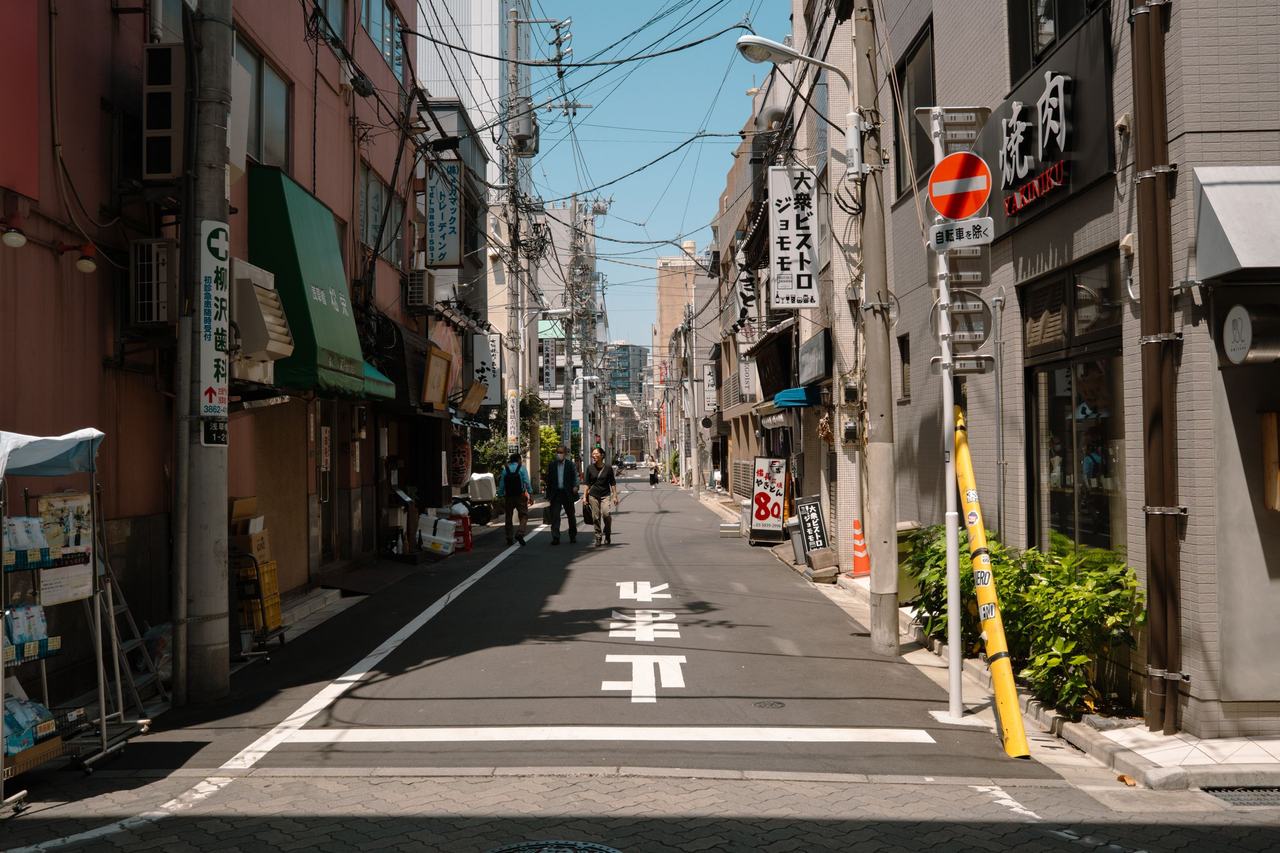
Opening photograph: A few people walk down a narrow, sunlit side street of small shops and overhead wires in Tokyo. Photograph by Iban Lopez Luna on Pexels. Blog photo credits.