Daijoubu Desu: Does It Mean Yes or No in Japan
大丈夫です means “it’s okay,” and whether that is a yes or a no depends on the question. Answering an offer (a bag, chopsticks, sugar), it is a polite no, thank you. Answering “are you all right,” it means I’m fine. About a plan or a place to stop, it means that works. To be unmistakable, say いえ、大丈夫です when you mean no and はい、お願いします when you mean yes.
What daijōbu desu means on its own
The course translates 大丈夫です as “It’s okay,” and adds that it also means I’m fine, when someone asks if you’re all right. In the course, Mori-san notices you look pale at the studio and asks:
Mori-san, a coworker, says
大丈夫ですか?顔色が悪いですよ。
Daijōbu desu ka? Kaoiro ga warui desu yo.
Are you okay? You look pale.
You say
大丈夫です。
Daijōbu desu.
It’s okay.
Also I’m fine, when someone asks if you’re all right.
So far, nothing confusing. The confusion starts when someone offers you something, because then “it’s okay” means “I’m okay without it.”
The polite way to say no to an offer
When a neighbor offers persimmons from his tree, or a clerk offers a bag, the obvious word for no is いいえ. The course warns against it. Its note says いいえ is a plain no, for facts, and as the answer to an offer it sounds blunt. The soft version is いえ、大丈夫です:
You say
いいえ。
Iie.
No.
A plain no, for facts. As the answer to an offer it sounds blunt: say いえ、大丈夫です instead.
You say
いえ、大丈夫です。
Ie, daijōbu desu.
No, thank you.
The soft way to turn down an offer.
Accepting works the other way round. In the course’s first unit, Okada-san, a neighbor, calls over his garden wall that his tree has given lots of persimmons, then offers to put some in a bag. You can take just one with じゃあ、ひとつだけいただきます, or say yes to the bag with はい、お願いします. Turning the whole offer down is いえ、大丈夫です, soft and complete.
You can hear the polite no in the course itself, too. When you offer to help Mori-san at the end of the day, she turns you down with Daijōbu desu yo. Arigatō gozaimasu: I’m fine, thank you. That daijōbu is a no to your offer, said warmly.
At the konbini: heating, chopsticks, bag and receipt
A convenience store counter is where daijōbu works hardest, because the clerk asks a short question about almost everything. In the course, Tamura-san, the night clerk, starts with the bento:
Tamura-san, the night clerk, asks
お弁当、温めますか?
Obentō, atatamemasu ka?
Shall I heat up your bento?
You say
温めなくて大丈夫です。
Atatamenakute daijōbu desu.
No need to heat it.
大丈夫です is the polite no at a konbini. いいです on its own can mean yes or no, so clerks often ask again: say 大丈夫です for no and お願いします for yes.
That note is the key to the whole topic. いいです on its own can mean yes or no, so clerks often ask again. 大丈夫です is clear as a no, and お願いします is clear as a yes.
Chopsticks come next. The course notes that いらないです, I don’t need them, is understood but blunt, and that 大丈夫です does the same job softly:
You say
お箸は大丈夫です。
Ohashi wa daijōbu desu.
No chopsticks, thank you.
いらないです is understood, but it’s blunt. 大丈夫です does the same job softly.
Then the bag. The course notes that plastic bags have cost a few yen since 2020, so clerks ask, and many people carry their own. With one item in your hand you can also say そのままで大丈夫です, which in the course’s words means no bag and no sticker.
You say
袋は大丈夫です。
Fukuro wa daijōbu desu.
I don’t need a bag.
Since 2020, plastic bags cost a few yen, so clerks ask and many people carry their own.
The receipt is the real trap. Sometimes the clerk asks it as a negative question:
Tamura-san, the night clerk, asks
レシートはよろしいですか?
Reshīto wa yoroshii desu ka?
You don’t need the receipt?
You say
レシートは大丈夫です。
Reshīto wa daijōbu desu.
I don’t need the receipt.
A trap: to レシートはよろしいですか?, はい means no receipt. Answer with 大丈夫です or ください and you can’t go wrong.
As the course puts it, to that question はい means no receipt. If you answer with 大丈夫です for no, or ください for yes, you cannot go wrong.
At the cafe: milk and sugar
At a kissaten counter, Haruka, the café owner, asks how you take your coffee. Daijōbu turns down the sugar here too:
Haruka, the café owner, asks
ミルクとお砂糖はお付けしますか?
Miruku to osatō wa otsuke shimasu ka?
Would you like milk and sugar?
You say
砂糖は大丈夫です。
Satō wa daijōbu desu.
No sugar, thank you.
大丈夫です turns down an offer politely. The staff say お砂糖, and you can say either.
If you want neither milk nor sugar, the course has ブラックで大丈夫です, black is fine. Same word, same polite no. There is more on the rest of that exchange in how to order coffee in Japanese.
When it means yes: taxis, plans and feeling better
Now the other direction. When the question is “is this all right,” daijōbu desu says yes, it is. In the course’s taxi scene, Takeda-san, the driver, asks whether he can stop here:
Takeda-san, the taxi driver, asks
この辺でよろしいですか?
Kono hen de yoroshii desu ka?
Is around here all right?
You say
ここで大丈夫です。
Koko de daijōbu desu.
Here is fine.
Here daijōbu accepts. The same is true when you agree to a time: the course’s 明日の夜は大丈夫です means tomorrow night works for me. And the morning after a cold, when Mori-san asks if you are all right now, daijōbu is good news:
You say
もう大丈夫です。
Mō daijōbu desu.
I’m fine now.
The pattern is simple once you see it. If you were offered something, daijōbu refuses it. If you were asked whether something is okay, daijōbu approves it.
How to make your yes or no unmistakable
When you are not sure how the question was meant, use the pair the course recommends for the konbini. Neither half depends on how the question was phrased, so the pair works wherever someone offers you something, at a cafe as much as at a konbini:
- For no: 大丈夫です, or いえ、大丈夫です to soften it further.
- For yes: はい、お願いします.
You say
はい、お願いします。
Hai, onegai shimasu.
Yes, please.
Accepting an offer, of help or of something to take.
Avoid answering with a bare いいです, because the course notes it can be heard either way. The course’s note on はい adds that a small nod goes with it, so a yes is easy to see as well as hear.
Every line here is a recording from Koe’s course. In the app you hear each one, say it out loud, and see what it heard, so the right answer is ready before the clerk finishes asking.
Every line on this page
The 16 lines above, in order, for one last listen before you go. Each one is the recording from the Koe course.
大丈夫ですか?顔色が悪いですよ。Daijōbu desu ka? Kaoiro ga warui desu yo.Are you okay? You look pale.
大丈夫です。Daijōbu desu.It’s okay.
いいえ。Iie.No.
いえ、大丈夫です。Ie, daijōbu desu.No, thank you.
お弁当、温めますか?Obentō, atatamemasu ka?Shall I heat up your bento?
温めなくて大丈夫です。Atatamenakute daijōbu desu.No need to heat it.
お箸は大丈夫です。Ohashi wa daijōbu desu.No chopsticks, thank you.
袋は大丈夫です。Fukuro wa daijōbu desu.I don’t need a bag.
レシートはよろしいですか?Reshīto wa yoroshii desu ka?You don’t need the receipt?
レシートは大丈夫です。Reshīto wa daijōbu desu.I don’t need the receipt.
ミルクとお砂糖はお付けしますか?Miruku to osatō wa otsuke shimasu ka?Would you like milk and sugar?
砂糖は大丈夫です。Satō wa daijōbu desu.No sugar, thank you.
この辺でよろしいですか?Kono hen de yoroshii desu ka?Is around here all right?
ここで大丈夫です。Koko de daijōbu desu.Here is fine.
もう大丈夫です。Mō daijōbu desu.I’m fine now.
はい、お願いします。Hai, onegai shimasu.Yes, please.
Common questions
Does daijoubu desu mean yes or no?
It means “it’s okay.” Answering an offer, it is a polite no, thank you. Answering “are you all right” or “is here okay,” it is a yes. If you need to be clear, say いえ、大丈夫です for no and はい、お願いします for yes.
Is it rude to just say iie in Japan?
Not for facts. The course notes that いいえ is a plain no for facts, but that as the answer to an offer it sounds blunt. For offers, use いえ、大丈夫です.
What does ii desu mean at a store?
It can mean yes or no, which is why the course recommends avoiding it on its own. Clerks often ask again when they hear it. Say 大丈夫です for no and お願いします for yes.
How do I refuse a bag at a Japanese convenience store?
Say 袋は大丈夫です, I don’t need a bag. With a single item you can say そのままで大丈夫です, it’s fine as it is, which skips both the bag and the sticker.
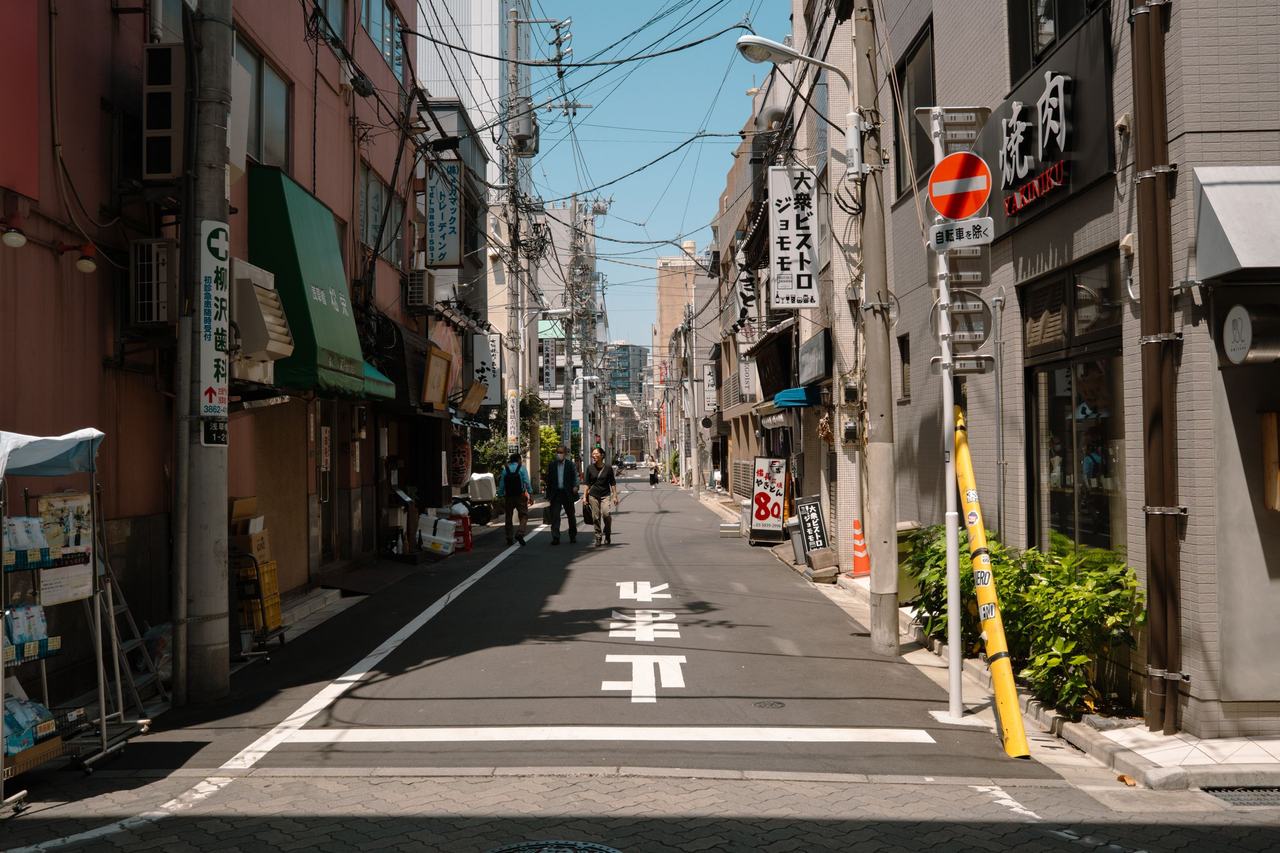
Opening photograph: A few people walk down a narrow, sunlit side street of small shops and overhead wires in Tokyo. Photograph by Iban Lopez Luna on Pexels. Blog photo credits.