Mexico City Slang Travelers Actually Hear
The Mexico City slang a visitor actually hears is short and friendly: Va or sale for okay, ¿Qué onda? for what’s up, luego luego for right away and No tiene pierde for you can’t miss it. People from the city are nicknamed chilangos, and these are the words of their everyday errands, not a list of insults. Each one below is played in its scene from Habla’s course, so you know who says it and what to say back.
The Mexico City okay
If you learn one local word, make it va. The course calls it the one-word Mexican yes to a plan, and notes that sale means the same. In another lesson it puts it even more simply: va is the Mexico City okay, as in deal.
You say
Va.
Okay.
The one-word Mexican yes to a plan. Sale means the same.
You ask
Va. ¿Aceptan tarjeta?
Okay. Do you take cards?
Va is the Mexico City okay: deal.
You will hear it in your direction often. Sofía the barista confirms your order with sale, and Diego closes a plan with it:
Sofía, the barista, says
Sale, para llevar.
Okay, to go.
Diego, a friend, says
Sale. Ahí nos vemos.
Okay. See you there.
Friends use va to agree to an errand too. When Diego asks Mariana to bring him snacks from the corner store, she says va before asking whether he has change:
Mariana, a coworker, says
Va. ¿Traes cambio? Nada más tengo un billete de quinientos.
Sure. Do you have change? I only have a $500 bill.
A close cousin is Listo, all set. Sofía uses it when your coffee order is complete, followed by the promise that it will be right out:
Sofía, the barista, says
Listo. Ahorita sale.
All set. It’ll be right out.
What friends say: what’s up and hey
Friends in the course greet each other without the formulas you learn first. When Diego runs into you on the street, he opens with ¿Qué onda?, which the course translates as what’s up, and asks where you are going:
Diego, a friend, asks
¿Qué onda? ¿A dónde vas?
What’s up? Where are you off to?
Oye, hey, is the other word friends start with. Diego uses it to turn a conversation toward you, and Tom uses it to get Mariana’s attention at the office, as in his question about the time.
Diego, a friend, asks
Oye, ¿y tú de dónde eres?
Hey, so where are you from?
Both of these come from friends. For greetings by time of day, see the guide to greeting people in Mexico City.
What vendors and drivers say to you
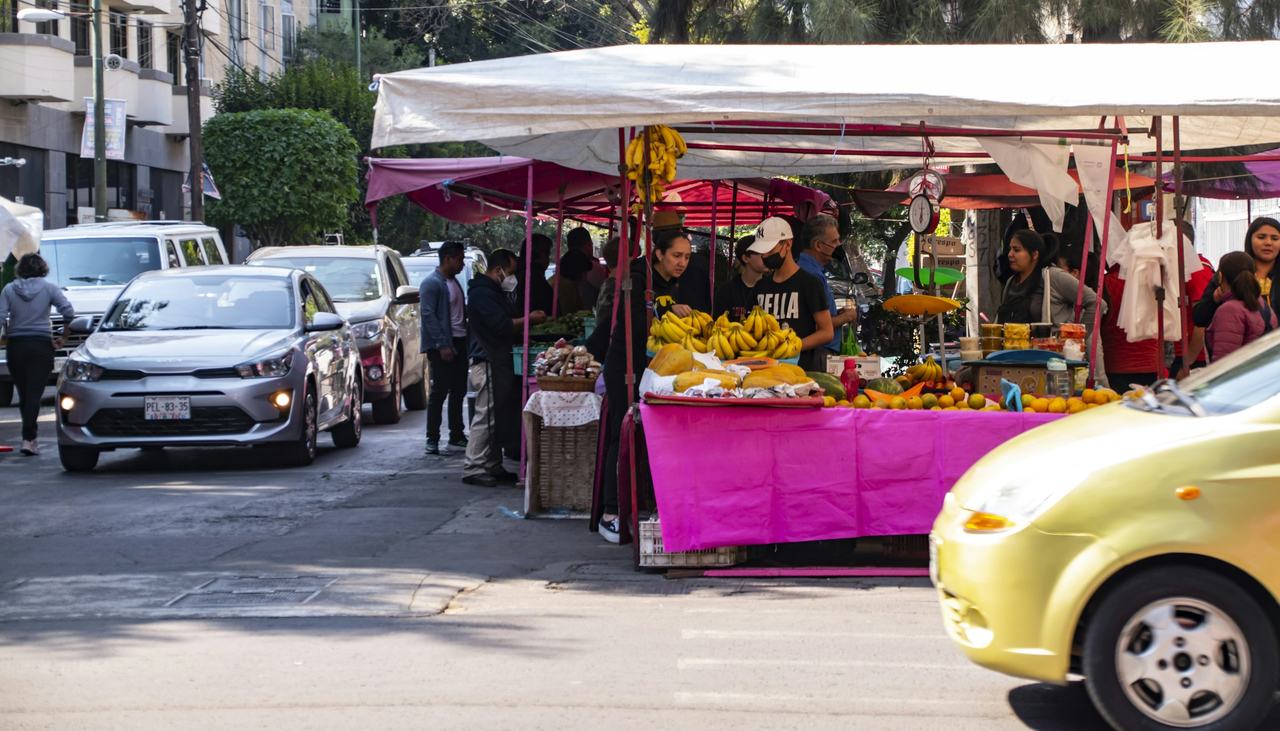
Market vendors have their own way of calling you over. Doña Lupe welcomes Diego to her fruit stall with Pásele, which the course translates as step right up, and calls him joven, young man:
Doña Lupe asks
Pásele, joven. ¿Qué le damos?
Step right up, young man. What can I get you?
Drivers and shopkeepers say yes with cómo no, of course. When Mariana asks Don Toño whether he has change for a big bill, his answer is warm and quick:
Don Toño, the taxi driver, says
Sí, cómo no, señorita.
Yes, of course, miss.
These are words to recognize rather than repeat. For the rest of what you hear at a market, see the guide to what Mexican vendors say to you.
Directions: you can’t miss it, right away
Directions come with two phrases worth knowing. No tiene pierde means you can’t miss it. Doña Lupe says it once her directions are done, so it is your signal that the explanation is over:
Doña Lupe says
Sí, a la izquierda. No tiene pierde.
Yes, left. You can’t miss it.
Luego luego means right away. Diego uses it to promise that you will see the Zócalo as soon as you turn the corner:
Diego, a friend, says
Sí, la segunda. Ahí lo ves luego luego.
Yes, the second. You’ll see it right away.
Three more from the course notes. You will hear derechito, the diminutive of straight ahead, for keep going straight. For is it far?, you will also hear ¿Está retirado? And in a taxi, aquí mero means right here, the moment you want the driver to stop.
Ahorita: now, soon or later
One more word deserves a section of its own. Ahorita can mean right now, in a minute, or later, depending on the tone, according to the course. When Sofía says it about your coffee, it means it will be right out:
Sofía, the barista, says
Perfecto. Ahorita sale.
Perfect. It’ll be right out.
The course also notes Ahorita regreso, I’ll be right back, as the classic polite way to walk away from a market stall without buying. The full story, with poquito, cerquita and the other diminutives, is in the guide to ahorita.
Short words friends use
The course notes a handful of everyday words that friends and locals use in place of the textbook ones. All of them are useful to recognize:
- igual: friends shorten likewise to it.
- el fin: the weekend, shortened.
- el depa: an apartment, among friends.
- la panza: the belly, for a stomach ache among friends.
- el cel: the phone itself.
- ¿Te animas?: are you up for it?, the friendly Mexican twin of do you want to come.
Two more show up at shops. Feria is slang for coins, and the course notes you may hear ¿No tiene feria? when change is short:
You ask
¿Tiene cambio?
Do you have change?
Ask before you hand over a big bill. You’ll also hear feria, slang for coins: ¿No tiene feria?
At a clothes stall, the course notes that chilangos say me queda guango when something is baggy:
You say
Me queda grande.
It’s too big on me.
Me queda…: it fits me… Me queda chico: it’s too small. Chilangos also say me queda guango: it’s baggy.
Every line on this page is a recording from the app’s course. In Habla you hear each one, say it out loud and see what the app heard. Saying va back to a vendor before you have thought about it is a small, real sign that the city is getting easier.
Every line on this page
The 15 lines above, in order, for one last listen before you go. Each one is the recording from the Habla course.
Va.Okay.
Va. ¿Aceptan tarjeta?Okay. Do you take cards?
Sale, para llevar.Okay, to go.
Sale. Ahí nos vemos.Okay. See you there.
Va. ¿Traes cambio? Nada más tengo un billete de quinientos.Sure. Do you have change? I only have a $500 bill.
Listo. Ahorita sale.All set. It’ll be right out.
¿Qué onda? ¿A dónde vas?What’s up? Where are you off to?
Oye, ¿y tú de dónde eres?Hey, so where are you from?
Pásele, joven. ¿Qué le damos?Step right up, young man. What can I get you?
Sí, cómo no, señorita.Yes, of course, miss.
Sí, a la izquierda. No tiene pierde.Yes, left. You can’t miss it.
Sí, la segunda. Ahí lo ves luego luego.Yes, the second. You’ll see it right away.
Perfecto. Ahorita sale.Perfect. It’ll be right out.
¿Tiene cambio?Do you have change?
Me queda grande.It’s too big on me.
Common questions
What does ¿Qué onda? mean?
It means what’s up. In the course, Diego uses it to greet a friend on the street before asking where they are going.
What does va mean in Mexico?
It means okay, or deal. The course calls va the one-word Mexican yes to a plan and the Mexico City okay, and notes that sale means the same.
What are chilangos?
It is the everyday nickname for someone from Mexico City. The course mentions chilangos in its note on clothes that are too big.
What does no tiene pierde mean?
You can’t miss it. Doña Lupe says it at the end of her directions to the metro, so when you hear it, the directions are done.
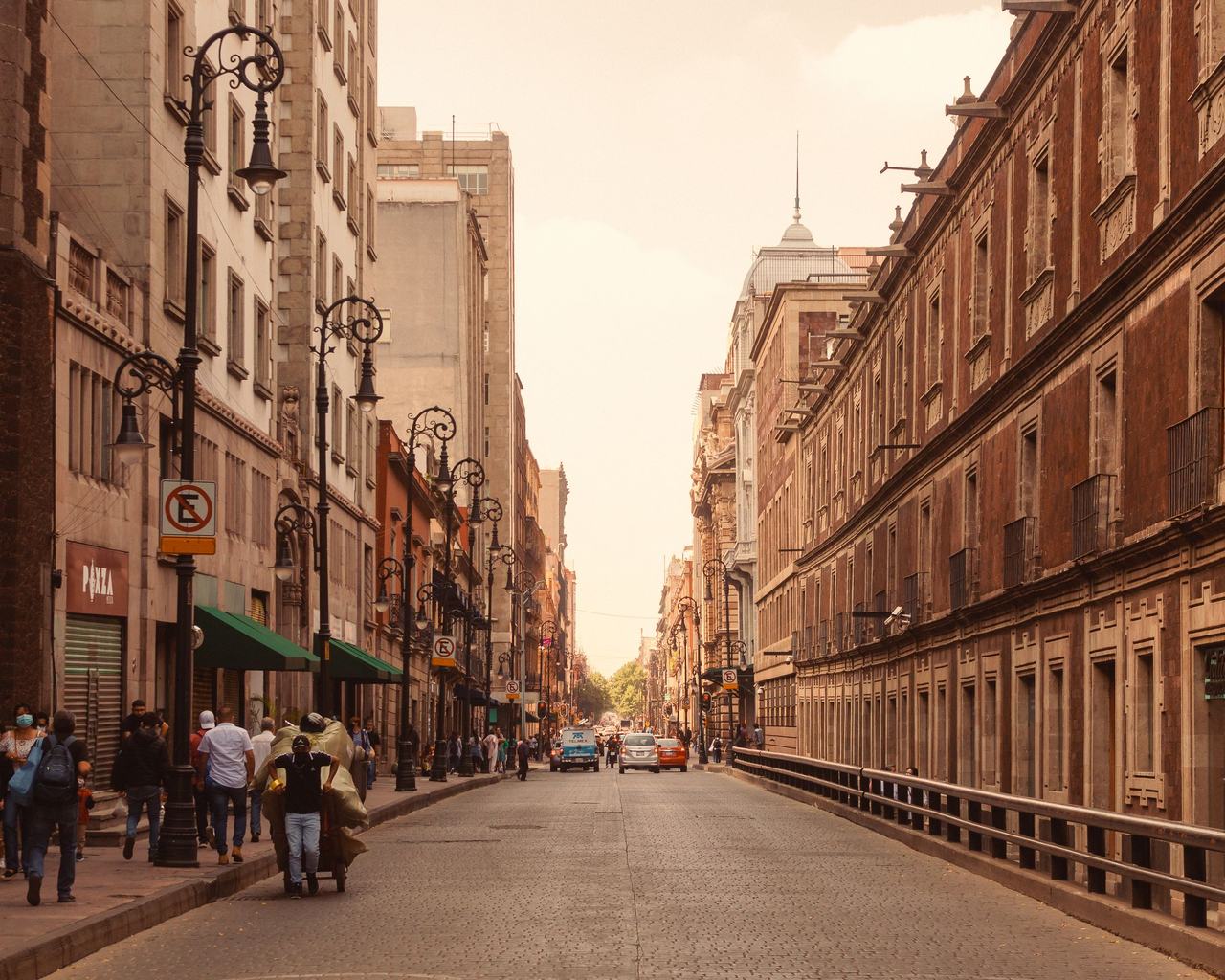
Opening photograph: Pedestrians and a porter pushing a loaded cart move along an old stone street in Mexico City. Photograph by Andrea Román on Pexels. Blog photo credits.