Ahorita, Poquito, Cerquita: Mexican Diminutives Explained
In Mexico, ahorita means right now, in a minute, or later, depending on the tone. That is how Habla’s course defines it, and you will meet all three meanings. When the barista says Perfecto. Ahorita sale, your coffee will be right out. When a friend says Ahorita no puedo, they mean right now. And the little ending on ahorita is everywhere else too: poquito, cerquita, tiendita. Here is each one in the scene where you will hear it, with its recording.
Ahorita as in a moment: the café and the taco stand
The meaning you are likely to meet first comes from people serving you: in a moment, coming right up. Sofía uses it once she has the name for the order, and Beto uses it at his taco stand once he has your order:
Sofía, the barista, says
Perfecto. Ahorita sale.
Perfect. It’ll be right out.
Beto, the taquero, says
Va. Ahorita salen.
Okay. They’ll be right out.
When you say you are done eating, Beto uses it again, this time for the bill. The course translates it as I’ll ring you up in a second:
Beto, the taquero, says
Sale. Ahorita le cobro.
Okay. I’ll ring you up in a second.
In all three, ahorita is a promise about the next few moments. Nothing for you to do but wait at the counter or finish your taco.
Ahorita as right now
Between friends, the same word can point at this very moment. Mariana invites Tom for a coffee ahorita, right now. Tom can’t, and the course gives you his answer, which uses the word for the same moment:
Mariana, a coworker, asks
Tom, ¿vamos por un café ahorita?
Tom, shall we go for a coffee right now?
You say
Ahorita no puedo.
I can’t right now.
Ahorita: right now, in a minute, or later, depending on the tone. Here it means now. Ahora works too.
The course note is the key line on this page: ahorita means right now, in a minute, or later, depending on the tone, and here it means now. It adds that plain ahora works too.
On the phone, the course translates it as right away. When you call the office and ask for Diego, Mariana puts him on ahorita. Face to face, when Diego takes your number, the course translates his ahorita as right now:
Mariana, a coworker, says
Ah, hola, Tom. Ahorita te lo paso.
Oh, hi, Tom. I’ll put him on right away.
Diego, a friend, says
Te mando un WhatsApp ahorita.
I’ll WhatsApp you right now.
Ahorita as later, or maybe not at all
The third meaning takes the most care. The course gives a clear example in its note on how to turn down a market vendor politely:
You say
Lo voy a pensar, gracias.
I’ll think about it, thanks.
The polite no. Ahorita regreso, I’ll be right back, is the classic version.
Ahorita regreso, I’ll be right back, is the classic polite no. Said to a vendor, it does not promise a return. It is a kind way to leave the stall.
So when ahorita is said to you, listen to the situation. A barista with your cup in hand means seconds. A friend making plans may mean now. A shopper walking away from a stall may mean never. If you need a firm answer, ask for one with a course line. For a delivery, ask how long it will take, and the course notes that the answer comes in minutes:
You ask
¿Cuánto tarda?
How long will it take?
Tardar: to take time. The answer comes in minutes: como media hora, about half an hour.
For a plan, ¿A qué hora?, what time?, gets you a time instead of an ahorita.

Poquito and poquita at the salsa bowl
The ending on ahorita turns up in many other words. The course puts the habit simply in a note at the taco stand: Mexicans love the diminutive. The first one you need is poquito, a little. When Mariana asks whether the green salsa is spicy, Beto answers with it:
Mariana, a coworker, asks
¿Pica la salsa verde?
Is the green salsa spicy?
Beto, the taquero, says
Poquito. La roja es la que pica.
A little. The red one is the spicy one.
It is also how you ask for less. Poquito or poquita, the course notes, means just a little. For salsa, the course line uses poquita:
You say
Poquita salsa, por favor.
Just a little salsa, please.
Poquito, poquita: just a little. Mexicans love the diminutive.
Beto repeats it back when he confirms Mariana’s order, which shows the word working in both directions:
Beto, the taquero, says
Sale. Sin cebolla y con poquita verde.
Coming up. No onion, and a little green.
Cerquita, tiendita and other small words
Once you notice the ending, you will hear it in directions and errands too. Asking whether a place is far, you may hear that it is cerquita, which the course translates as really close:
Diego, a friend, says
Está cerquita.
It’s really close.
The corner store is la tiendita. Doña Chelo’s store is one, and Mariana uses the word when she offers to bring Diego a snack:
Mariana, a coworker, asks
Voy a la tiendita. ¿Quieres algo?
I’m going to the corner store. Do you want anything?
The course notes a few more you will recognize now: derechito, keep going straight, in directions; papitas, potato chips, at the store; and más despacito, por favor, the softer way to ask someone to slow down. In each case the base word is one you may already know: derecho, papas, despacio.
Which ones to say yourself
Most of these words are for listening. Of all the diminutives on this page, the course asks you to say only two, and both are worth having ready.
The first is Ahorita no puedo, for turning down an invitation that comes at the wrong moment. Add another day and you have a kind no, as Tom does when he suggests tomorrow instead. If ahorita feels risky, the course note says plain ahora works too.
The second is Poquita salsa, por favor, for the salsa bowl. It is the diminutive you are most likely to need on a trip, and it pairs well with asking whether the salsa is spicy first.
Every line on this page is a recording from the app’s course. In Habla you hear each line, say it out loud and see what the app heard, which makes ahorita and poquita easy to catch the first time a real voice says them.
Every line on this page
The 15 lines above, in order, for one last listen before you go. Each one is the recording from the Habla course.
Perfecto. Ahorita sale.Perfect. It’ll be right out.
Va. Ahorita salen.Okay. They’ll be right out.
Sale. Ahorita le cobro.Okay. I’ll ring you up in a second.
Tom, ¿vamos por un café ahorita?Tom, shall we go for a coffee right now?
Ahorita no puedo.I can’t right now.
Ah, hola, Tom. Ahorita te lo paso.Oh, hi, Tom. I’ll put him on right away.
Te mando un WhatsApp ahorita.I’ll WhatsApp you right now.
Lo voy a pensar, gracias.I’ll think about it, thanks.
¿Cuánto tarda?How long will it take?
¿Pica la salsa verde?Is the green salsa spicy?
Poquito. La roja es la que pica.A little. The red one is the spicy one.
Poquita salsa, por favor.Just a little salsa, please.
Sale. Sin cebolla y con poquita verde.Coming up. No onion, and a little green.
Está cerquita.It’s really close.
Voy a la tiendita. ¿Quieres algo?I’m going to the corner store. Do you want anything?
Common questions
What does ahorita mean in Mexico?
Right now, in a minute, or later, depending on the tone, according to the course. From a barista it means your order will be right out. From a friend it can mean right now.
Does ahorita mean now or later?
It can mean either. The course gives Ahorita no puedo for I can’t right now, Ahorita sale for it’ll be right out, and Ahorita regreso as the classic polite no to a vendor.
What does poquito mean?
A little. The course notes that poquito and poquita both mean just a little, and teaches Poquita salsa, por favor for asking for just a little salsa.
What is a tiendita?
A corner store. In the course, Doña Chelo’s tiendita on the corner sells water, snacks and phone credit.
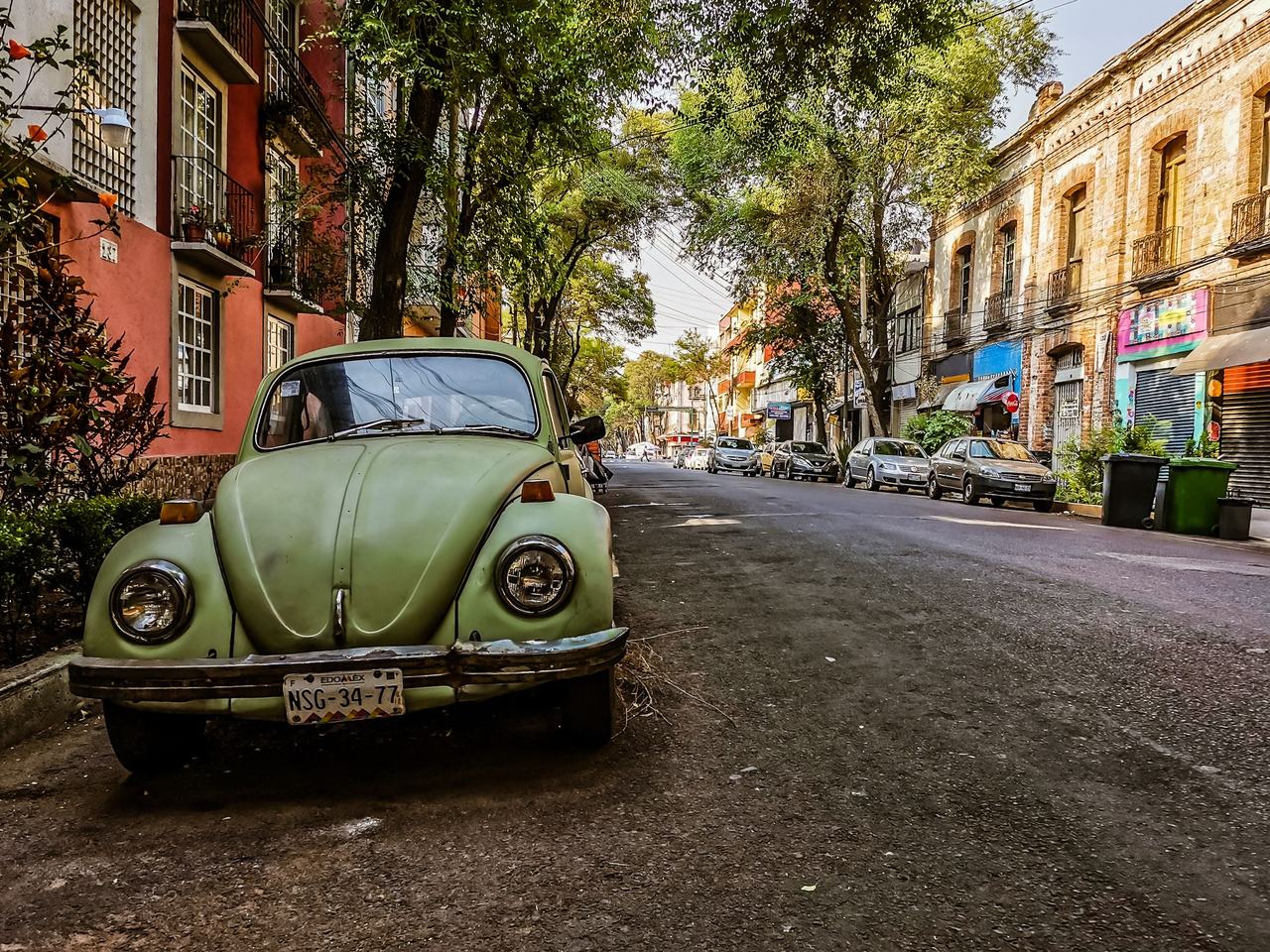
Opening photograph: Pedestrians and a porter pushing a loaded cart move along an old stone street in Mexico City. Photograph by Andrea Román on Pexels. Blog photo credits.