Mexican Spanish vs Spain Spanish: What Travelers Need
For a trip to Mexico City, the local words you will actually meet are everyday ones. People say ¿Mande? when they miss something, answer the phone with ¿Bueno?, ask for jitomate, not tomate, for red tomatoes, wear a playera and ask for el ticket at the register. This page skips the long comparison essays and goes through the swaps a visitor hits in one day, each one flagged as Mexican in Habla’s course and played from its recording.
Talking to people: pardon, hello and okay
One of the first differences you may hear is the word for pardon. In Mexico it is ¿Mande?, and the course calls it the polite Mexican way to ask someone to say it again. The course also warns that a bare ¿Qué? can sound rude.
You ask
¿Mande?
Pardon?
The polite Mexican way to ask someone to say it again, or to answer when they call you. Younger people also say ¿Perdón? or ¿Cómo? A bare ¿Qué? can sound rude.
The phone has its own hello. Mexico answers with ¿Bueno?, and only on the phone. Face to face, hello is still hola.
You ask
¿Bueno?
Hello?
How Mexico answers the phone, and only the phone. Face to face, hello is still hola.
Then there is okay. In Mexico City the one-word yes to a plan, a price or an offer is va, and the course notes that sale means the same. In the course you hear both from Sofía the barista, Beto the taquero and Diego.
You say
Va.
Okay.
The one-word Mexican yes to a plan. Sale means the same.
Smaller local touches run through the rest of the course. For what time is it, it notes the everyday ¿Qué horas son?, and that in Mexico seven in the evening is already de la noche for most people. A friend checking whether you want to join a plan may ask ¿Te animas?, are you up for it?, which the course calls the friendly Mexican twin of do you want to come. And the course notes that Mexicans love the diminutive: ahorita and its cousins, such as poquito and cerquita, are the words to listen for.
At the market and the corner store
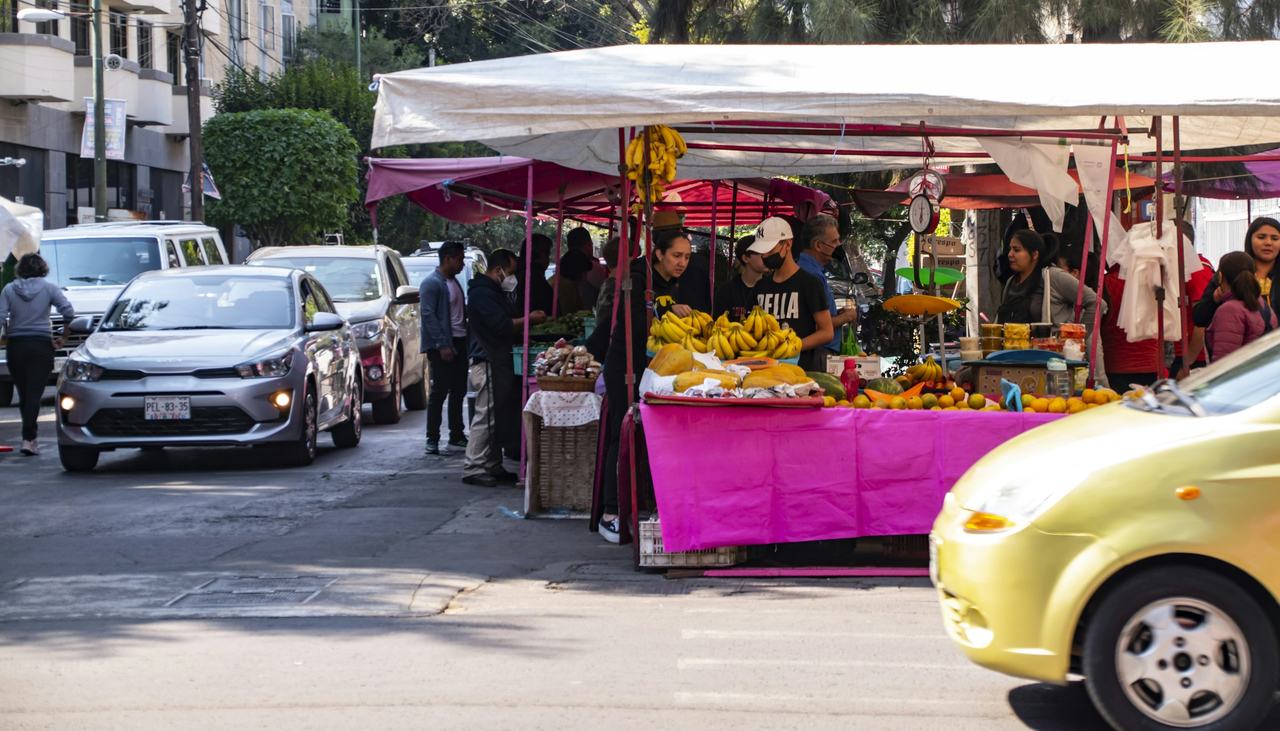
At a market stall in Mexico City, the red tomato you want is a jitomate. Ask for a tomate and, as the course notes, you get the green tomatillo.
You say
Un kilo de jitomate, por favor.
A kilo of tomatoes, please.
In Mexico City a red tomato is a jitomate. A tomate is the green tomatillo.
At the corner store, unas papas are a bag of potato chips, as the course explains, and you will hear the diminutive papitas just as often. Fries are papas a la francesa.
You say
Unas papas, por favor.
Some chips, please.
At a store unas papas are a bag of potato chips, and you’ll hear the diminutive papitas just as often. Fries are papas a la francesa.
At the register, the receipt is el ticket, said the English way. The course adds that el recibo is understood too, but usually means a bill you pay, like the light or the phone.
You ask
¿Me da el ticket, por favor?
Could I have the receipt, please?
El ticket, said the English way, is the receipt in Mexico. Stores with a register print one; a small tiendita often can’t, so ask only where you see one. El recibo is understood too, though it usually means a bill you pay, like the light or the phone.
Two more local habits from the same unit: when you turn down a bag, you say traigo bolsa, using traer, which the course calls the everyday Mexican verb for having something with you. And phone credit is something you ask a store to make: Mexicans say hacer una recarga.
Asking for things the Mexican way
One request pattern the course leans on is ¿Me da…?, literally will you give me. The course calls it the everyday Mexican way to ask for something. In the course it comes up at Sofía’s café and at Doña Chelo’s register.
You ask
¿Me da un café con leche, por favor?
Could I have a coffee with milk, please?
¿Me da…?, literally will you give me…?, is the everyday Mexican way to ask for something.
For more on it, and on ¿Tiene…?, see how to ask for things in Spanish in Mexico.
Shopping for clothes
At a clothes stall, the T-shirt is a playera, which the course calls the Mexican word for it.
You ask
¿Cuánto cuesta esta playera?
How much is this T-shirt?
Playera is the Mexican word for a T-shirt. Esta playera: this T-shirt.
Trying something on has its own verb in Mexico. Mexicans say medirse, literally to measure oneself. The course notes that probarse is understood too.
You ask
¿Me lo puedo medir?
Can I try it on?
Mexicans say medirse, to measure oneself, for trying clothes on. Probarse is understood too. Me la for a la thing.
Getting around the city
On the metro, a small word changes. Mexicans ask ¿Cuál línea? where a textbook says ¿Qué línea?, according to the course. Metro lines have numbers and colors, the course adds.
You ask
¿Cuál línea tomo?
Which line do I take?
Metro lines have numbers and colors. Mexicans say ¿Cuál línea? where a textbook says ¿Qué línea?
Addresses and taxi rides use colonia for a neighborhood. It is on every address in the city, and in a taxi people just say a la Roma, as the course notes.
You say
A la colonia Roma, por favor.
To the Roma, please.
A colonia is a neighborhood: the word on every address. People just say a la Roma.
When you feel unwell
At the pharmacy, a cold or the flu is la gripa. The course notes that elsewhere it is gripe, so this is one word where Mexico City differs.
You say
Tengo gripa.
I have a cold.
In Mexico a cold or the flu is la gripa; elsewhere it’s gripe.
Friends talk about la panza, the belly, rather than the stomach, and you may be wished better with Que te alivies, which the course calls very Mexican.
Making plans with friends
Plans have their own local touches. When a friend suggests something, the one-word yes is va, and the course notes that sale means the same. An invitation may come as a question in the negative, ¿No quieres ir?, which the course flags as a Mexican habit, and it is still a real invitation. And when you set the time, remember the course’s note that in Mexico seven is already de la noche for most people.
You say
A las siete de la noche.
At seven in the evening.
De la mañana, de la tarde, de la noche say which seven. In Mexico, seven is already de la noche for most people.
Every line on this page is a recording from the app’s course. In Habla you hear each line, say it out loud and see what the app heard, so the local words are the ones that come out when you need them.
Every line on this page
The 13 lines above, in order, for one last listen before you go. Each one is the recording from the Habla course.
¿Mande?Pardon?
¿Bueno?Hello?
Va.Okay.
Un kilo de jitomate, por favor.A kilo of tomatoes, please.
Unas papas, por favor.Some chips, please.
¿Me da el ticket, por favor?Could I have the receipt, please?
¿Me da un café con leche, por favor?Could I have a coffee with milk, please?
¿Cuánto cuesta esta playera?How much is this T-shirt?
¿Me lo puedo medir?Can I try it on?
¿Cuál línea tomo?Which line do I take?
A la colonia Roma, por favor.To the Roma, please.
Tengo gripa.I have a cold.
A las siete de la noche.At seven in the evening.
Common questions
Will Spain Spanish work in Mexico?
The course does not compare Mexico with Spain, but it notes that some words are understood even though locals use another, such as probarse for trying clothes on; el recibo is understood too, though it usually means a bill you pay. Learning the local words means you also understand what people say back to you.
Should I learn Mexican Spanish for a trip to Mexico?
If Mexico is where you are going, learn the words you will hear there: ¿Mande?, va, jitomate, playera, el ticket. They come up in everyday errands: the café, the corner store, the market and the clothes stall.
What does jitomate mean?
It is a red tomato. In Mexico City, the course notes, a tomate is the green tomatillo, so ask for jitomate at the market.
How do Mexicans answer the phone?
With ¿Bueno?, and only on the phone, as the course notes. Face to face, hello is still hola.
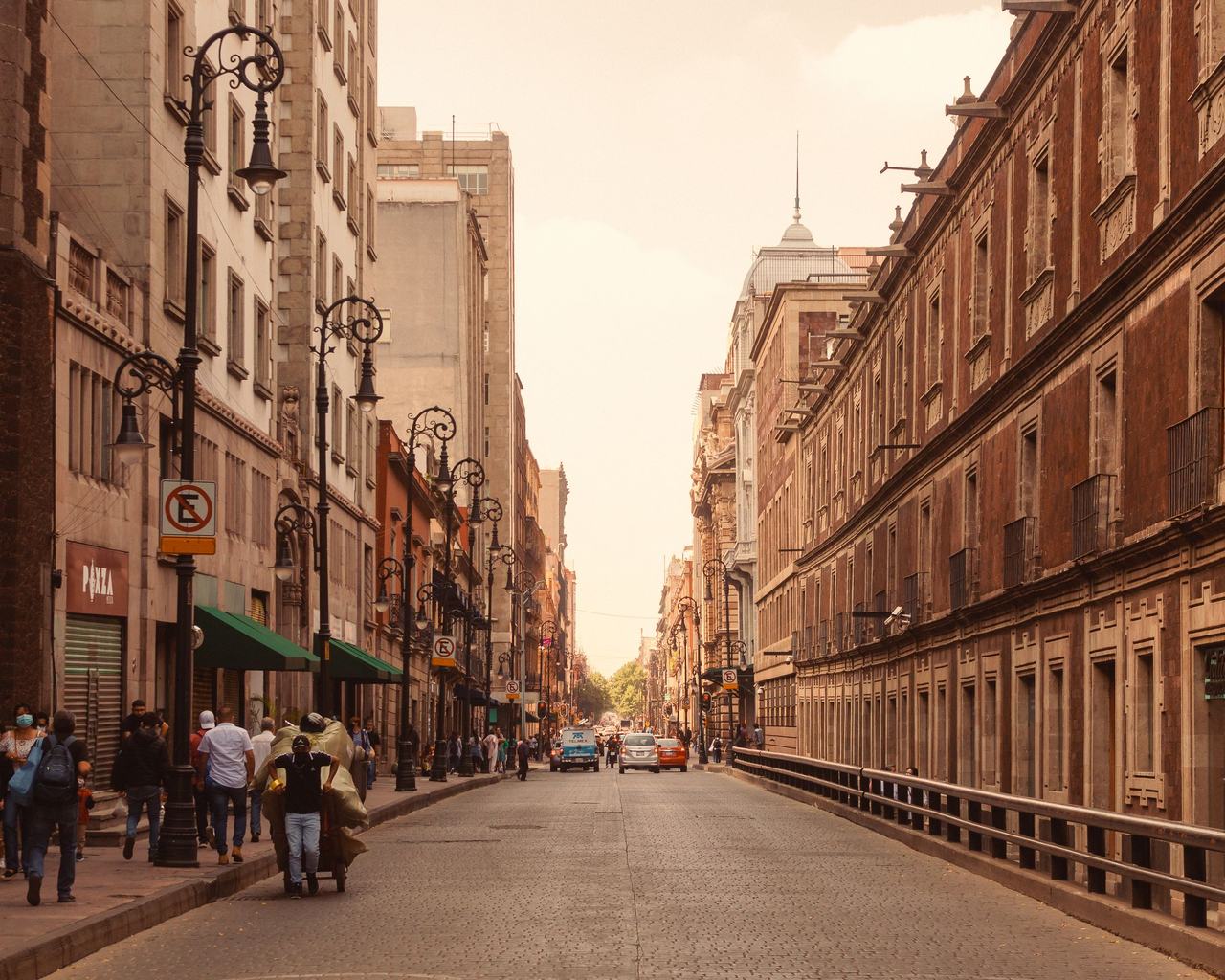
Opening photograph: Pedestrians and a porter pushing a loaded cart move along an old stone street in Mexico City. Photograph by Andrea Román on Pexels. Blog photo credits.