Sorry in Korean: Joesonghamnida vs Mianhaeyo
To say sorry in Korean to a stranger, a shop clerk or anyone you do not know, say 죄송합니다 (joesonghamnida). The course calls it the polite apology, for anyone, so it is the one to learn first. Mianhaeyo is the apology you hear between friends and coworkers in the course, for example when turning down a plan: 미안해요. 약속이 있어요. When someone apologizes to you, the usual answer is 괜찮아요 (gwaenchanayo), that’s okay.
Joesonghamnida: the apology for anyone
Joesonghamnida is a set phrase. Because the course calls it the polite apology for anyone, you do not need to adjust it for the person in front of you. Whether it is a stranger on the street or a clerk at a counter, the words stay the same.
You say
죄송합니다.
joesonghamnida.
I’m sorry.
A set phrase: the polite apology, for anyone.
The course’s first look at it is a small accident at work. As the course explains the scene, Minjun says joesonghamnida, and Seoyeon, his coworker, answers that it is fine. Here is the apology you would say, followed by her reply:
You say
죄송합니다.
joesonghamnida.
I’m sorry.
Seoyeon, a coworker, says
괜찮아요.
gwaenchanayo.
That’s okay.
Notice that the course uses the polite form even between two people who know each other. That is the best argument for making it your default on a trip: if it suits a coworker, it certainly suits a stranger, and you never have to stop and decide.
What people say back: gwaenchanayo
The reply to an apology is short, and it is one of the most useful words in the course. Gwaenchanayo means “it’s okay,” and the course note lists two more meanings worth knowing:
You say
괜찮아요.
gwaenchanayo.
It’s okay.
Also no thanks, or I’m fine.
So the same word answers an apology, turns down a bag at the convenience store, and tells a worried friend you are fine. When someone says sorry to you, a calm gwaenchanayo is all you need. In the course you also hear it with ne in front: when the chicken shop says the food will take forty minutes, Tom answers ne, gwaenchanayo, okay, that’s fine.
You can also follow it with something that moves things along. In the course, when a friend apologizes for being busy, the answer is “it’s okay” plus a new suggestion:
You ask
괜찮아요. 다음 주말은 어때요?
gwaenchanayo. daeum jumareun eottaeyo?
It’s okay. How about next weekend?

Mianhaeyo: sorry between friends
The course does not give mianhaeyo a note of its own, but it shows you where it lives. Every time it appears, it is said between friends or coworkers who already know each other. The clearest scene is a weekend invitation. Tom asks Seoyeon to go hiking, and she says no:
Tom, an exchange student, asks
서연 씨, 이번 주말에 같이 등산 갈래요?
seoyeon ssi, ibeon jumare gachi deungsan gallaeyo?
Seoyeon, do you want to go hiking together this weekend?
Seoyeon, a coworker, says
아, 미안해요. 이번 주말에는 약속이 있어요.
a, mianhaeyo. ibeon jumareneun yaksogi isseoyo.
Oh, sorry. I have plans this weekend.
Her answer has two parts: the apology, and a reason. The course teaches the same pair as a phrase you can say yourself, with a note that explains why it works:
You say
미안해요. 약속이 있어요.
mianhaeyo. yaksogi isseoyo.
Sorry, I have plans.
약속: plans to meet someone. The polite way to say no to an invitation.
In the role play, Seoyeon apologizes a second time, this time adding jeongmal, really:
Seoyeon, a coworker, says
정말 미안해요.
jeongmal mianhaeyo.
I’m really sorry.
The other place mianhaeyo comes up is the phone. In the course, Seoyeon is on the subway and cannot hear Minjun well, so he offers to call back later. She agrees, apologizes for the bad line, and ends the call:
Minjun, a friend, says
그럼 이따가 다시 전화할게요.
geureom ittaga dasi jeonhwahalgeyo.
Then I’ll call you back later.
Seoyeon, a coworker, says
네, 미안해요. 이따 통화해요.
ne, mianhaeyo. itta tonghwahaeyo.
Okay, sorry. Talk later.
Excuse me is not sorry: two words to keep apart
English uses “sorry” and “excuse me” loosely, but the course gives you separate words for jobs that are not apologies at all.
When you need someone to wait for you, or to let you get past, the course note says to use jamkkanmannyo. It is the word for a narrow aisle or a crowded subway door, not for a mistake:
You say
잠깐만요.
jamkkanmannyo.
One moment, please.
Also excuse me, when you need someone to wait or let you past.
When you want a clerk’s or a stranger’s attention, the word is jeogiyo. The course notes that this is how you get someone to turn around:
You say
저기요.
jeogiyo.
Excuse me.
To get a clerk’s or a stranger’s attention.
Each word has its own job. Keep the apology for when you really owe one, and use these two for everything else. For more on calling staff and stopping strangers, see yeogiyo vs jeogiyo.
Which apology to use on your trip
Put together, the course gives you a simple map:
- To a stranger, a clerk, a driver or anyone else: 죄송합니다.
- When a friend or coworker apologizes to you: 괜찮아요.
- To turn down a friend’s invitation: 미안해요. 약속이 있어요.
- To squeeze past or ask someone to wait: 잠깐만요.
- To get attention: 저기요.
For a short visit, most of your apologies will go to people you do not know, so joesonghamnida will do nearly all the work. Mianhaeyo becomes useful once you make friends, at a language exchange or through someone you know in Seoul, and someone asks you out on a night you are busy. If that happens, the next step is to offer another time. Our guide to saying no politely in Korean has more ways to decline without closing the door.
Every line on this page is a recording from Sori’s course. In the app you hear a line, say it out loud, and then see what it heard, so you can practice getting joesonghamnida out in one smooth breath before the moment you need it.
Every line on this page
The 12 lines above, in order, for one last listen before you go. Each one is the recording from the Sori course.
죄송합니다.joesonghamnida.I’m sorry.
괜찮아요.gwaenchanayo.That’s okay.
괜찮아요.gwaenchanayo.It’s okay.
괜찮아요. 다음 주말은 어때요?gwaenchanayo. daeum jumareun eottaeyo?It’s okay. How about next weekend?
서연 씨, 이번 주말에 같이 등산 갈래요?seoyeon ssi, ibeon jumare gachi deungsan gallaeyo?Seoyeon, do you want to go hiking together this weekend?
아, 미안해요. 이번 주말에는 약속이 있어요.a, mianhaeyo. ibeon jumareneun yaksogi isseoyo.Oh, sorry. I have plans this weekend.
미안해요. 약속이 있어요.mianhaeyo. yaksogi isseoyo.Sorry, I have plans.
정말 미안해요.jeongmal mianhaeyo.I’m really sorry.
그럼 이따가 다시 전화할게요.geureom ittaga dasi jeonhwahalgeyo.Then I’ll call you back later.
네, 미안해요. 이따 통화해요.ne, mianhaeyo. itta tonghwahaeyo.Okay, sorry. Talk later.
잠깐만요.jamkkanmannyo.One moment, please.
저기요.jeogiyo.Excuse me.
Common questions
What is the difference between joesonghamnida and mianhaeyo?
Joesonghamnida is the polite apology the course teaches for anyone, including strangers and staff. Mianhaeyo appears in the course only between friends and coworkers, for example when turning down a plan or ending a phone call.
How do you respond to sorry in Korean?
Say 괜찮아요 (gwaenchanayo), that’s okay. The same word also means no thanks or I’m fine, so it is worth learning early.
How do you say sorry, I have plans in Korean?
Say 미안해요. 약속이 있어요. The course notes that this is the polite way to say no to an invitation. You can follow it with a new suggestion, such as 다음 주말은 어때요?.
Is joesonghamnida too formal for friends?
No. In the course’s own example, Minjun uses joesonghamnida with Seoyeon, a coworker, after a small accident. Between friends you will also hear mianhaeyo, but the course calls the polite form right for anyone.
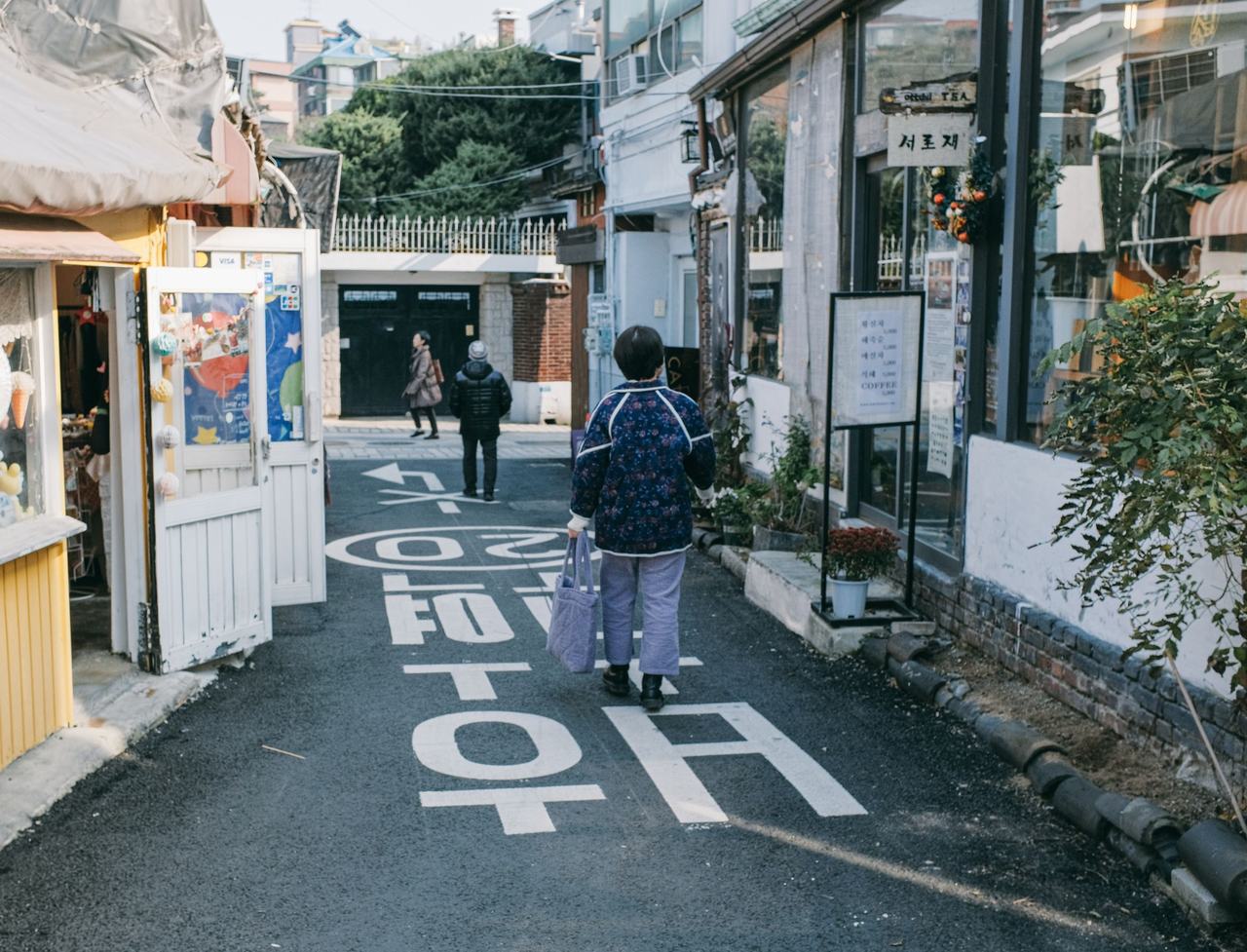
Opening photograph: A woman carrying a shopping bag walks away down a narrow lane of small shops in Seoul. Photograph by Huy Phan on Pexels. Blog photo credits.