Igeo Juseyo: How to Order in Korea by Pointing
To order in Korean by pointing, put igeo in front of juseyo. Igeo is “this,” the word you use while pointing, and juseyo is “please give me,” so together they mean “this, please.” The course’s recorded version adds a count, which makes it clearer at a busy counter: 이거 한 개 주세요, one of these, please. With igeo you can also ask the price, 이거 얼마예요?, and pay, 이거 계산해 주세요, without knowing the name of a single thing. Below is the whole pointing toolkit, from ordering to trying things on.
What igeo means, and why it works
Igeo turns up early in the course, in several of its most useful questions. Point at something, say igeo, and the other person knows exactly what you mean. The rest of the sentence is what you want to do with it: buy one, ask the price, pay for it, try it on.
That is the whole trick. You do not need the word for fish cake, sweater or umbrella. You need igeo, a finger, and one of the lines below.
You will hear it from staff as well, pointing things out to you. At the convenience store, Junho, the clerk, tells you about a deal on the item you are buying:
Junho, the store clerk, says
이거 원 플러스 원이에요.
igeo won peulleoseu wonieyo.
This one’s buy one, get one free.
When you hear igeo from the other side of a counter, look at whatever they are pointing at or holding. The rest of the sentence is about that thing.
Ordering by pointing: one of these, five of these
The basic order is igeo, a number, and juseyo. Here it is for one, and for five:
You say
이거 한 개 주세요.
igeo han gae juseyo.
One of these, please.
Count with 한, 두, 세, 네 before counters like 개 (things), 잔 (cups) and 명 (people); with no counter, say 하나, 둘, 셋. Prices in 원 use 일, 이, 삼 instead: 삼천 원, 이만 원.
You say
이거 다섯 개 주세요.
igeo daseot gae juseyo.
Five of these, please.
The course note on the first line is the key to counting things in Korean. Before a counter like gae, things, you use han, du, se, ne: one, two, three, four. So igeo han gae is “this, one item,” and igeo daseot gae is “this, five items.” For a quick order at a stall or a counter, point, say the line, and hold up the right number of fingers as a backup.
If you want more of the same later, the course has a line for that too. At a street food stall, one more fish cake is 어묵 하나 더 주세요. More on counting and prices is in our guide to native vs Sino Korean numbers.
Asking the price: how much is this?
The second thing you will want to say while pointing is “how much?” The course has the same shape, igeo plus the question. In the clothes shop, Seoyeon picks up a sweater and asks, and Daeun, the shop assistant, gives the price:
Seoyeon, a coworker, asks
이거 얼마예요?
igeo eolmayeyo?
How much is this?
Daeun, the shop assistant, says
삼만 구천 원이에요.
samman gucheon wonieyo.
It’s 39,000 won.
The answer is a price in won, and prices can be fast. If you want to check, say the number back as a question; the course teaches this as a way to confirm a price. For the full guide to hearing totals, see how to say prices in Korean won.
Paying and choosing: pay for this, I’ll take this one
When you are ready to buy, igeo does the work again. At the convenience store, you put your item on the counter and say:
You say
이거 계산해 주세요.
igeo gyesanhae juseyo.
I’d like to pay for this.
계산: the bill, paying.
In a shop, when you have been shown a few options and made up your mind, the course uses a slightly different form. Its note explains what it means:
You say
이걸로 할게요.
igeollo halgeyo.
I’ll take this one.
이걸로: this one, out of the ones you were shown.
So igeo is “this,” the thing you are pointing at, and igeollo is “this one,” your choice out of a set. If the assistant has laid out three sweaters, igeollo halgeyo picks one.
Once you have chosen, one more question can save trouble later:
You ask
이거 교환돼요?
igeo gyohwandwaeyo?
Can I exchange this?
At the restaurant: point at the menu
Pointing works at the table too, and here the course says so outright. In its note on asking for a dish to be made not spicy, it tells you to point at the menu as you say it:
You say
이거 맵지 않게 해 주세요.
igeo maepji anke hae juseyo.
Please make this not spicy.
Point at the menu as you say it. Or 덜 맵게 해 주세요: less spicy.
That makes the line useful even when you cannot read the dish name. Point at the dish as you say igeo, and there is no doubt which one you mean.
Naming the thing: these socks, these shoes
Once you do know the word for something, the course puts a short i, this, directly in front of it instead of igeo. Compare these with the lines above:
Seoyeon, a coworker, says
이 우산 오천 원이에요.
i usan ocheon wonieyo.
This umbrella is 5,000 won.
You ask
이 양말 얼마예요?
i yangmal eolmayeyo?
How much are these socks?
You ask
이 신발 신어 봐도 돼요?
i sinbal sineo bwado dwaeyo?
Can I try these shoes on?
I usan is this umbrella, i yangmal these socks, i sinbal these shoes. The idea is the same as igeo: you point and you add the word if you have it. When you do not, igeo on its own still works, as Minjun shows in the clothes shop:
Minjun, a friend, asks
이거 입어 봐도 돼요?
igeo ibeo bwado dwaeyo?
Can I try this on?
Every line on this page is a recording from Sori’s course. In the app you hear each line, say it out loud and see what it heard, so by the time you reach a counter, igeo and the line that follows it come out together.
Every line on this page
The 13 lines above, in order, for one last listen before you go. Each one is the recording from the Sori course.
이거 원 플러스 원이에요.igeo won peulleoseu wonieyo.This one’s buy one, get one free.
이거 한 개 주세요.igeo han gae juseyo.One of these, please.
이거 다섯 개 주세요.igeo daseot gae juseyo.Five of these, please.
이거 얼마예요?igeo eolmayeyo?How much is this?
삼만 구천 원이에요.samman gucheon wonieyo.It’s 39,000 won.
이거 계산해 주세요.igeo gyesanhae juseyo.I’d like to pay for this.
이걸로 할게요.igeollo halgeyo.I’ll take this one.
이거 교환돼요?igeo gyohwandwaeyo?Can I exchange this?
이거 맵지 않게 해 주세요.igeo maepji anke hae juseyo.Please make this not spicy.
이 우산 오천 원이에요.i usan ocheon wonieyo.This umbrella is 5,000 won.
이 양말 얼마예요?i yangmal eolmayeyo?How much are these socks?
이 신발 신어 봐도 돼요?i sinbal sineo bwado dwaeyo?Can I try these shoes on?
이거 입어 봐도 돼요?igeo ibeo bwado dwaeyo?Can I try this on?
Common questions
What does igeo juseyo mean?
It means “this, please.” Igeo is “this,” and juseyo is “please give me.” The course’s recorded line for ordering adds a count: 이거 한 개 주세요, one of these, please.
How do you say “how much is this” in Korean?
Say 이거 얼마예요? while pointing at the item. The answer will be a price in won.
What is the difference between igeo and igeollo?
Igeo is “this,” the thing you point at. The course notes that igeollo means this one, out of the ones you were shown, as in 이걸로 할게요, I’ll take this one.
How do you order two of something in Korean without knowing the name?
Point and say igeo, then the number with gae, then juseyo. The course note gives the numbers for counting things: han, du, se, ne. Five is 이거 다섯 개 주세요.
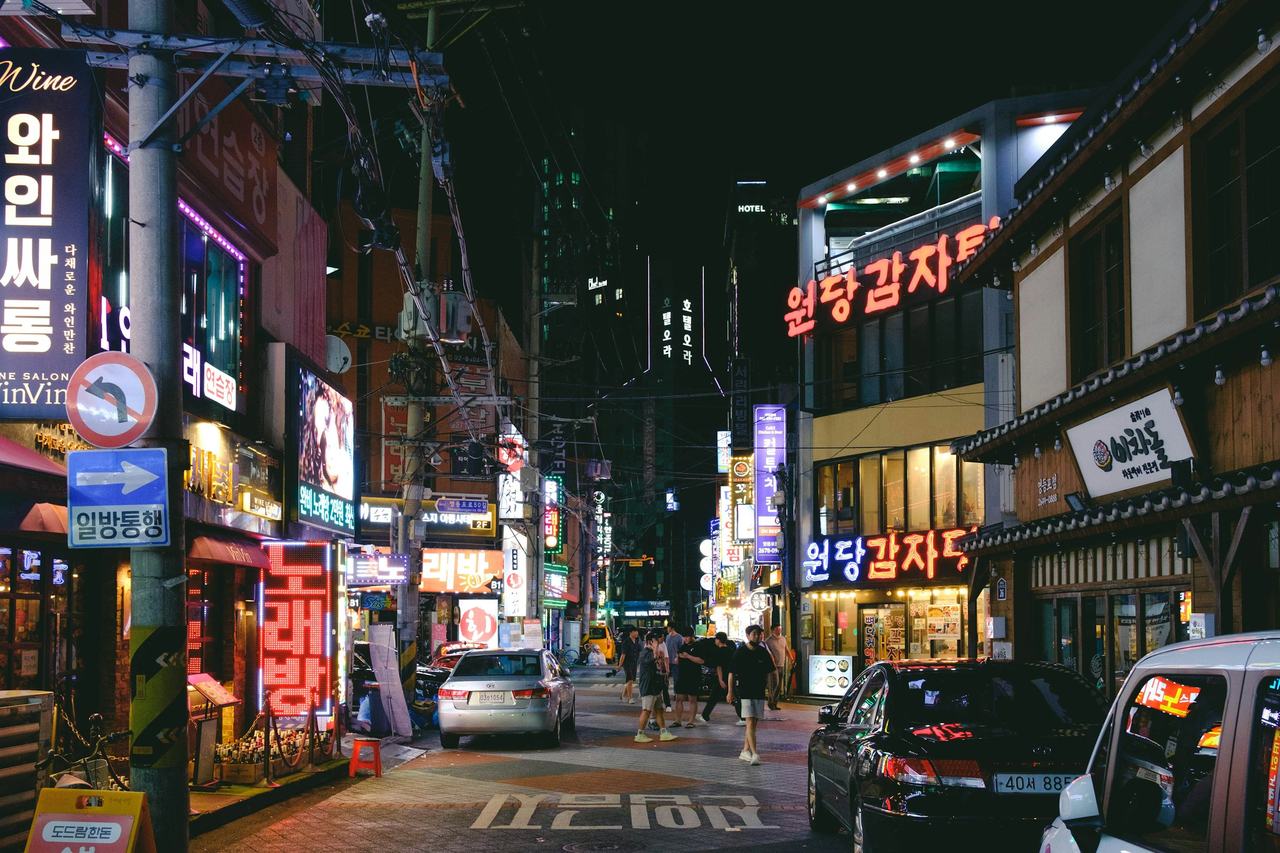
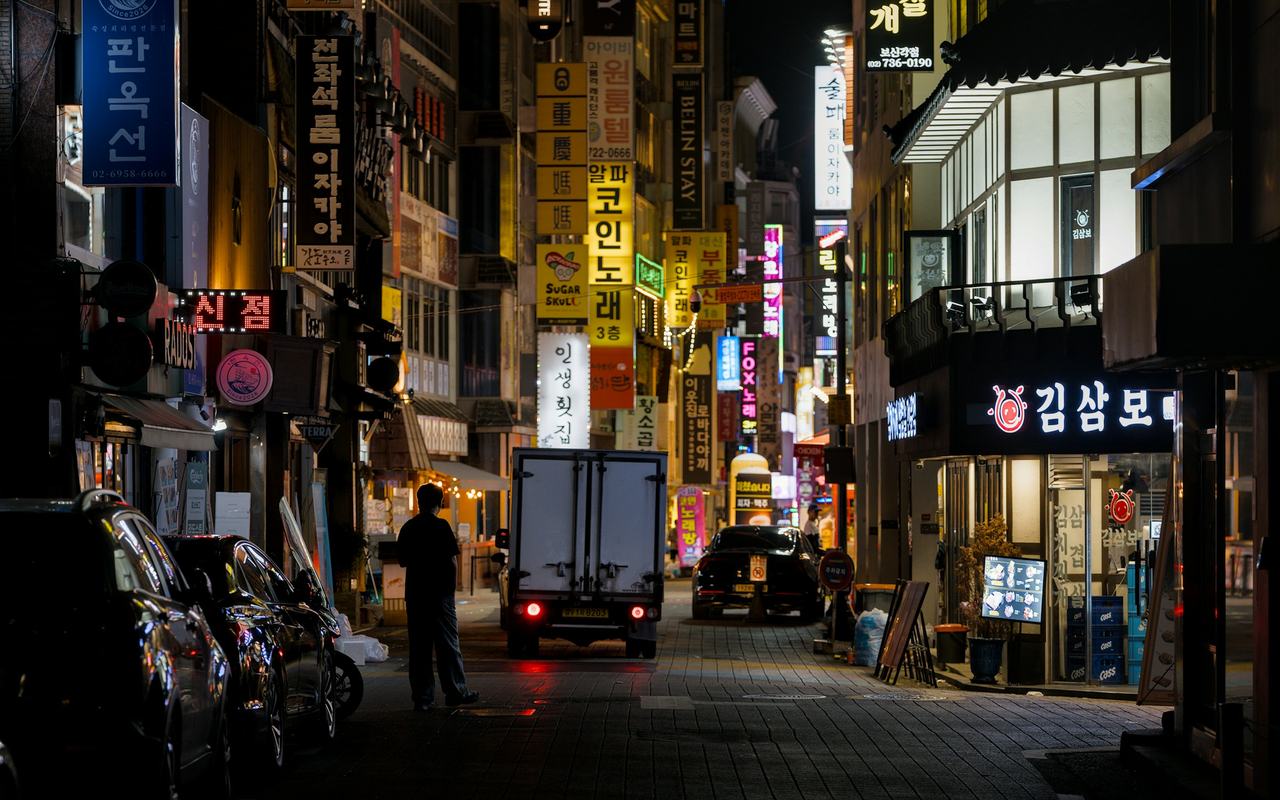
Opening photograph: A person stands in a narrow Seoul street at night under stacked signs. Photograph by Julien on Unsplash. Blog photo credits.