How to Make Plans to Meet Someone in Korean
To make plans in Korean, ask if the other person is free with 내일 시간 있어요? (naeil sigan isseoyo, are you free tomorrow), suggest a time with 오후 세 시 어때요? (ohu se si eottaeyo, how about 3 p.m.), and agree with 좋아요 (joayo, sounds good). Then settle the place and confirm with a see-you line. Below is each step from Sori’s time and plans unit, with your lines and the replies recorded, followed by the whole conversation between Jimin and Tom as the course plays it.
Asking if someone is free
The opening question does not use a word for free. The course note explains that it literally asks whether the person has time: sigan is time, and isseoyo asks if they have it.
You ask
내일 시간 있어요?
naeil sigan isseoyo?
Are you free tomorrow?
Literally: do you have time tomorrow?
You ask
주말에 시간 있어요?
jumare sigan isseoyo?
Are you free at the weekend?
Put the day at the front: naeil for tomorrow, jumare for on the weekend. The rest of the question stays the same.
In the course, the yes comes back in the same shape, with ne in front. Tom’s answer also narrows it down to the afternoon, which is useful, because it tells you where to put the time:
You say
네, 오후에 시간 있어요.
ne, ohue sigan isseoyo.
Yes, I’m free in the afternoon.
Ohue is in the afternoon. If someone answers you this way, your next step is to pick a time in the afternoon.
If you are the one who is not free, the course has a polite way to say so: 미안해요. 약속이 있어요 (mianhaeyo. yaksogi isseoyo), sorry, I have plans. Its note calls 약속 plans to meet someone. Follow it with another day and eottaeyo, how about, and the plan is back on track.
Asking when to meet
Once you both have time, the next question is when. The course gives two versions. The first asks when in general, with eonje, when:
You ask
언제 만날까요?
eonje mannalkkayo?
When shall we meet?
-(으)ㄹ까요?: shall we? 언제: when.
The note explains the ending: mannalkkayo is shall we meet. The same ending runs through the course’s plan-making lines: when shall we meet, what time shall we meet, where shall we meet.
The second version asks for a clock time, with myeot si, what hour. In the course role play, Jimin asks it after you say you are free:
Jimin, the barista, asks
그럼 몇 시에 만날까요?
geureom myeot sie mannalkkayo?
Then what time shall we meet?
If you hear myeot sie, the person wants an hour. If you hear eonje, the question is open, and a day or a part of the day answers it too.
Suggesting a day and time
The suggestion is a time plus eottaeyo, how about it. The course note on this line also gives the two words that make a time clear: ohu is afternoon, or p.m., and 오전 is morning, or a.m.
You ask
오후 세 시 어때요?
ohu se si eottaeyo?
How about 3 p.m.?
오후: afternoon, p.m. 오전: morning, a.m. 어때요?: how about it?
You ask
내일 오후 두 시 어때요?
naeil ohu du si eottaeyo?
How about 2 p.m. tomorrow?
The second line adds naeil at the front, so it carries the day and the hour together: how about 2 p.m. tomorrow. The hours are se si and du si, three and two o’clock, and the course notes that hours use native Korean numbers: han si, du si, se si, ne si. For half past, the course uses ban, half: 세 시 반이에요 is it’s half past three. For the rest of the hours and the minutes, see how to tell time in Korean.
Saying yes and confirming
The word for yes to a plan is short. The course note says joayo means sounds good, and also it’s good or I like it:
You say
좋아요.
joayo.
Sounds good.
Yes to a plan. It also means it’s good, or I like it.
To confirm, repeat the time inside a see-you line. That way you both say the time out loud one more time, and any mistake shows up before the day:
You say
좋아요. 세 시에 만나요.
joayo. se sie mannayo.
Sounds good. See you at three.
Se sie mannayo is see you at three, literally let’s meet at three. If the plan is for tomorrow and the time is already clear, the shorter goodbye works:
You say
네, 내일 봐요.
ne, naeil bwayo.
Okay, see you tomorrow.
Naeil bwayo is see you tomorrow.
Agreeing on a place
A time without a place is not a plan yet. The question for the place is eodiseo mannayo, where are we meeting, and the answer is a place plus eseo mannayo, let’s meet at:
Seoyeon, a coworker, asks
어디서 만나요?
eodiseo mannayo?
Where are we meeting?
You say
강남역에서 만나요.
gangnamnyeogeseo mannayo.
Let’s meet at Gangnam Station.
In the course role play, Minjun asks the same thing as a suggestion, eodiseo mannalkkayo, where shall we meet, and when you name the station he answers with the yes you now know:
Minjun, a friend, asks
어디서 만날까요?
eodiseo mannalkkayo?
Where shall we meet?
Minjun, a friend, says
좋아요.
joayo.
Sounds good.
For a station, the plan is not finished until you have the exit. That is a short exchange of its own, covered in how to ask which subway exit in Korean.
The whole conversation: Jimin and Tom
Here is the course dialogue in one piece. Jimin asks if Tom is free tomorrow, he says the afternoon, she asks when, he suggests three, and she confirms:
Jimin, the barista, asks
톰 씨, 내일 시간 있어요?
tom ssi, naeil sigan isseoyo?
Tom, are you free tomorrow?
Tom, an exchange student, says
네, 오후에 시간 있어요.
ne, ohue sigan isseoyo.
Yes, I’m free in the afternoon.
Jimin, the barista, asks
그럼 언제 만날까요?
geureom eonje mannalkkayo?
Then when shall we meet?
Tom, an exchange student, asks
오후 세 시 어때요?
ohu se si eottaeyo?
How about 3 p.m.?
Jimin, the barista, says
좋아요. 그럼 내일 세 시에 만나요.
joayo. geureom naeil se sie mannayo.
Sounds good. See you tomorrow at three, then.
Five lines, and every step is there: free, when, a suggestion, yes, and a confirmation with the day and time. Notice that Jimin’s last line repeats both, naeil se sie, tomorrow at three. That is the habit to copy.
If you are the one inviting someone to do something specific, a film or dinner, the conversation starts a little differently. See how to invite someone out in Korean for that.
Every line on this page is a recording from Sori’s course. In the app you hear each line, say it out loud, and see what the app heard. The replies are worth rehearsing as much as your own lines, so that ohue sigan isseoyo and eonje mannalkkayo are familiar before a friend says them to you.
Every line on this page
The 19 lines above, in order, for one last listen before you go. Each one is the recording from the Sori course.
내일 시간 있어요?naeil sigan isseoyo?Are you free tomorrow?
주말에 시간 있어요?jumare sigan isseoyo?Are you free at the weekend?
네, 오후에 시간 있어요.ne, ohue sigan isseoyo.Yes, I’m free in the afternoon.
언제 만날까요?eonje mannalkkayo?When shall we meet?
그럼 몇 시에 만날까요?geureom myeot sie mannalkkayo?Then what time shall we meet?
오후 세 시 어때요?ohu se si eottaeyo?How about 3 p.m.?
내일 오후 두 시 어때요?naeil ohu du si eottaeyo?How about 2 p.m. tomorrow?
좋아요.joayo.Sounds good.
좋아요. 세 시에 만나요.joayo. se sie mannayo.Sounds good. See you at three.
네, 내일 봐요.ne, naeil bwayo.Okay, see you tomorrow.
어디서 만나요?eodiseo mannayo?Where are we meeting?
강남역에서 만나요.gangnamnyeogeseo mannayo.Let’s meet at Gangnam Station.
어디서 만날까요?eodiseo mannalkkayo?Where shall we meet?
좋아요.joayo.Sounds good.
톰 씨, 내일 시간 있어요?tom ssi, naeil sigan isseoyo?Tom, are you free tomorrow?
네, 오후에 시간 있어요.ne, ohue sigan isseoyo.Yes, I’m free in the afternoon.
그럼 언제 만날까요?geureom eonje mannalkkayo?Then when shall we meet?
오후 세 시 어때요?ohu se si eottaeyo?How about 3 p.m.?
좋아요. 그럼 내일 세 시에 만나요.joayo. geureom naeil se sie mannayo.Sounds good. See you tomorrow at three, then.
Common questions
How do you ask “are you free” in Korean?
Say 내일 시간 있어요? (naeil sigan isseoyo) for tomorrow, or 주말에 시간 있어요? (jumare sigan isseoyo) for the weekend. The course notes that it literally asks whether the person has time.
How do you say “how about 3 p.m.” in Korean?
오후 세 시 어때요? (ohu se si eottaeyo). The course notes that ohu is afternoon or p.m., 오전 is morning or a.m., and eottaeyo means how about it.
What does mannalkkayo mean?
Shall we meet. The course notes that this ending means shall we, as in 언제 만날까요? (eonje mannalkkayo), when shall we meet.
How do you say “see you tomorrow” in Korean?
네, 내일 봐요 (ne, naeil bwayo), okay, see you tomorrow. To confirm a time as well, say 좋아요. 세 시에 만나요.
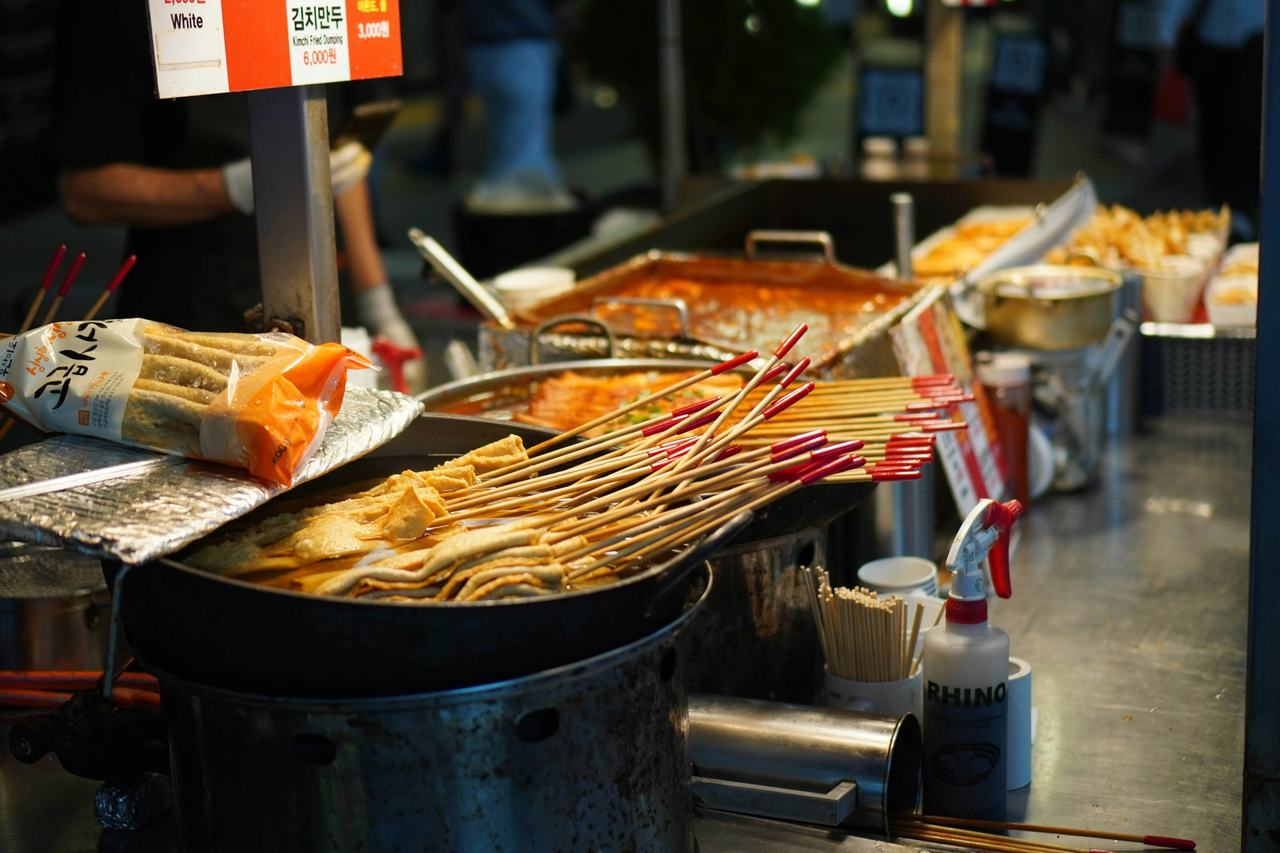
Opening photograph: Fish cake skewers simmering at a street food stall in Myeongdong, Seoul. Photograph by Irfan Syahmi on Unsplash. Blog photo credits.