How to Ask for Less Spicy Food in Korean
To ask for less spicy food in Korean, say 덜 맵게 해 주세요, “please make it less spicy.” If you want no heat at all, point at the dish on the menu and say 이거 맵지 않게 해 주세요, “please make this not spicy.” And before you order, you can check with 많이 매워요?, “is it very spicy?” This page walks through the exchange as it happens in Sori’s restaurant unit, including the warning the owner gives and the reply you get back, all with recordings.
Asking first: is it very spicy?
The simplest move is to ask before you order. Point at the dish on the menu and ask:
You ask
많이 매워요?
mani maewoyo?
Is it very spicy?
Mani maewoyo is short and easy to say. The course does not record a direct answer to it, but the owner’s warning in the next section shows how “spicy” sounds in a reply: jom maeunde, it is a bit spicy. If you hear that, it is time for one of the requests below.
The owner’s warning before you order
In the course, the warning comes without being asked. A customer orders kimchi stew, and the owner checks before taking the order to the kitchen:
The restaurant owner asks
뭐 드릴까요?
mwo deurilkkayo?
What can I get you?
You say
김치찌개 하나 주세요.
gimchijjigae hana juseyo.
One kimchi stew, please.
The restaurant owner asks
김치찌개는 좀 매운데 괜찮으세요?
gimchijjigaeneun jom maeunde gwaenchaneuseyo?
The kimchi stew is a bit spicy. Is that okay?
The key words are jom maeunde, “it is a bit spicy,” and gwaenchaneuseyo, “is that okay?” The course explanation describes the scene the same way: told the stew is a bit spicy, the customer asks for it not spicy. When you hear this question, you have two good answers, and both are below.
The role play has a shorter version of the same warning, without the name of the dish. This is the one to train your ear on, because you may hear it about any dish you order:
The restaurant owner asks
좀 매운데 괜찮으세요?
jom maeunde gwaenchaneuseyo?
It’s a bit spicy. Is that okay?
Not spicy or less spicy: two ways to ask
There are two requests in the course, and they are close in meaning:
You say
이거 맵지 않게 해 주세요.
igeo maepji anke hae juseyo.
Please make this not spicy.
Point at the menu as you say it. Or 덜 맵게 해 주세요: less spicy.
You say
덜 맵게 해 주세요.
deol maepge hae juseyo.
Please make it less spicy.
덜: less.
Maepji anke hae juseyo asks for the dish not spicy. Deol maepge hae juseyo asks for it less spicy. The course’s note on the first line suggests pointing at the menu as you say it, and offers the second as the alternative.
Here is what happens in the restaurant scene. The customer asks for not spicy, and the owner promises less spicy:
Minjun, a friend, says
그럼 맵지 않게 해 주세요.
geureom maepji anke hae juseyo.
Then please make it not spicy.
The restaurant owner says
네, 덜 맵게 해 드릴게요.
ne, deol maepge hae deurilgeyo.
Sure, I’ll make it less spicy.
That reply, ne, deol maepge hae deurilgeyo, means “sure, I’ll make it less spicy.” It is worth knowing that the answer to “not spicy” can be “less spicy.” If you truly cannot eat any heat, it is better to know that before the bowl arrives, and to order something else instead.
Deol and deo: less and more sound almost the same
This is the one word to get right. Deol, as the course notes, means less. Deo, from other lessons in the course, means more. They differ by one sound at the end, and the difference matters when the word is next to “spicy.”
You say
덜 맵게 해 주세요.
deol maepge hae juseyo.
Please make it less spicy.
You say
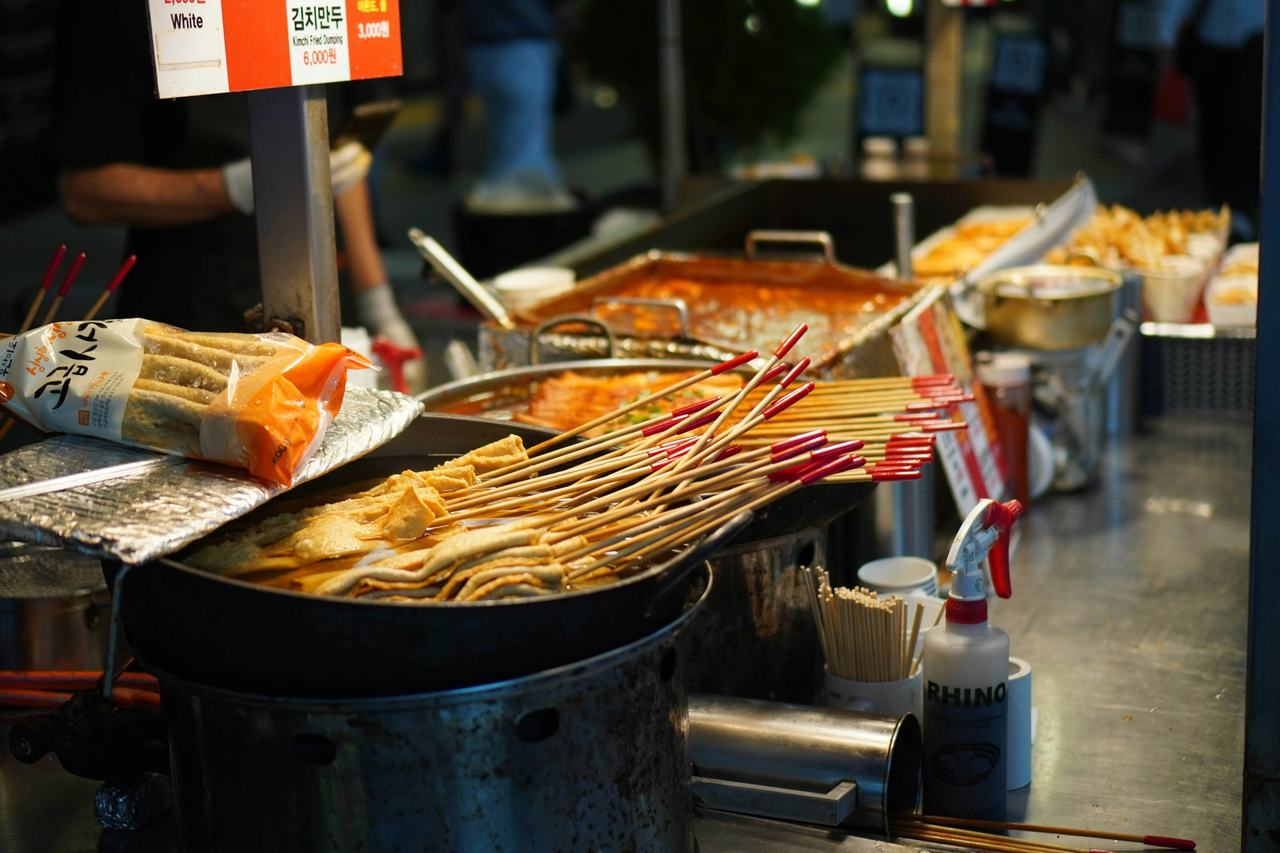
어묵 하나 더 주세요.
eomuk hana deo juseyo.
One more fish cake, please.
더: more.
Play the two lines one after the other. In the first you hear deol, with the l sound closing the word before maepge. In the second you hear deo with nothing after it before juseyo. When you ask for less heat, make sure that final l is there. The full phrase helps too: deol maepge is the only version you want to say.
When you are fine with spicy
If you like heat, the answer to the owner’s warning is gwaenchanayo, “it’s okay.” The course notes it can also mean “no thanks” or “I’m fine,” but after “is that okay?” it simply means yes, it’s fine. In the role play, the owner answers with “okay, got it.”
You say
괜찮아요.
gwaenchanayo.
It’s okay.
Also no thanks, or I’m fine.
The restaurant owner says
네, 알겠습니다.
ne, algetseumnida.
Okay, got it.
You can also say it outright. This line comes from the course’s unit on making friends, and it works just as well at a restaurant table:
You say
매운 음식 좋아해요.
maeun eumsik joahaeyo.
I like spicy food.
Other dishes on the same menu
The course menu has two other dishes besides kimchi stew. The course does not call either of them spicy, but it does not promise they are mild either, so ask with mani maewoyo if you are unsure.
You say
된장찌개 하나 주세요.
doenjangjjigae hana juseyo.
One soybean paste stew, please.
You say
비빔밥 하나 주세요.
bibimbap hana juseyo.
One bibimbap, please.
Doenjangjjigae is soybean paste stew. For ordering these from the door to the table, see how to order food in Korean.
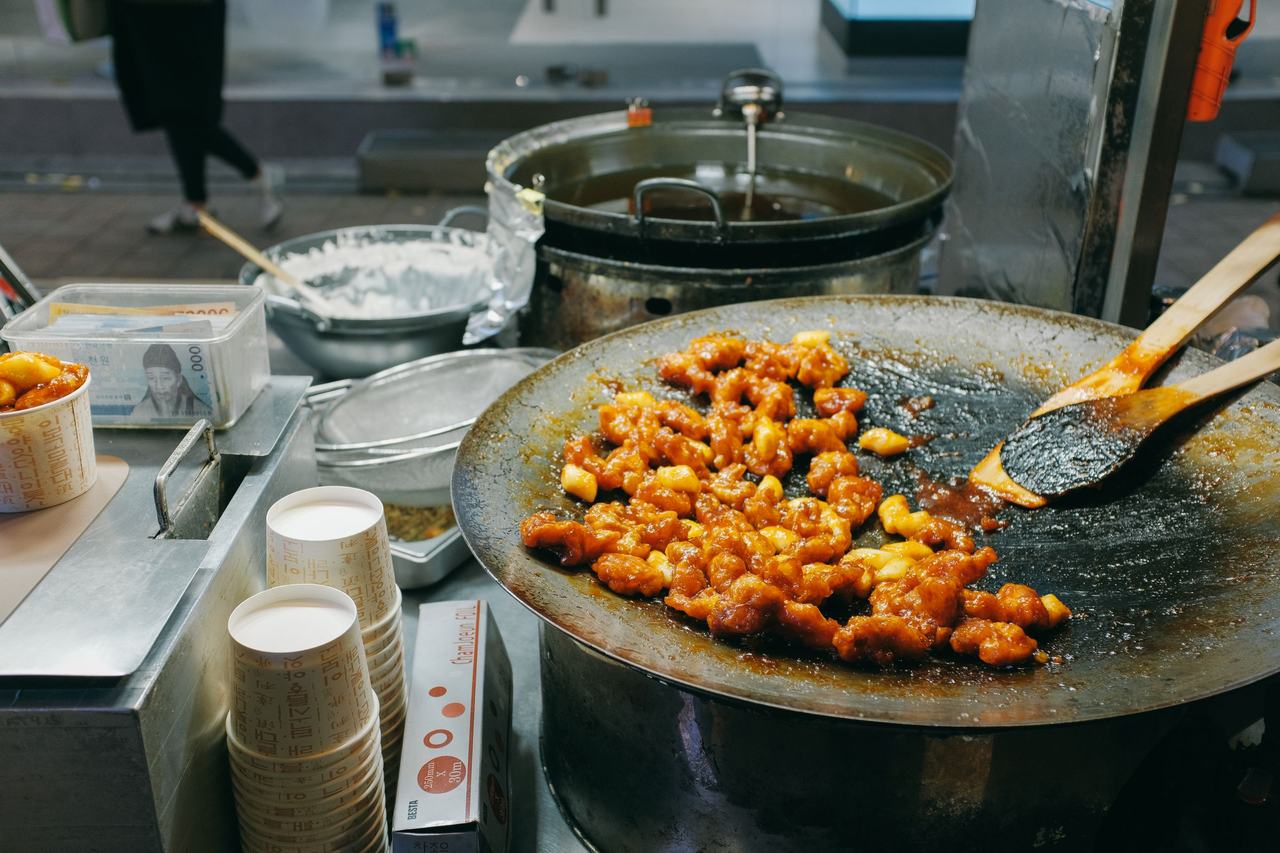
On the street, the course is direct about one dish: its note on tteokbokki calls it spicy rice cakes, the classic street food. If you order it from a stall, expect heat.
You say
떡볶이 하나 주세요.
tteokbokki hana juseyo.
One tteokbokki, please.
Spicy rice cakes, the classic street food.
More on stall food is in how to order street food in Korean.
A quick way to practice
The whole exchange is only four lines: your order, the owner’s warning, your request and the owner’s promise. Play the owner’s two warnings on this page until you can catch jom maeunde gwaenchaneuseyo the moment you hear it, then answer out loud with deol maepge hae juseyo. Every line here is a recording from Sori’s course, and the app lets you say each line out loud and shows what it heard, which is useful for checking that your deol really ends in an l.
Every line on this page
The 16 lines above, in order, for one last listen before you go. Each one is the recording from the Sori course.
많이 매워요?mani maewoyo?Is it very spicy?
뭐 드릴까요?mwo deurilkkayo?What can I get you?
김치찌개 하나 주세요.gimchijjigae hana juseyo.One kimchi stew, please.
김치찌개는 좀 매운데 괜찮으세요?gimchijjigaeneun jom maeunde gwaenchaneuseyo?The kimchi stew is a bit spicy. Is that okay?
좀 매운데 괜찮으세요?jom maeunde gwaenchaneuseyo?It’s a bit spicy. Is that okay?
이거 맵지 않게 해 주세요.igeo maepji anke hae juseyo.Please make this not spicy.
덜 맵게 해 주세요.deol maepge hae juseyo.Please make it less spicy.
그럼 맵지 않게 해 주세요.geureom maepji anke hae juseyo.Then please make it not spicy.
네, 덜 맵게 해 드릴게요.ne, deol maepge hae deurilgeyo.Sure, I’ll make it less spicy.
어묵 하나 더 주세요.eomuk hana deo juseyo.One more fish cake, please.
괜찮아요.gwaenchanayo.It’s okay.
네, 알겠습니다.ne, algetseumnida.Okay, got it.
매운 음식 좋아해요.maeun eumsik joahaeyo.I like spicy food.
된장찌개 하나 주세요.doenjangjjigae hana juseyo.One soybean paste stew, please.
비빔밥 하나 주세요.bibimbap hana juseyo.One bibimbap, please.
떡볶이 하나 주세요.tteokbokki hana juseyo.One tteokbokki, please.
Common questions
How do you say “not spicy” in Korean?
Say 이거 맵지 않게 해 주세요, “please make this not spicy,” and point at the dish on the menu as you say it, as the course suggests. The course offers 덜 맵게 해 주세요, less spicy, as the alternative.
What does “jom maeunde gwaenchaneuseyo” mean?
It means “it’s a bit spicy, is that okay?” It is the owner’s check before taking your order. Answer deol maepge hae juseyo to ask for less heat, or gwaenchanayo if you are fine with it.
What is the difference between deol and deo in Korean?
Deol means less and deo means more. They sound almost the same, so when you ask for less spicy food, say the whole phrase, deol maepge hae juseyo, and make sure the final l is there.
How do you say “I like spicy food” in Korean?
Say 매운 음식 좋아해요. It comes from the course’s making friends unit, and it is a useful answer if a restaurant owner warns you that a dish is spicy.
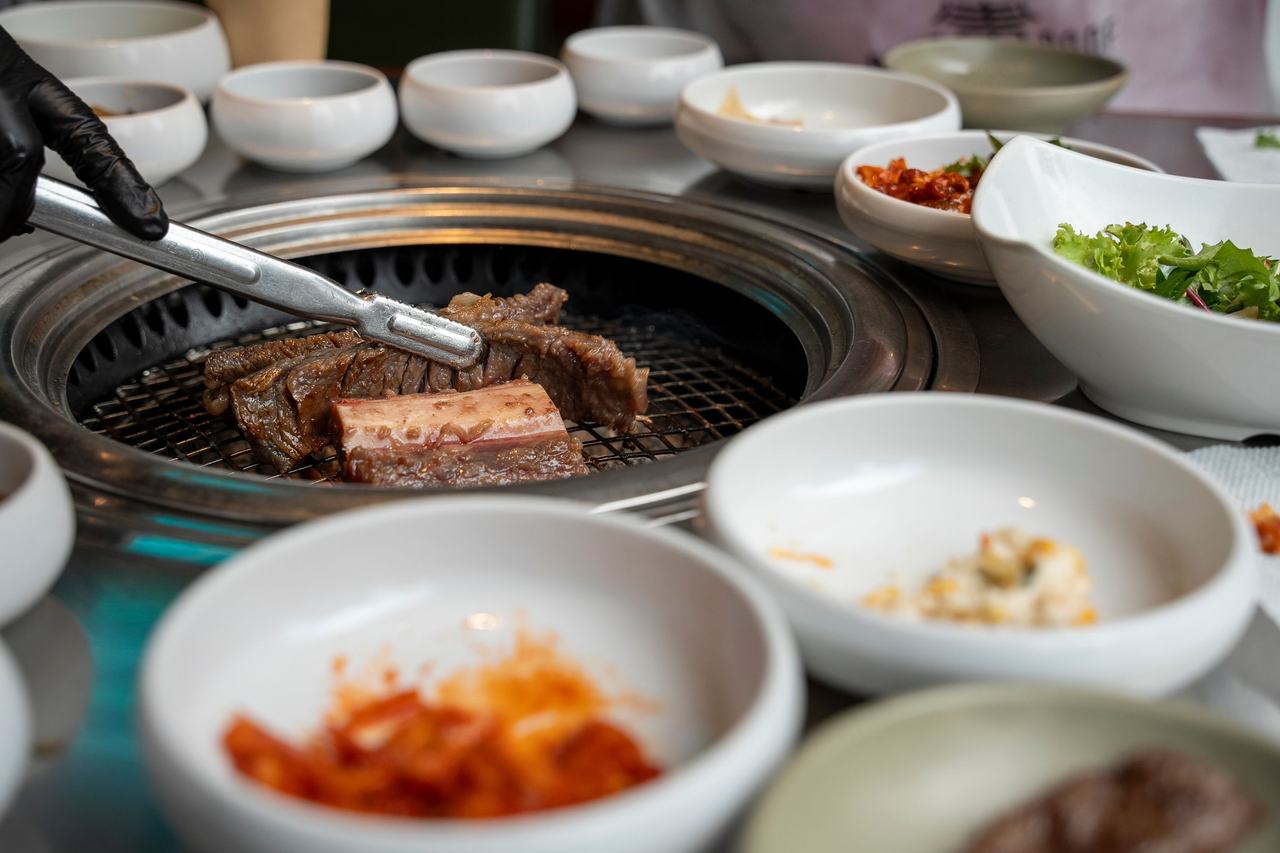
Opening photograph: Ribs sizzle on a tabletop grill surrounded by small bowls of side dishes at a Korean barbecue restaurant in Seoul. Photograph by Pincalo on Pexels. Blog photo credits.