Eating Alone in Seoul: Korean Phrases for One
When you eat alone in Seoul, the one phrase you need first is 혼자예요, “just me,” your answer when the owner asks how many of you there are. After that, order a dish that comes as a single portion, such as 비빔밥 하나 주세요, one bibimbap, and finish with 잘 먹었습니다, thank you for the meal, on your way out. Here is a meal for one from the door to the goodbye, with every line recorded from Sori’s course.
Saying “just me” at the door
The first thing you hear as you walk in is a welcome and a head count. The owner asks myeot buniseyo, how many of you, and your answer is one short word:
The restaurant owner asks
어서 오세요. 몇 분이세요?
eoseo oseyo. myeot buniseyo?
Welcome. How many of you?
You say
혼자예요.
honjayeyo.
Just me.
혼자: alone. 한 명이요 works too.
The restaurant owner says
이쪽으로 앉으세요.
ijjogeuro anjeuseyo.
Have a seat over here.
Honjayeyo means “just me.” The course notes that 혼자 means alone, and that 한 명이요, one person, works too. The han in 한 명이요 is the form of one the course teaches before a counter word like 명, people. Either answer gets you the owner’s ijjogeuro anjeuseyo, have a seat over here.
Myeot buniseyo comes as part of the greeting, so listen for it as you walk in. The course notes that 분 is the polite word for people in the question, and you answer with 명. So if you hear bun at the door, it is the head count.
Dishes that work for one
Some dishes come as one portion, and the course’s restaurant menu is made of them: stews and bibimbap. Ask for the menu with 메뉴판 좀 주세요, could we have the menu, please. The course notes that jom in it softens the request, like please, and the line works just as well for one person as for a table of four. Then order when the owner comes back:
The restaurant owner asks
주문하시겠어요?
jumunhasigesseoyo?
Are you ready to order?
You say
김치찌개 하나 주세요.
gimchijjigae hana juseyo.
One kimchi stew, please.
Jumunhasigesseoyo means “are you ready to order?” The answer is the dish plus hana juseyo, one, please. The other two dishes on the course menu work the same way:
You say
된장찌개 하나 주세요.
doenjangjjigae hana juseyo.
One soybean paste stew, please.
You say
비빔밥 하나 주세요.
bibimbap hana juseyo.
One bibimbap, please.
Doenjangjjigae is soybean paste stew. All three end in hana juseyo, which is handy when you are eating alone: one of anything is just the dish name plus hana juseyo.
The course warns, through the owner, that kimchi stew is a bit spicy. If heat is a concern, how to ask for less spicy food in Korean covers the request.
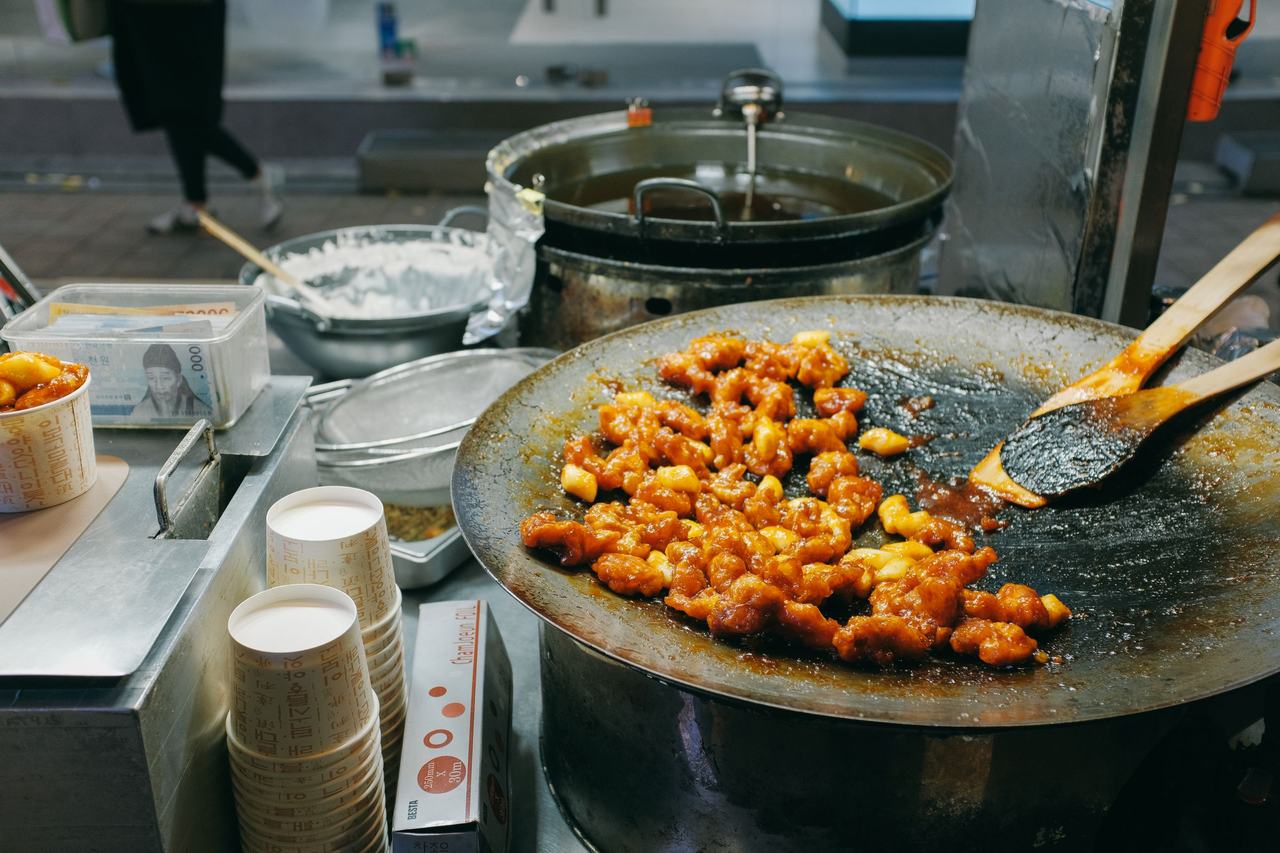
The quick option: a kimbap roll
For a fast meal on your own, the course’s street food lesson has a line for a kimbap roll. The course notes that 줄, a line or roll, is the counter for kimbap, so you ask for han jul, one roll.
You say
김밥 한 줄 주세요.
gimbap han jul juseyo.
One kimbap roll, please.
줄: a line or roll, the counter for kimbap.
At a stall, the next question is whether you are eating there or taking it with you:
The street food seller asks
여기서 드세요?
yeogiseo deuseyo?
Eating here?
You say
먹고 갈게요.
meokgo galgeyo.
I’ll have it here.
Literally: I’ll eat and go. Said for drinks too.
You say
포장이요.
pojangiyo.
To go.
포장: wrapping up, takeaway.
Yeogiseo deuseyo means “eating here?” Meokgo galgeyo, the course notes, literally means “I’ll eat and go,” and it is the answer for eating there. Pojangiyo means to go: the course notes that 포장 is wrapping up, takeaway. A roll to go is an easy meal to carry back to your room or eat on a bench. More stall lines are in how to order street food in Korean.
Water during the meal
On your own, you have no one to send for water, so it helps to know the request and the most likely answer. The course note on the line gives the answer away:
You say
물 좀 주세요.
mul jom juseyo.
Some water, please.
Water is often self-service: 물은 셀프예요.
Mul jom juseyo is “some water, please.” If you hear mureun selpeuyeyo, water is self-service, and the owner will point you to the dispenser. Side dishes are different: the course notes they are free and refilled when you ask, and the owner brings them: see asking for water and side dishes.
Paying alone and the thank-you on the way out
Paying alone is simpler than paying in a group, because the together-or-separately question does not come up. The course notes that in most Korean restaurants you pay at the counter by the door.
You say
계산해 주세요.
gyesanhae juseyo.
I’d like to pay, please.
In most Korean restaurants you pay at the counter by the door.
You say
카드로 할게요.
kadeuro halgeyo.
I’ll pay by card.
Gyesanhae juseyo asks to pay, and kadeuro halgeyo says you will pay by card. Then comes the last line of the meal. The course calls it a set phrase, said as you leave a restaurant:
You say
잘 먹었습니다.
jal meogeotseumnida.
Thank you for the meal.
A set phrase: said as you leave a restaurant, or to whoever paid.
The restaurant owner says
감사합니다. 또 오세요.
gamsahamnida. tto oseyo.
Thank you. Come again.
Jal meogeotseumnida thanks the owner for the meal. The owner’s gamsahamnida. tto oseyo means “thank you, come again.”
The meal for one, in order
Here is the whole visit:
- Owner: eoseo oseyo. myeot buniseyo? You: honjayeyo.
- Owner: ijjogeuro anjeuseyo. You: menyupan jom juseyo.
- Owner: jumunhasigesseoyo? You: the dish plus hana juseyo.
- During the meal: mul jom juseyo, and listen for selpeu.
- At the counter: gyesanhae juseyo, then kadeuro halgeyo.
- On the way out: jal meogeotseumnida.
Six lines of your own, and none of them is long. Every line on this page is a recording from Sori’s course; in the app, you hear each one, say it out loud and see what it heard, so honjayeyo is ready the moment the door opens.
Every line on this page
The 16 lines above, in order, for one last listen before you go. Each one is the recording from the Sori course.
어서 오세요. 몇 분이세요?eoseo oseyo. myeot buniseyo?Welcome. How many of you?
혼자예요.honjayeyo.Just me.
이쪽으로 앉으세요.ijjogeuro anjeuseyo.Have a seat over here.
주문하시겠어요?jumunhasigesseoyo?Are you ready to order?
김치찌개 하나 주세요.gimchijjigae hana juseyo.One kimchi stew, please.
된장찌개 하나 주세요.doenjangjjigae hana juseyo.One soybean paste stew, please.
비빔밥 하나 주세요.bibimbap hana juseyo.One bibimbap, please.
김밥 한 줄 주세요.gimbap han jul juseyo.One kimbap roll, please.
여기서 드세요?yeogiseo deuseyo?Eating here?
먹고 갈게요.meokgo galgeyo.I’ll have it here.
포장이요.pojangiyo.To go.
물 좀 주세요.mul jom juseyo.Some water, please.
계산해 주세요.gyesanhae juseyo.I’d like to pay, please.
카드로 할게요.kadeuro halgeyo.I’ll pay by card.
잘 먹었습니다.jal meogeotseumnida.Thank you for the meal.
감사합니다. 또 오세요.gamsahamnida. tto oseyo.Thank you. Come again.
Common questions
How do you say “table for one” in Korean?
Answer the owner’s myeot buniseyo, how many of you, with 혼자예요, “just me.” The course notes that 한 명이요, one person, works too.
What should I order when eating alone in Seoul?
From the course menu, 김치찌개 하나 주세요, 된장찌개 하나 주세요 and 비빔밥 하나 주세요 each come as one dish for one person. For something quick, a kimbap roll: 김밥 한 줄 주세요. Each order is the dish plus hana juseyo, one, please, so once you can say one of them you can say all three. If heat is a worry, ask before you order, as the course does, whether the dish is very spicy.
What does “honjayeyo” mean?
It means “just me.” The course notes that 혼자 means alone. It is your answer to myeot buniseyo, how many of you, when you arrive at a restaurant on your own.
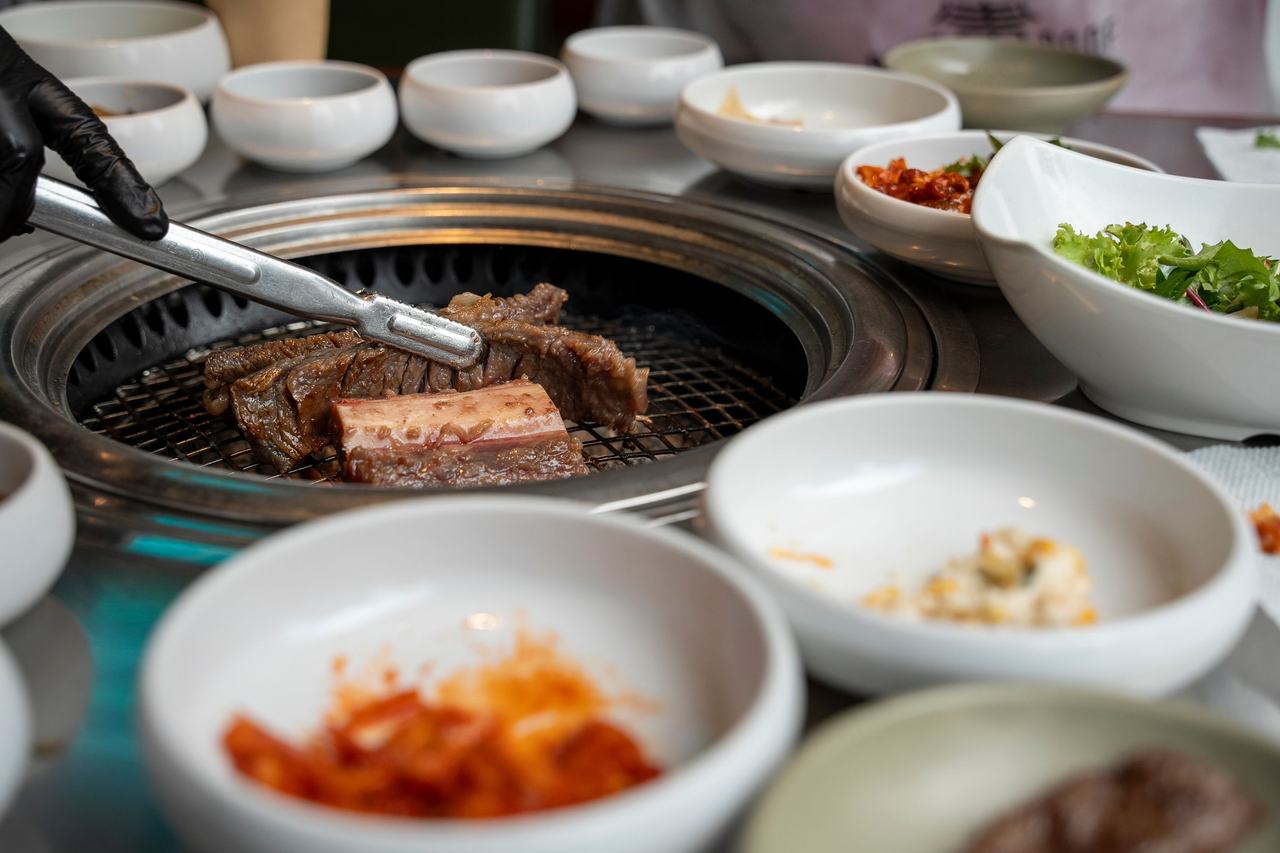
Opening photograph: Ribs sizzle on a tabletop grill surrounded by small bowls of side dishes at a Korean barbecue restaurant in Seoul. Photograph by Pincalo on Pexels. Blog photo credits.