For Here or To Go in Korean: What Baristas Ask
In Korean, the barista asks only half of “for here or to go”: 여기서 드세요? (yeogiseo deuseyo?), which means “will you have it here?” To take it away, answer 포장이요 (pojangiyo), to go, or aniyo, pojangiyo, no, to go. To stay, say 먹고 갈게요 (meokgo galgeyo), I’ll have it here, or simply ne, yes. The question is short and comes quickly, so it is worth hearing a few times before your first café order in Seoul.
How the question sounds
At Jimin’s café, the course’s café, the question comes right after you order. Here it is on its own, with the course’s note on what it means:
You ask
여기서 드세요?
yeogiseo deuseyo?
For here?
What the barista asks: will you have it here?
Yeogiseo is “here,” and deuseyo is a polite word for having food or drink. The course explains that word in another unit, at the pharmacy: deuseyo is the polite word for others, and about yourself you say meogeoyo. That is why the barista uses deuseyo and you answer with a different word.
The important thing for a visitor is that this is a yes or no question. You are not choosing between two options you have to say back. You are saying yes, here, or no, to go.
Answering to go: pojangiyo
Pojang means wrapping up, or takeaway, and pojangiyo is the whole answer:
You say
포장이요.
pojangiyo.
To go.
포장: wrapping up, takeaway.
In the course, Minjun orders two drinks for himself and a friend. Listen to the exchange that follows:
Jimin, the barista, asks
여기서 드세요?
yeogiseo deuseyo?
For here?
Minjun, a friend, says
아니요, 포장이요.
aniyo, pojangiyo.
No, to go.
He answers with aniyo, no, then pojangiyo. That aniyo answers the question exactly as it was asked: no, not here. You can leave it out and just say pojangiyo; the meaning is clear either way.
Answering for here: meokgo galgeyo
If you are staying, the course gives you a phrase whose literal meaning is worth knowing:
You say
먹고 갈게요.
meokgo galgeyo.
I’ll have it here.
Literally: I’ll eat and go. Said for drinks too.
“I’ll eat and go” sounds strange in English, but the course translates it simply as “I’ll have it here,” and as the note says, it works for drinks too. You do not need to explain anything else.
There is an even shorter answer. Because the question is “for here?”, a plain yes does the job. The course notes that ne means yes, and also okay or sure:
You say
네.
ne.
Yes.
Also okay, sure, and the answer when someone calls your name.
At a street food stall
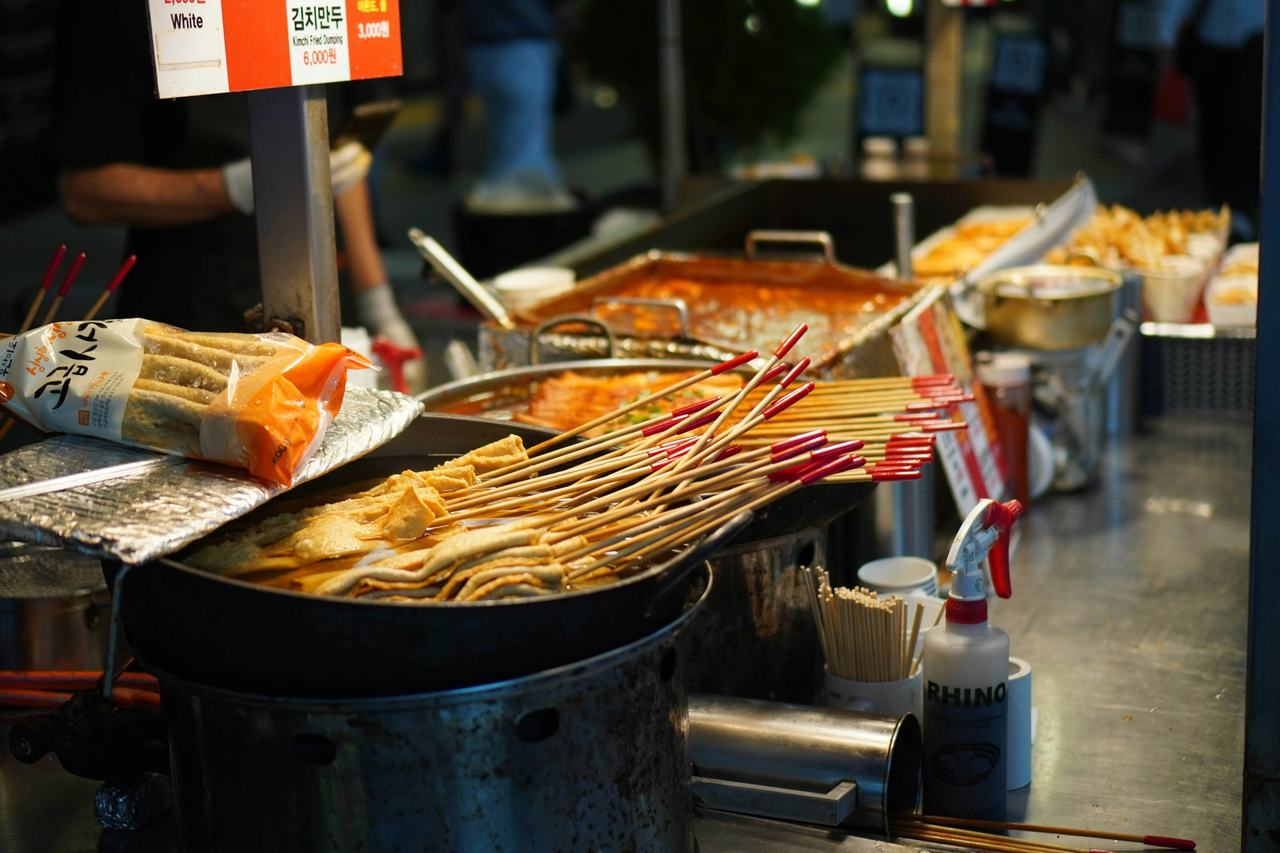
The same question turns up at a street food stall, and it sounds almost the same. In the course, Minjun orders tteokbokki and fish cakes, and the seller asks him:
The street food seller asks
네. 여기서 드세요?
ne. yeogiseo deuseyo?
Sure. Eating here?
Minjun, a friend, asks
네. 다 해서 얼마예요?
ne. da haeseo eolmayeyo?
Yes. How much is it all together?
The course translates her question as “eating here?” because at a stall you are eating, not drinking, but the Korean words are the same as the barista’s. Minjun answers with a plain ne and goes straight on to ask the total. It keeps the order moving: yes, and how much is it all together?
If you want your food to go at a stall, the answer is the same as at a café: pojangiyo. For the full stall exchange, see how to order street food in Korean.
What staff say next
After you answer, you hear one more line, and it tells you what to do next. At the café, if you said to go, Jimin says she will make your drinks to go. If you said here, she asks you to have a seat and wait:
Jimin, the barista, says
네, 포장해 드릴게요.
ne, pojanghae deurilgeyo.
Sure, I’ll make them to go.
Jimin, the barista, says
네, 앉아서 기다려 주세요.
ne, anjaseo gidaryeo juseyo.
Sure, have a seat and wait, please.
Both start with ne, okay. The second one, anjaseo gidaryeo juseyo, is worth catching: it means have a seat and wait, so you can find a table rather than standing at the counter.
At the stall, the seller says much the same, in her own words. Here is the stay answer and the to-go answer, one after the other:
The street food seller says
네, 여기 앉으세요.
ne, yeogi anjeuseyo.
Sure, have a seat here.
The street food seller says
네, 포장해 드릴게요.
ne, pojanghae deurilgeyo.
Sure, I’ll pack it to go.
And sometimes you only hear a request to wait, without a seat. In the course, Jimin says this once Minjun has said to go:
Jimin, the barista, says
네, 잠시만 기다려 주세요.
ne, jamsiman gidaryeo juseyo.
Sure, just a moment, please.
Listen for gidaryeo juseyo in two of these. It means please wait, and once you hear it, the next step is simply to stand back and let your order arrive.
Your answers at a glance
Whatever the place, the question is the same, and so are your answers:
- Staying: ne, yes, or 먹고 갈게요.
- Taking it away: 포장이요, or aniyo, pojangiyo if you want to answer the question word for word.
- Then listen for gidaryeo juseyo, please wait, or an offer to sit.
That is the entire exchange: one question, one of two answers, and one instruction. It only feels hard because it arrives in the middle of an order, when you are still thinking about your drink.
Every line on this page is a recording from Sori’s course. In the app you hear each line, say it out loud and see what it heard. The best practice for this question is to play yeogiseo deuseyo? and answer it out loud before the recording finishes.
Every line on this page
The 13 lines above, in order, for one last listen before you go. Each one is the recording from the Sori course.
여기서 드세요?yeogiseo deuseyo?For here?
포장이요.pojangiyo.To go.
여기서 드세요?yeogiseo deuseyo?For here?
아니요, 포장이요.aniyo, pojangiyo.No, to go.
먹고 갈게요.meokgo galgeyo.I’ll have it here.
네.ne.Yes.
네. 여기서 드세요?ne. yeogiseo deuseyo?Sure. Eating here?
네. 다 해서 얼마예요?ne. da haeseo eolmayeyo?Yes. How much is it all together?
네, 포장해 드릴게요.ne, pojanghae deurilgeyo.Sure, I’ll make them to go.
네, 앉아서 기다려 주세요.ne, anjaseo gidaryeo juseyo.Sure, have a seat and wait, please.
네, 여기 앉으세요.ne, yeogi anjeuseyo.Sure, have a seat here.
네, 포장해 드릴게요.ne, pojanghae deurilgeyo.Sure, I’ll pack it to go.
네, 잠시만 기다려 주세요.ne, jamsiman gidaryeo juseyo.Sure, just a moment, please.
Common questions
How do you say “to go” in Korean?
Say 포장이요. The course notes that pojang means wrapping up, or takeaway. If the barista has just asked “for here?”, you can say aniyo, pojangiyo, no, to go.
What does yeogiseo deuseyo mean?
It means “will you have it here?” It is what the barista or a street food seller asks after you order. Answer ne or 먹고 갈게요 to stay, or 포장이요 to take it away.
How do you say “for here” in Korean?
Say 먹고 갈게요, literally “I’ll eat and go.” The course notes that it is said for drinks too. A simple ne, yes, also works, since the question is “for here?”
Why do I hear deuseyo but say something else?
The course notes that deuseyo is the polite word for others, and that about yourself you say meogeoyo. So staff ask with deuseyo, and you answer with meokgo galgeyo.
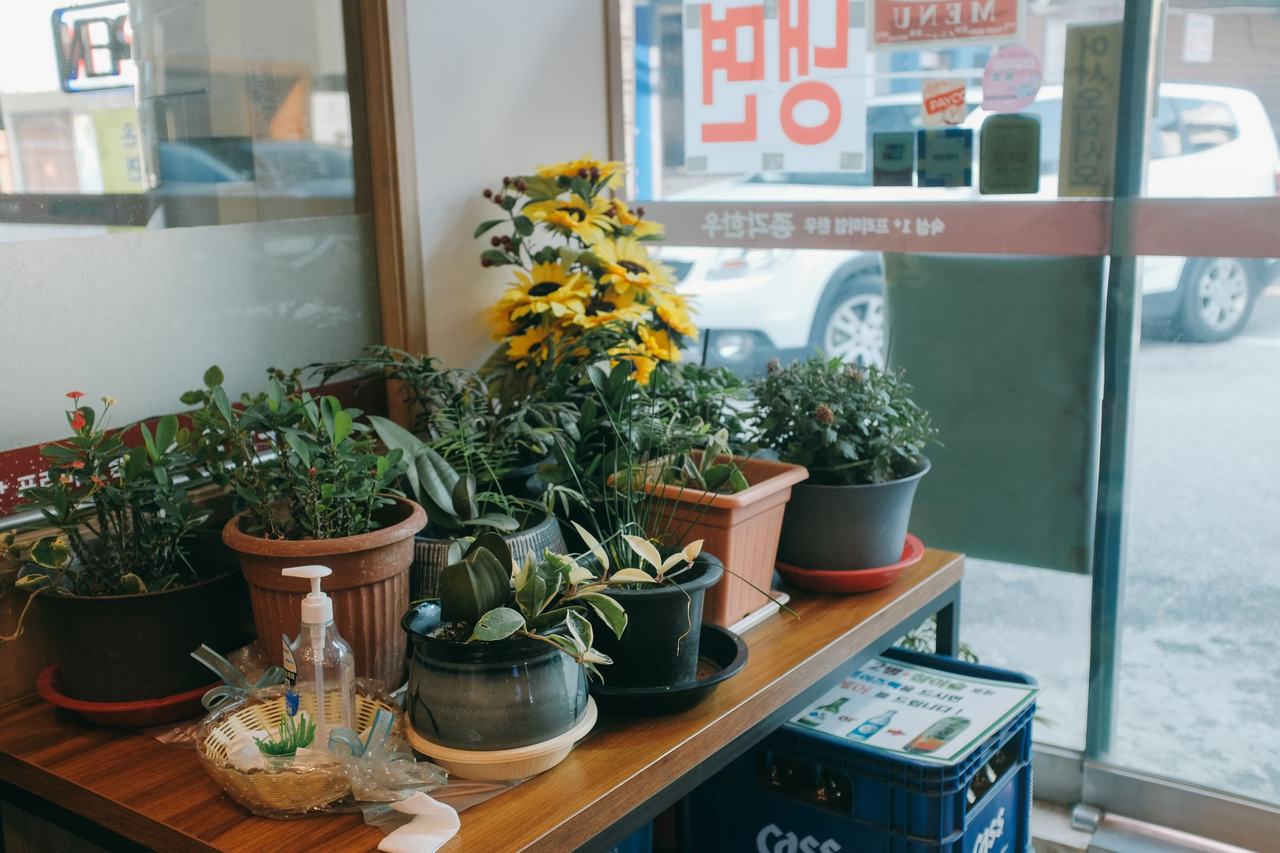
Opening photograph: Potted plants and sunflowers sit on a table by the front window of a Seoul cafe. Photograph by Huy Phan on Pexels. Blog photo credits.