What to Say When You Don’t Understand Japanese
When you don’t understand someone in Japanese, say すみません、よく分かりません (sorry, I don’t quite understand), then ask for it again with すみません、もう一度お願いします or more slowly with もう少しゆっくりお願いします. Once you catch the key word, repeat it back with desu ne or as a question, so the other person can say yes or correct you. That last step is the one that actually rescues a conversation.
Step one: say that you did not catch it
The course builds this whole skill around one scene. Outside your building in Yanaka one morning, Okada-san, a neighbor, explains the garbage days, kindly and much too fast:
Okada-san, a neighbor, says
燃えるゴミは火曜日と金曜日です。
Moeru gomi wa kayōbi to kin'yōbi desu.
Burnable garbage is Tuesdays and Fridays.
The first thing to say is that you did not follow. The course’s line starts with sumimasen, sorry, and the translation is “I don’t quite understand,” which is honest without being dramatic.
You say
すみません、よく分かりません。
Sumimasen, yoku wakarimasen.
Sorry, I don’t quite understand.
That one line tells the speaker there is a problem, without you having to explain which part you missed. What you ask for next depends on what went wrong.
Ask again, or ask for slower
If you want the same words again, ask for them once more. The course notes that a slightly more casual way to say “once more” is fine too.
You say
すみません、もう一度お願いします。
Sumimasen, mō ichido onegai shimasu.
Sorry, could you say that again?
もう一回 is a little more casual, and fine too.
If the words were fine and only the speed was the problem, ask for slower instead. This works with anyone: a neighbor, a station attendant, a pharmacist.
You say
もう少しゆっくりお願いします。
Mō sukoshi yukkuri onegai shimasu.
A little more slowly, please.
Both lines end in onegai shimasu, the same polite request word you use when ordering, so they sound like a request and not a complaint.
Confirm by repeating the key word
Here is the technique that does the most work. Pick out the one word that matters (the day, the price, the direction, the time), say it back, and let the other person confirm. The course uses two ways to do it: add desu ne, or say the word as a question.
A day
From the garbage explanation, the word that matters is Tuesday. The course’s note on this line is that ね checks that you heard right.
You say
火曜日ですね。
Kayōbi desu ne.
Tuesday, right?
ね checks that you heard right.
A price
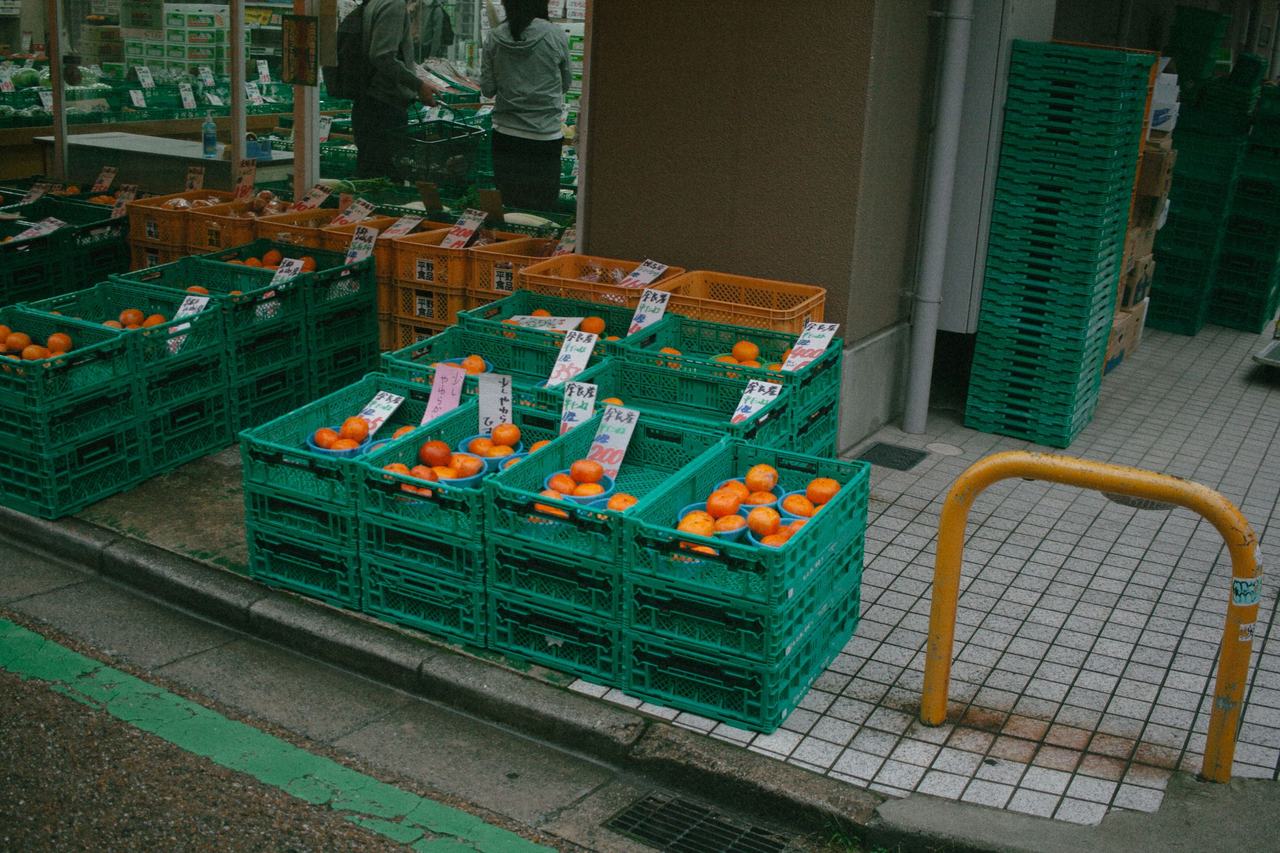
On Togoshi Ginza’s shopping street, Ōno-san, the greengrocer, tells you the price of a pile of tomatoes. The course’s note: say a price back as a question to check you heard it right.
Ōno-san, the greengrocer, says
一山300円です。
Hitoyama sanbyakuen desu.
¥300 a pile.
You ask
300円ですか?
Sanbyakuen desu ka?
¥300?
Say a price back as a question to check you heard it right.
A direction
Asking the way in Jimbocho, a woman at the crossing tells you to go straight ahead. You echo the direction with ね, which the course describes as checking what you heard:
A passerby says
まっすぐ行ってください。
Massugu itte kudasai.
Go straight ahead.
You say
まっすぐですね。
Massugu desu ne.
Straight ahead, right?
Checking what you heard, with ね.
A time and a place
When Kenta, a friend, settles the plan for Saturday, two facts matter: the time and the exit. You say both back.
Kenta, a friend, says
じゃあ、土曜日の6時に北口で。
Jā, doyōbi no rokuji ni kitaguchi de.
Then six on Saturday, at the North Exit.
You say
6時に北口ですね。
Rokuji ni kitaguchi desu ne.
Six at the North Exit, right?
A dose at the pharmacy
At the drugstore counter, Nakagawa-san, the pharmacist, explains how to take a cold medicine, and there are three numbers in one sentence. Pick the part you are least sure of and ask it back:
Nakagawa-san, the pharmacist, says
1日3回、食後に2錠ずつ飲んでください。
Ichinichi sankai, shokugo ni nijō zutsu nonde kudasai.
Take two tablets three times a day, after meals.
You ask
食後ですか?
Shokugo desu ka?
After meals?
The beauty of this is that you only need the key word. If you heard it wrong, the other person corrects it. If you heard it right, you get a hai and you are done.
When it is a name or a bad line
If it is a name you missed, the course has a line for exactly this, from your first days at the studio in Kuramae:
You ask
すみません、お名前、もう一度いいですか?
Sumimasen, onamae, mō ichido ii desu ka?
Sorry, could I have your name once more?
On the phone, the problem may be the line rather than the language. In the course, you call a restaurant from a noisy platform and the call keeps fading. This is what you say, and if it does not improve, the course’s next line is またかけ直します, I’ll call back.
You say
すみません、よく聞こえません。
Sumimasen, yoku kikoemasen.
Sorry, I can’t hear you well.
Set expectations before you start
Sometimes it helps to say up front that your Japanese is limited, so the other person adjusts before they speak. The course’s line is modest and true for most visitors:
You say
日本語は少しだけ話せます。
Nihongo wa sukoshi dake hanasemasu.
I speak a little Japanese.
And when the thing you do not understand is an object (a dish, a button on a ticket machine, something in a display case), point and ask:
You ask
これは何ですか?
Kore wa nan desu ka?
What’s this?
Close the loop with got it
When you finally understand, say so. Wakarimashita on its own means got it. With thanks added, it is the course’s way of ending any exchange where someone took the time to explain:
You say
分かりました。ありがとうございます。
Wakarimashita. Arigatō gozaimasu.
Got it. Thank you.
It also tells the speaker they can stop explaining, which saves you both another round.
Here is the whole ladder in order. You rarely need every step. If you caught most of what was said, skip straight to the echo and check the one word you are unsure of.
- Say you did not follow: すみません、よく分かりません.
- Ask for the same words again: すみません、もう一度お願いします.
- Ask for slower: もう少しゆっくりお願いします.
- Repeat the key word back with desu ne, or as a question.
- Close with 分かりました。ありがとうございます.
A good way to rehearse this ladder is to play Okada-san’s garbage line and answer it three ways: with yoku wakarimasen, with a request to slow down, and with the echo Kayōbi desu ne. Every line here is a recording from Koe’s course, where you hear a line, say it out loud, and the app shows what it heard.
Every line on this page
The 18 lines above, in order, for one last listen before you go. Each one is the recording from the Koe course.
燃えるゴミは火曜日と金曜日です。Moeru gomi wa kayōbi to kin'yōbi desu.Burnable garbage is Tuesdays and Fridays.
すみません、よく分かりません。Sumimasen, yoku wakarimasen.Sorry, I don’t quite understand.
すみません、もう一度お願いします。Sumimasen, mō ichido onegai shimasu.Sorry, could you say that again?
もう少しゆっくりお願いします。Mō sukoshi yukkuri onegai shimasu.A little more slowly, please.
火曜日ですね。Kayōbi desu ne.Tuesday, right?
一山300円です。Hitoyama sanbyakuen desu.¥300 a pile.
300円ですか?Sanbyakuen desu ka?¥300?
まっすぐ行ってください。Massugu itte kudasai.Go straight ahead.
まっすぐですね。Massugu desu ne.Straight ahead, right?
じゃあ、土曜日の6時に北口で。Jā, doyōbi no rokuji ni kitaguchi de.Then six on Saturday, at the North Exit.
6時に北口ですね。Rokuji ni kitaguchi desu ne.Six at the North Exit, right?
1日3回、食後に2錠ずつ飲んでください。Ichinichi sankai, shokugo ni nijō zutsu nonde kudasai.Take two tablets three times a day, after meals.
食後ですか?Shokugo desu ka?After meals?
すみません、お名前、もう一度いいですか?Sumimasen, onamae, mō ichido ii desu ka?Sorry, could I have your name once more?
すみません、よく聞こえません。Sumimasen, yoku kikoemasen.Sorry, I can’t hear you well.
日本語は少しだけ話せます。Nihongo wa sukoshi dake hanasemasu.I speak a little Japanese.
これは何ですか?Kore wa nan desu ka?What’s this?
分かりました。ありがとうございます。Wakarimashita. Arigatō gozaimasu.Got it. Thank you.
Common questions
How do you say “I don’t understand” in Japanese politely?
Say すみません、よく分かりません, sorry, I don’t quite understand. Then ask for the words again with すみません、もう一度お願いします, or more slowly with もう少しゆっくりお願いします.
How do you ask someone to speak slowly in Japanese?
Say もう少しゆっくりお願いします, a little more slowly, please. You can put sumimasen in front of it, as the course does when it speaks to a stranger.
How do you say “one more time” in Japanese?
The course’s line is すみません、もう一度お願いします, sorry, could you say that again? Its note adds that a slightly more casual version is fine too.
What does ne mean at the end of a Japanese sentence?
In the course, ね does two jobs. It checks that you heard right, as in Kayōbi desu ne, Tuesday, right? And in small talk it invites the other person to agree, as in Ii otenki desu ne, lovely weather, isn’t it?
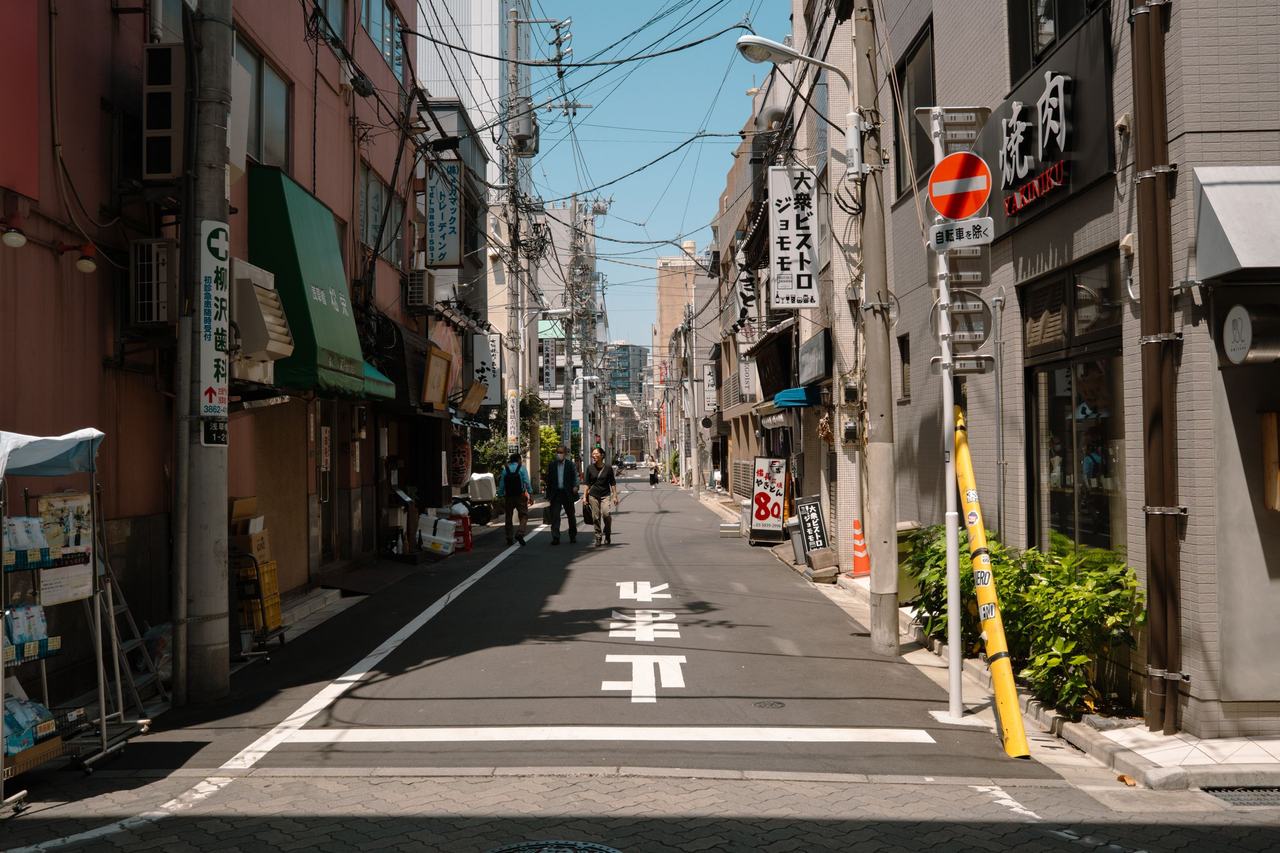
Opening photograph: A few people walk down a narrow, sunlit side street of small shops and overhead wires in Tokyo. Photograph by Iban Lopez Luna on Pexels. Blog photo credits.