Where Are You From? Answering in Spanish in Mexico
To say where you are from in Spanish, use soy de and your country: Soy de Estados Unidos, I’m from the United States, or Soy de Canadá, I’m from Canada. In Mexico you will hear the question as ¿De dónde eres? from someone your age, or ¿De dónde es usted? from someone being polite. Below are both questions, the answers for several countries, the nationality word the course teaches, and what you will hear when you ask back, each with its recording from Habla’s course.
How the question sounds
In the course, the question comes from new friends, casually, in the middle of a conversation. Diego asks it with oye, hey, at the front:
Diego, a friend, asks
Oye, ¿y tú de dónde eres?
Hey, so where are you from?
That is the friendly form, with tú. The course gives both forms for you to ask yourself. With someone your age:
You ask
¿De dónde eres?
Where are you from? (to a friend)
With tú, to someone your age.
With someone older, the polite form puts usted right in the question:
You ask
¿De dónde es usted?
Where are you from? (formal)
With usted, to someone older.
Listen for the word dónde, where, in both. Once you catch it, the rest of the question is predictable, and your answer is ready.
Answering with your country
The answer has one shape: soy de, I’m from, and the country. The course records it for several countries, so you can hear how each name sounds in Spanish:
You say
Soy de Estados Unidos.
I’m from the United States.
You say
Soy de Canadá.
I’m from Canada.
You say
Soy de Inglaterra.
I’m from England.
You say
Soy de Australia.
I’m from Australia.
You say
Soy de la India.
I’m from India.
Two details stand out. Some country names sound quite different in Spanish, so hearing them once matters more than reading them: the United States is Estados Unidos, and England is Inglaterra. And India takes la in front: Soy de la India. Say these the way the recordings do, stress and all.
The course records these five countries. For any other, keep the same soy de opening and say your country’s name.
You can add your city the way Tom does in the course, by naming it after de. When Mariana asks him more, he just says De Toronto, Toronto.
Saying your nationality instead
The other way to answer is with a nationality word, I’m Canadian rather than I’m from Canada. The course teaches one, with a useful note:
You say
Soy canadiense.
I’m Canadian.
Canadiense is the same for a man or a woman. Many others change: mexicano, mexicana.
Canadiense is the same for a man or a woman. Many nationality words change, though, and the course gives the local example: mexicano for a man and mexicana for a woman. If you are not sure of your own nationality word in Spanish, soy de and the country is the form the course teaches for every country, and it does the same job.

When they guess first
Sometimes the question comes as a guess. In the course, Mariana guesses that Tom is from the United States, and he corrects her with the country form:
Mariana, a coworker, asks
¿Eres de Estados Unidos?
Are you from the United States?
Tom, a newcomer, says
No, soy de Canadá.
No, I’m from Canada.
The pattern is the same whether the guess is right or wrong: a yes or a no, then soy de and the country. ¿Eres de Estados Unidos? asks are you from the United States?, so if the guess is right, Soy de Estados Unidos confirms it.
Asking back, and what you hear about home
Once you have answered, ask back. With someone your age, Tom’s way works: he adds his city and turns the question around in one line.
Tom, a newcomer, asks
De Toronto. ¿Y tú, de dónde eres?
Toronto. And you, where are you from?
With someone older, use the polite ¿De dónde es usted? instead. Then listen to the answers. Mariana is from Mexico City, and she says so with de aquí, from here. Diego, in the role play, also tells you where he lives:
Mariana, a coworker, says
Yo soy de aquí, de la Ciudad de México.
I’m from here, Mexico City.
Diego, a friend, says
Yo vivo aquí, en la Condesa.
I live here, in the Condesa.
Notice the two different verbs in the translations: soy de is I’m from, and vivo is I live. Yo soy de aquí, de la Ciudad de México tells you Mariana’s hometown. Yo vivo aquí, en la Condesa tells you where Diego lives in the city. Hearing the difference helps you keep the conversation going, because a neighborhood is an easy thing to ask more about.
If you have just met, names come first in the course, then where you are from. For the name part, see how to introduce yourself in Spanish in Mexico.
The whole exchange, start to finish
Here is how it tends to run in the course. A new friend asks where you are from, or guesses. You answer with soy de and your country, and add your city if you like. Then you ask back with ¿Y tú, de dónde eres?, the way Tom does. The answer may be a hometown, de aquí if they are from the city, or a neighborhood where they live now.
You will also hear the city itself named in full. Mariana calls it la Ciudad de México, and that is the name to listen for when someone says they are from here. Three lines from you, two from them, and you have a conversation going.
Every line on this page is a recording from the app’s course. In Habla you hear each line, say it out loud and see what the app heard, so your own country comes out clearly the first time someone asks.
Every line on this page
The 14 lines above, in order, for one last listen before you go. Each one is the recording from the Habla course.
Oye, ¿y tú de dónde eres?Hey, so where are you from?
¿De dónde eres?Where are you from? (to a friend)
¿De dónde es usted?Where are you from? (formal)
Soy de Estados Unidos.I’m from the United States.
Soy de Canadá.I’m from Canada.
Soy de Inglaterra.I’m from England.
Soy de Australia.I’m from Australia.
Soy de la India.I’m from India.
Soy canadiense.I’m Canadian.
¿Eres de Estados Unidos?Are you from the United States?
No, soy de Canadá.No, I’m from Canada.
De Toronto. ¿Y tú, de dónde eres?Toronto. And you, where are you from?
Yo soy de aquí, de la Ciudad de México.I’m from here, Mexico City.
Yo vivo aquí, en la Condesa.I live here, in the Condesa.
Common questions
How do you say I am from in Spanish?
Say soy de and the place: Soy de Estados Unidos, Soy de Canadá, Soy de Inglaterra. For India, the course says Soy de la India, with la.
How do you ask where someone is from in Spanish?
With someone your age, ask ¿De dónde eres?. With someone older, the course gives the polite ¿De dónde es usted?.
How do you say I’m American in Spanish?
The course does not teach a nationality word for the United States. It teaches Soy de Estados Unidos, I’m from the United States, which is the simplest answer.
Does canadiense change for a woman?
No. The course notes that canadiense is the same for a man or a woman, while many others change, like mexicano and mexicana.
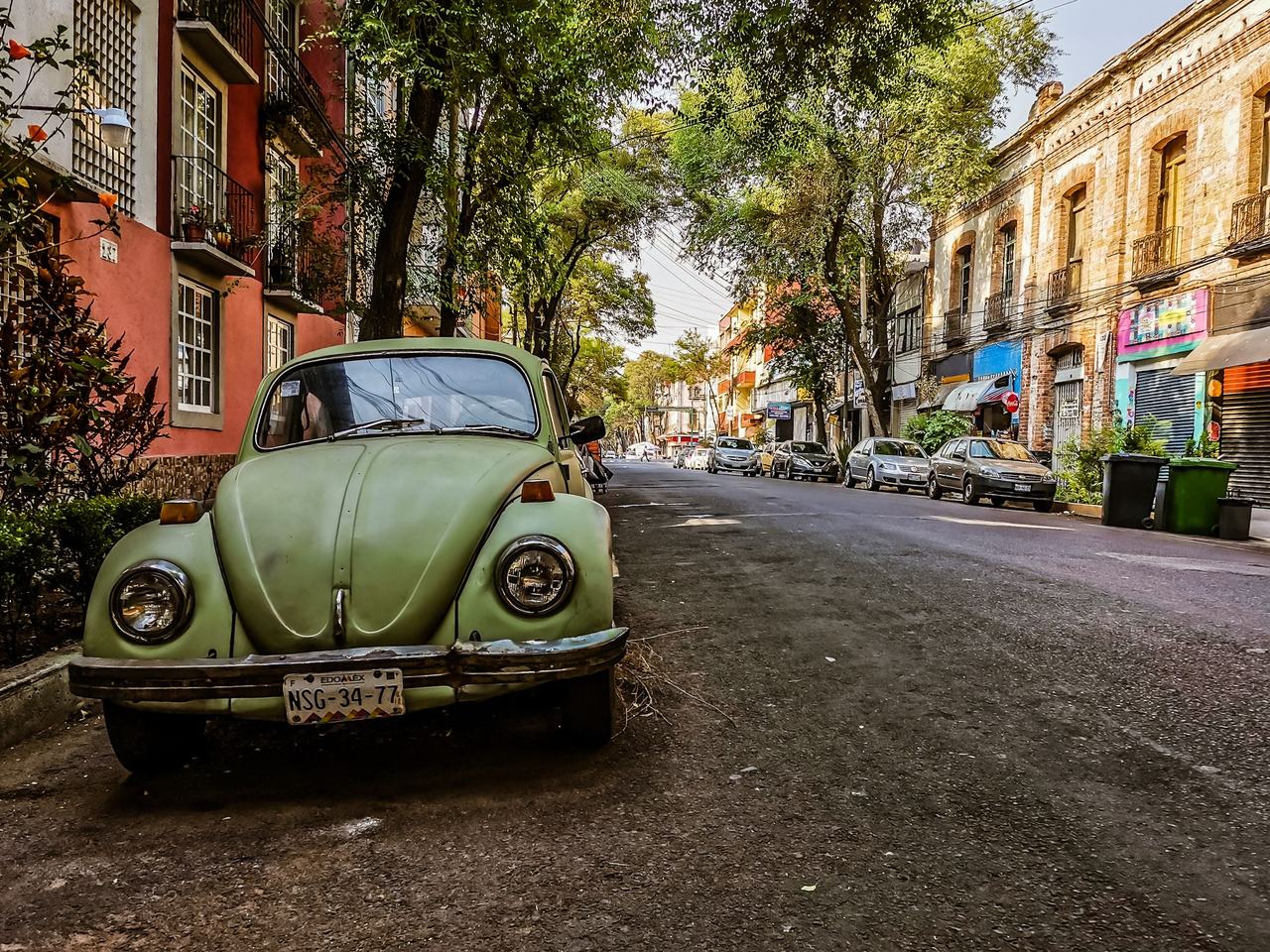
Opening photograph: A pale green Volkswagen Beetle parked on a quiet, tree-lined street in Mexico City. Photograph by Roland DRz on Pexels. Blog photo credits.