Is It Spicy? Salsa Spanish for Mexico City Taco Stands
To ask if something is spicy in Spanish in Mexico, say ¿Pica?: is it spicy? The word is pica, from picar, to sting, and not caliente, which means hot to the touch. If you want no heat at all, say Que no pique, por favor, and if you want only a little salsa, poquita. Below is the whole salsa exchange at Beto’s taco stand, the questions he asks you included, each line with its recording from Habla’s course.
Spicy is pica, not hot
The word to know at a taco stand is short, and the course note explains it: picar is to sting, and pica means it has chili heat. Caliente is hot to the touch, so never ask that about salsa.
You ask
¿Pica?
Is it spicy?
Picar is to sting: pica means it has chili heat. Caliente is hot to the touch, so never ask that about salsa.
You can point at a bowl and ask ¿Pica?, or name the salsa, as Mariana does in the next scene with ¿Pica la salsa verde? Either way, the answer will be about heat, not temperature. Listen for the same word coming back: if a salsa is the hot one, you will hear that it is la que pica, the one that’s spicy. If it is mild, you may hear poquito, a little.
Green or red: ask at every stand
Most stands have two salsas, la verde and la roja, green and red. In the course scene, Mariana asks about the green one, and Beto tells her which is the hot one at his stand:
Mariana, a coworker, asks
¿Pica la salsa verde?
Is the green salsa spicy?
Beto, the taquero, says
Poquito. La roja es la que pica.
A little. The red one is the spicy one.
Poquito means a little, so the green is mild here, and la roja es la que pica, the red one is the one that’s spicy. Do not take that as a rule. The course note on salsa is explicit that which one is spicier changes from stand to stand, so ask:
You say
Con salsa verde, por favor.
With green salsa, please.
Most stands have la verde and la roja. Which one is spicier changes from stand to stand, so ask.
That is the main lesson of the unit. Color tells you nothing reliable, and the question costs one word.
What the taquero asks you
Often you will not have to raise the subject. In the course, after your order, Beto asks whether you want salsa, and then which one:
Beto, the taquero, asks
¿Con salsa?
With salsa?
Beto, the taquero, asks
¿Cuál le pongo?
Which one do you want?
¿Cuál le pongo? means which one do you want? You can answer with a color, like the line above for green salsa, or ask ¿Pica? first. If you ask for nothing spicy, Beto confirms it like this:
Beto, the taquero, says
Va, sin picante.
Okay, nothing spicy.
Sin picante, nothing spicy in the course’s translation, is one of the alternatives the course gives for asking for mild.
Just a little, or none at all
If you like some heat but not much, ask for a little salsa. The course notes that poquito and poquita both mean just a little, and that Mexicans love the diminutive:
You say
Poquita salsa, por favor.
Just a little salsa, please.
Poquito, poquita: just a little. Mexicans love the diminutive.
If you want none, there is a polite way to ask for food that is not spicy. Literally it means let it not sting. The course adds two shorter options, sin picante and sin chile:
You say
Que no pique, por favor.
Not spicy, please.
Literally: let it not sting. Sin picante and sin chile work too.
One caution from outside the course. A Mexico-based food writer points out that a salsa a local calls not spicy can still have noticeable heat, and suggests also asking whether it has chile in it at all. If you are very sensitive to heat, sin chile is the clearest of the course’s options, and it is fine to ask more than once.
Skipping the onion
At a stand, the taquero’s question about toppings usually comes as ¿Con todo?, which the course says means onion and cilantro. In the salsa lesson, Beto asks it in full. If you would rather skip the onion, this is the moment:
Beto, the taquero, asks
¿Con cebolla y cilantro?
Onion and cilantro?
You say
Sin cebolla, por favor.
No onion, please.
Beto, the taquero, says
Sale. Sin cebolla.
Coming up. No onion.
The course note on con and sin is short: con is with, sin is without. You will meet the same shape all over the course: sin cebolla, no onion; sin picante, nothing spicy; sin azúcar, no sugar in your coffee. For the rest of the order, see how to order tacos at a Mexico City stand.
The whole salsa exchange at Beto’s stand
Here is how Mariana puts it all together in the course. She has asked about the green salsa and heard that it is only a little spicy. So she asks for the green, just a little, and no onion, in one breath:
Mariana, a coworker, says
Entonces con la verde, poquita. Y sin cebolla, por favor.
The green one then, just a little. And no onion, please.
Beto, the taquero, says
Sale. Sin cebolla y con poquita verde.
Coming up. No onion, and a little green.
Beto says it all back, the way he confirms every order in the course: Sale, coming up, no onion, and a little green. When you hear your own order repeated like that, you know it landed.
The pattern is easy to copy. Ask ¿Pica?, listen for poquito or for the color that pica, then order the salsa you want with poquita if you want it light, and add any sin you need. If you are unsure which filling to choose, the guide to Mexico City taco fillings explains each one.
Every line on this page is a recording from the app’s course. In Habla you hear each line, say it out loud and see what the app heard, so ¿Pica? is ready the moment the salsa bowls appear.
Every line on this page
The 14 lines above, in order, for one last listen before you go. Each one is the recording from the Habla course.
¿Pica?Is it spicy?
¿Pica la salsa verde?Is the green salsa spicy?
Poquito. La roja es la que pica.A little. The red one is the spicy one.
Con salsa verde, por favor.With green salsa, please.
¿Con salsa?With salsa?
¿Cuál le pongo?Which one do you want?
Va, sin picante.Okay, nothing spicy.
Poquita salsa, por favor.Just a little salsa, please.
Que no pique, por favor.Not spicy, please.
¿Con cebolla y cilantro?Onion and cilantro?
Sin cebolla, por favor.No onion, please.
Sale. Sin cebolla.Coming up. No onion.
Entonces con la verde, poquita. Y sin cebolla, por favor.The green one then, just a little. And no onion, please.
Sale. Sin cebolla y con poquita verde.Coming up. No onion, and a little green.
Common questions
How do you ask if something is spicy in Spanish?
Say ¿Pica?, is it spicy? It comes from picar, to sting. You can also name the salsa, as Mariana does: ¿Pica la salsa verde?
Why not say caliente for spicy?
The course notes that caliente is hot to the touch, so it asks about temperature, not chili heat. For salsa, ask ¿Pica?
Is green salsa or red salsa spicier in Mexico?
It depends on the stand. The course notes that most stands have la verde and la roja, and that which one is spicier changes from stand to stand, so ask each time.
How do you say not spicy in Spanish?
Say Que no pique, por favor, literally let it not sting. The course notes that sin picante and sin chile work too.
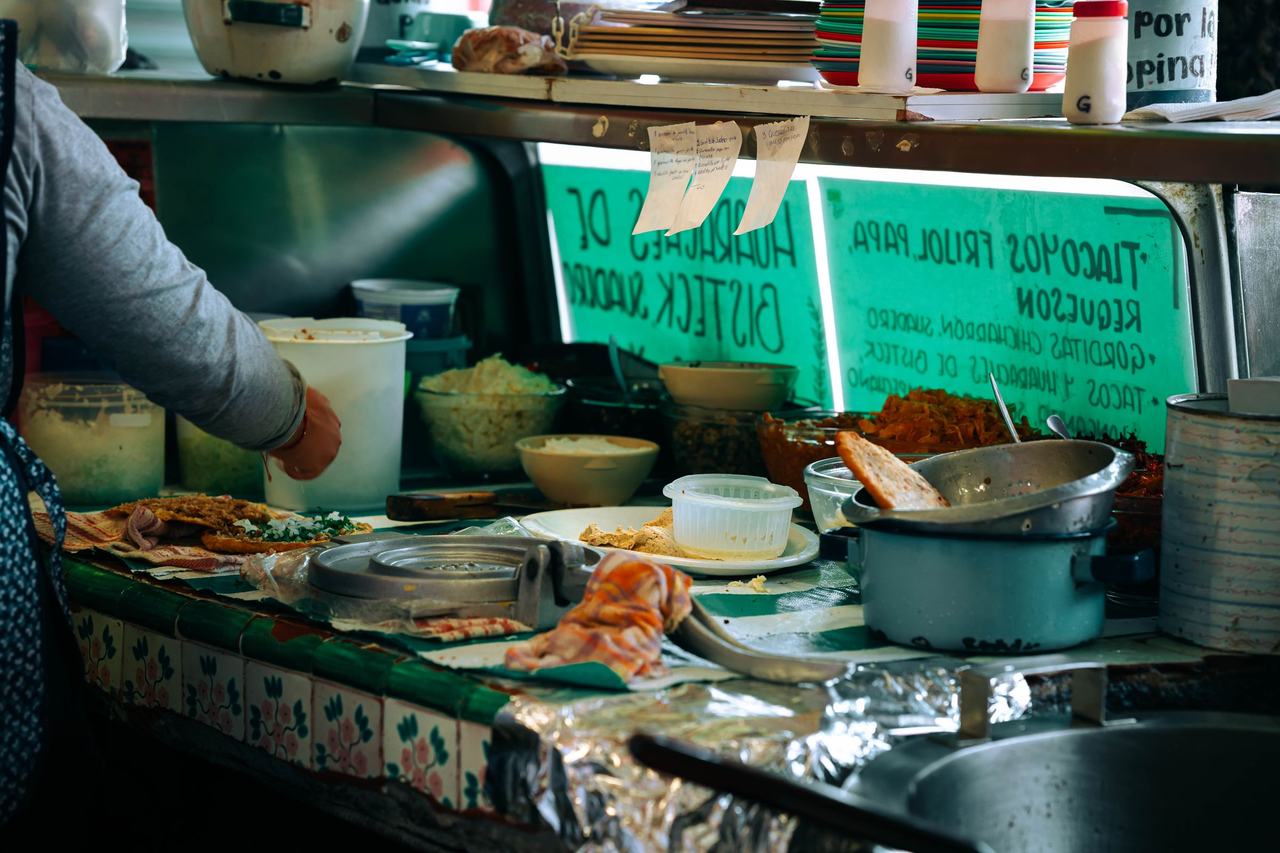
Opening photograph: A vendor reaches across a tiled street food counter crowded with pots and taco fillings in Mexico City. Photograph by Viridiana Rivera on Pexels. Blog photo credits.