How to Say Seoul Place Names in Korean
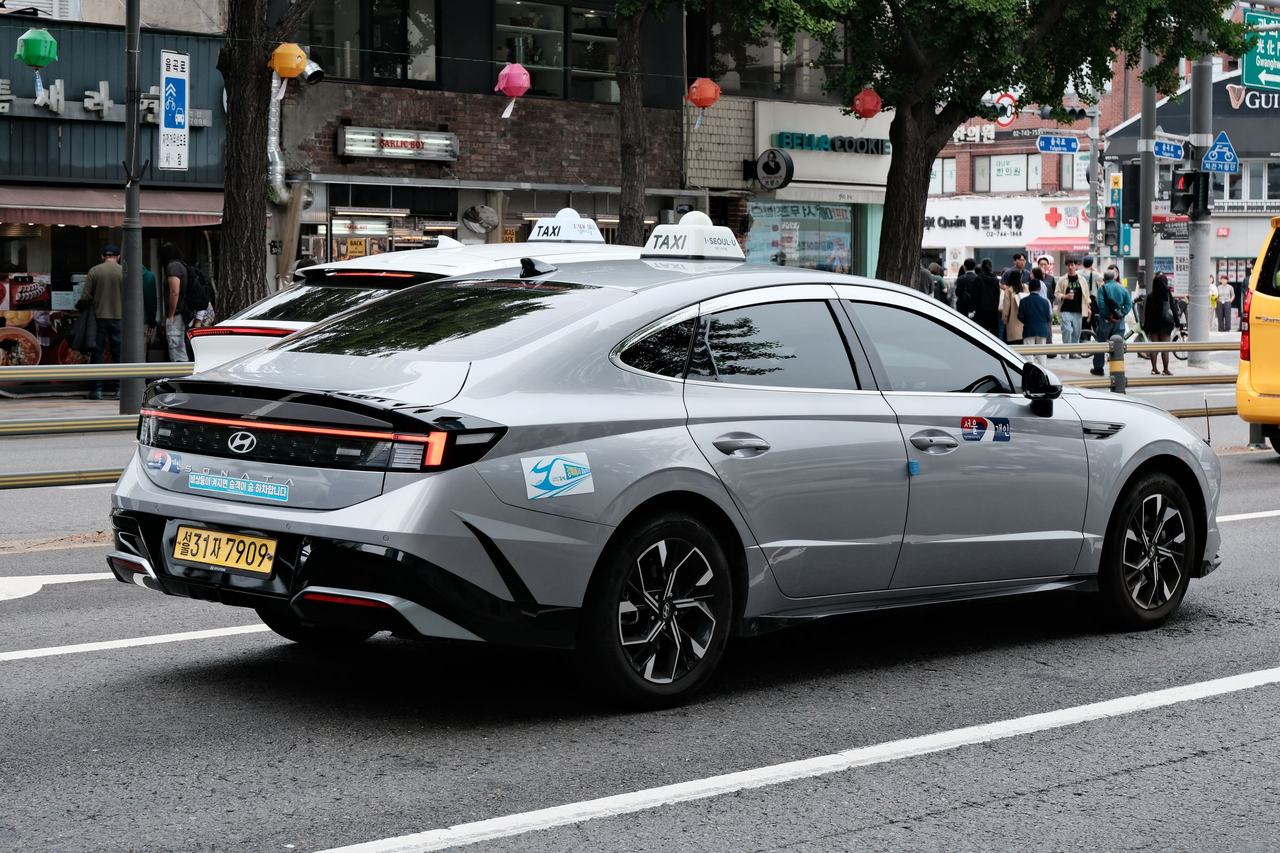
The best way to learn how to pronounce Myeongdong, and the other Seoul names in Sori’s course, is to hear them inside the sentence you will actually use. In a taxi, that sentence is 명동으로 가 주세요 (myeongdongeuro ga juseyo, to Myeongdong, please). Below are four place names from the course, Myeongdong, Hongdae, Gangnam Station and Seoul Station, each recorded in a taxi line or a meeting line, with notes on what the course’s romanization shows about how they sound.
Why learn a name inside a sentence
A place name on its own is not what a driver or a friend hears. They hear it with something attached. In a taxi, the course adds euro ga juseyo or ro ga juseyo, please take me to. In a plan, it adds eseo mannayo, let’s meet at. The course writes those endings joined to the name, and the end of the name can change once something follows it.
You can see this in the course’s own romanization. Seoul Station on its own is seoullyeok. In the taxi line it becomes seoullyeogeuro, and the k at the end of the name is now written as a g. If you practice only the bare name, the full sentence still feels new. If you practice the sentence, the name comes with it.
So for each place below, there are two recordings: the line you say, and the same name in a course character’s mouth or in a second sentence. Listen to both before you try it yourself.
Myeongdong
Here is the line you will use in a taxi, and the same line as Seoyeon says it in the course scene, getting into Park’s cab:
You say
명동으로 가 주세요.
myeongdongeuro ga juseyo.
To Myeongdong, please.
Place + 으로 가 주세요 (로 after a vowel or ㄹ): please take me to that place.
Seoyeon, a coworker, says
명동으로 가 주세요.
myeongdongeuro ga juseyo.
To Myeongdong, please.
The course romanizes the name myeongdong, two syllables, and in the sentence euro follows it directly, written as part of the same word. The note gives the rule for the ending: a place plus euro ga juseyo, or ro ga juseyo after a vowel or ㄹ. Myeongdong ends in a consonant, so it takes euro. For the rest of the ride, see how to take a taxi in Seoul in Korean.
Hongdae and Hongik University Station
These two can look like two different places, and the course clears it up. The station is called 홍대입구역, Hongik University Station. The course’s note on the meeting line says that people often just say 홍대, Hongdae:
You say
홍대입구역에서 만나요.
hongdaeipguyeogeseo mannayo.
Let’s meet at Hongik University Station.
People often just say 홍대.
So the short name and the long one point to the same stop. In the taxi, the line is the short name with the short ending, because hongdae ends in a vowel:
You say
홍대로 가 주세요.
hongdaero ga juseyo.
To Hongdae, please.
The full station name in the meeting line is long, hongdaeipguyeogeseo, but the first two syllables are the same hongdae. If you can say Hongdae, the rest is the station word and the ending.
Gangnam Station
Gangnam Station is where Minjun suggests meeting in the course, and it is a good name to hear in a full sentence because something happens at the join:
You say
강남역에서 만나요.
gangnamnyeogeseo mannayo.
Let’s meet at Gangnam Station.
Minjun, a friend, says
강남역에서 만나요.
gangnamnyeogeseo mannayo.
Let’s meet at Gangnam Station.
The course romanizes this line gangnamnyeogeseo mannayo. Look at the middle: gangnam and then nyeog, with an n that is not in the name on its own. Listen for it in both recordings. The course writes the name and the station word as one, and that extra n is part of the join.
Once the station is settled, the next question is the exit, and for that see how to ask which subway exit in Korean.
Seoul Station
The course has Seoul Station two ways, on foot and in a taxi. To ask where it is, and to ask a driver to take you there:
You ask
서울역 어디예요?
seoullyeok eodiyeyo?
Where’s Seoul Station?
You say
서울역으로 가 주세요.
seoullyeogeuro ga juseyo.
To Seoul Station, please.
The course writes the station seoullyeok, with a doubled l where the city name meets the word for station. That doubled l is the join to listen for in the recordings, where the city name and yeok become one word. Then, in the taxi line, the k at the end is written as a g before the ending: seoullyeogeuro.
The station word itself is 역, and the course notes on the subway question that 역 means station. It sits on the end of every station name on this page: seoullyeok, gangnamnyeogeseo, hongdaeipguyeogeseo.
Names inside an address
Place names also turn up inside addresses, where they are followed by numbers instead of an ending. The course’s example is an apartment complex, said the way you would say it on the phone for a delivery:
You say
한강아파트 백삼 동 오백이 호예요.
hangangapateu baeksam dong obaegi hoyeyo.
Hangang Apartments, building 103, flat 502.
An apartment address: the building with 동, then the flat with 호, both in Sino-Korean numbers.
The name, hangangapateu, Hangang Apartments, comes first, and then the building and the flat with dong and ho. For how to say a whole address and the numbers in it, see how to give your address in Korean, and practice it the same way as the station names: in the full sentence.
Every line on this page is a recording from Sori’s course. In the app you hear each line, say it out loud, and see what the app heard. For names, that last step is the useful one, because it shows whether what you said came across as the name you meant.
Every line on this page
The 9 lines above, in order, for one last listen before you go. Each one is the recording from the Sori course.
명동으로 가 주세요.myeongdongeuro ga juseyo.To Myeongdong, please.
명동으로 가 주세요.myeongdongeuro ga juseyo.To Myeongdong, please.
홍대입구역에서 만나요.hongdaeipguyeogeseo mannayo.Let’s meet at Hongik University Station.
홍대로 가 주세요.hongdaero ga juseyo.To Hongdae, please.
강남역에서 만나요.gangnamnyeogeseo mannayo.Let’s meet at Gangnam Station.
강남역에서 만나요.gangnamnyeogeseo mannayo.Let’s meet at Gangnam Station.
서울역 어디예요?seoullyeok eodiyeyo?Where’s Seoul Station?
서울역으로 가 주세요.seoullyeogeuro ga juseyo.To Seoul Station, please.
한강아파트 백삼 동 오백이 호예요.hangangapateu baeksam dong obaegi hoyeyo.Hangang Apartments, building 103, flat 502.
Common questions
How do you pronounce Myeongdong?
The course romanizes it myeongdong, two syllables. Hear it in the taxi line 명동으로 가 주세요 (myeongdongeuro ga juseyo), which is the line you would use in a taxi.
Is Hongdae the same as Hongik University Station?
Yes. The station is 홍대입구역, Hongik University Station, and the course notes that people often just say 홍대, Hongdae. In a taxi, the course line is 홍대로 가 주세요.
How do you say Gangnam Station in Korean?
It is 강남역. In the course meeting line, 강남역에서 만나요, it is romanized gangnamnyeogeseo, written with an n between gangnam and the word for station.
How do you say “station” in Korean?
역, romanized yeok. The course notes that 역 means station, and it goes on the end of the name, as in seoullyeok, Seoul Station.
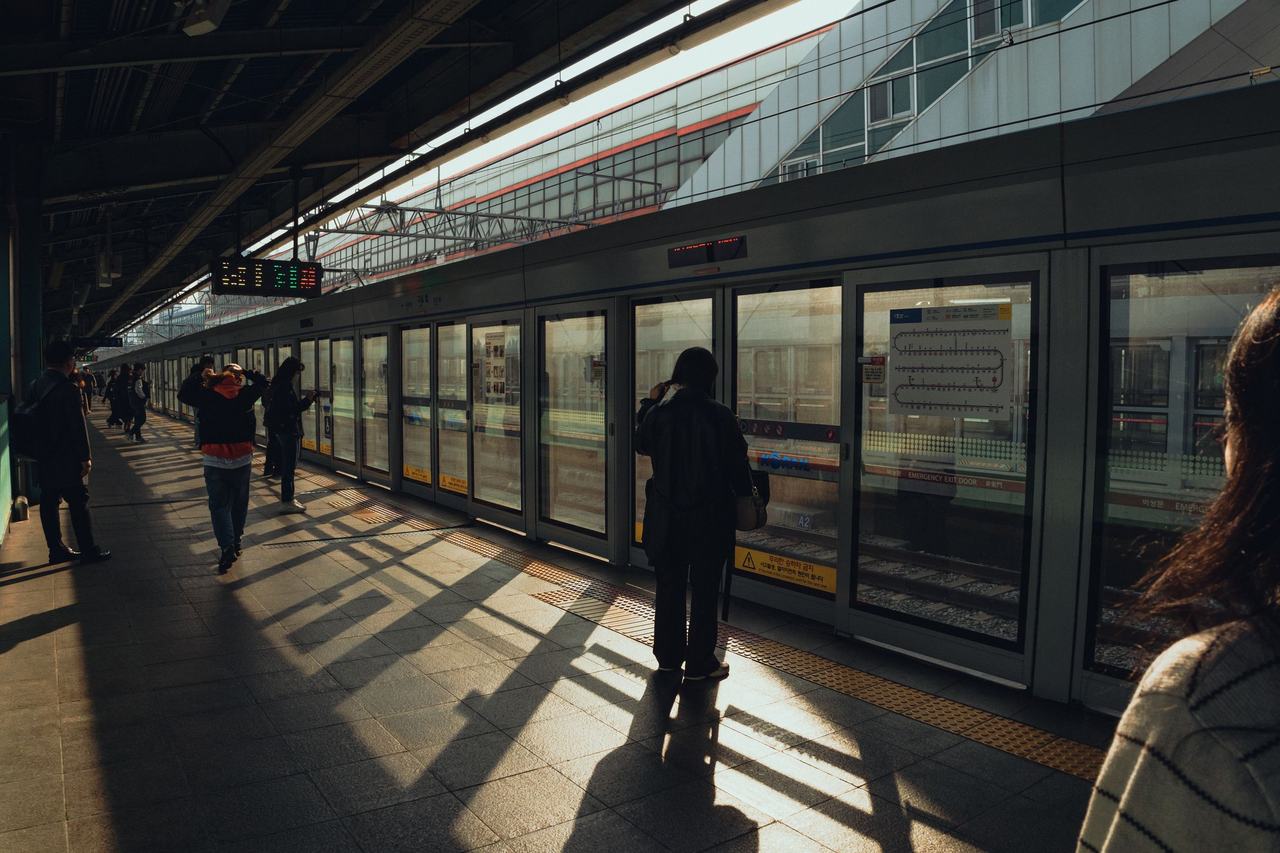
Opening photograph: Commuters wait in long afternoon shadows beside the platform screen doors of a Seoul subway station. Photograph by Theodore Nguyen on Pexels. Blog photo credits.