Card or Cash: How to Pay for Things in Korean
To say you will pay by card in Korean, say 카드로 할게요, “I’ll pay by card.” For cash, it is 현금으로 할게요, “I’ll pay in cash.” If you are not sure a place takes cards, ask first with 여기 카드 돼요?, “do you take cards here?” Then listen for one of two instructions: insert the card, or tap it. This page covers each of those moments with recordings from Sori’s course, taken from the café, the convenience store, the street food stall and the taxi.
Saying how you will pay
In the course, the cashier says the total first. That is your moment to say how you are paying. Here is the exchange at the café counter in the course:
Jimin, the barista, says
사천오백 원이에요.
sacheonobaek wonieyo.
That’s 4,500 won.
You say
카드로 할게요.
kadeuro halgeyo.
I’ll pay by card.
Jimin, the barista, says
네, 카드 꽂아 주세요.
ne, kadeu kkoja juseyo.
Okay, insert your card, please.
Sacheonobaek wonieyo is “that’s 4,500 won.” Kadeuro halgeyo is “I’ll pay by card.” The barista answers ne, kadeu kkoja juseyo, “okay, insert your card, please.” The cash version of your line has the same shape, with hyeongeum, cash, in place of kadeu:
You say
현금으로 할게요.
hyeongeumeuro halgeyo.
I’ll pay in cash.
These two lines are the most reusable in this whole guide. The course uses kadeuro halgeyo at the café, in the taxi and on the phone to a chicken shop.
Asking if they take cards
If there is any doubt, ask before the cashier rings anything up. The line is short:
You ask
여기 카드 돼요?
yeogi kadeu dwaeyo?
Do you take cards here?
돼요? asks whether something works or is allowed: can I use a card here?
Junho, the store clerk, says
네, 돼요. 여기 꽂아 주세요.
ne, dwaeyo. yeogi kkoja juseyo.
Yes. Insert it here, please.
Yeogi kadeu dwaeyo means “do you take cards here?” The course notes that dwaeyo? asks whether something works or is allowed, so the line is really “can I use a card here?” The clerk’s answer, ne, dwaeyo. yeogi kkoja juseyo, means “yes. Insert it here, please.” The same dwaeyo is the word for “it works” in the answer. If the answer starts with ne, dwaeyo, cards are fine.
There is one exception the course points out. When you top up a transit card at a convenience store, the course notes that it is for cash only: 현금만 돼요. More on that in how to top up a T-money card in Korean.
Insert or tap: the card reader instruction
After you say kadeuro halgeyo, the cashier tells you what to do with the card. There are two instructions in the course, and they sound different:
- Kkoja juseyo: insert it, please. You hear this at the café and the convenience store.
- Dae juseyo: tap it, please. You hear this from the taxi driver.
Here is the taxi driver’s version at the end of a ride:
The taxi driver says
카드 여기 대 주세요.
kadeu yeogi dae juseyo.
Tap your card here, please.
Kadeu yeogi dae juseyo means “tap your card here, please.” In the course, yeogi, here, comes with both instructions, so listen past it for the verb. When the payment is done, the clerk hands your card back:
Junho, the store clerk, says
카드 받으세요.
kadeu badeuseyo.
Here’s your card back.
Kadeu badeuseyo means “here’s your card back.” It is your cue to take it and put it away.
Paying cash and getting change
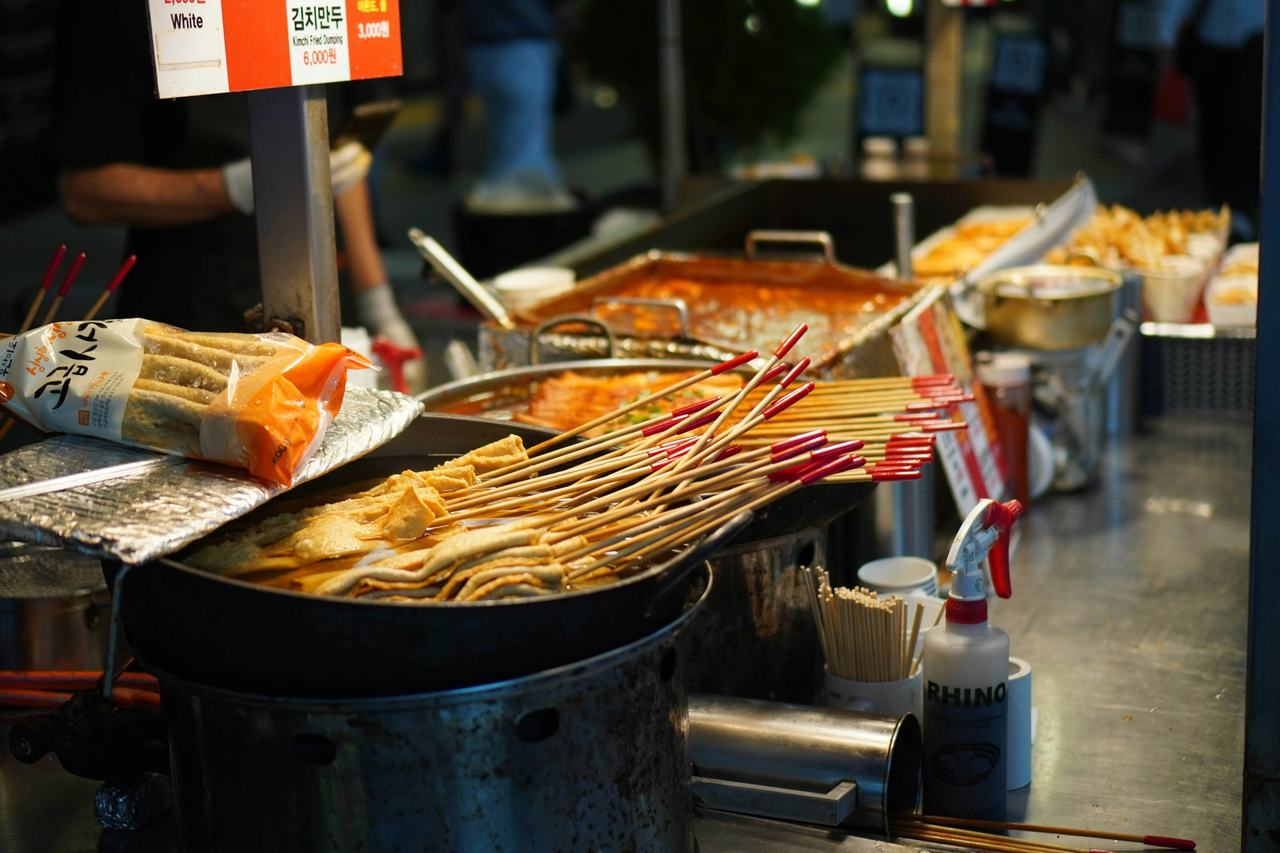
When you pay in cash, you hand over the note and say what it is. At the street food stall in the course, it goes like this:
The street food seller says
육천 원이에요.
yukcheon wonieyo.
That’s 6,000 won.
You say
여기 만 원이요.
yeogi man woniyo.
Here’s 10,000 won.
The street food seller says
네, 사천 원 받으세요.
ne, sacheon won badeuseyo.
Thanks, here’s 4,000 won back.
Yukcheon wonieyo is “that’s 6,000 won.” Yeogi man woniyo means “here’s 10,000 won.” The seller answers ne, sacheon won badeuseyo, “thanks, here’s 4,000 won back.” The word to catch is badeuseyo at the end: it is the same word the clerk uses when handing your card back, and here it comes with your change. For the numbers themselves, see how to say and understand prices in Korean won.
The receipt question
Once you have paid, a cashier may offer the receipt:
Jimin, the barista, asks
영수증 드릴까요?
yeongsujeung deurilkkayo?
Would you like the receipt?
You say
영수증 주세요.
yeongsujeung juseyo.
The receipt, please.
You say
영수증은 버려 주세요.
yeongsujeungeun beoryeo juseyo.
Please throw the receipt away.
버려 주세요: please throw it away.
Yeongsujeung deurilkkayo means “would you like the receipt?” If you do, say yeongsujeung juseyo, the receipt, please. If you do not, the course’s convenience store line asks the clerk to throw it away: yeongsujeungeun beoryeo juseyo. The course notes that beoryeo juseyo means please throw it away. The other cashier questions you may hear at a store counter are in what Korean cashiers ask you.
Paying for a phone order
Paying by phone works differently. When you order food by phone, the shop asks how you will pay, and the course’s note explains why:
The shop asks
결제는 어떻게 하시겠어요?
gyeoljeneun eotteoke hasigesseoyo?
How would you like to pay?
What the shop asks. 결제: payment. On a phone order you pay the rider when the food comes.
Gyeoljeneun eotteoke hasigesseoyo means “how would you like to pay?” As the note says, on a phone order you pay the rider when the food comes. Your answer is the same line as at any counter: kadeuro halgeyo or hyeongeumeuro halgeyo.
The payment lines in one place
- I’ll pay by card: kadeuro halgeyo.
- I’ll pay in cash: hyeongeumeuro halgeyo.
- Do you take cards here? Yeogi kadeu dwaeyo?
- Insert it: kkoja juseyo. Tap it: dae juseyo.
- Here’s 10,000 won: yeogi man woniyo.
- The receipt, please: yeongsujeung juseyo.
Every line on this page is a recording from Sori’s course. In the app you hear each line, say it out loud and see what it heard. The two instructions, kkoja and dae, are worth playing back to back until you can tell them apart without thinking.
Every line on this page
The 15 lines above, in order, for one last listen before you go. Each one is the recording from the Sori course.
사천오백 원이에요.sacheonobaek wonieyo.That’s 4,500 won.
카드로 할게요.kadeuro halgeyo.I’ll pay by card.
네, 카드 꽂아 주세요.ne, kadeu kkoja juseyo.Okay, insert your card, please.
현금으로 할게요.hyeongeumeuro halgeyo.I’ll pay in cash.
여기 카드 돼요?yeogi kadeu dwaeyo?Do you take cards here?
네, 돼요. 여기 꽂아 주세요.ne, dwaeyo. yeogi kkoja juseyo.Yes. Insert it here, please.
카드 여기 대 주세요.kadeu yeogi dae juseyo.Tap your card here, please.
카드 받으세요.kadeu badeuseyo.Here’s your card back.
육천 원이에요.yukcheon wonieyo.That’s 6,000 won.
여기 만 원이요.yeogi man woniyo.Here’s 10,000 won.
네, 사천 원 받으세요.ne, sacheon won badeuseyo.Thanks, here’s 4,000 won back.
영수증 드릴까요?yeongsujeung deurilkkayo?Would you like the receipt?
영수증 주세요.yeongsujeung juseyo.The receipt, please.
영수증은 버려 주세요.yeongsujeungeun beoryeo juseyo.Please throw the receipt away.
결제는 어떻게 하시겠어요?gyeoljeneun eotteoke hasigesseoyo?How would you like to pay?
Common questions
How do you say “do you take cards” in Korean?
Say 여기 카드 돼요?, “do you take cards here?” The course notes that dwaeyo? asks whether something works or is allowed. A yes sounds like ne, dwaeyo.
What does “kadeu kkoja juseyo” mean?
It means “insert your card, please.” It is what the barista and the convenience store clerk say in the course. A taxi driver in the course says dae juseyo instead, which means tap it.
How do you say “I’ll pay in cash” in Korean?
Say 현금으로 할게요, “I’ll pay in cash.” When you hand over a note, you can say what it is, as in 여기 만 원이요, here’s 10,000 won.
What does “yeongsujeung deurilkkayo” mean?
It means “would you like the receipt?” Answer 영수증 주세요 if you want it, or 영수증은 버려 주세요 to ask the cashier to throw it away.
Opening photograph: A person stands in a narrow Seoul street at night under stacked signs. Photograph by Julien on Unsplash. Blog photo credits.